
Many housewives press their own peanut oil and sesame oil for use.
Concerned about the prevalence of counterfeit and low-quality industrial cooking oils on the market, many families in Nghe An are choosing to press their own peanut, sesame, and soybean oils for consumption.
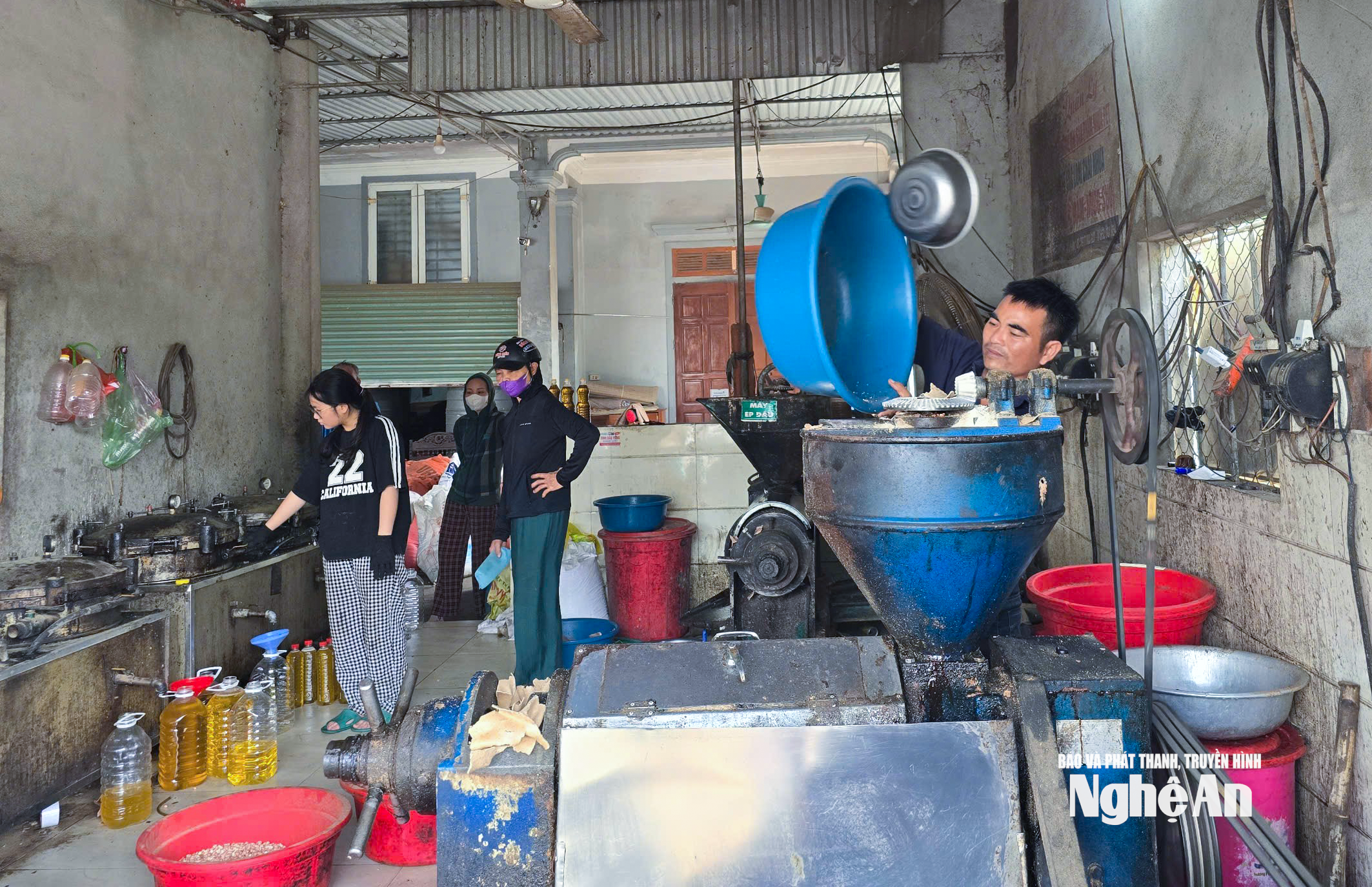
Recently, the demand for pressing peanut, sesame, and soybean oil has increased significantly in various localities. Some oil pressing facilities have had to work overtime and hire additional workers to meet the demand of the people.
"Many people bring peanuts to be pressed. Before, we only pressed for a few households in the area, selling the pressed peanuts and sesame seeds retail, but now, a large number of people bring peanuts, beans, and sesame seeds to be pressed. Some days we press 4-5 tons of raw materials for dozens of households, operating the machines from dawn until late at night. Normally, just the two of us work, but now we have to hire more workers to meet the demand," said Mr. Nguyen Huu Duong, owner of an oil pressing facility in Dong Loc commune (formerly Nghi Loc district).
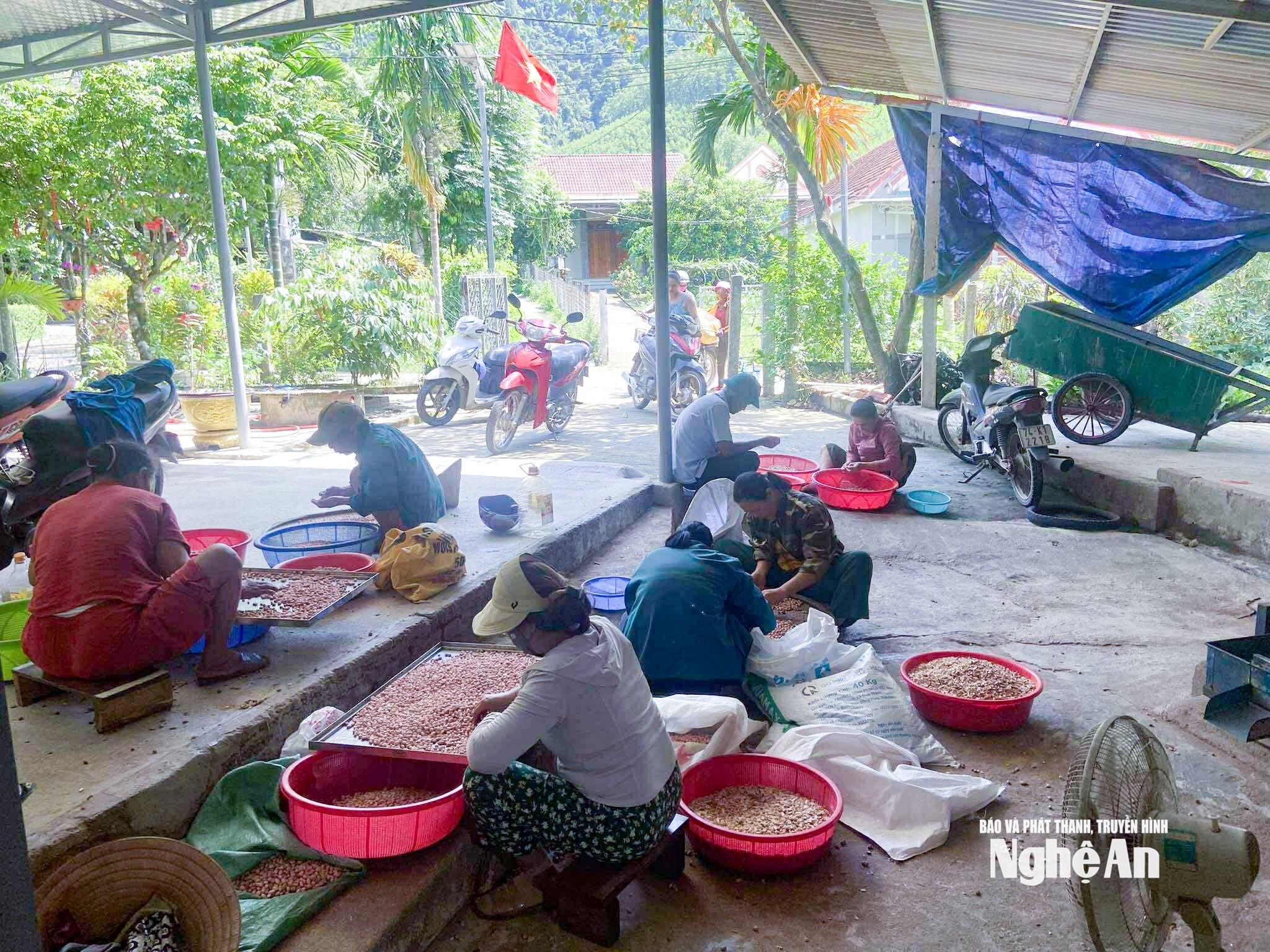
Having been involved in oil pressing for many years, Mr. Nguyen Hung (Thien Nhan commune) said that he had never witnessed such a high demand for on-site oil pressing from local people as in recent times.
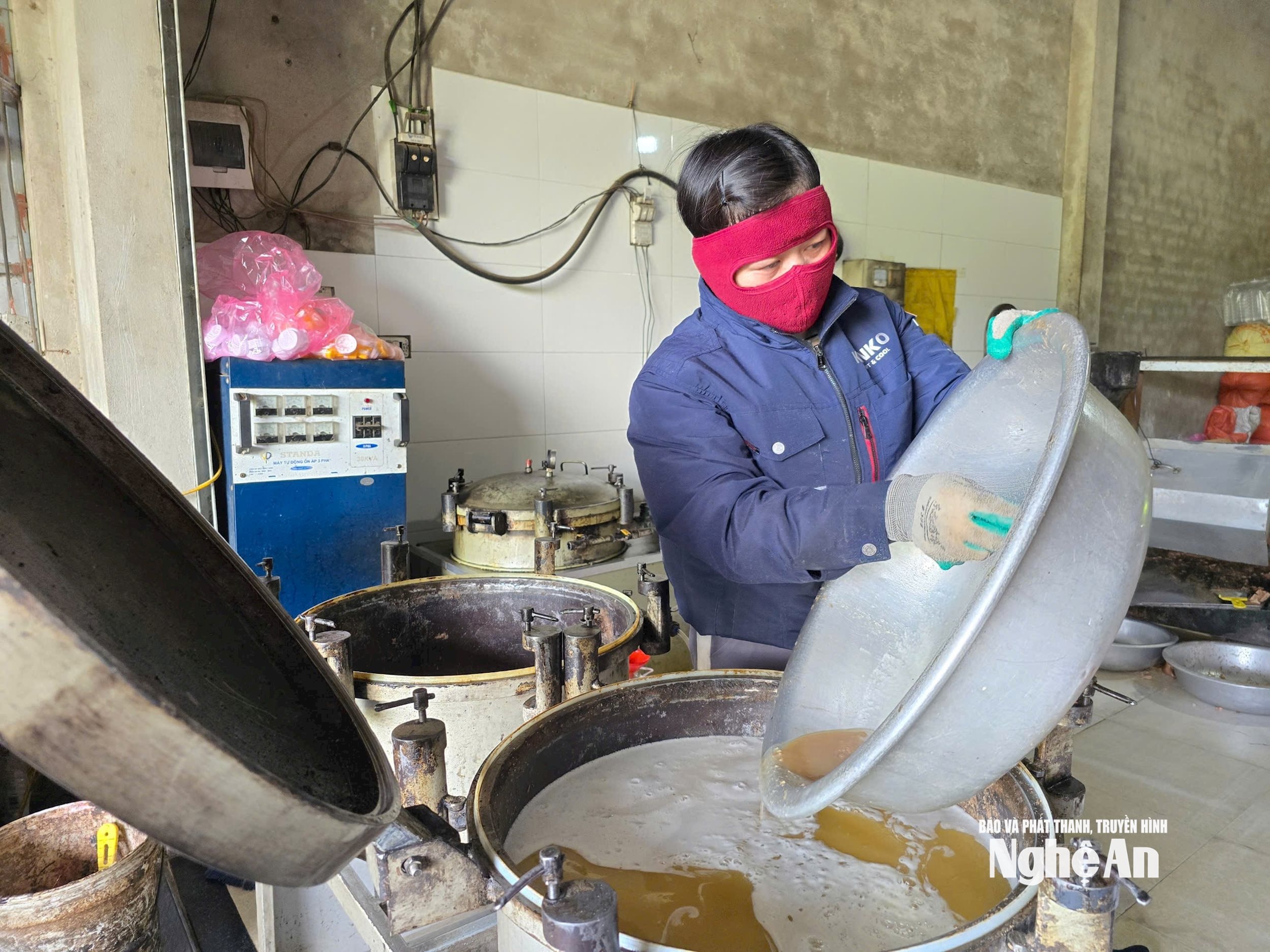
"Many households press large quantities to send to relatives far away. Our peanut oil product has been awarded the OCOP star rating, so it's very popular in the market, and many distributors place orders for retail. Therefore, these days, we have to work overtime frequently," Mr. Hung added.
According to the process, peanuts are sun-dried, then shelled, and any damaged or underdeveloped kernels are sorted before being put into the oil press. The oil, after pressing, is then passed through a compressed air filter to remove any impurities. According to surveys, the current price of peanut kernels is approximately 500,000 VND per 10 kg (10 kg), and each 10 kg of peanuts can yield about 5 liters of oil after pressing.
.jpg)
The price is therefore around 100,000 – 120,000 VND/liter, 2-3 times higher than commercially produced cooking oil (only 150,000–200,000 VND/5-liter can). Sesame oil is even more expensive than peanut oil, ranging from 200,000 – 220,000 VND/liter.
Another current "trend" is that many people are choosing to use lard in their daily cooking instead of refined cooking oil. Ms. Trinh Thi Hoa, a housewife in Dai Dong commune (formerly Thanh Chuong district), said: "Recently, when authorities discovered cases of counterfeit cooking oil, many consumers returned to using lard because they felt safer."
This trend has driven up the price of pork fat at local markets, currently ranging from 80,000 to 100,000 VND/kg. According to Ms. Kim Dung, a business owner specializing in processing pork fat in Vinh Phu ward (formerly Vinh City), previously, clean pork fat was mainly bought by mothers to prepare baby food, but now many families buy it for daily meals.
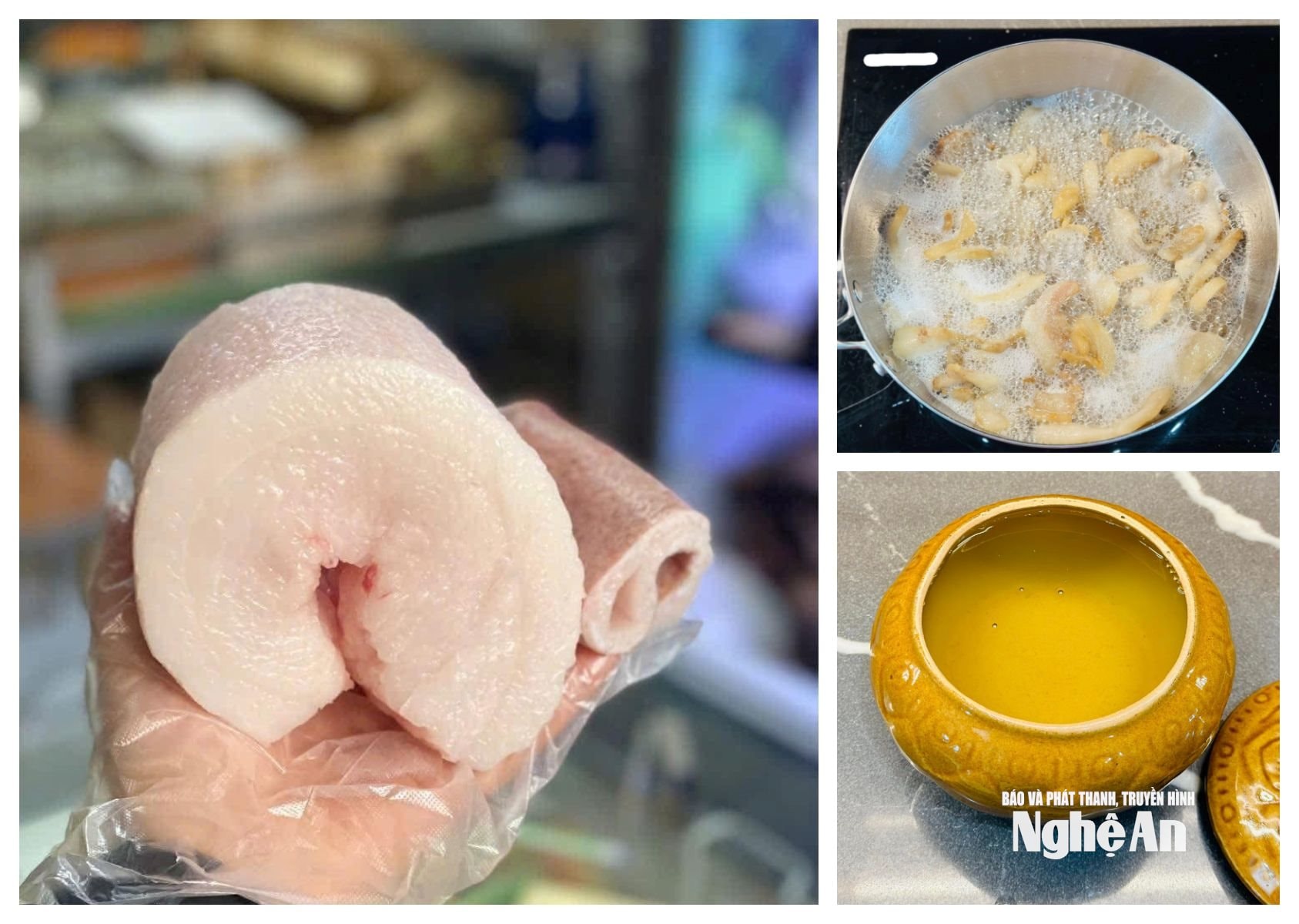
The trend of returning to traditional methods of pressing oil from peanuts, sesame seeds, and soybeans, or choosing lard for cooking, is spreading. However, consumers also need to be discerning in selecting ingredients, choosing reputable processing facilities, and understanding proper storage methods.


