
Many challenges arise from an aging population.
(Baonghean.vn) - Population aging profoundly impacts every aspect of individuals, communities, and the nation. This necessitates comprehensive social welfare and healthcare services for the elderly.
In Nghe An, caring for the elderly is one of the annual activities implemented by the Population Department for many years, despite many difficult conditions.
Pressure of old age
Although born in 1953, Mr. Phan Xuan Cuong and Mrs. Nguyen Thi Minh (Hamlet 7, Lien Thanh Commune, Yen Thanh District) look much older than their age. Mrs. Minh, in particular, suffers from chronic back pain and years of continuous manual labor, causing her back to become hunched and making walking extremely difficult. Despite their increasing age and declining health, the couple diligently work every day, tending their small garden, growing corn and beans, and raising pigs and chickens.
Ở xã Liên Thành, những trường hợp như vợ chồng ông Cường bà Minh không hiếm. Bởi lẽ, dù ông bà có 3 con đều đã trưởng thành, có gia đình riêng nhưng cuộc sống còn nhiều vất vả, phải đi làm ăn xa. Vì không muốn phụ thuộc con cháu, hai ông bà lại không có lương, đành cố gắng làm lụng để có tiền tự lo được cho bản thân và cũng đỡ đần được phần nào cho con cháu.
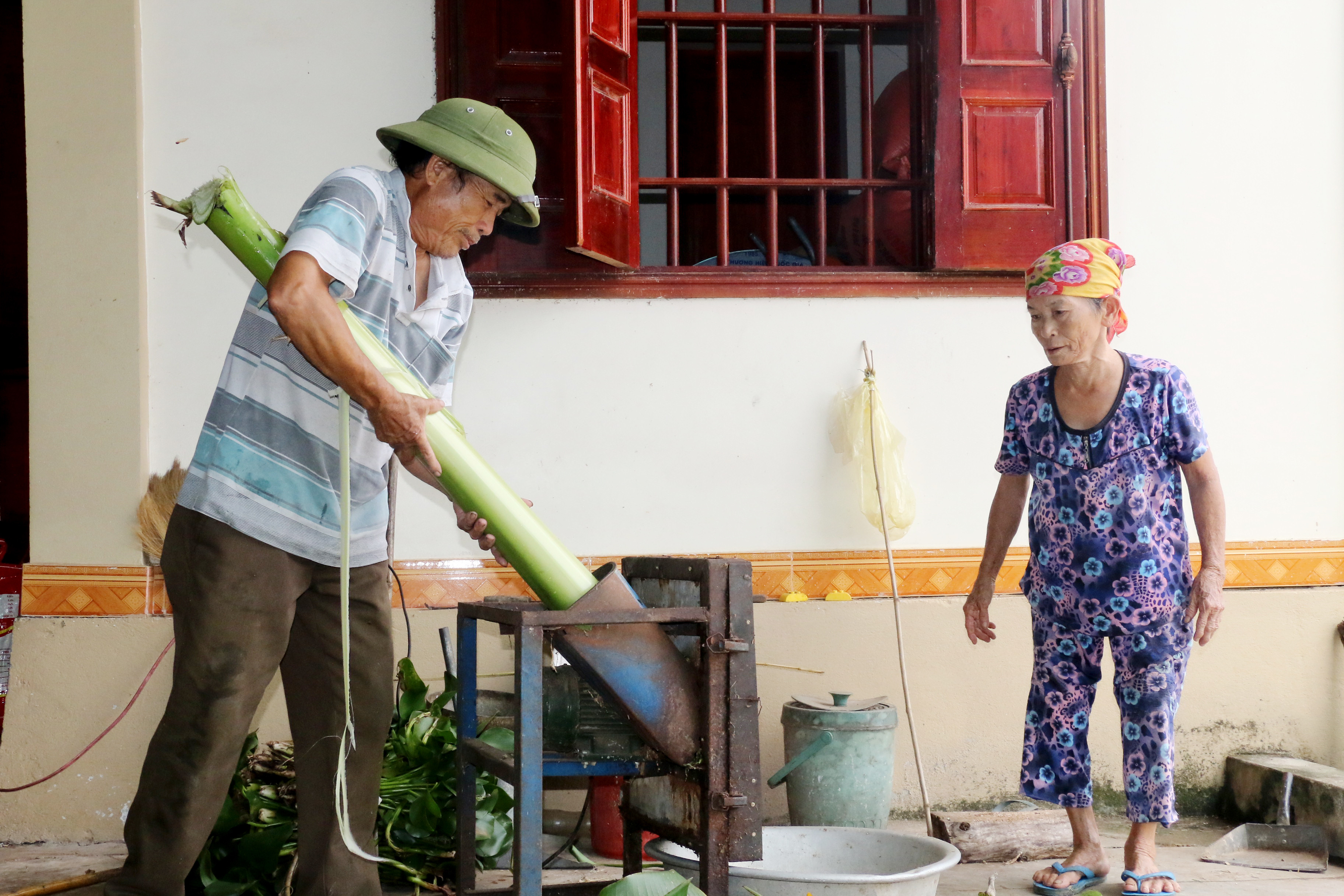
Nói về điều kiện hiện nay của gia đình, bà Minh tâm sự: “Vợ chồng chúng tôi làm nông, chắt bóp bấy nhiêu năm cũng chỉ đủ xây được ngôi nhà tươm tất cho các con có nơi về. Còn lại, bây giờ tuổi cao rồi nhưng chúng tôi không có tích lũy. Nay làm được đồng nào thì tiêu đồng ấy, cũng rất vất vả”.
Xã Liên Thành hiện có 1.385 hội viên hội người cao tuổi. Trong số này, có khoảng 60 người thuộc đối tượng người già neo đơn, khó khăn, bệnh tật. Số còn lại, chỉ 20% hội người cao tuổi là có lương. Không ít người cao tuổi, nay dù tuổi đã cao nhưng vẫn còn phải lo lắng đến việc chi phí sinh hoạt hàng ngày vì không muốn phụ thuộc vào con cháu.
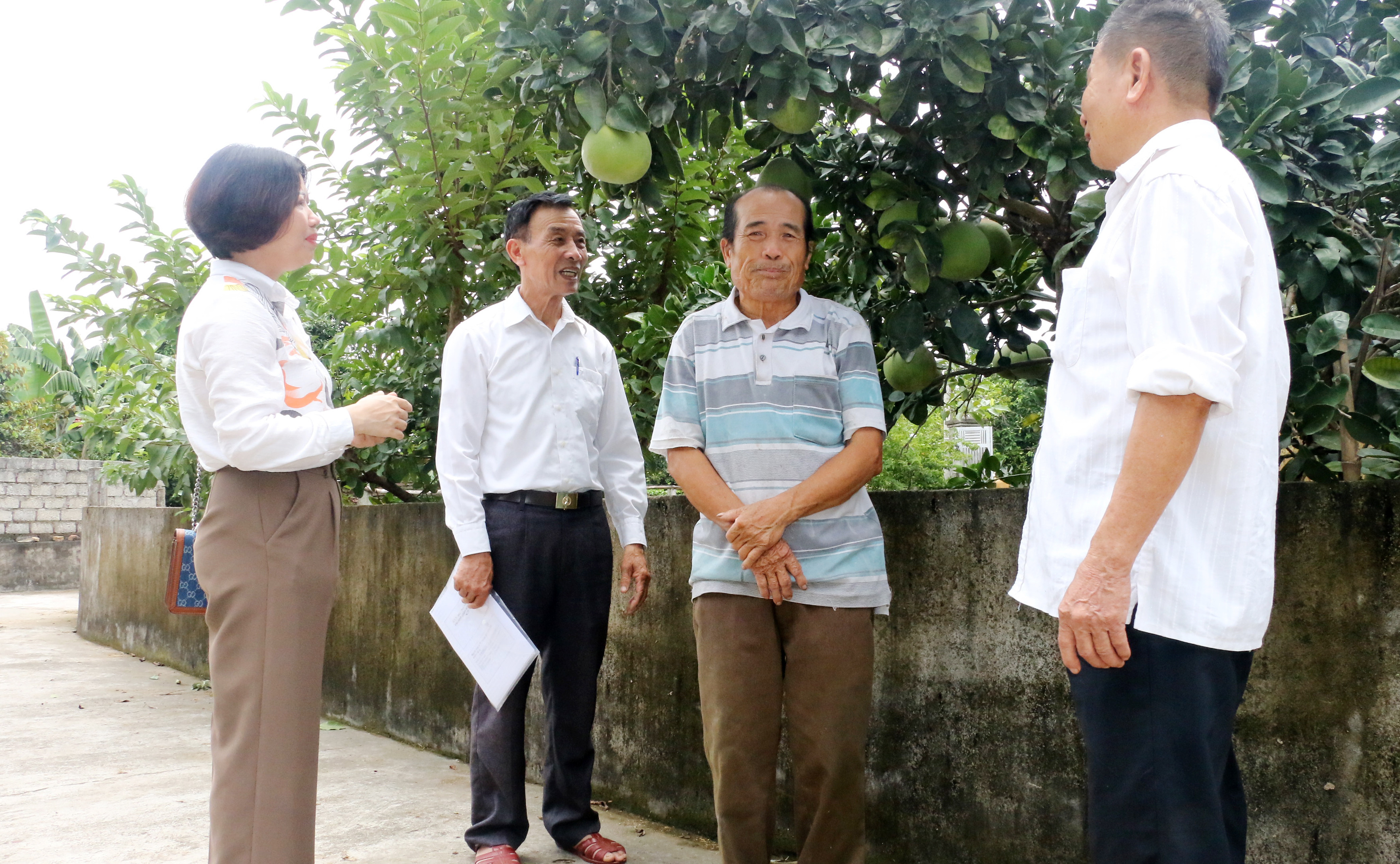
Ông Phạm Công Thúy – Chủ tịch Hội Người cao tuổi xã Liên Thành cho biết: “Hầu hết người cao tuổi ở xã chúng tôi đều phải sống phụ thuộc vào con cháu. Nếu con cháu có việc làm, có kinh tế thì cuộc sống đỡ vất vả. Còn lại nhiều người vẫn phải mưu sinh hàng ngày. Những năm qua, ở xã cũng đã thành lập câu lạc bộ liên thế hệ, mô hình bà nội, bà ngoại với mục đích tập hợp hội viên để chăm lo giúp đỡ nhất là trong phát triển kinh tế.
Tuy nhiên, hội viên tham gia các câu lạc bộ chưa nhiều, kinh phí cũng hạn hữu nên số người được vay vốn phát triển kinh tế còn rất khiêm tốn, với mỗi lần vay chỉ từ 10 – 20 triệu đồng. Trong khi đó, theo quy định, người cao tuổi nếu trên 60 tuổi là không được vay vốn phát triển kinh tế của các chương trình dự án, của Ngân hàng Chính sách xã hội, nên họ rất khó khăn để mở rộng sản xuất, làm chủ cuộc sống”.
Tại huyện Tân Kỳ, qua trao đổi, ông Hồ Minh Hà – Trưởng phòng Truyền thông Dân số - KHHGĐ, Trung tâm Y tế huyện cho biết: “Hiện nay, tỷ lệ già hóa dân số ở Tân Kỳ là 12,6%, vượt mức dân số già (10%). Điều này, là thách thức không nhỏ cho công tác chăm sóc người cao tuổi, nhất là áp lực về xã hội (hệ thống y tế chăm sóc người cao tuổi), về gia đình (khó khăn nhất là về kinh tế). Hầu như người cao tuổi hiện nay đều phụ thuộc vào con cái và chưa có điều kiện được chăm sóc đầy đủ.
Therefore, only about 40% of elderly people are healthy enough to participate in the workforce, while the rest have health problems. Another concern we have is that currently, the percentage of elderly people in the district receiving pensions is very low, only 1%.”
Difficulties and challenges
The 21st century is known as the century of population aging. Globally, calculations show that between 2000 and 2050, the proportion of the population over 60 years old will double from 11% to 22%. In recent years, Vietnam has also followed this trend of population aging.
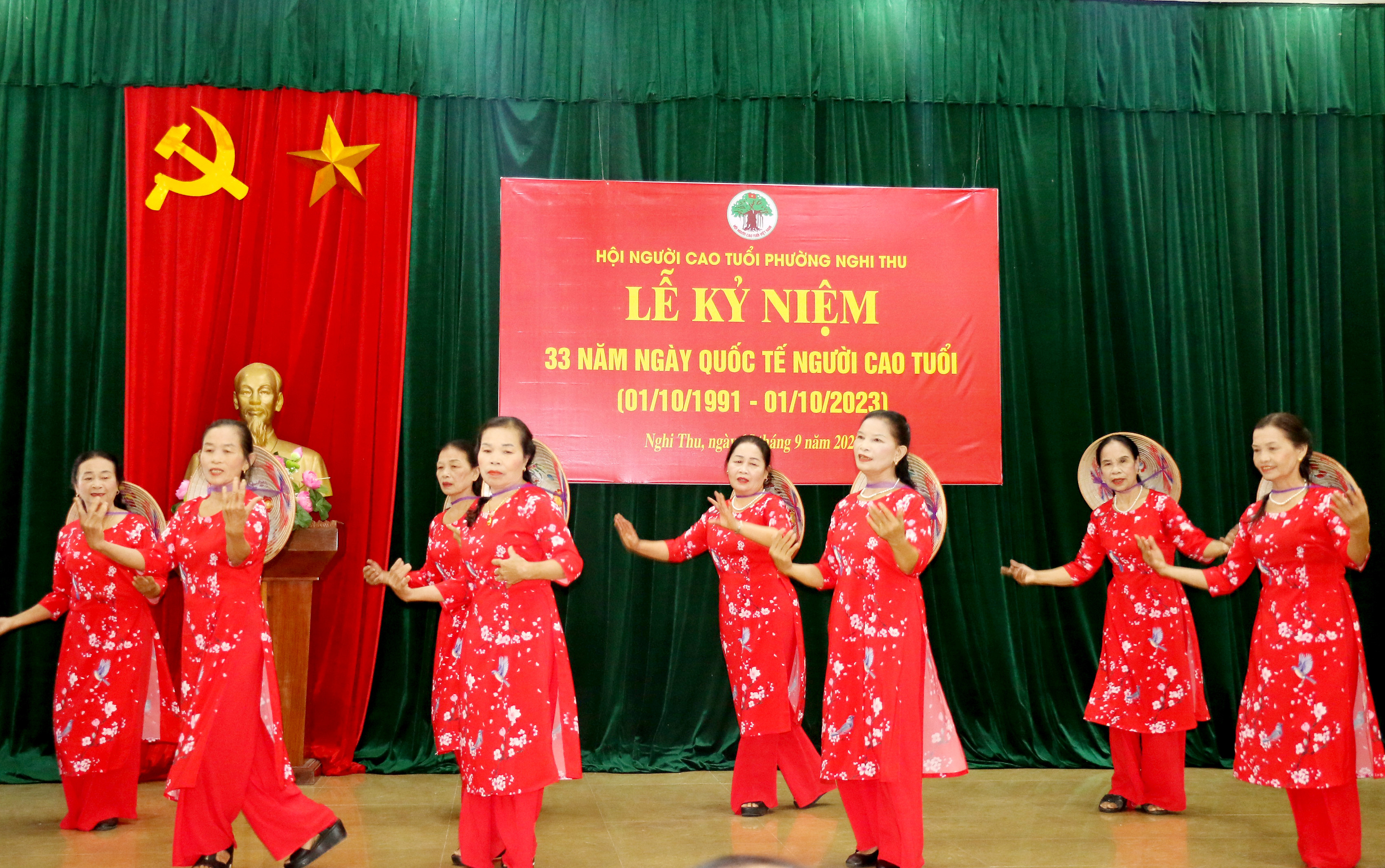
Specifically, since 2011, the proportion of the population over 60 years old has reached 9.9%, and Vietnam has officially entered the stage of population aging. More than 10 years later, according to data from the General Statistics Office in 2022, Vietnam has approximately 11.86 million elderly people (60 years and older), accounting for 12% of the population. With this growth rate, it is projected that Vietnam will become a very old country by 2038, with the proportion of people aged 60 and over reaching 20.1%, and by 2049 accounting for about 25% of the population, meaning that for every four people, one is elderly.
Regarding the issue of population aging in Vietnam, Mr. Nguyen Xuan Truong – Director of the Department of Population Structure and Quality, General Department of Population and Family Planning, stated that: Along with rapid aging, population aging in Vietnam has its own unique characteristics. These include a trend towards feminization in the elderly, with an increasing rate of widowhood and the number of elderly people living alone.
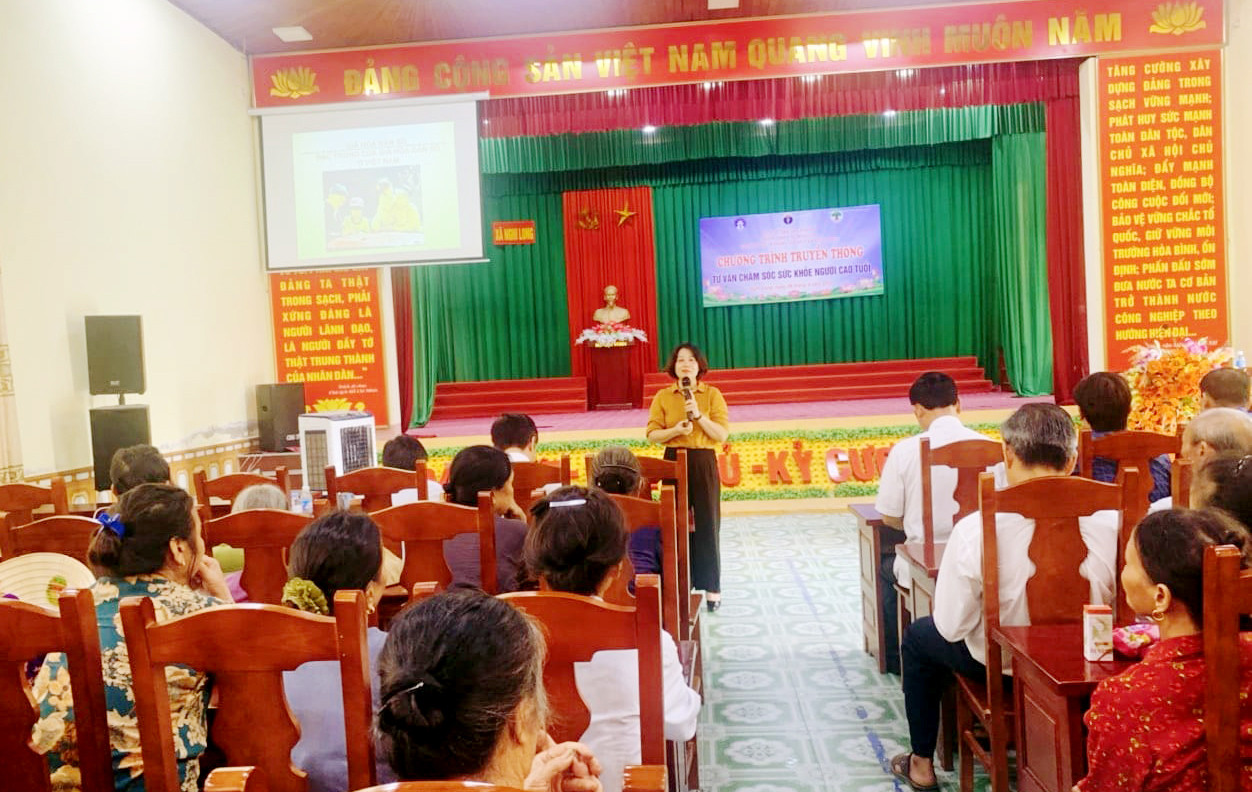
It is concerning that the material living conditions of elderly people in Vietnam are still difficult, with 68% of them living in rural areas, being farmers and engaged in agriculture. The health of elderly people in Vietnam is also limited, facing a double burden of disease; on average, each elderly person suffers from three illnesses. Meanwhile, the healthcare system has not yet met the increasing needs of the elderly.
Given the increasing population aging, Nghe An province has paid special attention to healthcare for the elderly in recent years. Specifically, the Population Department, in accordance with Plan No. 427/KH-UBND dated July 30, 2021, on "Implementing the program for healthcare of the elderly in Nghe An province until 2030," has implemented numerous programs. Accordingly, the Population and Family Planning Sub-Department annually organizes the "Happy and Healthy Living for the Elderly" competition, which has received attention from the Party Committee and government, attracting a large number of elderly participants.
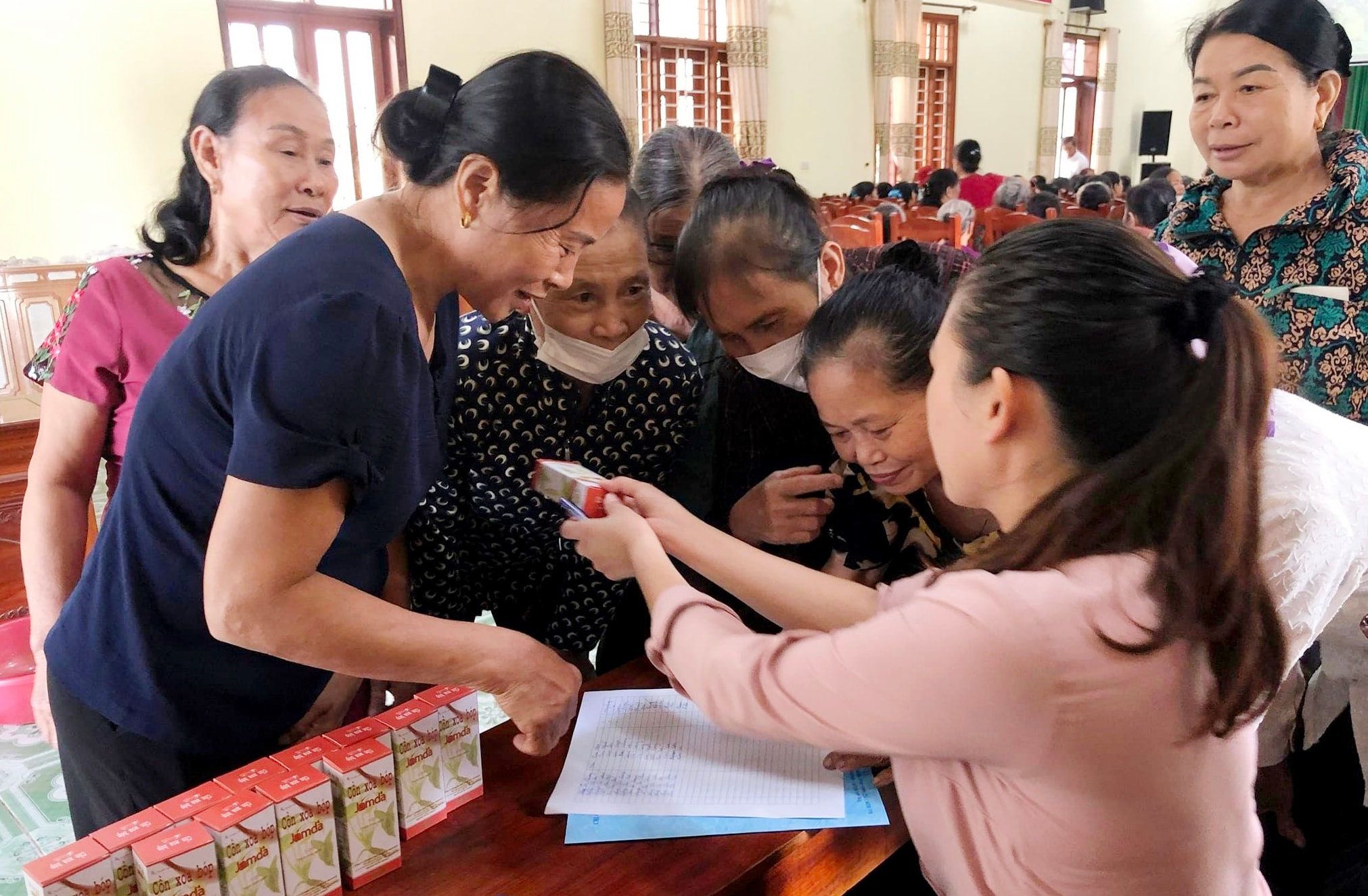
The sector has also organized dozens of communication and health care consultation sessions for the elderly in the area, communicating about population aging and promoting the role of the elderly. These sessions focused on topics such as: providing information and advice on proper nutrition and exercise for the elderly; guidance on maintaining hygiene and health for the elderly; common diseases among the elderly and how to prevent them… During these programs, the elderly also received direct consultations, had their questions answered regarding health and old age, and received free medication.
However, in this contextpopulation agingWith the pace of development accelerating and the resources for implementation remaining limited, this remains a challenging task.
Discussing this issue, Mr. Nguyen Ba Tan, Head of the Population and Family Planning Department, added: “In Nghe An, the biggest difficulty currently is the limited and inconsistent provision of community-based healthcare. Medical examinations and treatment for the elderly are still not given sufficient attention. Meanwhile, the social security system has not developed comprehensively. Providing knowledge and skills for healthcare, as well as material and spiritual support, to the elderly has not received adequate attention, both in terms of awareness campaigns, training, and direct care. Therefore, the rights of the elderly are not guaranteed as stipulated. In addition, funding for these activities is extremely limited, mainly used for awareness campaigns and fundraising, leaving little room for supporting the provision of specialized medical equipment for the elderly.”
These challenges also require coordinated efforts from the provincial to the grassroots level. This will highlight the responsibility of the government and relevant departments in implementing policies and laws regarding the elderly, ensuring that the elderly receive comprehensive care in terms of health, social support, living conditions, and culture.


