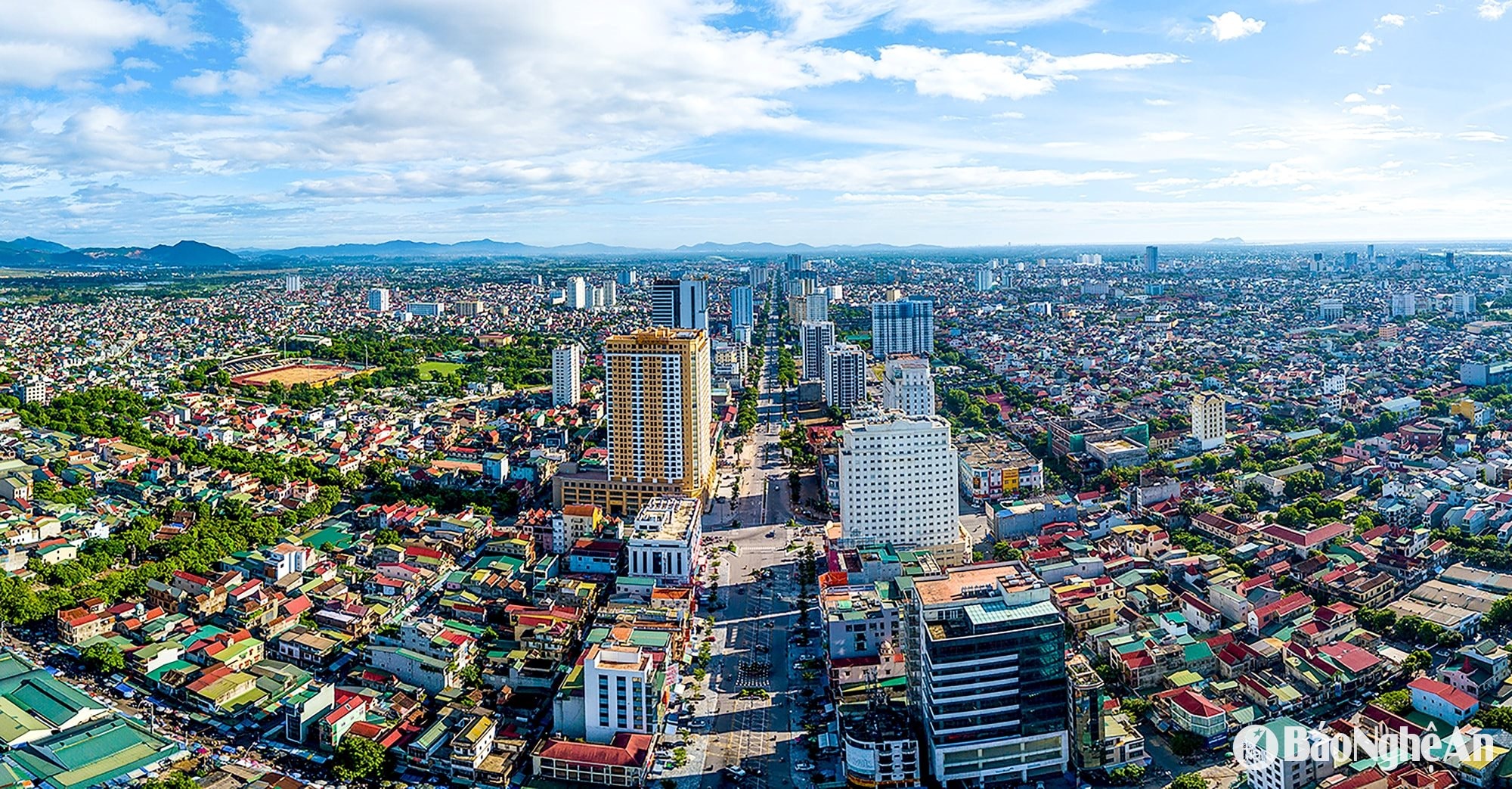
A bridge of renewed faith and motivation.
Fifty years ago, under an agreement between the Vietnamese Government and the German Democratic Republic, hundreds of German experts came to Nghe An to help rebuild Vinh city from the ruins left by American bombs. Today, German managers, experts, and businesses are once again coming to Nghe An to cooperate in improving vocational training and creating jobs for young workers.

Nguyen Mai LinhMarch 28, 2025
Fifty years ago, under an agreement between the Vietnamese Government and the German Democratic Republic, hundreds of German experts came to Nghe An to help rebuild Vinh city from the ruins of American bombs. Today, German managers, experts, and businesses are once again coming to Nghe An to cooperate in improving vocational training, creating jobs for young workers, and contributing to providing human resources for several German states and businesses. The bridge between the cherished past and the bright future is being rebuilt with renewed faith and motivation.
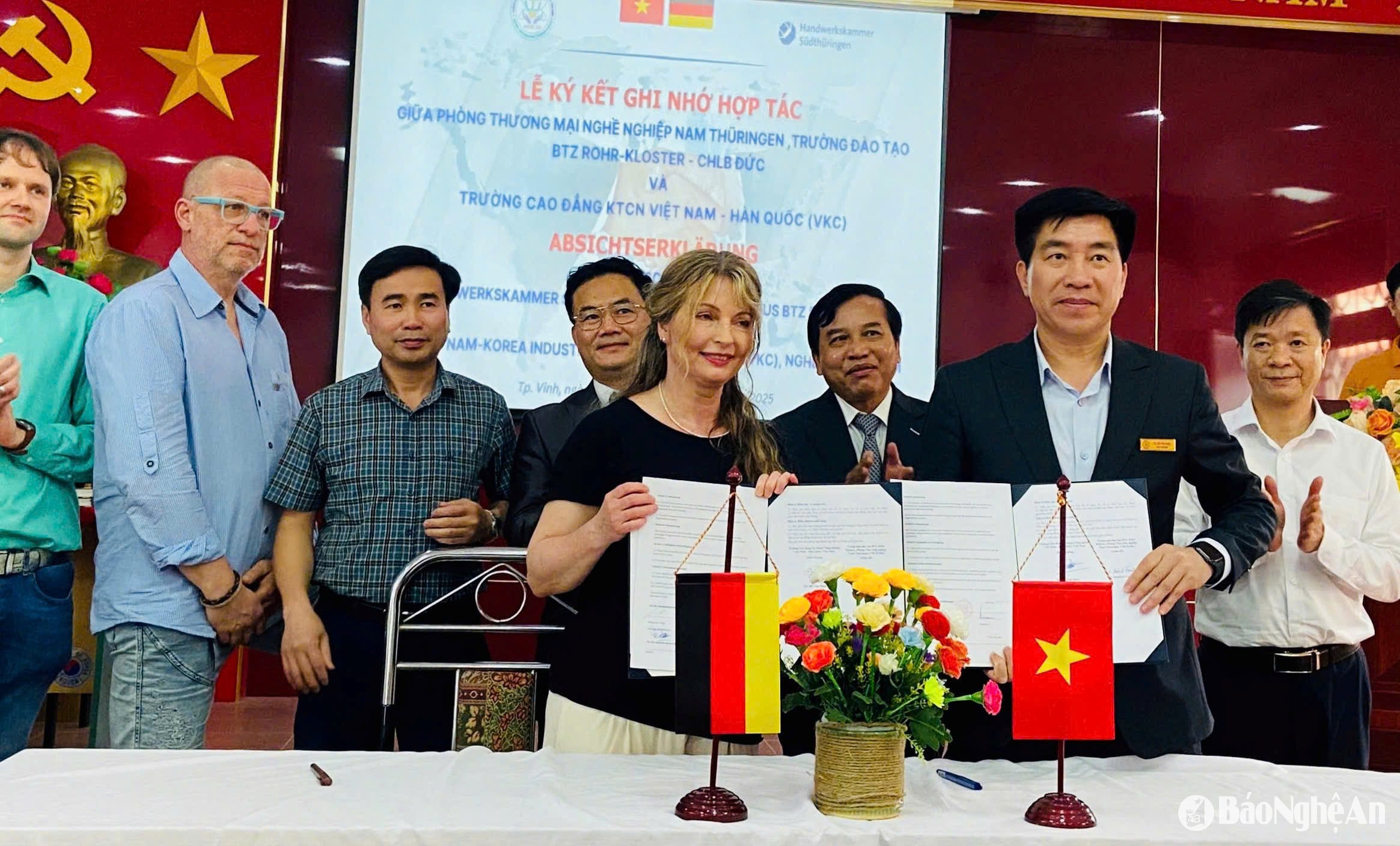
Following the working visit of Comrade Thai Thanh Quy - then Secretary of the Nghe An Provincial Party Committee - and the Nghe An provincial delegation to the Federal Republic of Germany in June 2024, through the connection between the two sides, on the afternoon of March 26, 2025, in Vinh City, the International Relations Office of Handicrafts of the State of Thuringia, represented by Ms. Friedrich, and the BTZ Rohr-Kloster Training School, represented by Mr. Manfred Tietze, along with leaders of several businesses in Erfurt, Federal Republic of Germany, visited the Vietnam-Korea College of Economics and Industry (CĐKTCN).
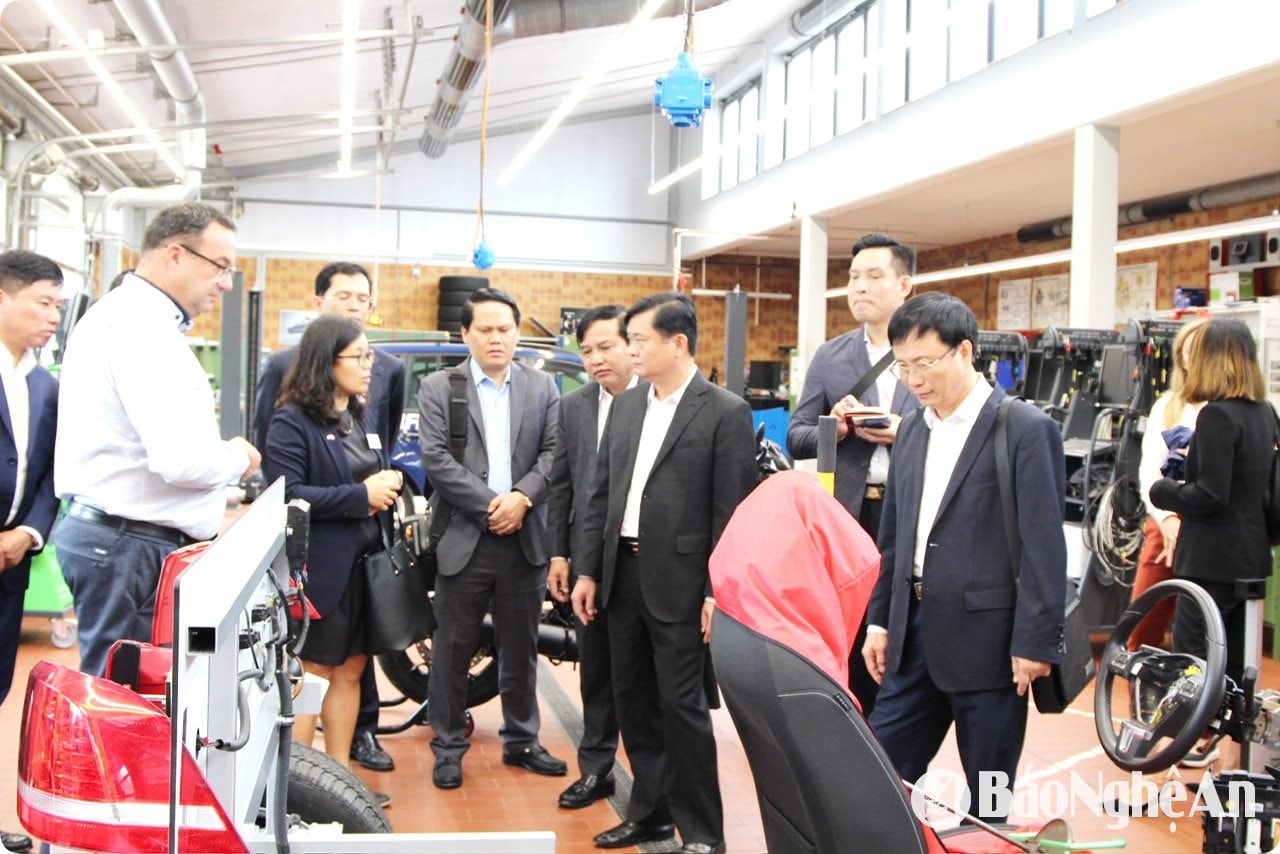
This activity is the result of the visit and working trip of the leaders of Nghe An province to the Federal Republic of Germany in June 2024. Nearly a year later, in Nghe An, the two sides discussed and signed a Memorandum of Understanding on cooperation in teacher and student training, improving the quality of vocational training; and solutions to facilitate access to the labor market in Thuringia, Germany, for students of the Vietnam-Korea College of Technology.

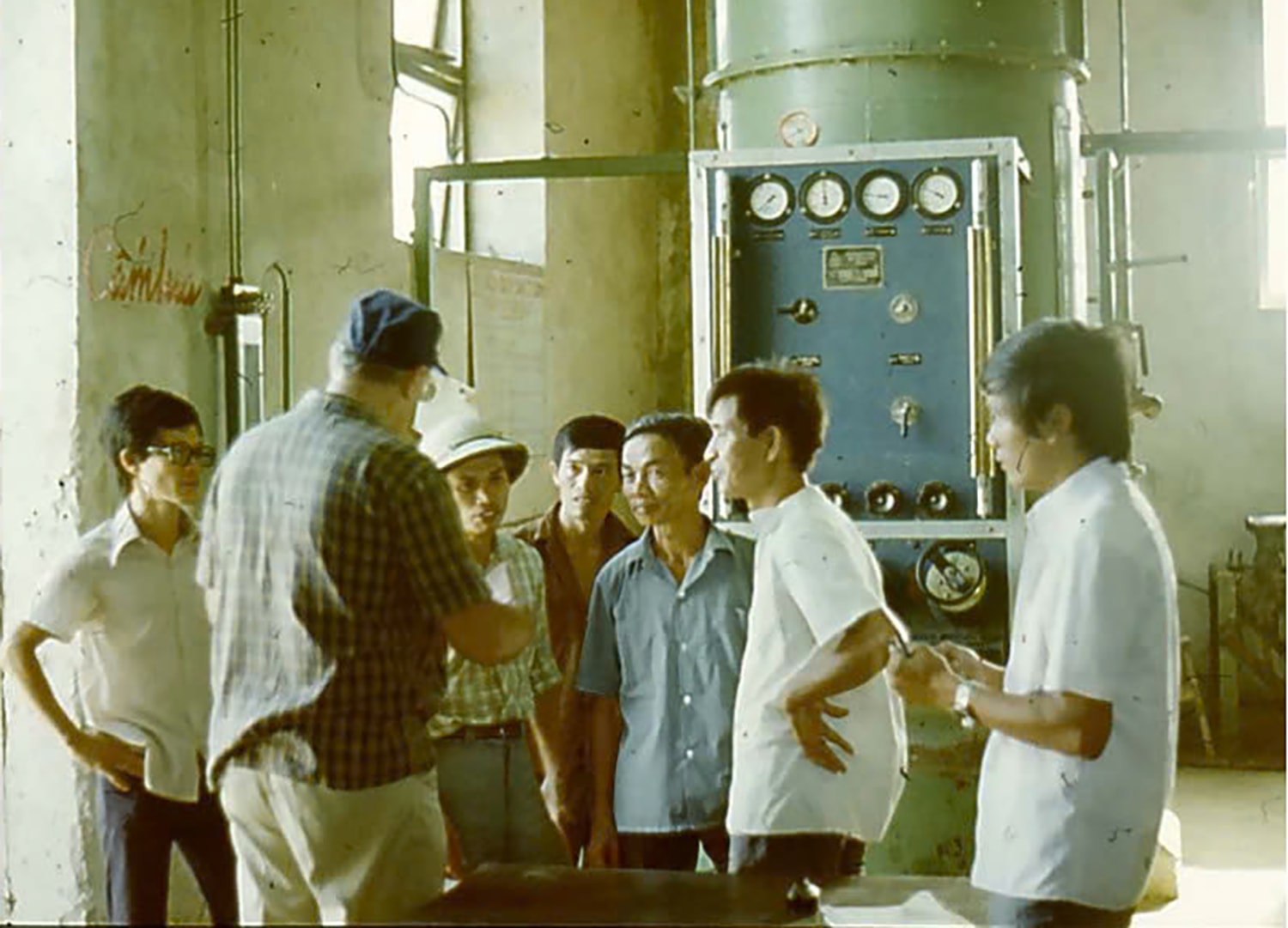
More than 50 years ago, on October 22, 1973, the Government of the German Democratic Republic signed an agreement with the Government of Vietnam on the construction of Vinh City, while the Vietnamese people's struggle against American imperialism was still ongoing. According to this agreement, from 1974 to 1980, 213 German officials and experts came to Nghe An to help with the overall planning of Vinh City, organize training for officials and technical workers; and assist in the design and reconstruction of Vinh City and some surrounding areas. Twenty-nine projects were built during this period, including cement factories, brick factories, construction machinery factories, vocational training centers, commercial centers, and especially the 21 multi-story buildings on Quang Trung Street with over 1,500 modern apartments – the most modern in North Vietnam at that time.
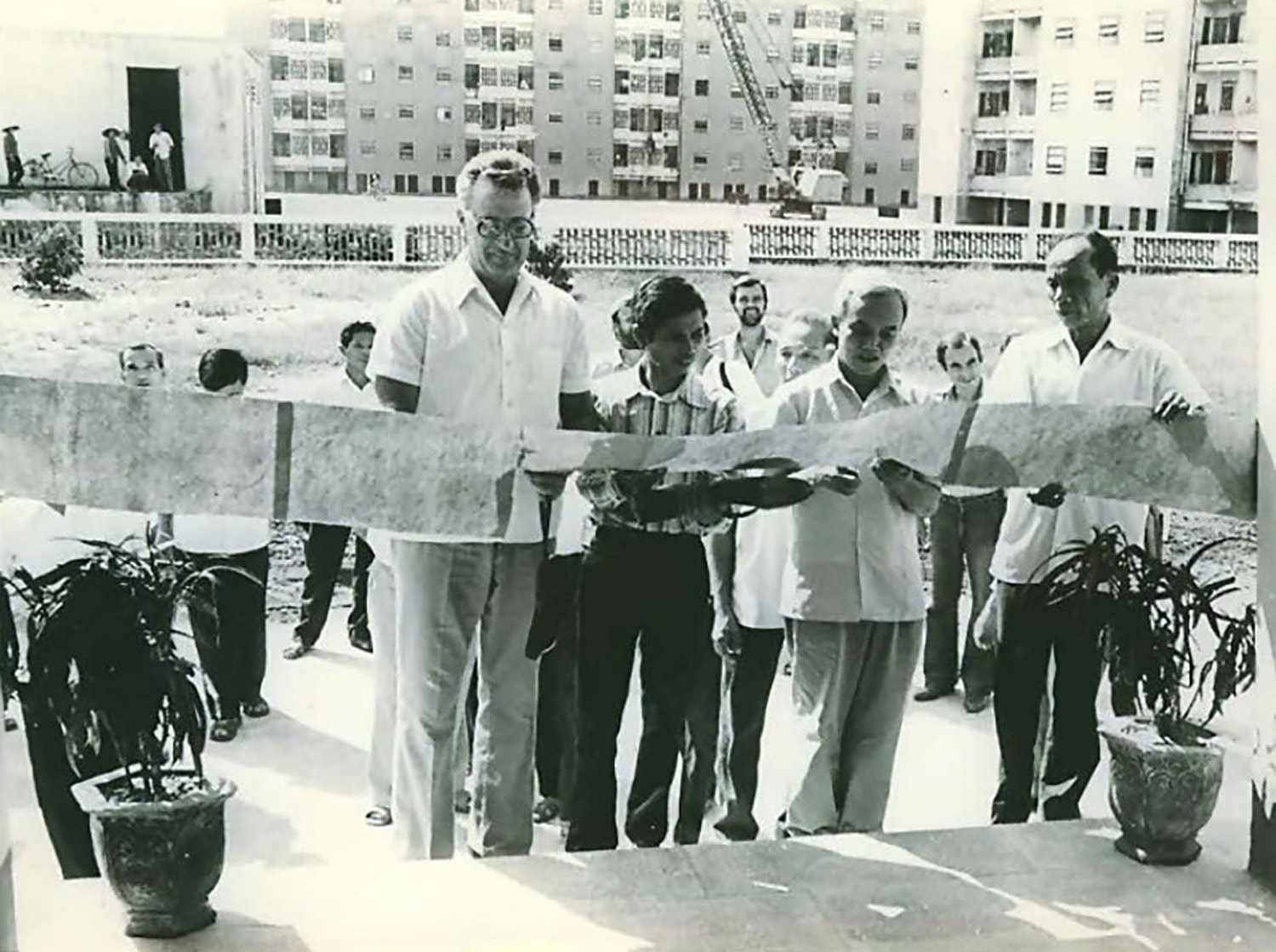
It is difficult to recount all the hardships and sacrifices of the German experts. It is also difficult to quantify the amount of machinery, equipment, and money that the German people and government dedicated to Nghe An province in rebuilding Vinh city from the ruins left by American bombs. However, what remains in the hearts of the people of Vinh city and Nghe An province is gratitude to their German friends, and gratitude to the country and people of Germany. The beautiful, modern, and well-developed appearance of Vinh city today is a result of the planning and architecture provided with the assistance of those German experts from that time.

In Nghe An province, there are currently 49 vocational training institutions, with a trained workforce rate of 70.1%. However, a current limitation is that the quality of training in many institutions does not meet the needs of the labor market. The main reasons are that the facilities and equipment used for training are largely outdated, and the teaching staff does not meet the increasingly high demands of the labor market.
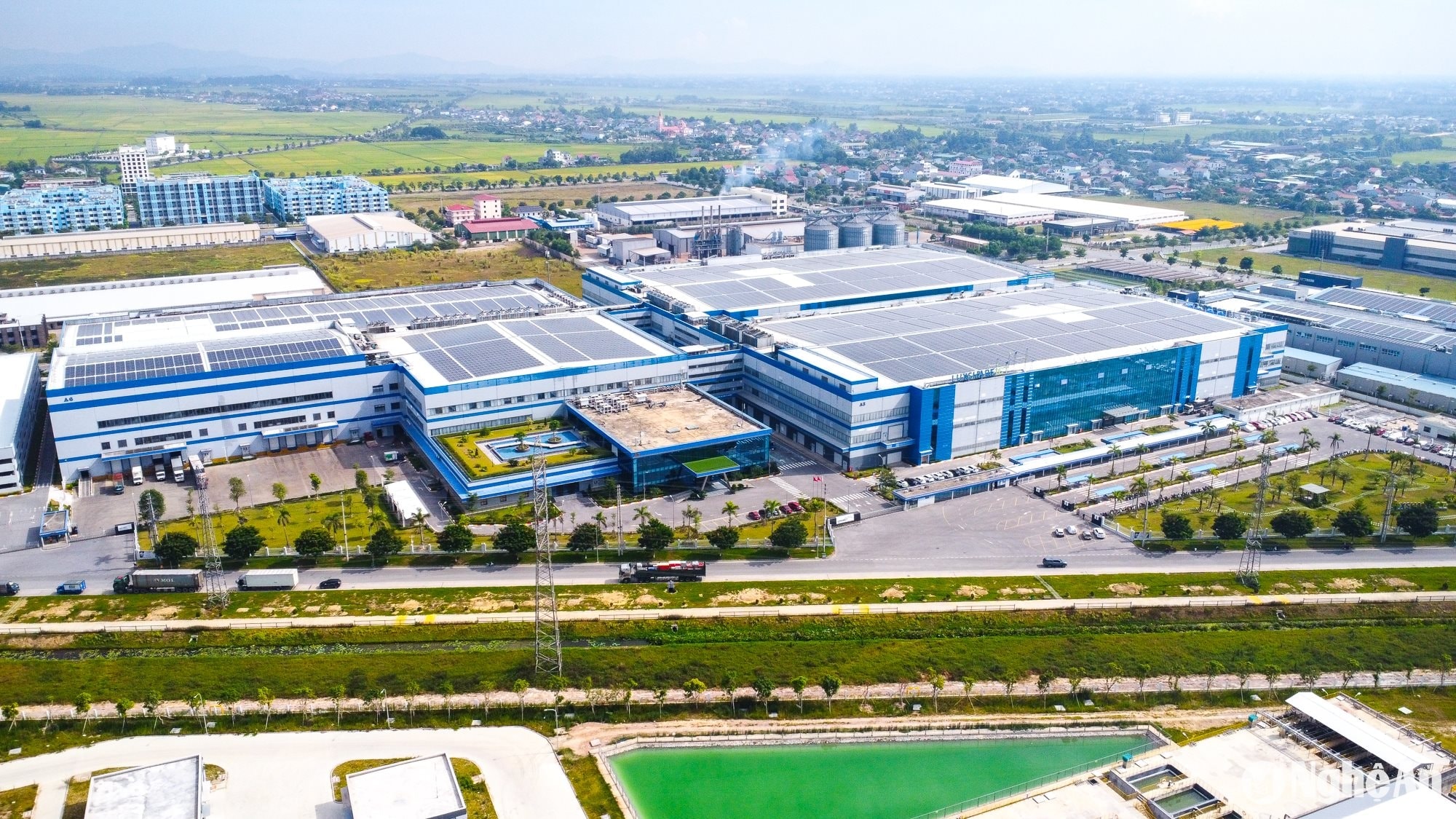
In 2024, Nghe An's economic growth rate reached 9.01%, ranking 13th nationwide. Foreign direct investment (FDI) attracted $1.7 million. To date, the province has 147 active FDI projects with a total registered capital of $5.1 billion. However, the province is also facing difficulties, especially regarding the quality of its workforce. A representative from the VSIP Industrial Park stated that VSIP 1 currently lacks over 20,000 workers, and recruiting enough is proving difficult. When VSIP 2 becomes operational, it will require 100,000 to 150,000 skilled workers. This is also a common situation for the WHA Industrial Park, Hoang Mai Industrial Park, and other businesses in the province.
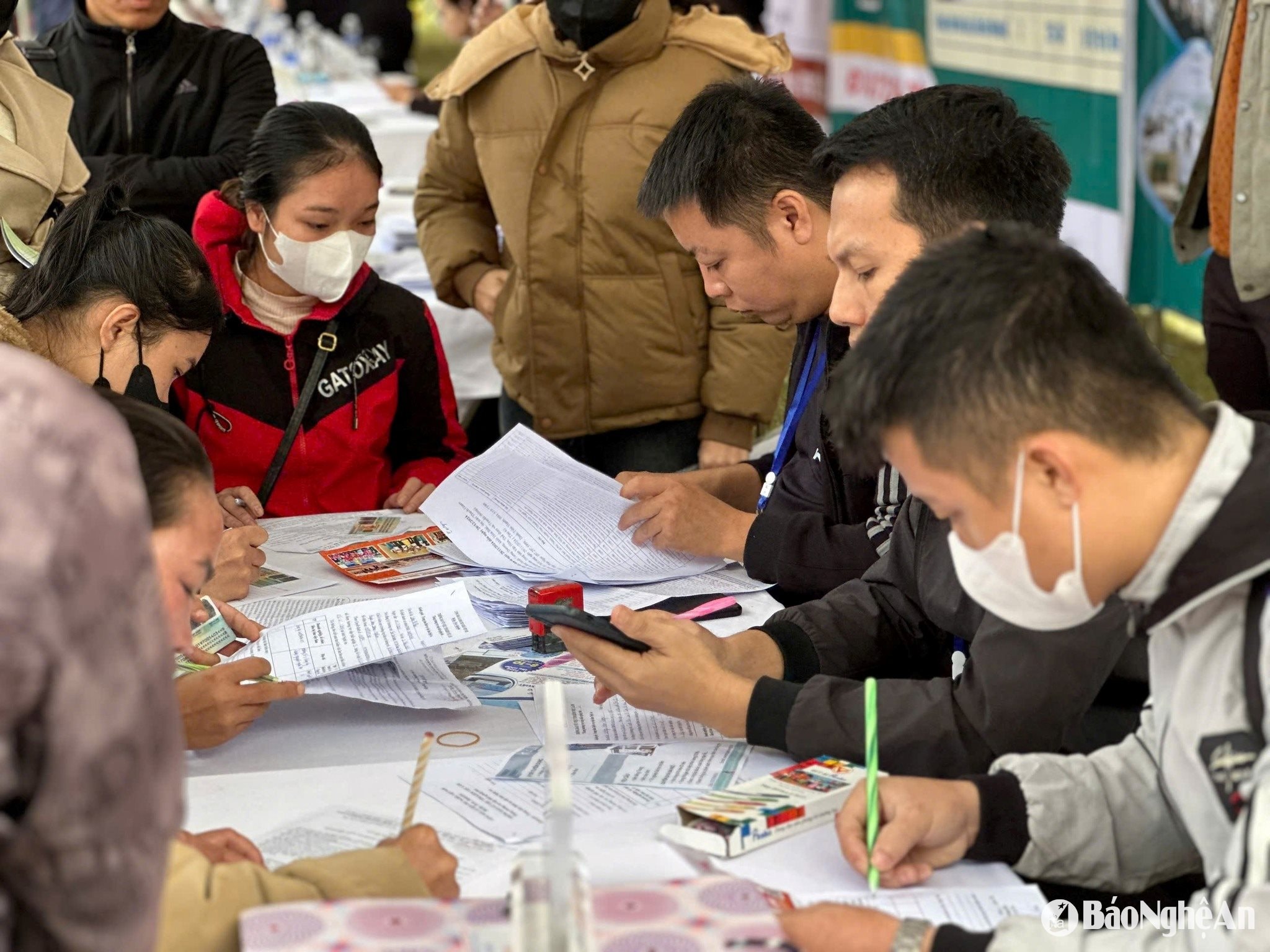
According to a recent report from the Department of Labor, War Invalids and Social Affairs of Nghe An province, from 2020 to 2024, more than 23,000 workers from Nghe An went to work abroad under contract each year; the amount of money sent back home annually is estimated at 350 million USD. Besides the positive aspects, the Nghe An labor market is facing some challenges and difficulties, such as: the proportion of highly skilled workers is still low; the quality and productivity of labor are still low compared to many countries in the region; the situation of workers absconding before their contracts expire and residing illegally in host countries remains high, negatively impacting the overseas labor market in general. This is one of the shortcomings and a bottleneck for the development of Nghe An in the new era.

The working session and cooperation agreement between the Southern Thuringia Chamber of Commerce and Industry, the BTZ Rohr-Kloste Training School, and the Vietnam-Korea College of Technology addressed specific issues: Training and updating the knowledge and skills of teachers; innovating and developing the content and fields of training at the Vietnam-Korea College of Technology to meet the needs of the German and international labor markets. Along with improving the quality of the workforce from the initial stages domestically, both sides will promote the exchange of students and experts. A number of students from the Vietnam-Korea College of Technology will be sent to Germany for further training in phase 2; using a work-study method to both improve practical skills and earn sufficient income to cover their expenses during their studies. Upon completion of the training, these students will be employed in production and business establishments in Thuringia.
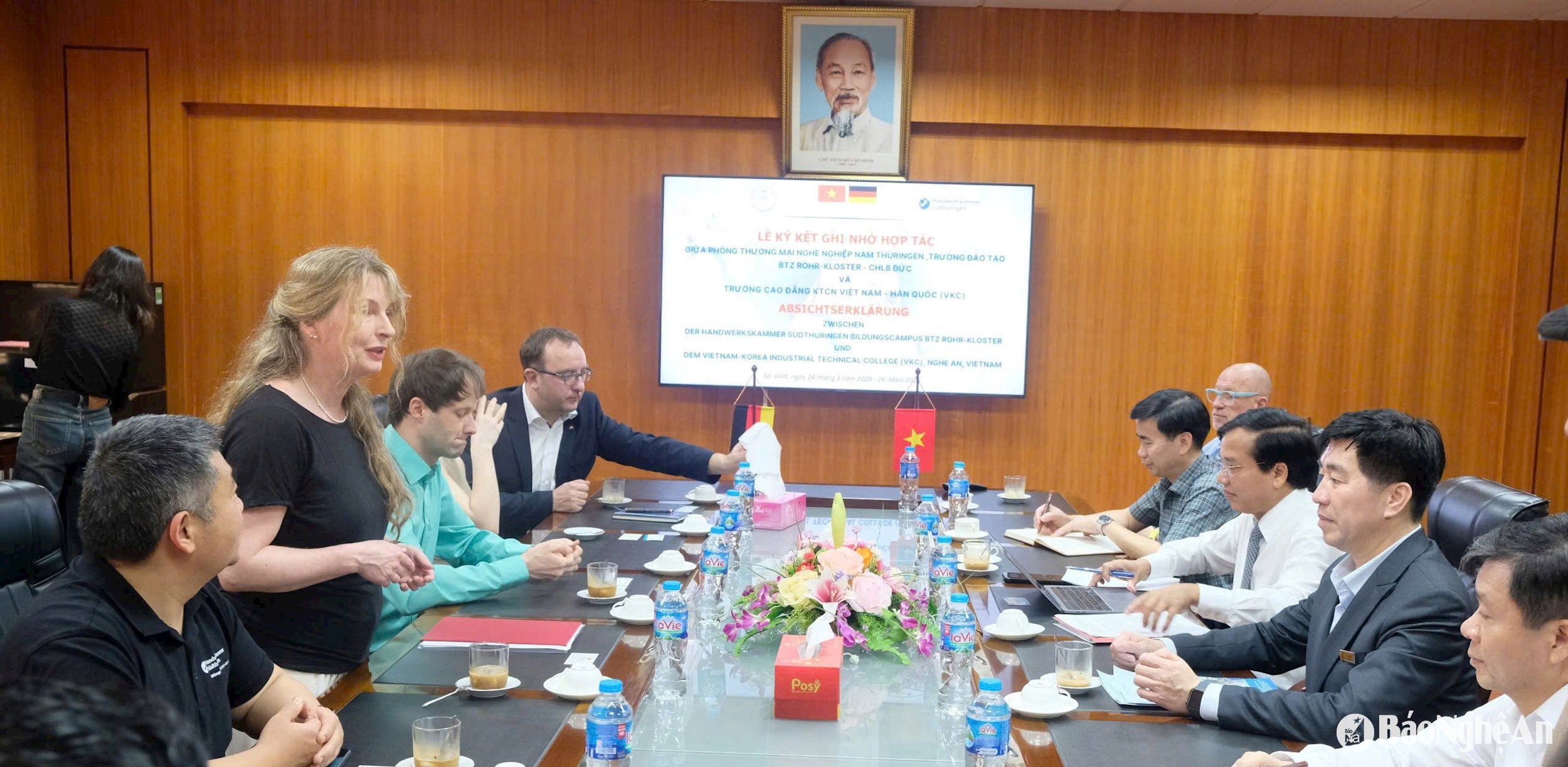
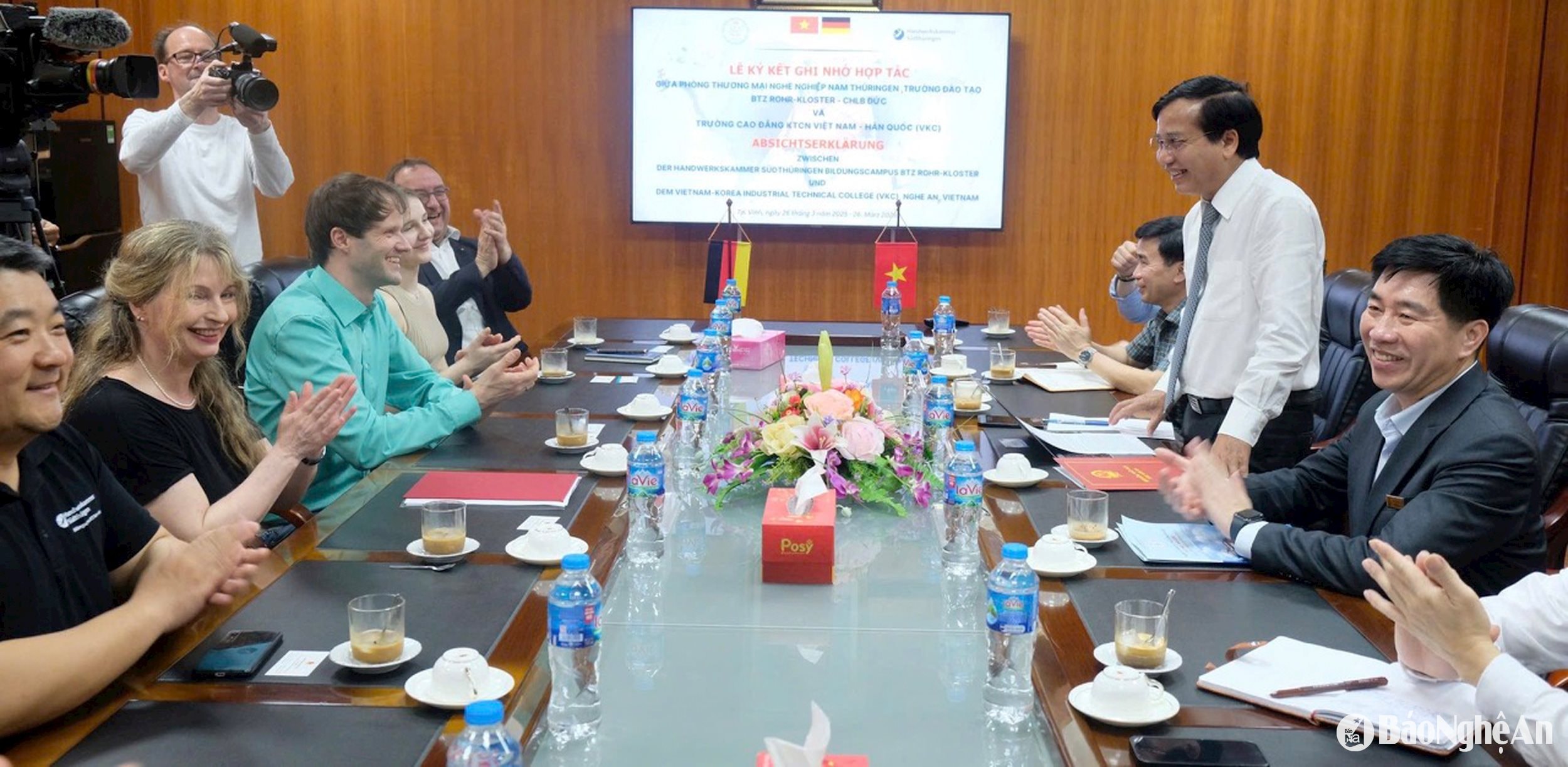
During a recent working trip, the leaders of Nghe An province directly worked with several German associations and businesses, as well as the Vietnamese Embassy in Berlin. They were informed that Germany currently faces a shortage of over 600,000 workers annually, particularly in core technology, engineering, construction, and nursing sectors. During the meeting with the provincial leaders and the Vietnam-Korea College of Technology, Ms. Friedrich, Head of International Relations for Handicrafts in the State of Thuringia, representing 6,300 businesses in Thuringia, expressed her interest in Vietnamese labor. She stated that German leading technology companies are very interested in Vietnamese labor. With the human resources and teaching systems of several training institutions in Nghe An, such as the Vietnam-Korea College of Technology, combined with Germany's vocational training capabilities, cooperation between the two sides will produce high-quality human resources to meet the needs of the domestic and international labor markets, especially in the mechatronics and automotive technology sectors in Germany.
Mr. Vo Trong Tho, Director of Kaiser & Vo GROUP in Erfurt, acting as the facilitator for this cooperation program, pledged that his company and its partners in Erfurt have the full capacity and experience to support the legal procedures on the German side for this cooperation program.
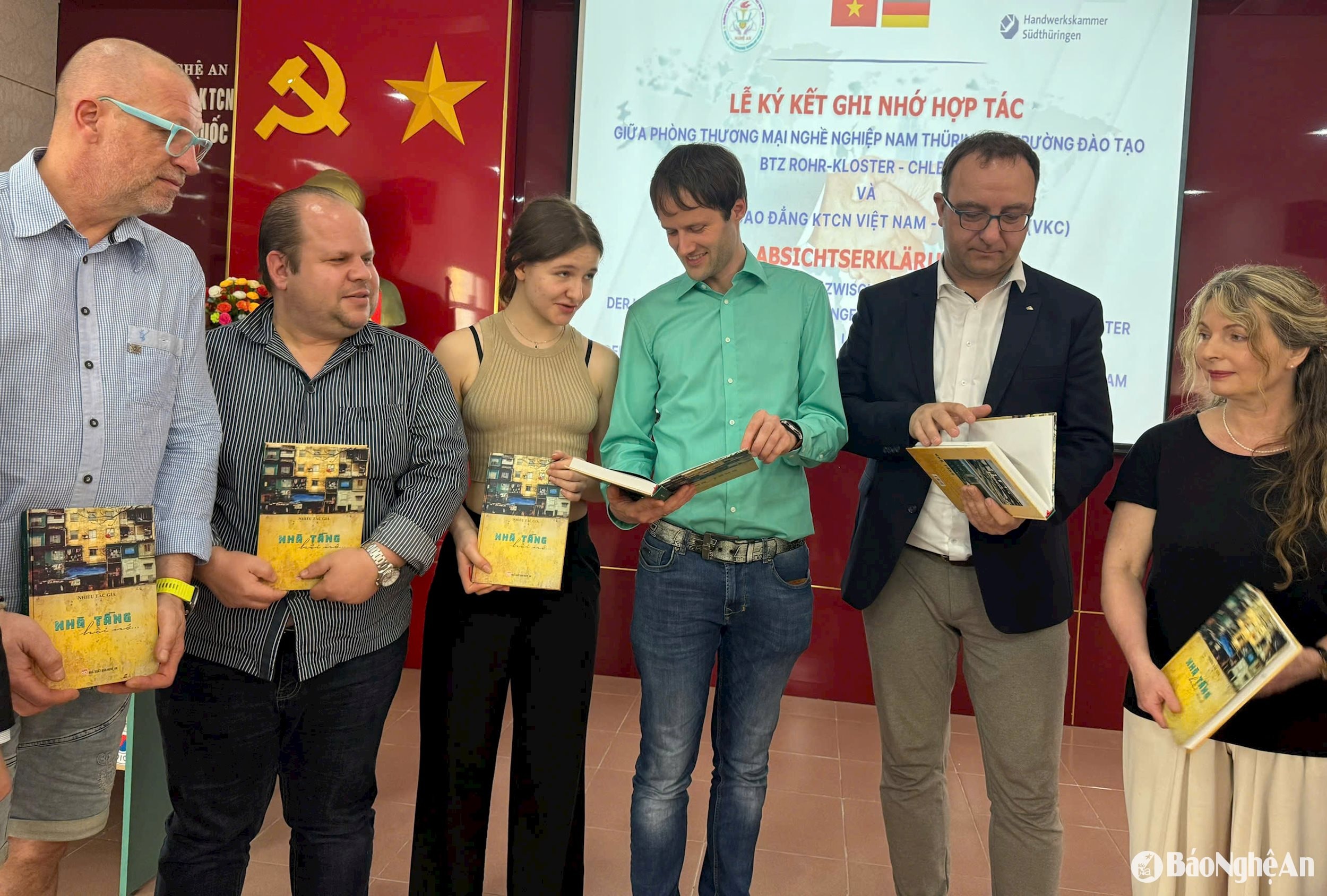
Suddenly I thought of the book."The multi-story house back then"This book, compiled and published by researcher Pham Xuan Can and many other authors, including German experts who worked in Vinh City during the years 1975-1980, is a collection of cherished memories of the past; an expression of appreciation and gratitude for the contributions and affection that our German friends dedicated to Vinh and Nghe An during the years when the country and homeland had just emerged from war and faced numerous difficulties.
And today, managers, businesses, and experts in the field of vocational education from Germany have come to Nghe An to cooperate and agree on solutions to achieve the goal of improving the quality of vocational training, creating jobs and better incomes for workers in Nghe An; meeting the needs of the domestic labor market and providing high-quality human resources for German manufacturing and business enterprises.
Hopefully, we and our German friends will continue to write the story of today together, with the core values of intelligence, responsible effort, trust, and affection built from the past; for the development of Nghe An province and the state of Thuringia, and for the friendly and cooperative relationship between Vietnam and Germany.
And perhaps, that is also the most beautiful expression of appreciating the past; the best way for us to continue building a bridge of faith and new motivation in the era of our homeland's progress.