
The rhythm of livelihood from near-shore fishing trips.
As the early morning mist still shrouded the sea, small boats quietly returned to the harbor, their holds laden with pink shrimp and silver herring. The near-shore fishing season in Nghe An's waters not only brings the joy of a bountiful harvest and good prices but also opens up a vibrant rhythm of livelihood.
.png)
Thanh Phuc /Present:Hong Toai• March 22, 2026
*****
As the early morning mist still shrouded the sea, small boats quietly returned to the harbor, their holds laden with pink shrimp and silver herring. The near-shore fishing season in Nghe An province not only brings the joy of a bountiful harvest and good prices but also opens up a vibrant cycle of livelihoods. From fishermen who fish overnight to those who buy, process, grill, and dry shrimp, everyone moves in sync with the seasonal sea, creating a dynamic, gentle, yet enduring coastal economic landscape.
.png)
Before dawn, the Quỳnh Lập fishing port (Tân Mai ward) was already bustling with the sound of engines. In the hazy mist, small boats lined up to dock, their holds a vibrant red from fresh shrimp. Trays overflowing with shrimp were passed from the boats to the shore, calls and shouts filling the air, and the roar of waiting trucks starting their engines created the familiar rhythm of the fishing season. The salty scent of the early morning breeze mingled with the aroma of fresh shrimp, heralding a bountiful fishing trip.
-6c2a86d4e8e33dfe9c80771e8d14143c.jpg)
-a081eca5529060192d32f4e242f683e4.jpg)
-df0a0c56150bbf4eaead3e982cd698ac.jpg)
This is the peak season for shrimp harvesting. Small boats, with only one or two workers, set sail around 5 PM the previous day and return after a night at sea. They don't need to go far, just within the fishing grounds near the shore, but each trip yields a considerable catch.
On the dock, some pull the trays, others weigh the catch, and still others record the transactions in a rhythmic, skillful manner, like a well-established cycle ingrained in the workings of the fishing village. Mr. Hoang Van Tien, owner of the boat NA73239TS, just pulled the last tray of shrimp ashore while quickly wiping away the sweat from his forehead: “We left the dock yesterday afternoon, sailing around the nearshore area, pulling in the nets every 20 minutes. Tonight the shrimp catch was good, nearly 500 kg. The price this year is about 20,000 VND/kg, higher than last year, so everyone is happy. After deducting fuel costs, each person earned about 2 million VND. Working near the shore, using less fuel, and having a quick turnaround means that even with rising fuel prices, we still make a profit, and the fishermen feel secure in continuing their work at sea.”
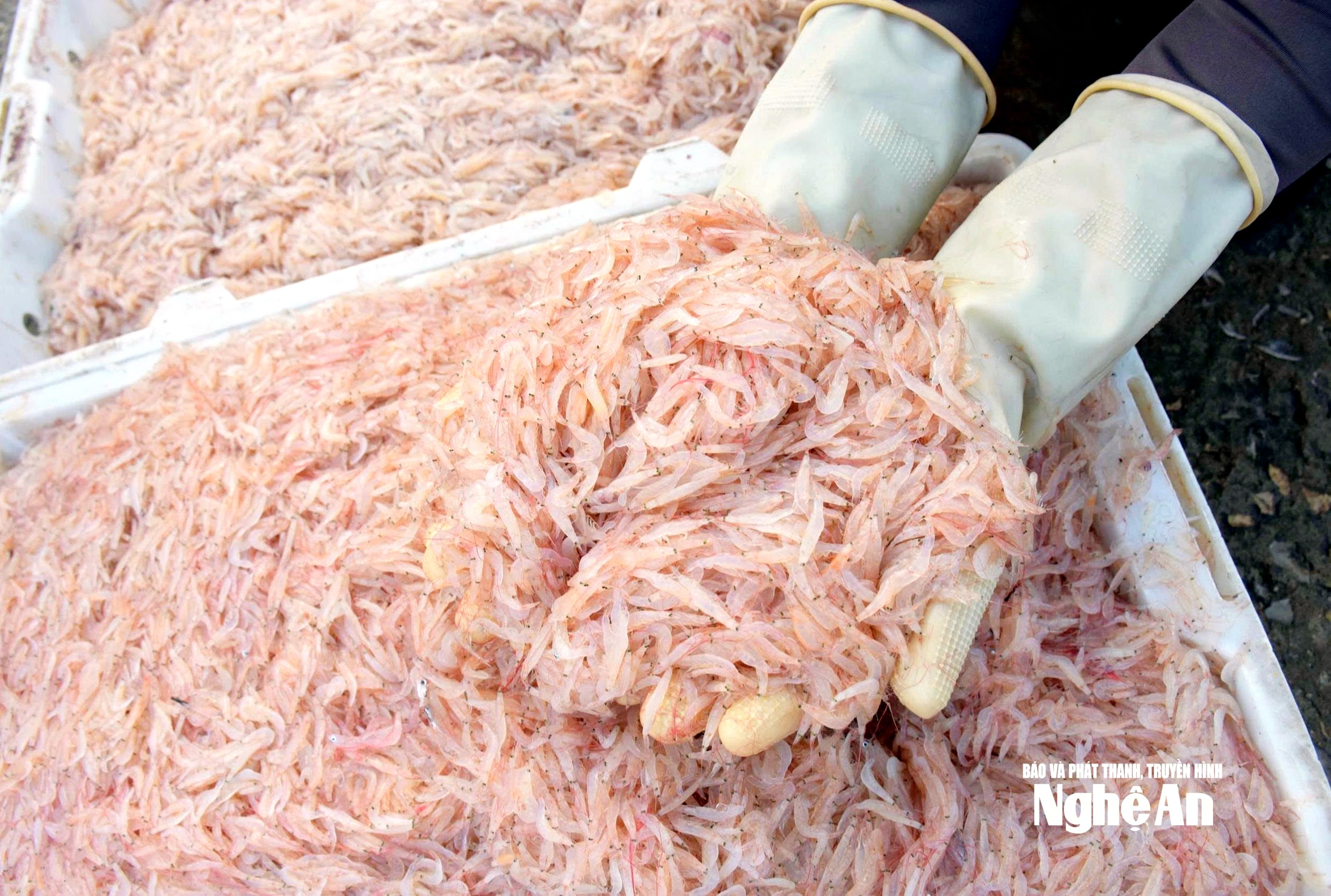
Mr. Tien's boat is small and compact, with two large poles attached to the bow to stretch the net. As the boat moves, the net sinks below the water's surface, gathering schools of shrimp along with the current. After each haul, the shrimp are collected in trays and transferred to the hold. This continues throughout the night, with the yellow light shining on the sea, as successive catches of shrimp fill up, until dawn when they return to the dock. Compared to long sea voyages, shrimp harvesting is much simpler.
No ice is needed, no food stockpiling is required, and fuel consumption is minimal, lasting only a few hours of engine operation. Each boat only needs one or two crew members, resulting in low labor costs and a fast turnaround time. In the context of rising fuel prices, this method of fishing is more suitable than ever, especially for fishermen who do not own large boats or are unable to stay at sea for extended periods.
Mr. Tran Van Hau, owner of the boat NA80172TS, shared: “This profession requires careful planning for each trip. Catching shrimp near the shore keeps costs low; we only spend one night there, don't need ice, and require fewer workers. Even with rising fuel prices, a good catch of shrimp still yields a profit. We also take advantage of opportunities to catch crabs or small fish to increase our income. Fishing has been our livelihood for a long time, so we have to be flexible and adaptable, working close to shore while still maintaining our income.”
-363c334e81ef0be8c6099b70ded8f8da.jpg)
-577d4ad11314ec9206d04c99f7948cf1.jpg)
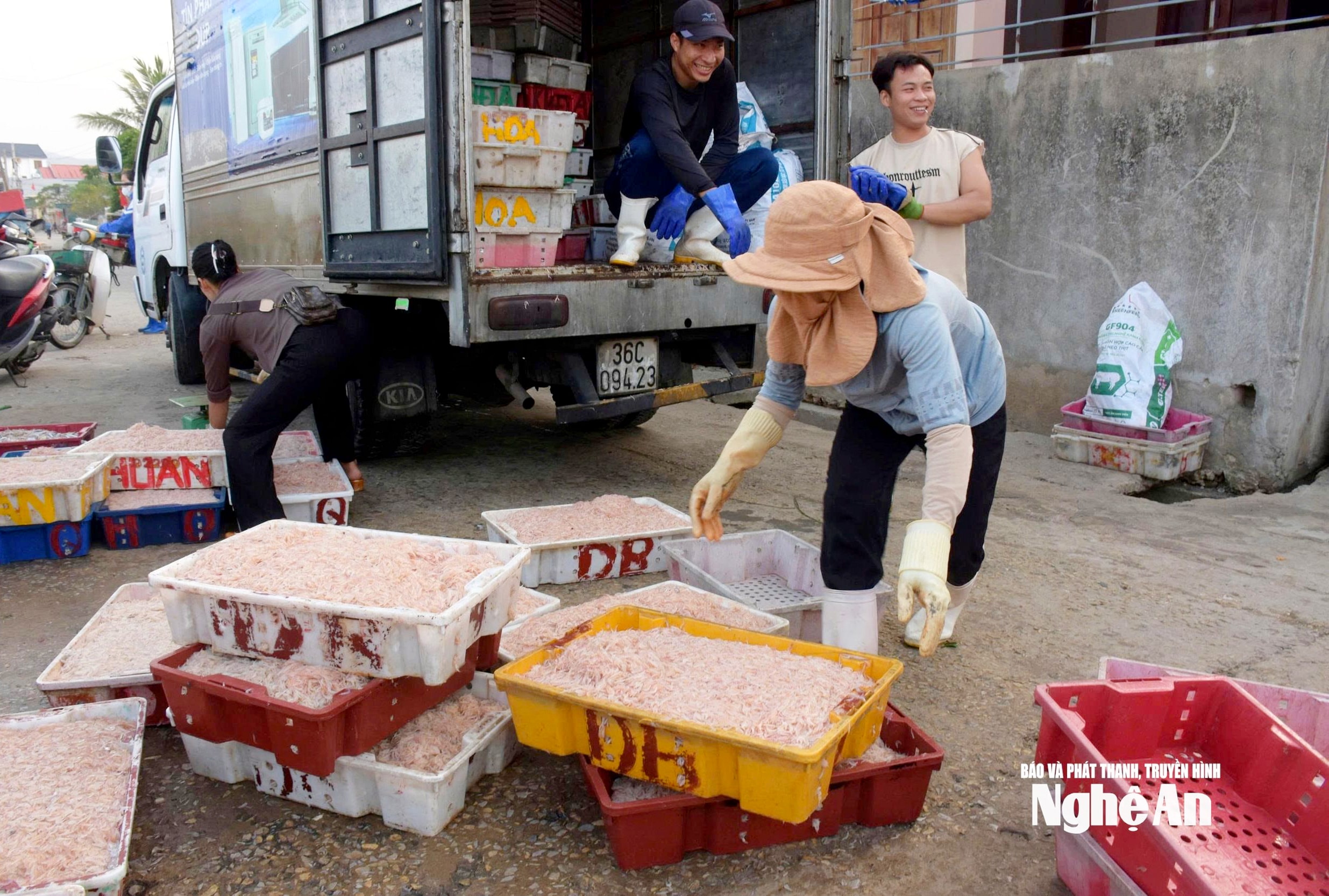
What makes fishermen happy is not only the good yield but also the stable selling price. Almost all the shrimp caught are bought up upon arrival, with no waiting time. Many traders even place orders in advance, and some even arrive early to purchase them. Short fishing trips, low costs, stable yields, and favorable market demand all contribute to a successful near-shore fishing season. In the context of difficulties in distant fishing grounds, declining resources, and rising costs, the near-shore fishing season becomes a lifeline, helping fishermen maintain their livelihoods and sustain their income in the coastal villages.
-f40c49077fc672cfd5cc274cd4012b4e.jpg)
-6b23a41397b7212e353642929bae7354.jpg)
-092ee09c0ffb32e1da1503bc3569f4c1.jpg)
-345ec26a0f51e0397962839521020cbb.jpg)
-c298dfaa0e373e87e24b2a73d25920a3.jpg)
Besides krill, herring is also more abundant this season. At Quynh Phuong fishing port (Quynh Mai ward), many boats bring back about 2 tons of herring after two days of fishing. The shimmering catches of fish, glistening in the early morning sun, are piled high in the hold and quickly transferred ashore.
The workers load the fish, weigh the goods, record the transactions, and refrigerated trucks wait to transport the catch to purchasing and processing facilities. This bustling activity creates a continuous cycle of livelihood stretching from the sea to the shore, where near-shore seafood catches not only provide income for fishermen but also create jobs for those involved in purchasing, processing, drying, and grilling the fish, forming a vibrant seasonal livelihood chain.
.png)
As the trays of shrimp are carried away from the fish market in the early morning, the rhythm of life on shore begins to stir. From the drying areas along the harbor to the purchasing facilities, drying factories, and the charcoal grills blazing with fish, everything connects to form a vibrant economic cycle. The products caught near the shore, from tiny shrimp to silver herring, don't just remain in the boat's hold but continue to provide livelihoods for many coastal workers.
Arriving at the fish market while the air was still misty, Ms. Nguyen Thi Phuong Thu, a shrimp paste trader, busily weighed, sorted, and loaded the shrimp paste onto refrigerated trucks. The trays of fresh shrimp paste were then gathered and quickly transported to the processing facility.
“The shrimp paste is boiled, dried, frozen, and then shipped to other provinces. This year, input costs have increased, but consumption remains favorable, especially during the tourist season. Dried shrimp paste sells for around 120,000–150,000 VND/kg, so it's still profitable. The important thing is that we have a consistent supply; we buy everything from the fishermen so they can go out to sea with peace of mind,” Ms. Thu shared.
-4adde191a673ff175547c82de9e6f8a3.jpg)
-5afbea953fc7ebd083dda1aa9e29213a.jpg)
-56280c9103dacbcd6be2941c61045548.jpg)
Not far away, the shrimp drying areas stretch along the sandy slopes. Under the early morning sun, the shrimp gradually turn a pale yellow, the scent of the sea wafting in the breeze. People drying, turning, and collecting… the work unfolds in rhythm with the sun. In the morning, they spread the shrimp, turn them over at noon, and collect and bag them in the afternoon. The laborers are mainly middle-aged and elderly women, working on an hourly basis. Ms. Ho Thi Tinh, a seasonal worker, said while turning the shrimp: “During the shrimp season, there’s always work, so I’m here early in the morning. The work is light, done by the hour, and I earn 250,000 – 300,000 VND per day. This provides extra income and I don’t have to travel far for work. When there’s a lot of shrimp, I work all day; when there’s less, I work for half a day, and I still have some money coming in.”
Besides sun-drying, shrimp paste is also processed in factories. At a shrimp paste drying facility in Tan Mai ward, the production line operates continuously. After cleaning, the shrimp paste is put into steaming, drying, and packaging machines. Workers are assigned to different stages: some feed the material, some operate the machines, and some pack the shrimp paste.
The owner of the facility said they purchase about 15 tons of fresh shrimp paste daily. Thanks to the industrial drying line, the product is not dependent on weather conditions, allowing for a stable supply to the market and for export. On average, workers here earn about 250,000 – 300,000 VND per day, creating jobs for many local people.
-e39e2cd01e9de438ed2f44dbdd194669.jpg)
-3b72119b7cf015e337d5f5e9e0971fe3.jpg)
Besides being dried, shrimp paste is also used in the fermentation of shrimp, a long-standing traditional occupation of coastal residents. In the courtyards behind houses, earthenware jars are arranged in rows, and shrimp paste is mixed with salt and fermented according to traditional methods. After nearly a year of fermentation, the shrimp paste becomes shrimp paste, a characteristic product of the coastal region.
Mr. Nguyen Van Tuan, owner of a shrimp paste processing facility in Tan Mai ward, said: “During the shrimp season, we buy tons of fresh shrimp every day to make shrimp paste. The shrimp are put into earthenware jars and naturally fermented for about a year before the product is ready. Making shrimp paste is time-consuming, but it has high value, stable consumption, and helps utilize the seasonal shrimp resources.”
Besides shrimp paste, herring from nearshore fishing trips has also quickly become a new source of livelihood. At Ms. Nguyen Thi Chinh's fish grilling facility (Quynh Mai ward), dozens of charcoal grills blaze from early morning. Freshly purchased herring are washed, arranged on racks, and placed in the grills. The smoke from the charcoal, mixed with the fragrant smell of fish, spreads throughout the small courtyard. Women nimbly flip the fish, arrange them on trays, and package them. The work continues steadily from 6 am to early afternoon. "Every day, the facility grills about 5 tons of various types of fish, mainly herring and mackerel. The grilled fish is sold to traders who take them to markets. This profession provides a stable income for my family and creates jobs for about 10 local women," Ms. Chinh shared.
-c23816c0eb10d18103a6fbc52850751e.jpg)
-c4d95f11d8ce958dc756880a99fa066e.jpg)
.jpg)
From the fishing dock to the drying yard, from the drying factory to the fish sauce production facility and the fish grilling kitchen, a livelihood chain naturally forms according to the seasons. The tiny krill and the silver herring have attracted hundreds of laborers to participate in the stages of purchasing, preliminary processing, and processing.
Mr. Truong Cong Vu, Vice Chairman of the Tan Mai Ward Farmers' Association, said that there are hundreds of shrimp fishing boats in the area, along with many processing and purchasing facilities. Each season creates jobs for hundreds of workers, mainly women and the elderly. “The near-shore fishing season helps fishermen reduce costs while still earning income. At the same time, purchasing and processing activities also create more jobs for people. This is an important livelihood, contributing to the stability of life in the coastal area,” Mr. Vu said.
From the near-shore fishing trips, the cycle of earning a living continues. The shrimp and herring catches not only bring income to fishermen but also create livelihoods for people in coastal areas. As the sun rises, the fishing docks gradually become less crowded, but in the drying yards, workshops, and charcoal stoves, the rhythm of earning a living continues to be vibrant with the fishing season...


