
Important first steps for new car drivers
To reduce stress, increase confidence, and ensure safety, new drivers should start with the simplest things when getting into the car.
Adjust the seat
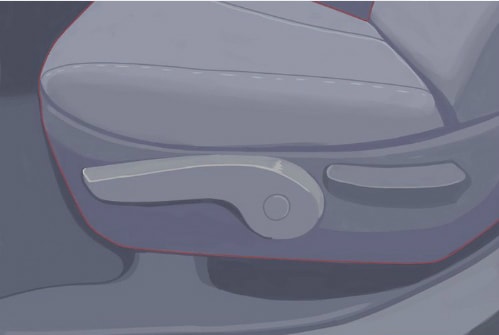 |
Adjust your seat so that your feet are comfortably positioned to control both the brake and accelerator pedals. The driver's seat can be adjusted forward and backward, as well as up and down. Some cars have electronic controls (usually on the left side of the seat). Older cars often have mechanical controls located under the seat. |
Get familiar with the accelerator and brake pedals.
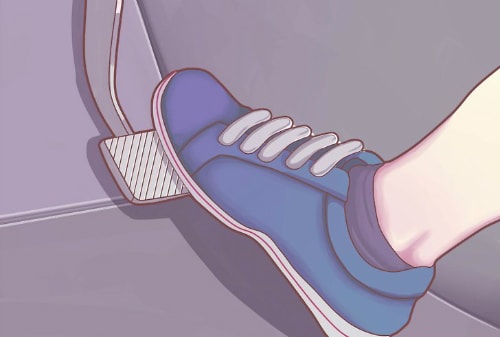 |
After finding a comfortable seating position, it's essential to "test" the accelerator and brake pedals. The distance, throttle response, and brake sensitivity vary from car to car. Use only your right foot to control both the accelerator and brake pedals; never use one foot for the accelerator and the other for the brake. Additionally, while driving, if you take your foot off the accelerator, you should immediately lightly press the brake pedal, or vice versa, to prepare for the next situation. |
Adjust the mirror.
|
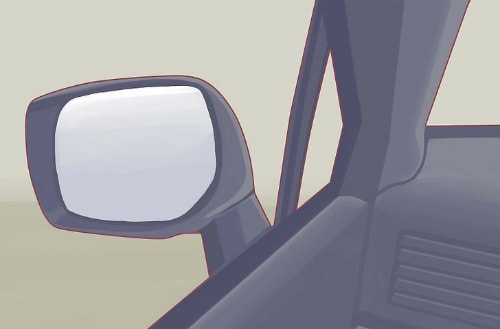
The mirror system consists of three positions: a rearview mirror that allows the driver to see behind the windshield without having to turn around, and two side mirrors to see behind the vehicle – warning of blind spots. Similar to seating positions, each person has a different convenient mirror viewing position. For rearview mirrors, drivers can adjust them so that the view behind the windshield is as wide as possible. For the pair of side mirrors, which provide an over-the-shoulder view, drivers should adjust the mirror position to have the widest possible viewing angle to effectively eliminate blind spots. |
Remember to release the parking brake.
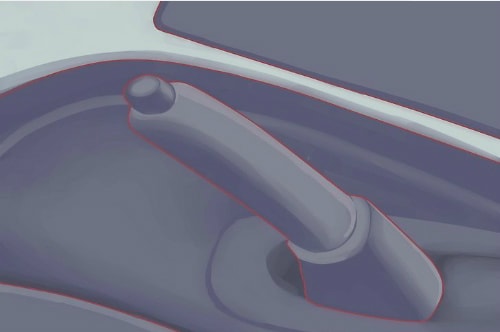 |
The parking brake, also known as the emergency brake, locks the wheels when engaged, preventing the vehicle from rolling freely when parked. Drivers should ensure the parking brake is released before moving. |
Enter the number
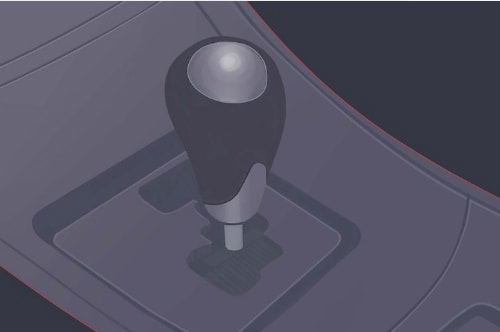 |
| If the gear isn't engaged, your car won't move even if you press the accelerator hard (a common mistake among new drivers). New drivers may be flustered when shifting gears, especially if they're not used to it. Stay calm, move the gear lever to the D position, and the car will gradually move as you release the brake and switch to the accelerator. Similarly, the N position is for temporary stop. When you want to park completely, move the gear lever to the N position. |
How to read the parameters on the control panel.
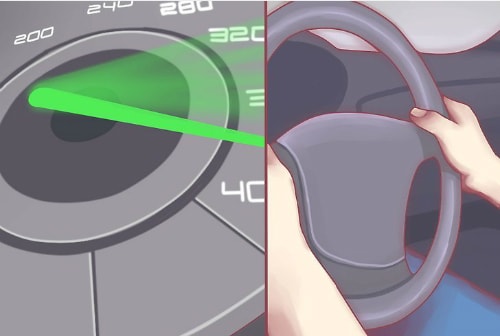 |
Of the parameters displayed on the dashboard, the speedometer is the most important. It shows how fast the car is going. Next is the tachometer, which shows how the car's engine is performing. Most tachometers will show a red warning starting from 6,000 or 7,000 rpm, at which point the driver should reduce the throttle. The fuel gauge indicates the amount of gasoline remaining in the vehicle. It may display a needle gauge with "F" and "E" (Full and Empty) or a digital display. Similarly, the engine temperature gauge moves between "H" and "C" (Hot and Cool). When the needle is in the middle position, the engine is in ideal condition. |
According to VNE


