
These plants serve as ornamental plants, food sources, and medicinal herbs.
The Chinese elm, Barringtonia, or Rhinacanthus are medicinal plants that can treat many common ailments such as coughs, sprains, aches and pains, and have diuretic properties. These plants are easy to grow and can be widely planted in home gardens.
A single tree
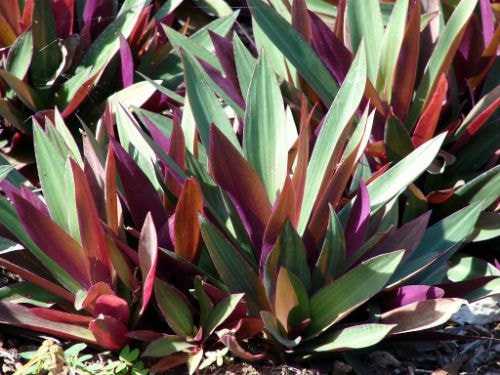 |
| The plant, scientifically known as Tradescantia discolor L'Her, belongs to the Commelinaceae family. Photo: Flickr. |
It is an unbranched plant, about 30-40 cm tall, with leaves that are two-colored, green on the upper surface and purple on the underside, and flowers with sepals and 3 petals.
According to herbalist Nguyen Duc Nghia, a member of the Executive Board of the Ho Chi Minh City Medicinal Herbs Association, the flowers of the *Le Ban* plant have a sweet, mild taste, a cooling nature, and are effective in clearing heat and treating coughs. Both the flowers and leaves are used as a cough remedy for adults and especially children. Take three leaves or ten flower buds. Add a small kumquat, steam with a little rock sugar or steam in a double boiler for about 10-15 minutes to create a mildly sweet taste that effectively treats coughs and acute bronchitis. After cooking, let it cool and drink 2-3 times a day until the cough completely subsides. In reality, many medicinal herbs can treat coughs, but the disadvantage is that they are bitter, so children refuse to drink them or may choke or vomit. The advantage of the *Le Ban* plant is that it is easy to find, easy to grow, its leaves are not bitter, and it is easy to use.
The leaves of the *Lycopodium* plant are used as food; they can be washed and stir-fried with beef. The flowers of the *Lycopodium* plant can be used in salads and are quite delicious.
The tree is used for ornamental purposes in many places, indoors, in parks, and on streets.
Monkey bone tree
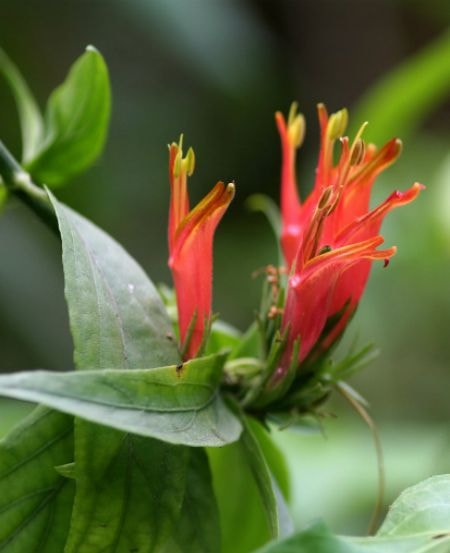 |
| Clinacanthus nutans B, also known as monkey bone plant, belongs to the Acanthaceae family. Photo: Flickr. |
The plant known as "monkey bone plant" or "bim bip" in the Southeast region of Vietnam is a creeping shrub that can grow up to 3 meters tall. Its leaves are simple with short petioles, lance-shaped or oblong, and its flowers are a beautiful reddish-pink. The plant is used as an ornamental plant; its reddish-pink flowers droop at the tips; the corolla has two lips, the lower lip having three teeth; the anthers are yellowish-green; the fruit is a club-shaped capsule about 1.5 cm long with a short stalk, containing four seeds.
Treating mouth ulcers caused by heat: Wash fresh leaves of the *Mảnh cộng* plant, let them dry, add a little clean water, crush them, filter the juice, and gargle and swallow gradually throughout the day. The leaves of the *Bìm bịp* plant, when crushed and stir-fried with vinegar or alcohol and a little salt, are effective in treating dislocations and sprains, relieving pain. According to herbalist Nghĩa, the internal dosage is 4-12 grams per day; for external application, the dosage should be adjusted according to the affected area.
Young leaves can be used to make soup. Dried leaves have a distinctive aroma, similar to sticky rice, so they are often used to soak sticky rice flour for making cakes. Additionally, the leaves can be used in salads or soups with fish or meat.
This plant commonly grows wild in hedges and bushes in many places, and is also often grown in home gardens as an ornamental plant because of its beautiful flowers.
Barringtonia tree
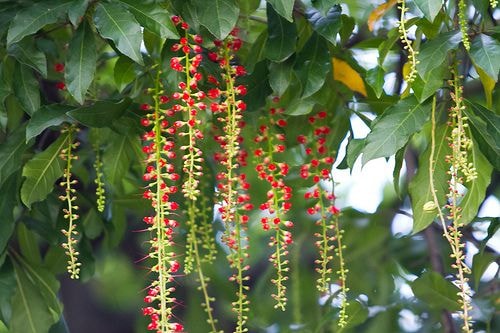 |
| Barringtonia actuangula L., also known as the Barringtonia tree, belongs to the Barringtonia family. Photo: Flickr |
The flowers and bark of the Barringtonia tree, when boiled and drunk, are effective in treating stomach pain and diarrhea. Barringtonia leaves, harvested year-round, are scraped clean, washed, sliced, and dried in the sun or in a dryer. They are used as medicine to treat stomach pain, diarrhea, and fever, due to the high tannin content in the bark. The recommended dosage is 4-12 grams per day.
Young leaves can be used in salads or wrapped in sun-dried rice paper.
Barringtonia, also known as Barringtonia or Barringtonia var., has a beautiful trunk and roots, and its flowers are usually red and fragrant when in bloom, making it a popular ornamental plant.
Gynostemma pentaphyllum
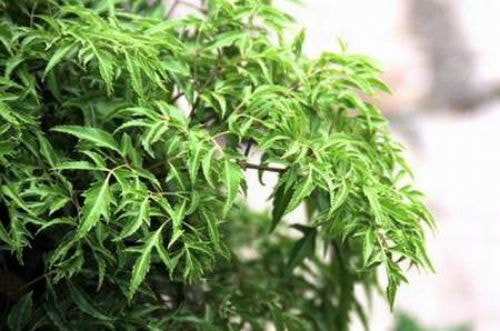 |
| This plant, scientifically known as Polyscias fruticosa L, belongs to the ginseng family. Photo: Flickr. |
The roots of the Aralia plant have a sweet, slightly bitter taste and a cooling nature, making them a tonic, diuretic, and beneficial for weakness and emaciation. Remarkably, all parts of the Aralia plant, from the stem, branches, and leaves to the entire root and bark, can be processed into medicine.
According to herbalist Nghia, boiling the entire plant with water and drinking the decoction treats freckles and acne, and after a period of time, the skin will become smooth and radiant. For those who are weak and exhausted, this plant can help regenerate red blood cells and fight aging. Panax notoginseng is a very mild herb that can be used year-round without side effects. The roots of Panax notoginseng have a sweet, slightly bitter taste and a cooling nature; a decoction of the roots helps increase physical stamina. Many people use the roots of Panax notoginseng to make medicinal wine to treat aches, pains, and back pain. The recommended dosage is 100 grams of fresh leaves per day, 10-20 grams of dried leaves per day, and 12-50 grams of roots per day.
As a food ingredient, the leaves of the Aralia plant can be used in salads with mango or eaten with fermented pork sausage (tré) or spring rolls (nem), creating an impressive flavor.
Some families grow the Gynura procumbens plant in pots and gardens for ornamental purposes.
According to vnexpress


