
World-shaking shifts in the next 10 years
Theo Stratfor, thế giới trong thập niên tới sẽ nguy hiểm hơn nhiều, với quyền lực của Mỹ bị suy yếu và các quốc gia khác phải trải qua một giai đoạn hỗn loạn, tụt dốc.
Türkiye and the US became close allies for an unexpected reason.
Several Arab nations are in freefall, and Stratfor predicts that the current turmoil will not end anytime soon. The biggest beneficiary will be Türkiye, a strong, relatively stable country with borders stretching from the Black Sea down to Syria and Iraq.
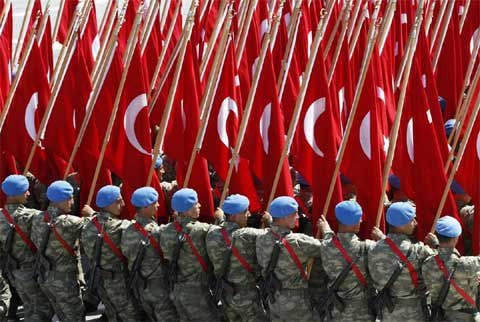 |
Türkiye will not be very proactive in intervening in conflicts near its borders, but it will inevitably have to do so, according to forecasts. And as Ankara's power and assertiveness surpass those of its neighbors, Türkiye will become an indispensable partner for the United States.
However, Türkiye will want something in return for becoming a partner with the United States. That something is a defense plan against a powerful and aggressive power across the Black Sea that maintains military bases in Armenia. Turkey will want the U.S. to help push Moscow out of its backyard.
China faces a huge problem.
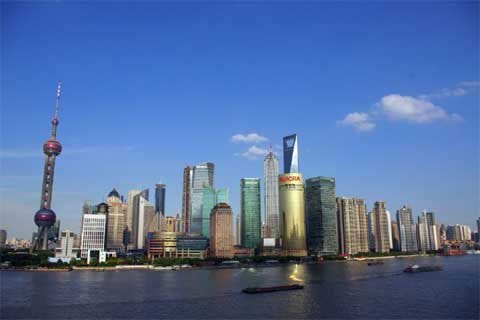
China may face a challenging decade as its economic growth slows.
 |
Beijing also faces other, possibly larger, problems.
China's development is uneven across regions. Coastal cities are developing more rapidly, while inland areas have less access to international markets and tend to be poorer.
This problem will worsen as China continues to urbanize and the rift between the coastal and inland regions widens.
Japan will be a rising naval power.
Japan has a long maritime tradition and is an import-dependent island nation. China is building a powerful navy and may become more aggressive in controlling sea lanes in the East China Sea, the South China Sea, and the Indian Ocean, routes in which Japan also has interests.
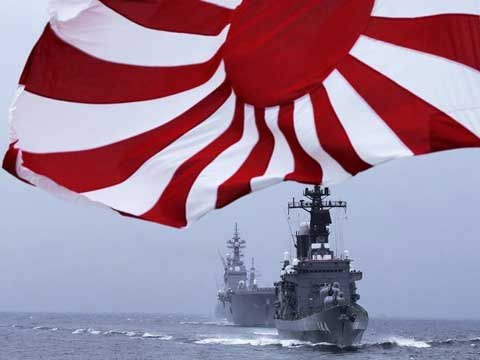 |
Japan will have no choice but to project power in the region to counter China and protect vital shipping lanes. As US power gradually wanes, it must take matters into its own hands.
"Currently, Japan still relies on the U.S. for access. However, we anticipate that the U.S. will be more cautious in participating in foreign partnerships, and since the U.S. doesn't rely on imports, its reliability remains questionable. Therefore, Japan will have to strengthen its navy in the coming years."
The islands in the South China Sea are not a trigger for war.
Regional powers will decide that island disputes in the South China Sea are not worth a major military escalation, but they still represent a dangerous show of force.
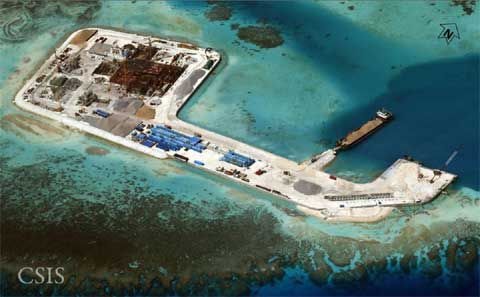 |
Dangerous displays of power are returning to East Asia, even if they don't lead to armed conflicts in the South China Sea and East China Sea.
16 economies are thriving, including Vietnam.
The Chinese economy will slow down, and productivity growth will be a flat line. This is not good news for a number of countries.
 |
However, countries including Mexico, Nicaragua, the Dominican Republic, Peru, Ethiopia, Uganda, Kenya, Tanzania, Bangladesh, Myanmar, Sri Lanka, Laos, Vietnam, Cambodia, the Philippines, and Indonesia could see economic improvements in the next decade, thanks to the acquisition of more manufacturing-related jobs.
American power is declining.
Given the increasingly disordered and unpredictable nature of the world over the next 10 years, the U.S. will respond by becoming more cautious about how it chooses to challenge itself rather than taking an active leadership role in addressing global issues.
As a developed economy, with soaring domestic energy production, declining exports, and remaining one of the most stable corners of the world, the US can protect itself from global crises.
 |
However, those factors could limit America's role in global affairs, making the world a more unpredictable place, and that is a reality other nations will have to confront.
"The U.S. will continue to be a major military, political, and economic power in the world, but will be less involved in global affairs than before," Stratfor predicts. "The world will be more disorderly, and in many regions there will be a shift in the protectors. The U.S. will still maintain its role as the big brother, but less pronounced in the next decade."
(According to VNN)
| RELATED NEWS |
|---|


