
Signs that indicate damage to your car's shock absorbers.
Shock absorbers are components that dampen vibrations in the suspension system when a car is moving on the road, providing a smooth and comfortable ride for the passengers.
Car shock absorbers will weaken after a long period of use.
|
| Car shock absorbers will weaken after a long period of use. |

Shock absorbers on a car are also commonly known as "suspension struts". Typically, car shock absorbers weaken over time with prolonged use and can eventually fail. Here are some signs of damaged car shock absorbers:
The shock absorbers are making a noise.
During vehicle operation, especially on rough roads, a "creaking" sound is the first sign that the shock absorber system has a problem. According to experienced automotive maintenance experts, this could be due to warped shock absorber cylinders, rusted springs, or friction between components, causing the noise.
|
| Faulty shock absorbers will make a noise when the vehicle is in operation. |
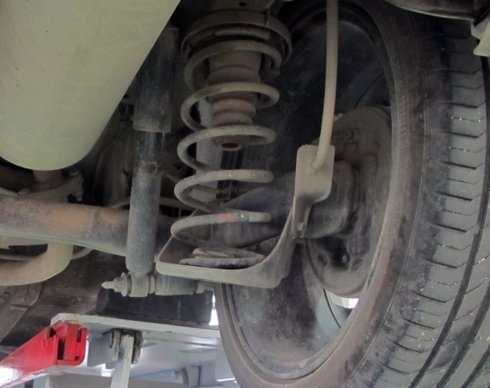
Oil leak in the shock absorber.
If you notice wet oil residue at the end of the shock absorber or hear a "clunking" sound when driving over bumpy roads, it's a sign that the shock absorber seal is leaking and hydraulic fluid is escaping.
|
| Oil leakage indicates that the shock absorber seal is damaged. |
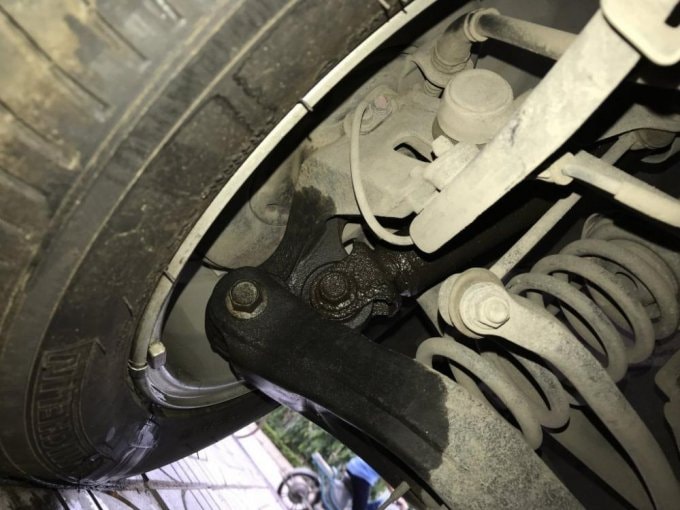
The car shakes violently when driving on rough roads.
The role of shock absorbers is to dampen vibrations when the car is traveling on rough roads. If the driver feels the car is shaking more violently than usual, the first thing experienced car owners think of is a problem with the shock absorbers.
The car skidded and veered off course.
The car skids and veers off course even when driving on a flat road. This is also a warning sign that the car's shock absorbers are malfunctioning.
The steering wheel is misaligned.
When a car is fully loaded, if it leans to one side accompanied by unbalanced steering, it may indicate a broken shock absorber spring or a bent piston rod.
Uneven tire wear
Regularly check your tires; if you notice uneven wear or poor traction, you should also pay attention to the shock absorbers.
Check your car's shock absorbers.
|
| Secure the car on a ramp to easily test the shock absorbers. |
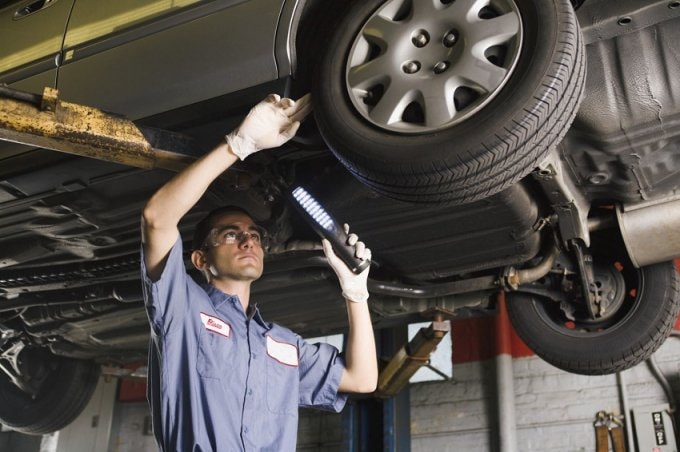
The first step is to check under the vehicle for dents or oil leaks. If the chassis makes strange noises while driving, check components such as bolts, rubber bushings, springs, ball joints, etc.
Test drive the car at a speed of approximately 16 km/h, firmly press the brake pedal all the way down, and feel the suspension dampening at the front of the vehicle. If the front of the car dips sharply forward, it is highly likely that your car's shock absorbers are malfunctioning and you should take your car to a service and repair shop for inspection as soon as possible.


