
Things to know about the glycemic index of foods
If you have weight issues, metabolic syndrome, or diabetes, knowing the glycemic index (GI) of foods can help you better manage your diet and health.
You've probably guessed that this number makes food seem "healthier" in some way. But do you know what GI means?
Simply put, GI is an index that measures the rate at which a particular carbohydrate or sugar is metabolized in the body relative to glucose. The faster the metabolism, the higher the GI of the food. For example, refined white sugar has a GI of 100.
Knowing the glycemic index (GI) of foods is crucial, especially for people with diabetes and those who want to prevent diabetes. Foods with a high GI often cause a sudden spike in blood sugar levels, and the subsequent "sugar cravings" can leave the body feeling extremely tired.
Low-GI diets offer numerous health benefits, such as improved physical endurance, increased insulin sensitivity, and reduced blood cholesterol.
Low-GI foods also reduce hunger and help you feel full for longer, which can help you lose or maintain weight.
This will lead to a healthier body weight, reducing the risk of heart disease.
Recent studies have also shown that a low-GI diet can have a positive effect on mood and mild depression.
To function optimally, the brain needs energy that is released slowly and steadily. A low-GI diet helps prevent fluctuations in blood sugar levels, allowing for a more stable energy release and reducing fatigue, both mentally and emotionally.
 |
Knowing the numbers
GI is generally divided into 3 categories:
Low: 55 or below
Average: 56-69
Height: 70 cm or taller
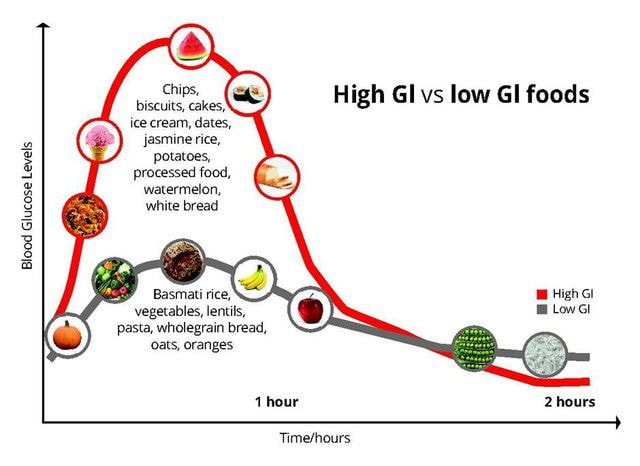
It's easy to guess that high-GI foods would include refined sweets. Surprisingly, however, many healthy foods, including fruits and vegetables, also have a high GI, such as pumpkin and watermelon.
Even seemingly harmless foods like potatoes and rice crackers have a glycemic index (GI) of 100, the same as that of sugar.
 |
Use GI in a waywise
The glycemic index (GI) is just a guideline in dietary habits that will impact the body's metabolism. It's not a comprehensive guide to food choices, as variety is essential to ensure a balanced diet with sufficient vitamins, minerals, and micronutrients.
Many other factors also affect GI, such as cooking method, eating method, other components in food such as protein or fat, and the amount consumed.
Similarly, the glycemic index (GI) of foods produced in different countries and by different manufacturers can also vary.
The best way to achieve a healthy balance is to ensure your diet includes plenty of low-GI foods. Medium-GI foods, such as bananas, mangoes, or ice cream, should only be eaten in moderation, as larger portions can disrupt your diet, leading to weight gain or uncontrolled blood sugar levels.
Reduce your intake of high-GI foods as much as possible, but you can still eat some if you're engaging in strenuous physical activity for a few hours.
It is believed that consuming vinegar, dairy products, sesame seeds, and bean products with rice, whether before or after eating, can lower the glycemic index (GI) of rice.
To begin, replace high-GI foods like white rice or white bread with lower-GI alternatives such as sweet potatoes, taro, or rice noodles.
Studies in Thailand and Australia have shown that low-GI foods may improve the management and control of diabetes.
With diabetes, metabolic syndrome, obesity, and other chronic diseases on the rise, especially with age, paying attention to the glycemic index (GI) may no longer be an option, but a necessity.
According to Gia Dinh.net


