
Things you didn't know about the genius scientist Albert Einstein.
(Baonghean.vn) - The genius Albert Einstein was a German-born theoretical physicist and is considered one of the fathers of modern physics.
1. The head is larger than normal.
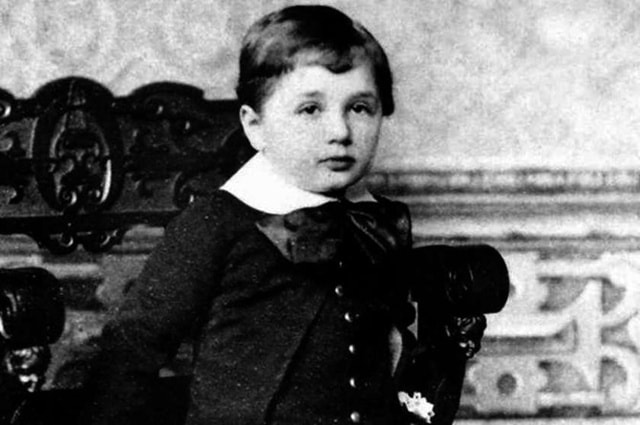 |
| Einstein was born on March 14, 1879, in Germany. At birth, the back of Einstein's head was unusually large, causing his family to worry that he might have a serious problem. However, a few weeks later, the shape of his head returned to normal.Image:Wikimedia Commons |
2. Delayed speech
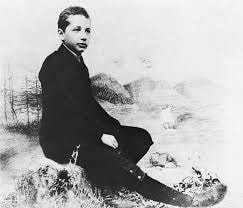 |
| Einstein began speaking at the age of four. His parents sought medical help to address his speech delay. Economist Thomas Sowell even coined the term "Einstein syndrome" to describe individuals who are highly intelligent or exceptionally gifted but experience delayed speech development in childhood. (Image: Wikimedia Commons) |
2. A genius with unbalanced learning, underestimated by teachers, and unlucky in exams.
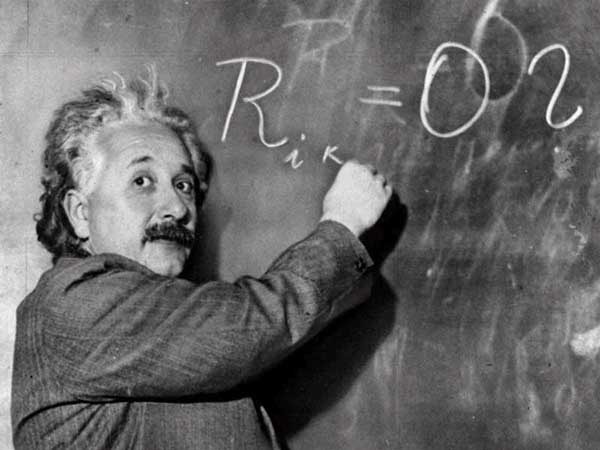 |
| During his school years, Einstein was not considered a good student. In fact, rumors circulated that he had failed mathematics. However, in reality, Einstein had already mastered university-level physics before the age of 11, was a skilled violinist, and achieved high marks in Latin and Greek. Before the age of 15, Einstein had already mastered differential and integral calculus.Image:Wikimedia Commons |
4. The mystery of Einstein's daughter
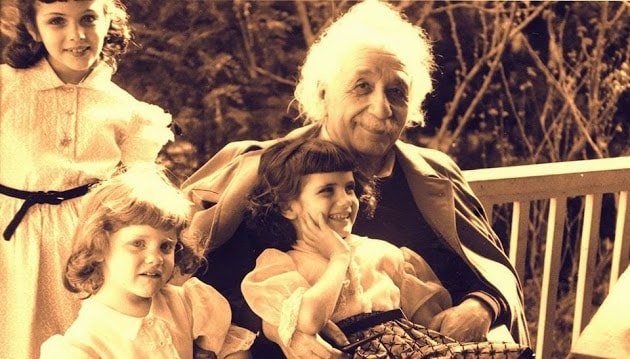 |
| Before Einstein and his first wife, Mileva Marić, married, Mileva secretly gave birth to their daughter at her parents' home in Serbia. However, their daughter Lieserl's identity was unclear. Essentially, records relating to Lieserl disappeared after her birth. To this day, researchers have found no evidence that Einstein ever saw his daughter. (Image: Internet) |
5. Einstein set rules for his wife.
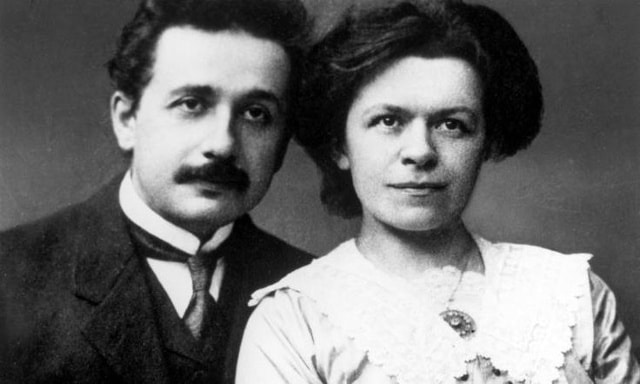 |
| After their marriage, Einstein laid down a set of rules that his wife, Mileva, had to follow, including requirements such as Mileva preparing three meals a day, stopping talking when he asked her to, and not expecting any intimate attention from him.Image:Wikimedia Commons |
6. Einstein married his cousin.
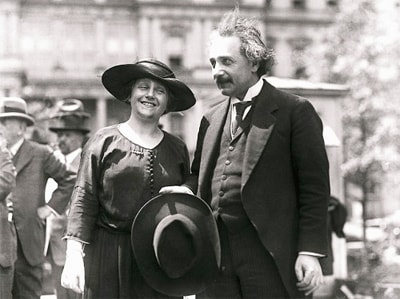 |
| Einstein had a very good relationship with his cousin Elsa Einstein, who later became his second wife in 1919. There are even reports that Einstein and Elsa's relationship blossomed while he was still married to his first wife. Photo: Bettmann |
7. Einstein never wore socks.
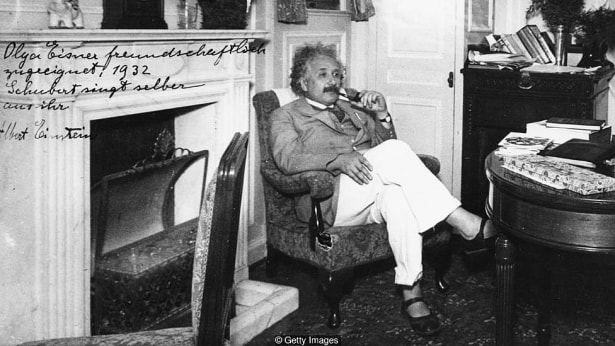 |
| "When I was a child, I discovered that my big toe often made a large hole in my sock. Since then I have never worn socks again," Einstein wrote in a letter to his cousin. (Image: Internet) |
8. Renouncing German citizenship at age 16.
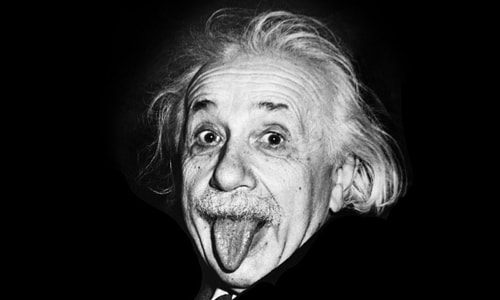 |
| From a young age, Albert Einstein disliked having a specific nationality, believing it would be ideal to be a "citizen of the world." In 1895, at the age of 16, he renounced his German citizenship and became stateless until he acquired Swiss citizenship in 1901. |
9. The FBI file is 1,427 pages long.
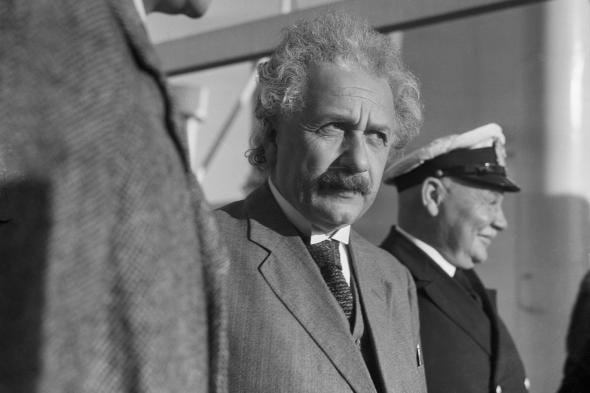 |
| In 1933, the Federal Bureau of Investigation (FBI) began filing a dossier on Einstein, just before his third trip to the United States. The dossier, over 1,400 pages long, focused primarily on Einstein's connections with socialist and pacifist organizations. J. Edgar Hoover, the FBI's first director, even recommended denying Einstein entry into the United States under the Alien Prevention Act, but this recommendation was rejected by the State Department. |
10. Civil rights activists before the start of the civil rights movement.
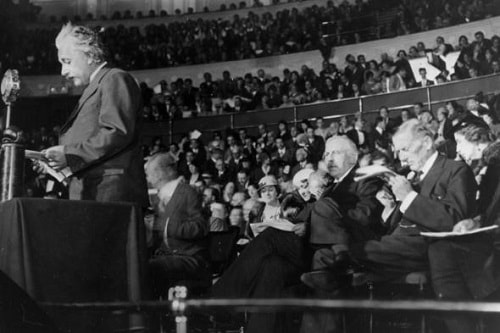 |
| Einstein was a strong advocate of civil rights and freedom of speech. When W.E. Du Bois, an American historian, was prosecuted in 1951 on charges of being a spy for a foreign power, Einstein volunteered to testify. After Du Bois's lawyer informed the court that Einstein would be present, the judge decided to suspend the case. Pictured: Einstein speaking at the 1933 Science and Populism Conference at the Royal Albert Hall in London. Photo: Hulton Archive |
Peace
(Synthetic)
| RELATED NEWS |
|---|


