
The unexpected benefits of broccoli sprouts
Broccoli offers many amazing health benefits. But broccoli sprouts, the young, tender form of this common cruciferous vegetable, are even more impressive in many ways.
On his personal page, Dr. William Li, a physician, scientist, and author of the New York Times bestselling book, *Diet That Beats Disease*, shared the impressive benefits of broccoli.
According to him, there are countless recipes circulating online revolving around broccoli. Certainly, it has many great health benefits. But broccoli sprouts, the young, tender form of this common cruciferous vegetable, are even more impressive in many ways. Despite their immaturity, these tiny greens possess a wealth of powerful properties.
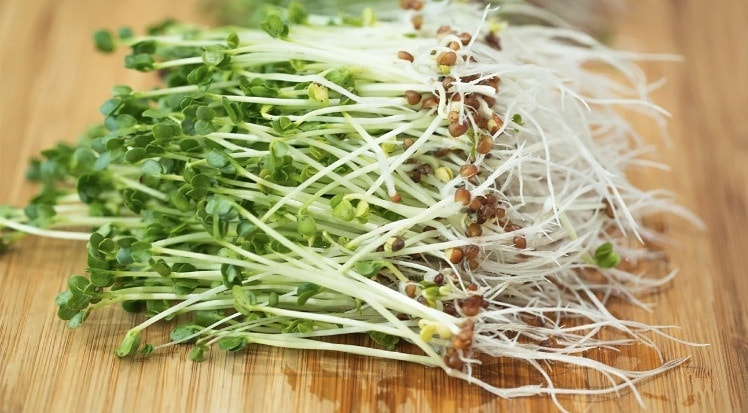
Broccoli sprouts are a rich source of nutrients (Photo: Gettyimages).
According tographlineBroccoli sprouts are a rich source of nutrients. They are an excellent source of protein, fiber, vitamins, minerals, and phytochemicals, which are biologically active plant compounds. These compounds protect plants from sunlight and insects, but they also offer numerous health benefits for humans.
Just one serving of these sprouts provides a high amount of vitamin C, which has antioxidant and immune-boosting properties. Additionally, they contain a phytochemical called sulforaphane. Experts believe this chemical is responsible for most of the health benefits of these sprouts.
Animal studies have shown that sulforaphane has a bioavailability of 82%, which is considered high. This means it is absorbed quickly and easily, allowing your body to readily take advantage of its benefits.
Compared to broccoli
Although broccoli sprouts are the first stage of the broccoli plant, they are not nutritionally the same as the mature vegetable.
They may provide almost the same amount of calories and macronutrients, meaning the same amount of protein, carbs, and fat. However, broccoli sprouts provide about 100 times more glucoraphanin. Glucoraphanin is an inactive compound that is converted into the beneficial chemical sulforaphane when cut or chewed.
Potential health benefits of broccoli sprouts
Thanks to its sulforaphane content, broccoli sprouts offer numerous health benefits.
Boosting immune function
The most important benefit of broccoli sprouts is their ability to boost immune function. They contain sulforaphane, a naturally occurring bioactive compound that helps activate the immune system to fight off viruses.
In a clinical study conducted in 2016, participants received a flu vaccine, and half were given a broccoli sprout shake daily. Those who drank the shake were shown to have more effective immune protection against the virus.
Anticancer properties
Sulforaphane is a compound with potent anti-cancer properties. In fact, this is why broccoli sprouts have long been studied for their anti-cancer effects.
Studies show that sulforaphane can promote the apoptosis (programmed cell death) of cancer cells, inhibit the growth of new blood vessels that nourish malignant cells, reduce inflammation, decrease sensitivity to carcinogens, and reduce the invasion and spread of cancer cells.
Sulforaphane works by increasing certain detoxification enzymes in your liver. These enzymes both fight off and help the liver eliminate the potentially carcinogenic effects of toxins or chemicals from food and the environment.
Similar test-tube and animal studies suggest that sulforaphane from broccoli sprouts may fight breast, prostate, colon, liver, and lung cancers.
According to Dr. William Li, broccoli sprouts also contain many antioxidants, such as glucoraphanin, which help your body fight disease and prevent cancer. It is significantly more effective in protecting the body against cancer than mature broccoli.
Supports mental and brain health.
Sulforaphane, found in broccoli sprouts, may also protect against certain brain diseases, including stroke, Alzheimer's disease, and Parkinson's disease. In the case of stroke, sulforaphane may reduce brain cell death, thus minimizing brain tissue loss.
In the case of Alzheimer's disease, sulforaphane is thought to protect brain cells from the toxicity of beta-amyloid. Beta-amyloid is a protein that accumulates in the brain and is associated with the onset of the disease.
Furthermore, test-tube and animal studies suggest that sulforaphane may protect brain cells and improve cognitive decline such as memory loss.
Parkinson's disease is caused by the weakening or death of brain cells that produce dopamine—a chemical neurotransmitter that affects your mood, concentration, and memory. Sulforaphane protects these cells from oxidative stress caused by harmful free radicals.
Improve gut health
Due to its antioxidant and antibacterial properties, sulforaphane from broccoli sprouts may enhance gut health.
Sulforaphane also has strong antibacterial effects against H. pylori, a bacterium that can cause gastrointestinal infections, gastritis, and stomach ulcers. A 16-week study in 50 people with H. pylori-induced gastritis showed that eating 70g of 3-day-old broccoli sprouts daily helped reduce H. pylori infection and gastritis.
Other benefits
- Improve cardiovascular health
Sprouts may reduce risk factors for heart disease, such as high triglyceride levels and LDL (bad) cholesterol. They are also rich in coenzyme Q10, a compound that has been shown to lower blood pressure.
- Lower blood sugar levels
Test-tube and animal studies suggest that broccoli sprout extract may improve insulin sensitivity, which could then lower blood sugar levels.
- Improved joint health
Test-tube studies have determined that sulforaphane in broccoli sprouts may reduce markers of inflammation associated with arthritis, a condition that can cause painful joint inflammation.
Things to note
Broccoli and other sprouts need moist conditions to germinate. Unfortunately, so do bacteria like Salmonella, E. coli, and Listeria monocytogenes.
This means that sprouts can be contaminated, and if consumed, you could get food poisoning with symptoms such as fever, diarrhea, and stomach cramps. That's why it's important to wash any sprouts thoroughly before eating them.
Another thing to note is that broccoli sprouts contain isothiocyanates, a group of plant compounds that include sulforaphane. These are thought to be goitrogens, substances that alter your body's absorption of iodine.
This means that eating too much broccoli sprouts could potentially alter your thyroid function and increase your risk of hypothyroidism, a condition characterized by an underactive thyroid gland.
Although there is no documentation indicating how much sprouts you need to eat over time to increase this risk, a study of other cruciferous vegetables, such as broccoli, Chinese cabbage, and bok choy, showed that typical servings are unlikely to cause harm.
Furthermore, the study defined excessive consumption as consuming more than 1kg per day over several months.
Finally, sulforaphane can interact with certain medications and limit their effectiveness. These medications include furosemide, verapamil, and ketoprofen, which are used to treat fluid retention, high blood pressure, and arthritis, respectively.
Experts advise against adding broccoli sprouts to smoothies or using them as a topping for salads and buttered toast, as they lose their nutritional value when cooked.
Recipe for making broccoli sprout smoothie
Ingredient:
- 1 cup of almond milk, soy milk, or other milk of your choice.
- Half a banana.
- 1/2 cup frozen mango.
- 1 handful of broccoli sprouts (about 1/2 cup).
- 1 cup of spinach.
- 1 teaspoon of chia seeds.
You can add 1 teaspoon of honey for sweetness. Put all the ingredients into a blender and blend until smooth.


