
Things to note when decocting traditional Chinese medicine.
Decoctions are a method of treating diseases in traditional medicine. The decoction process greatly affects the medicinal properties of the herbs, influencing the effectiveness of treatment. So, what should be considered when decocting herbs?
According to the experience recorded in the book "Essentials of Traditional Medicine" by the renowned physician Hai Thuong Lan Ong, the method of decocting medicine greatly affects its medicinal properties.
The usual method for decocting herbal medicine is to put the herbs in a pot and add enough water to cover them. Once the water boils, reduce the heat and simmer gently, avoiding boiling over. Cover the pot tightly; do not open the lid of the pot, as this can cause evaporation and loss of the active ingredients. Typically, use 3 parts water and simmer until reduced to 1 part.
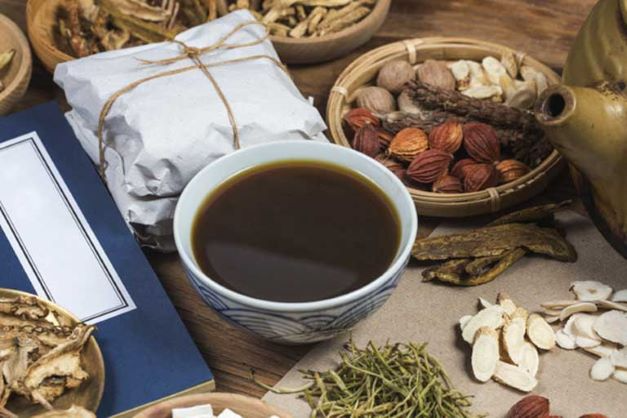
If patients or their family members prepare herbal medicine at home, several points should be noted to ensure the quality and medicinal properties of the remedy:
1. Tools for decocting herbal medicine
Today, the market offers many convenient and easy-to-use herbal medicine pots with capacities suitable for modern kitchens. These pots are made from a variety of materials such as metal, stainless steel, and earthenware.
Choosing the right material for the herbal decoction pot is crucial, as the material can alter the medicinal properties of the herbs, leading to reduced effectiveness of the treatment.
Absolutely do not use metal pots to decoct herbal medicine. Ideally, use an earthenware pot for decoction. You can refer to some electric ceramic pots manufactured in Vietnam, China, South Korea, Japan, etc.
2. Pay attention while decocting the medicine.
2.1. Before decocting the medicine
Most of us often skip the soaking step and go straight to decocting the herbs. However, for herbal remedies treating acute illnesses such as colds, digestive disorders, or newly contracted diseases, this step can be omitted.
However, for herbal remedies treating chronic diseases that have been progressing for a period of time, approximately 3 months or more, the herbs should be soaked before decoction.
It is recommended to soak the herbs in clean water for 15-20 minutes to allow the water to penetrate thoroughly. This will maximize the extraction of the medicinal properties when decocted.
Certain hard, animal-derived medicinal ingredients such as clam shells, tortoise shells, dragon bones, oyster shells, etc., or plant-based medicinal ingredients in the form of hard dried seeds or fruits such as almonds, peach kernels, cardamom, nutmeg, etc., should not be left whole.
In cases where the herbal decoction contains animal and plant-derived ingredients with a hard texture as mentioned above, the ingredients should be crushed or finely ground before adding them to the pot for boiling. This allows the active ingredients to be released more effectively and quickly.
Certain herbs, especially those with small, fine hairs, can irritate the mucous membrane of the throat, causing allergic reactions and discomfort. To overcome this, these herbs should be placed in a cloth filter bag, wrapped up, and added to the pot with other herbs. Alternatively, the sediment should be carefully filtered out after brewing.
Some herbal medicines, such as those made from large leaves or whole herbs like Trichosanthes kirilowii, Lysimachia nummularia, and Rhus chinensis, will occupy a large area in the decoction pot, affecting the extraction and concentration of the medicine. Therefore, it is necessary to decoct the herbs first, discard the residue, and then add the resulting liquid to the pot for decoction of other herbs, using the resulting liquid to drink.
Finally, before decocting the medicine, poisonous herbs such as black aconite should be added to the pot first, and then the remaining herbs should be added afterwards.
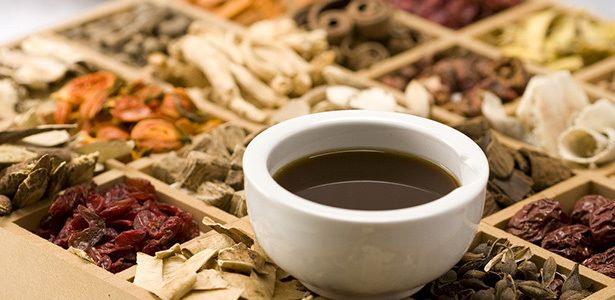
2.2. While decocting the medicine
For herbs belonging to the diaphoretic group, which have a fragrant aroma, they should not be boiled for too long over low heat. Prolonged decoction of these herbs will cause the fragrance to dissipate, reducing their medicinal properties.
Note that when the water boils, add the herbs to the pot and simmer for only 3-5 minutes before removing the pot from the heat. Alternatively, grind the herbs into a powder and mix it with the decoction to drink.
For herbs that are primarily tonics, such as Rehmannia glutinosa, Atractylodes macrocephala, Dioscorea opposita, Longan fruit, and Nelumbo nucifera seeds, it is necessary to simmer them over low heat, decocting them slowly.
After decocting the herbs, while the liquid is still boiling, add ingredients with a sticky or viscous consistency such as: licorice, honey, donkey hide gelatin, etc. Wait for these ingredients to dissolve into the liquid before drinking.
NotePatients using any traditional Chinese medicine should consult a doctor or qualified professional for advice.


