
The "coming-of-age" days in the shared house of wallets and rice cakes.
Ten days at the "common house" for the final round of the "Searching for Nghe Tinh Folk Song Talent" competition in 2026 was not only a journey of learning to sing but also a journey of growth for young people who share a common love for their homeland's heritage.
When folk music serves as a connecting bridge
At 6 a.m., the fourth floor of a small hotel near the Nghe An National Folk Music and Dance Troupe was bustling with people waking each other up. This was where the finalists of the 2026 "Searching for Nghe Tinh Folk Song Talent" competition were staying during their training course. The doors of the rooms opened one by one. Some girls were washing their faces while softly humming a folk song; others were opening the windows to admire the sunrise and quietly rehearse the lyrics; some groups were braiding each other's hair and memorizing songs; and a few others were adjusting each other's vocal embellishments that their teachers had taught them the day before... On that fourth floor, every corner could become a practice spot. Naturally, Dfolk songs and chantsIt has become a connecting link for young people here, during these special days.
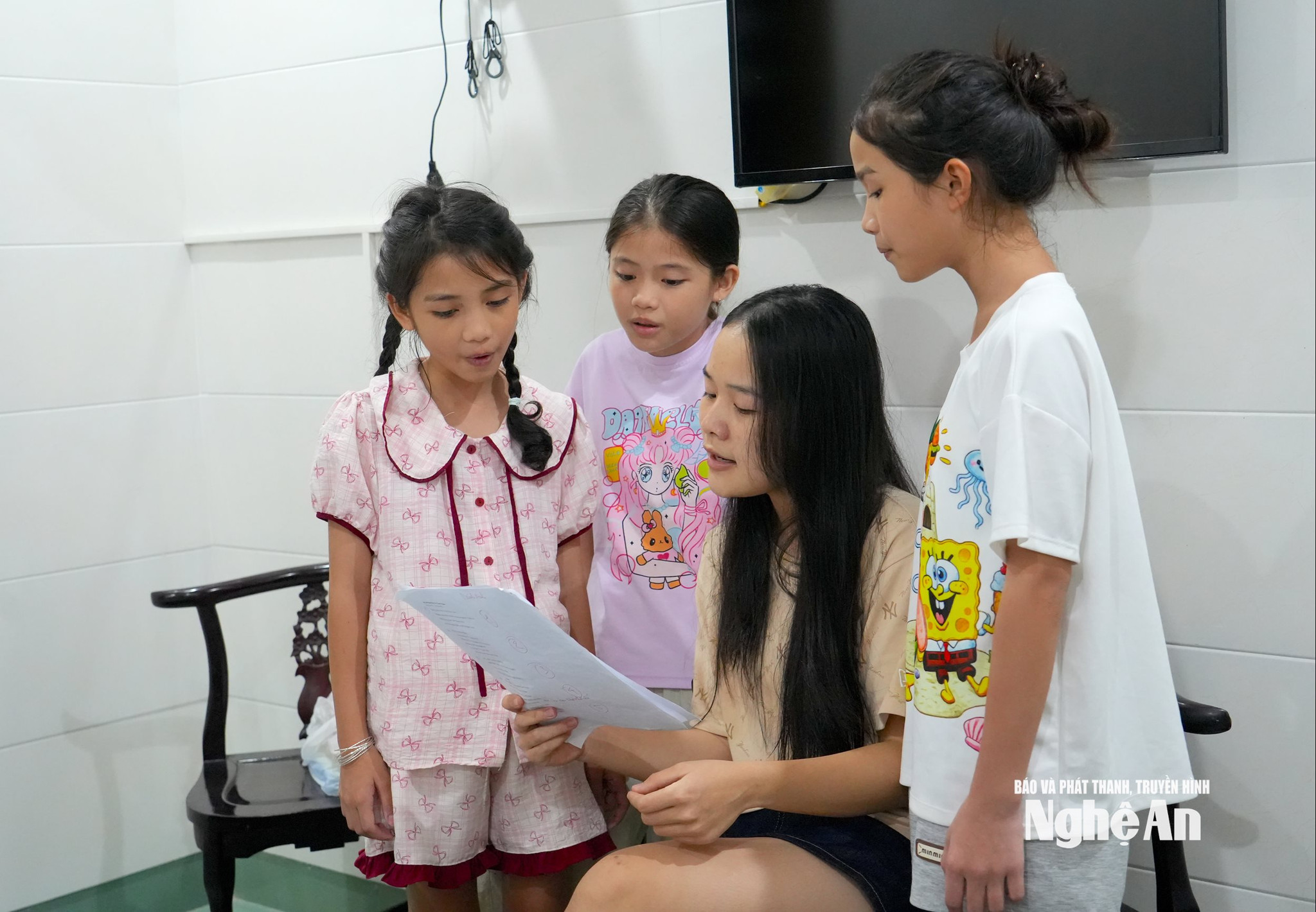
After breakfast is delivered to their rooms, the contestants begin their training sessions at the Nghe An National Folk Music and Dance Troupe's studios. Mid-session, they take a break with snacks before continuing their studies until noon. After a nutritious meal and a short nap, the afternoon classes resume. Despite the demanding schedule, fatigue is rarely seen on the contestants' faces.
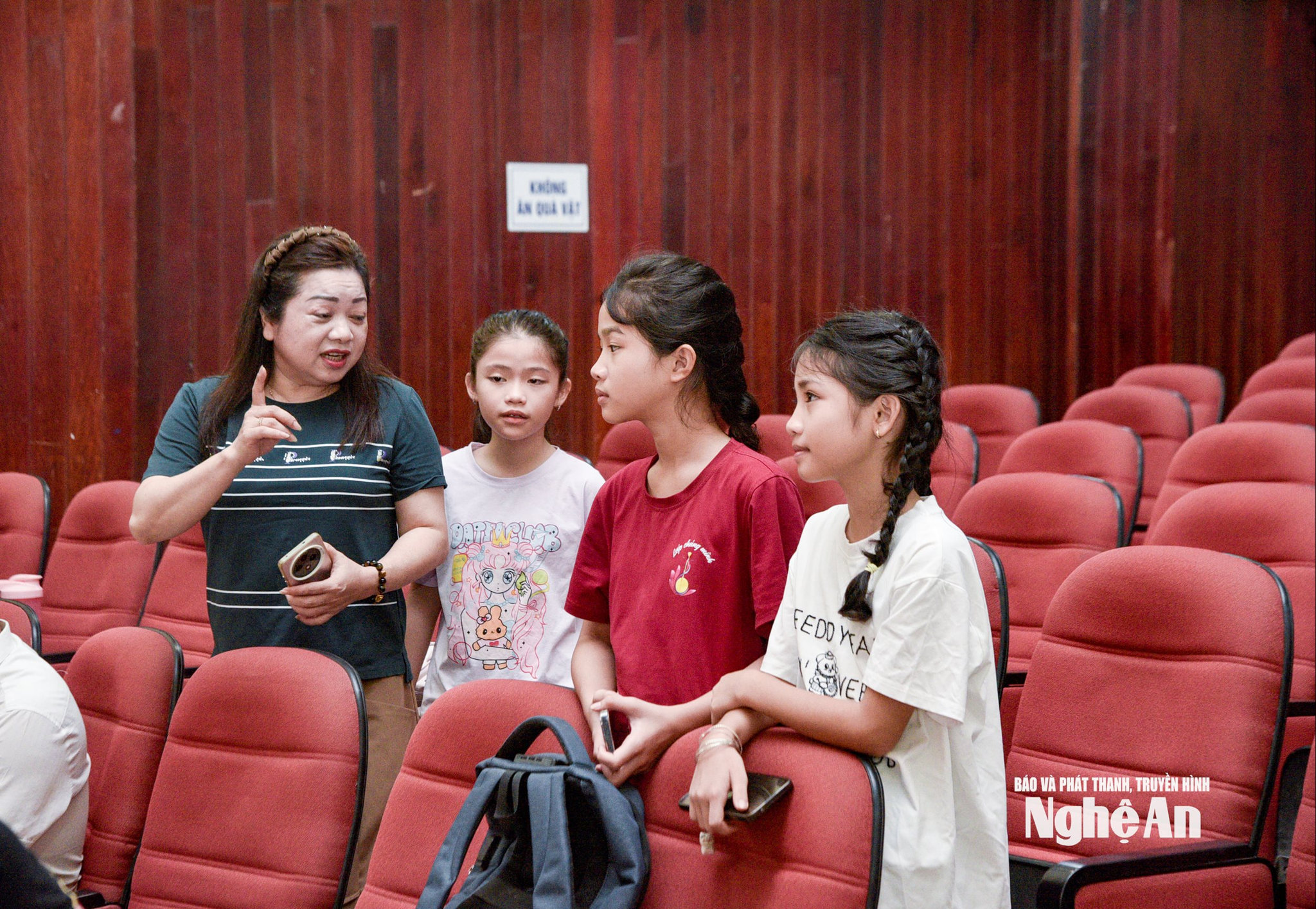
Around 5 PM, upon returning to the hotel, the 4th floor once again became a true "communal home." There were children as young as 7, elementary, middle, and high school students, and even those in their twenties. They came from various rural areas, from Nghe An and Ha Tinh to Ho Chi Minh City, but after only a few days, they had become close friends, calling each other "brother" and "sister." Age and regional differences disappeared, replaced by the shared love of these young people for the folk songs of the Vi and Giam genres.
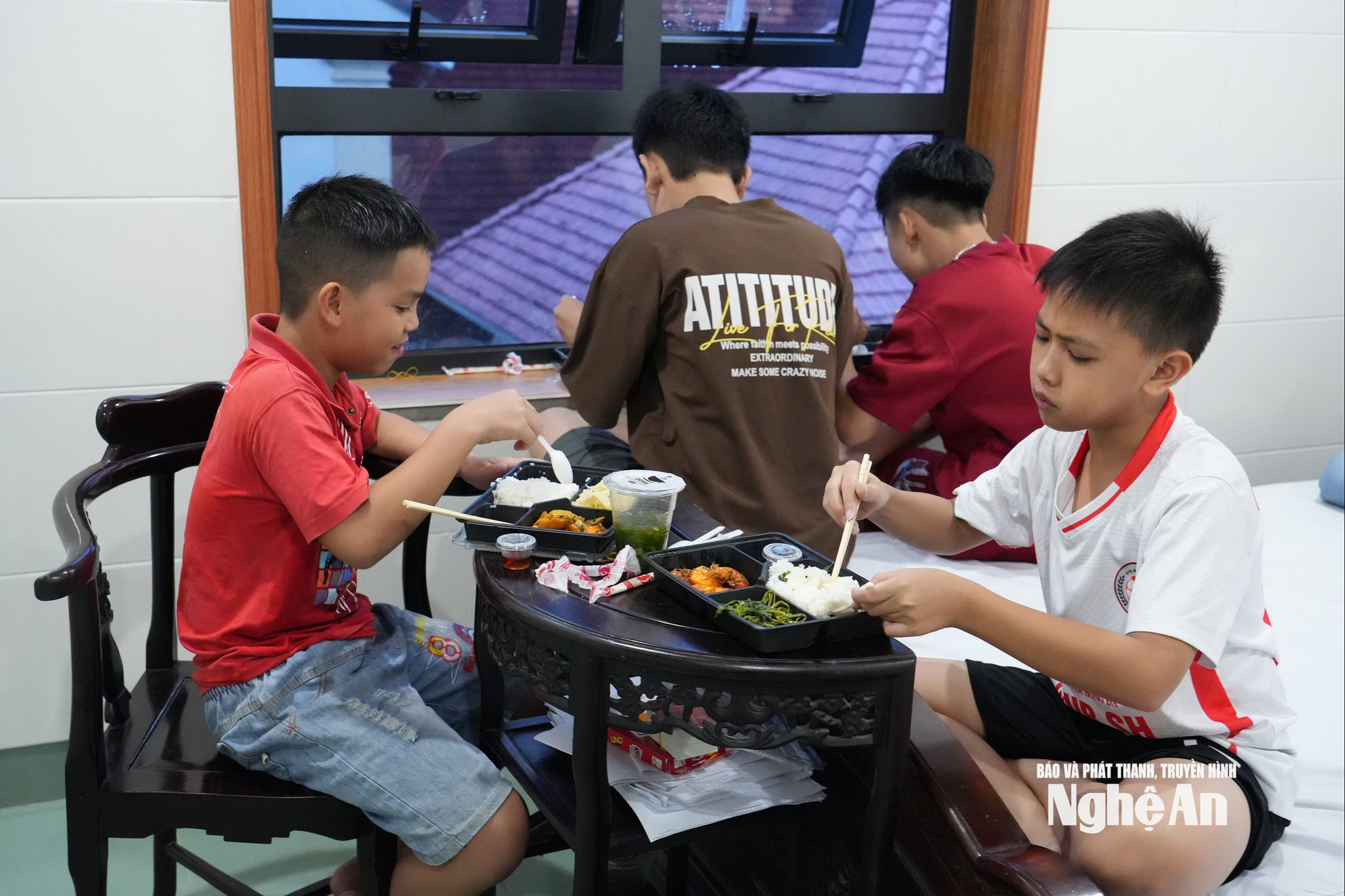
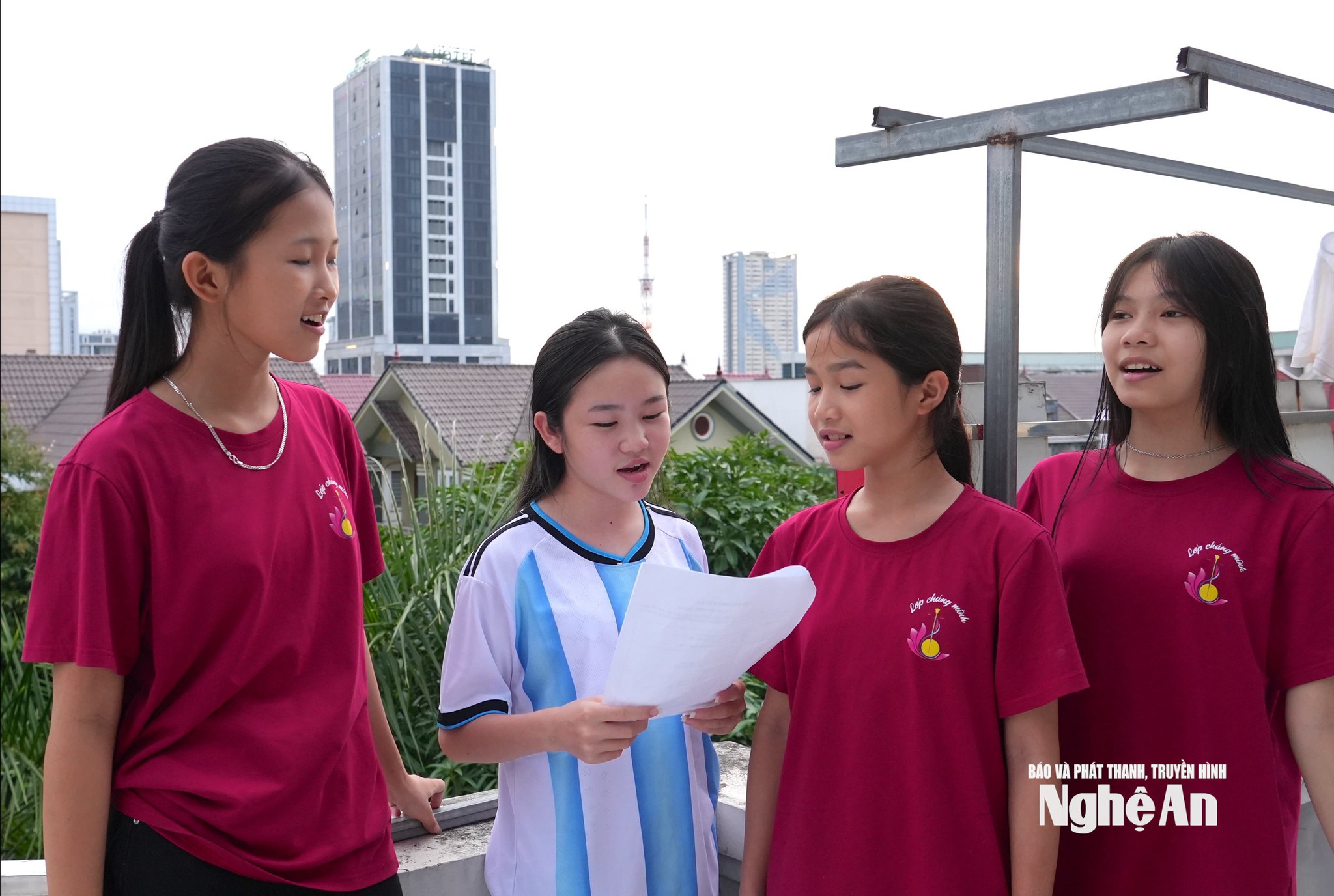
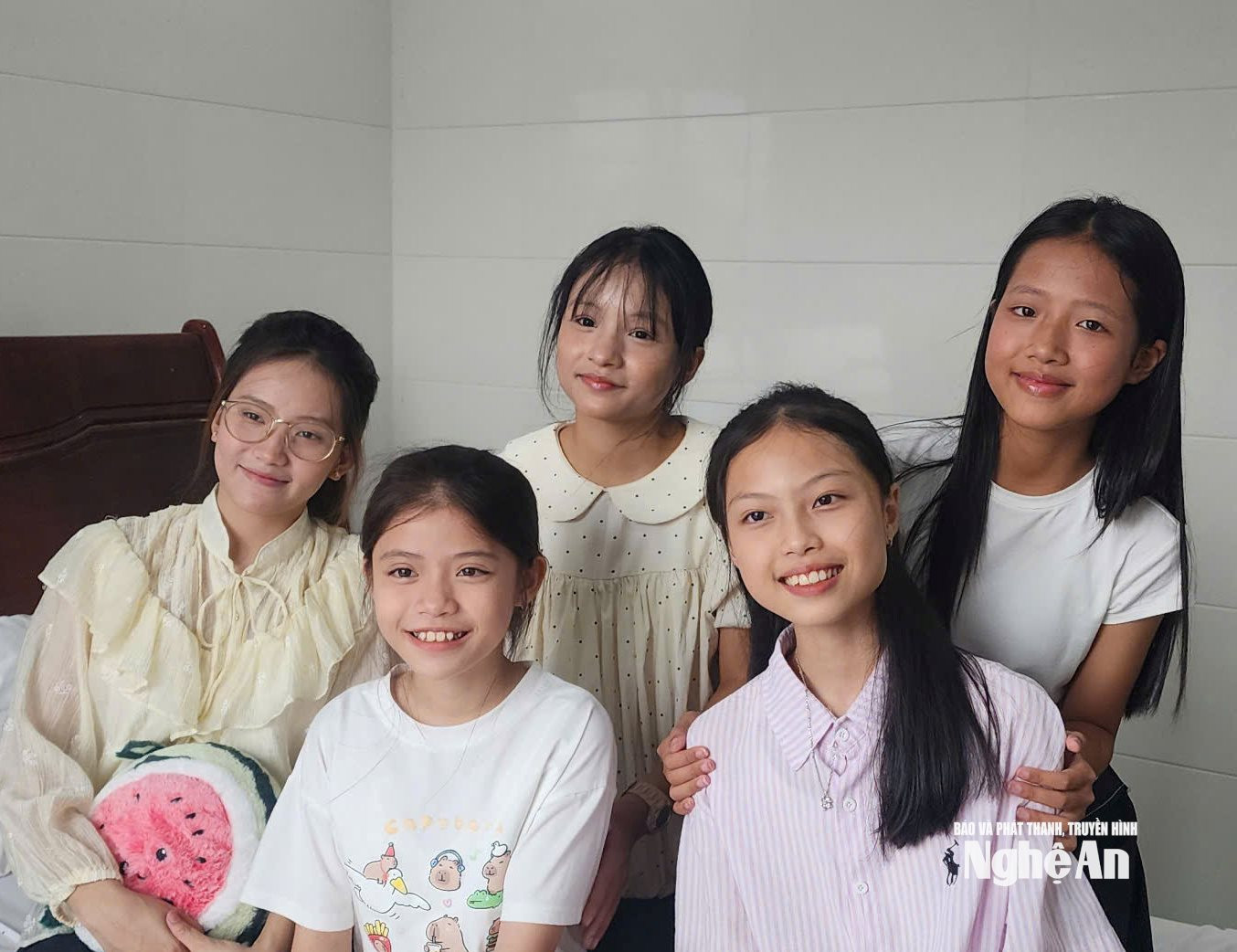
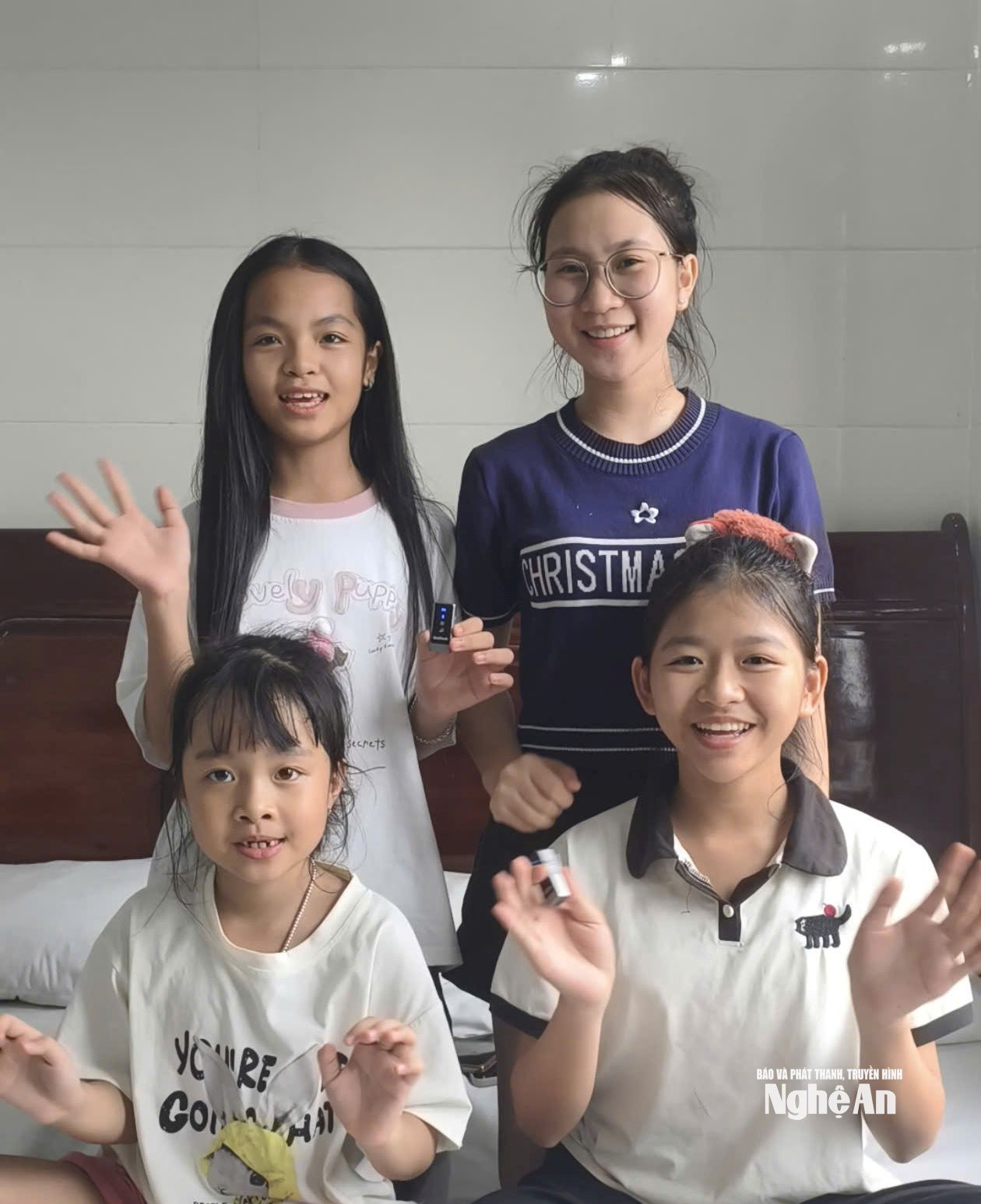
Some people were busy washing clothes, others hanging them out to dry, and still others cleaning the rooms. While caring for the children, Ms. Luong Thi Van, an officer from the Provincial Traditional Arts Center, shared: “The most joyful thing is that the children are very well-behaved, independent, and supportive of each other. The older contestants proactively help the younger ones like siblings in a family. Some braid their younger siblings' hair before each lesson, some guide the younger ones in folding clothes, remind them of mealtimes and bedtime, or encourage them when they feel homesick…”
As the youngest contestant in the final round, this was the first time contestant Hoang Bao Ngoc (born in 2019) had been away from her family for many days. Her initial nervousness was quickly dispelled by the care and attention of the older contestants. “It’s my first time participating in a competition, my first time away from home, but my mother is very reassured because the older contestants are always there to support and guide me. At night, they remind me to go to bed on time, wake me up in the morning, braid my hair, and comb it for me like my own sisters,” Bao Ngoc innocently recounted.
Having participated in many folk song training courses, contestant Ho Thi Ngoc Ha (born in 2012), from Quynh Van commune, shared: “Although it is a competition, what I feel among everyone is mutual support and companionship. There is no competition; everyone helps each other selflessly. I feel that my fellow contestants are very talented and I learn a lot from them.”
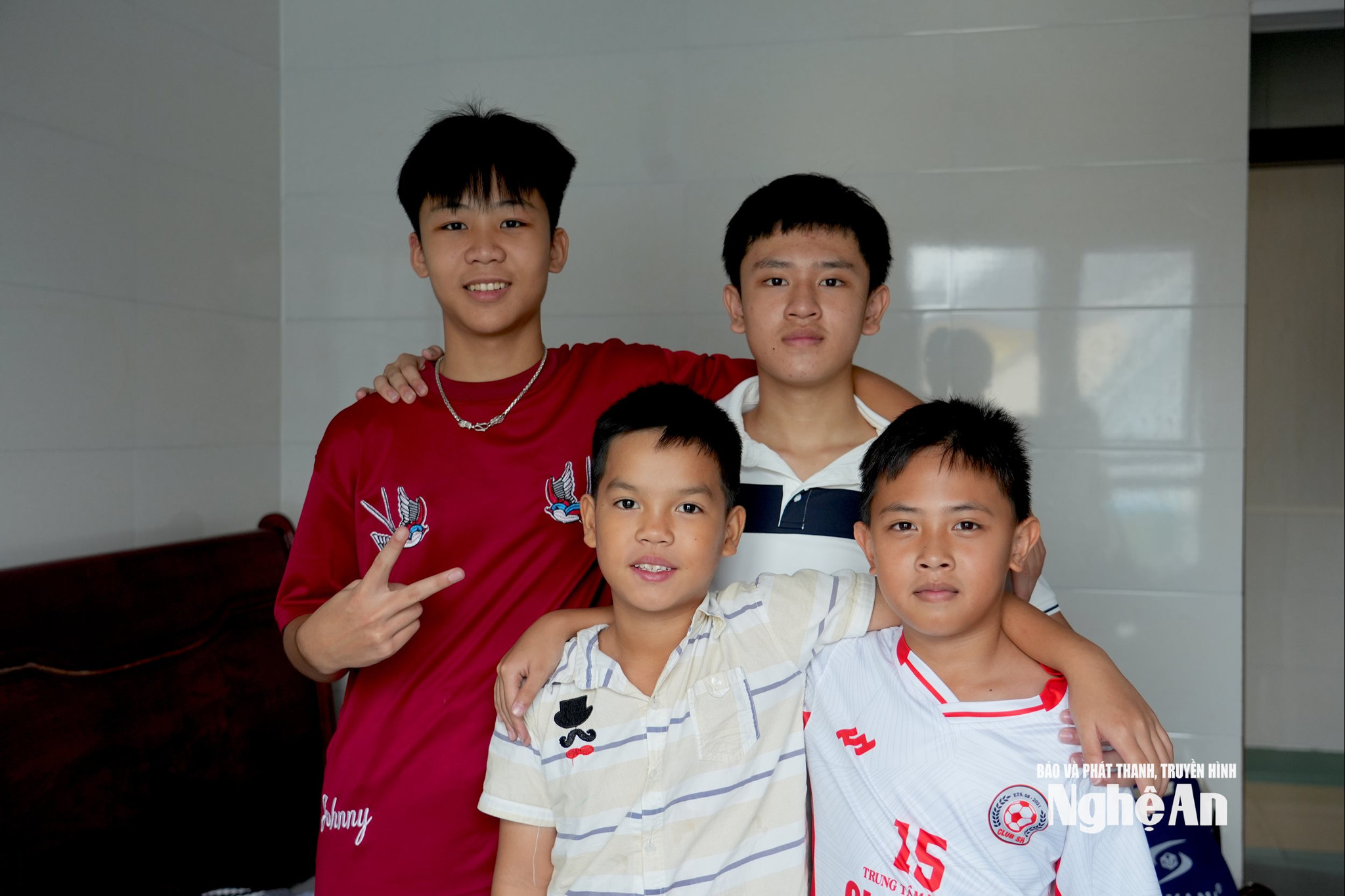
Not only the contestants, but many parents also expressed their trust in how the Organizing Committee took care of the children throughout the course. Ms. Ho Thi Huong, mother of contestant Nguyen Kieu Huong Vy (born in 2018), from Quynh Luu commune, said: “After the first two days staying with my daughter, I felt completely at ease returning home. What reassured me was not only my daughter's independence but also the thoughtfulness of the staff and teachers. Even the older members of the group kept me updated on everything from meals, sleep schedules, playtime, and daily activities to Vy's health.”
The days spent at the "shared house" of the folk singers were truly a time for young people to learn how to live together, to share, to be independent, and to nurture their love for their homeland's heritage.
Those who "inspire" the next generation.
If the fourth floor of the hotel is where young talents grow up in friendship and independence, then the classrooms of the Provincial Traditional Arts Center are where artists quietly pass on their skills to the next generation.
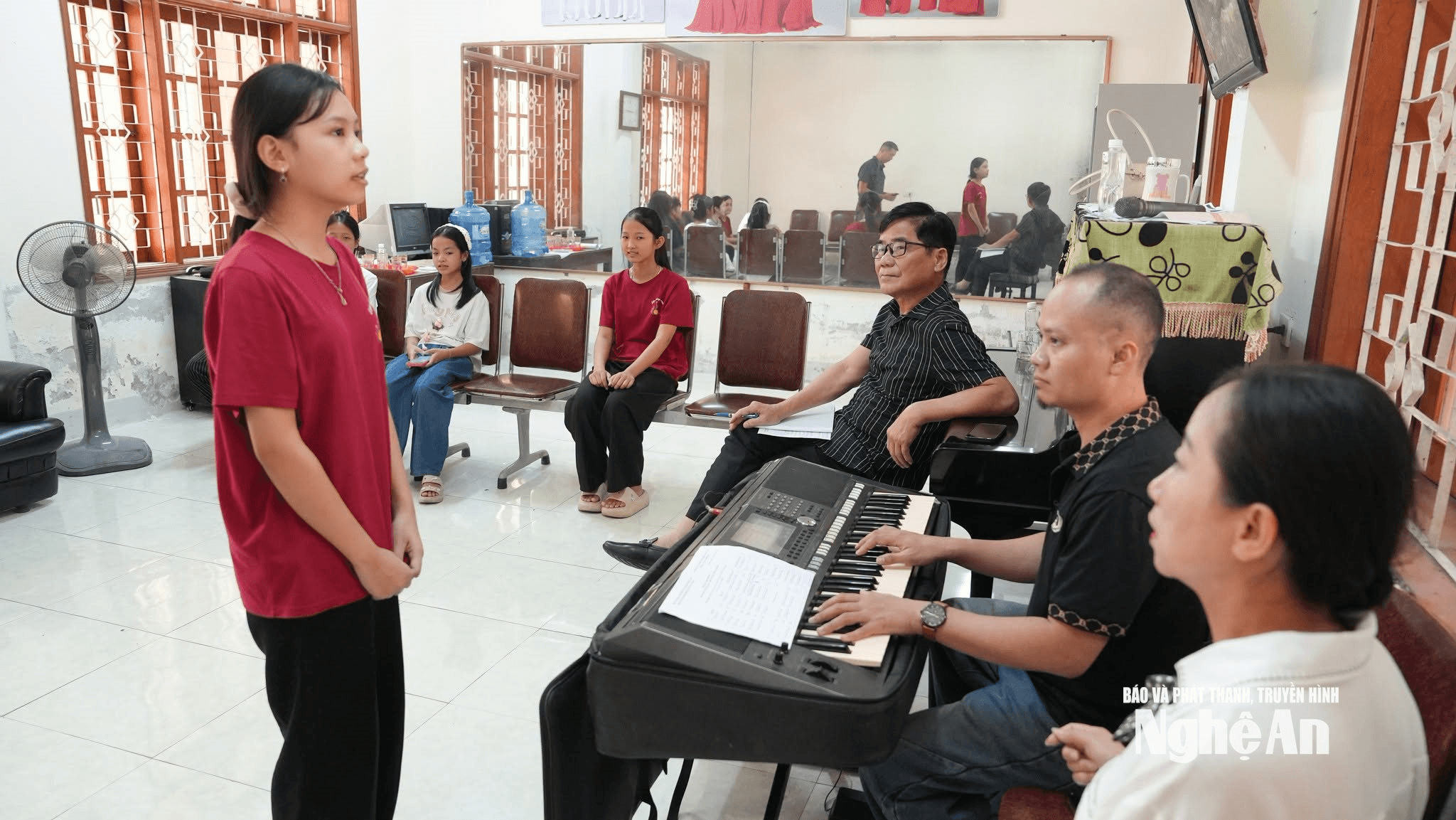
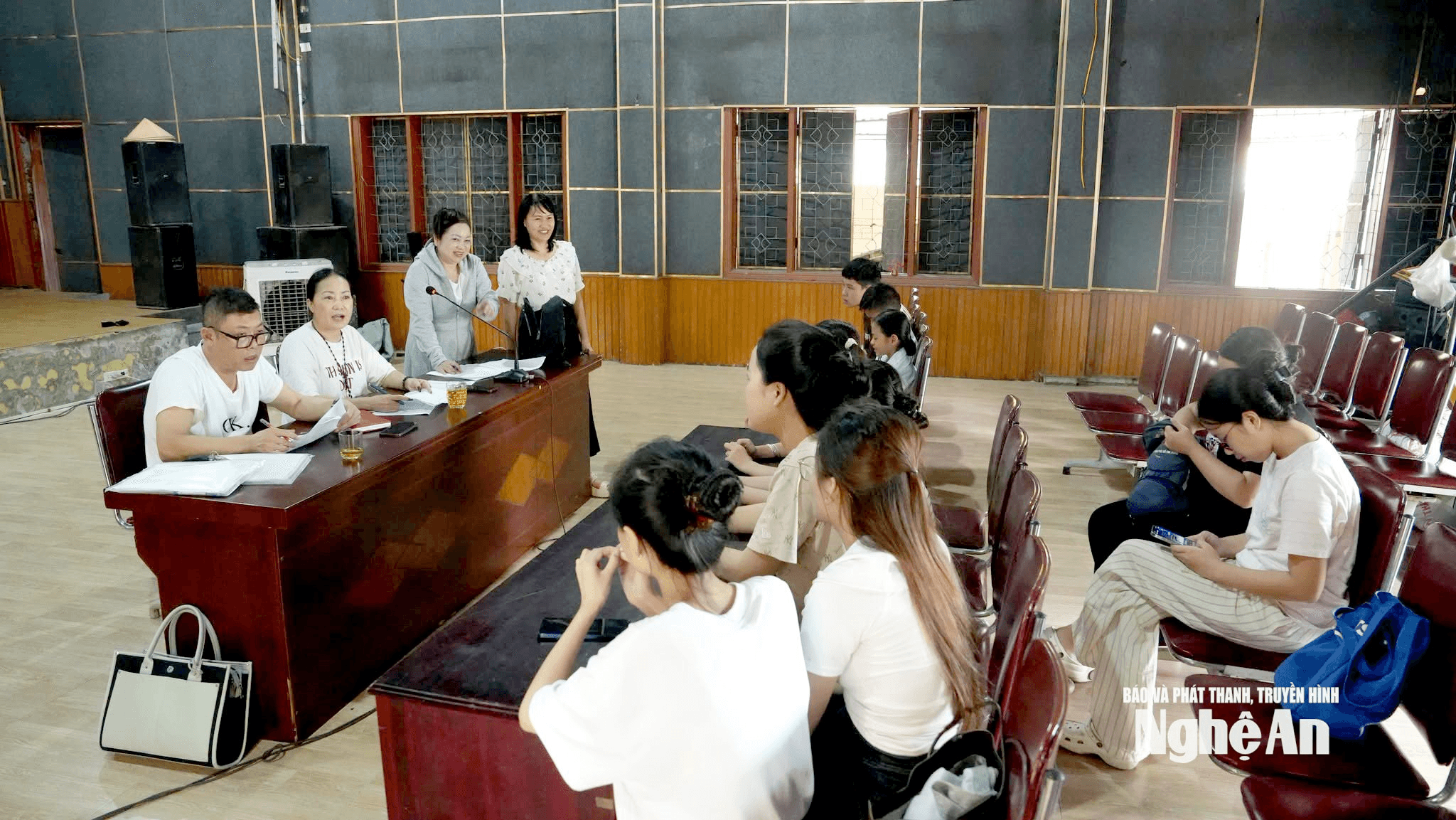
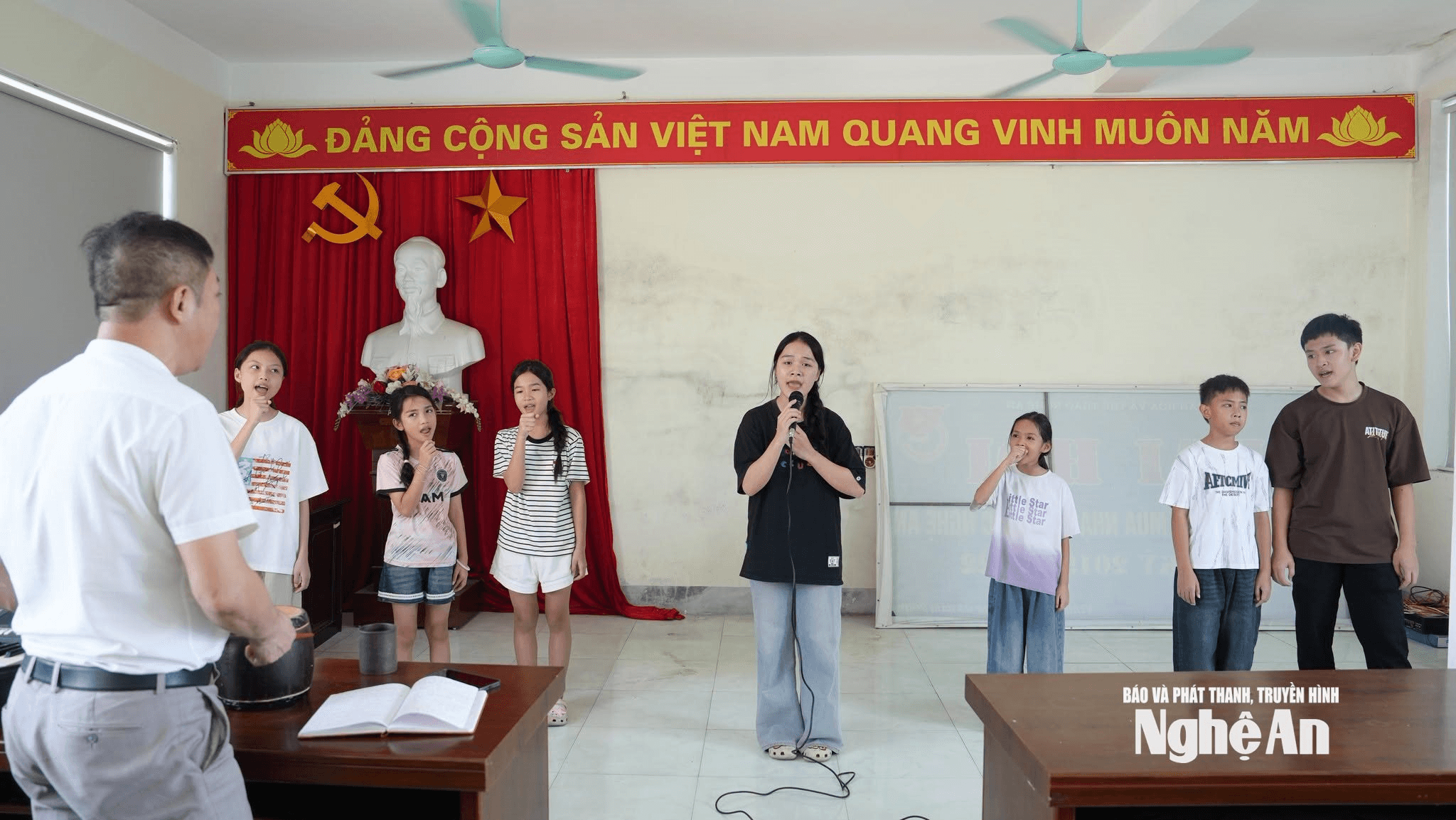
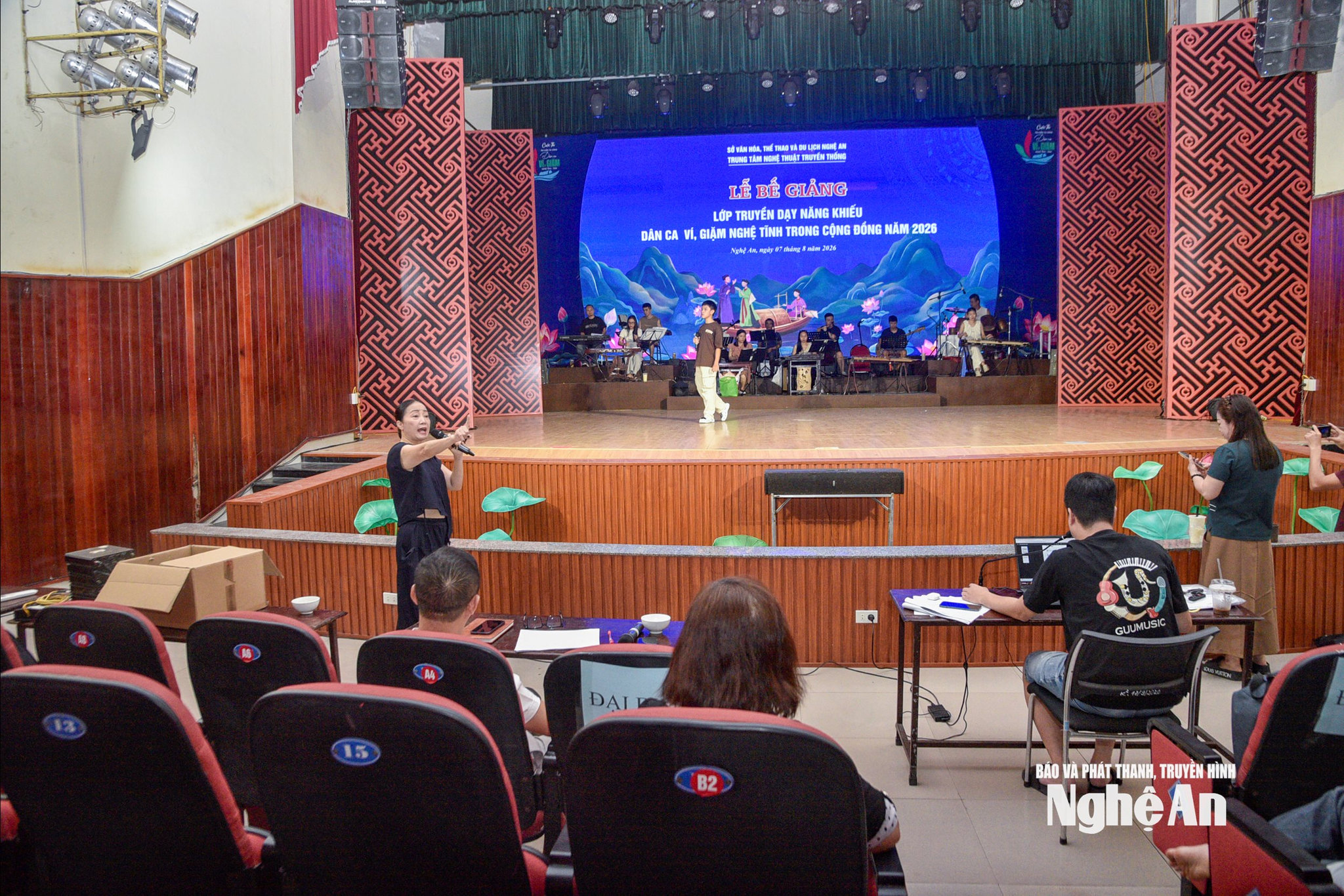
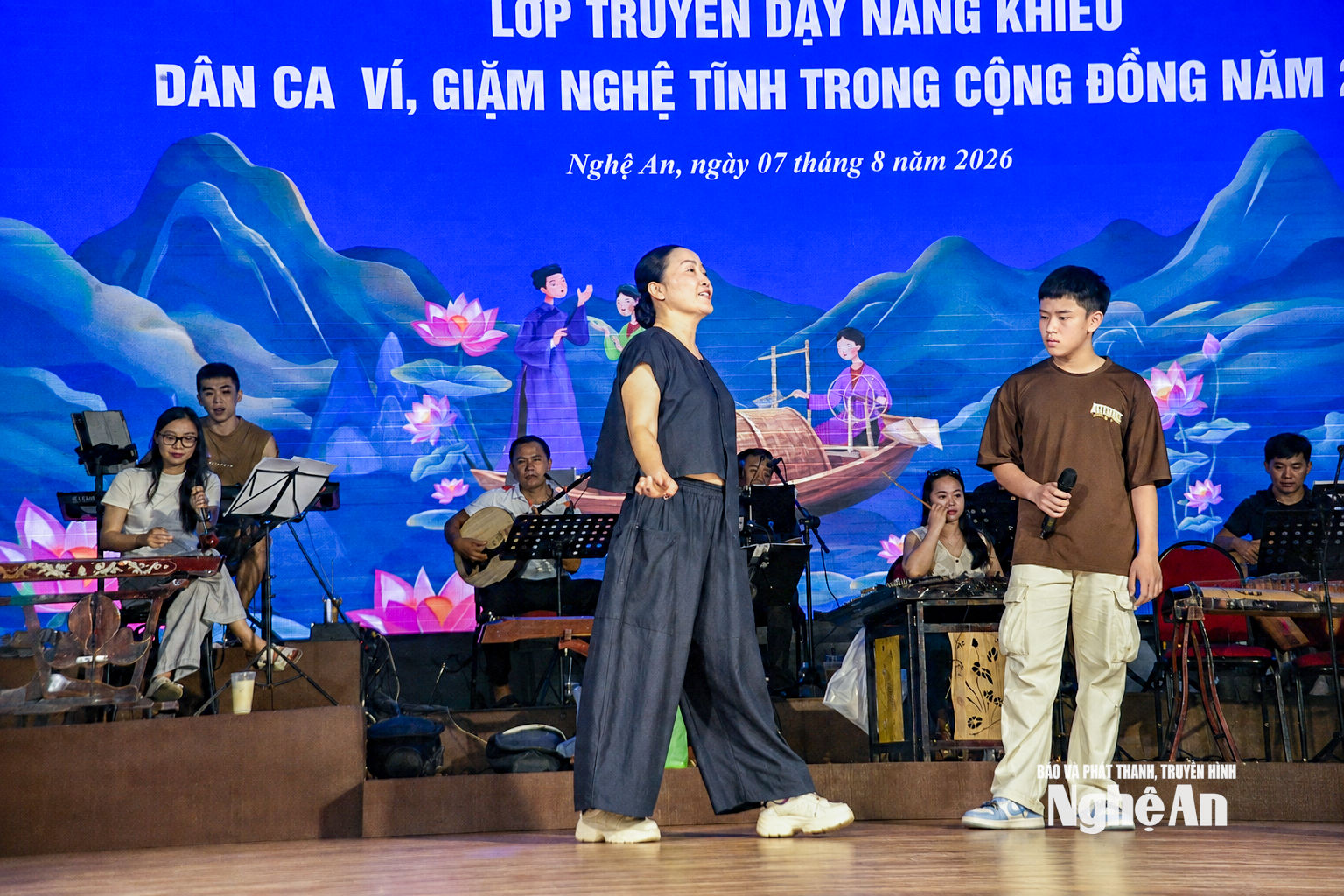
The contestants were divided into three groups and trained in three different rehearsal rooms. Within the grounds of the Nghe An National Folk Music and Dance Troupe headquarters, the sounds of stringed instruments, drums, and folk songs filled the air. Leading artists and instructors guided each contestant, correcting everything from breathing techniques and enunciation to performance movements. Some students perfected their skills with just a few corrections, while others had to sing a section repeatedly to find the right technique. The artists listened attentively to each student, offering gentle feedback. Sometimes, even a single mispronounced word, an incorrect breath control, or an expression lacking sufficient emotion would prompt a pause for correction. Each song was meticulously refined, with the patience and responsibility of those who have dedicated their lives to folk music.
For the artists, the training course is not simply preparation for a competition. It is also an opportunity to pass on their skills, their love, and their belief in the vitality of the Ví and Giặm folk music to the younger generation.
.jpg)
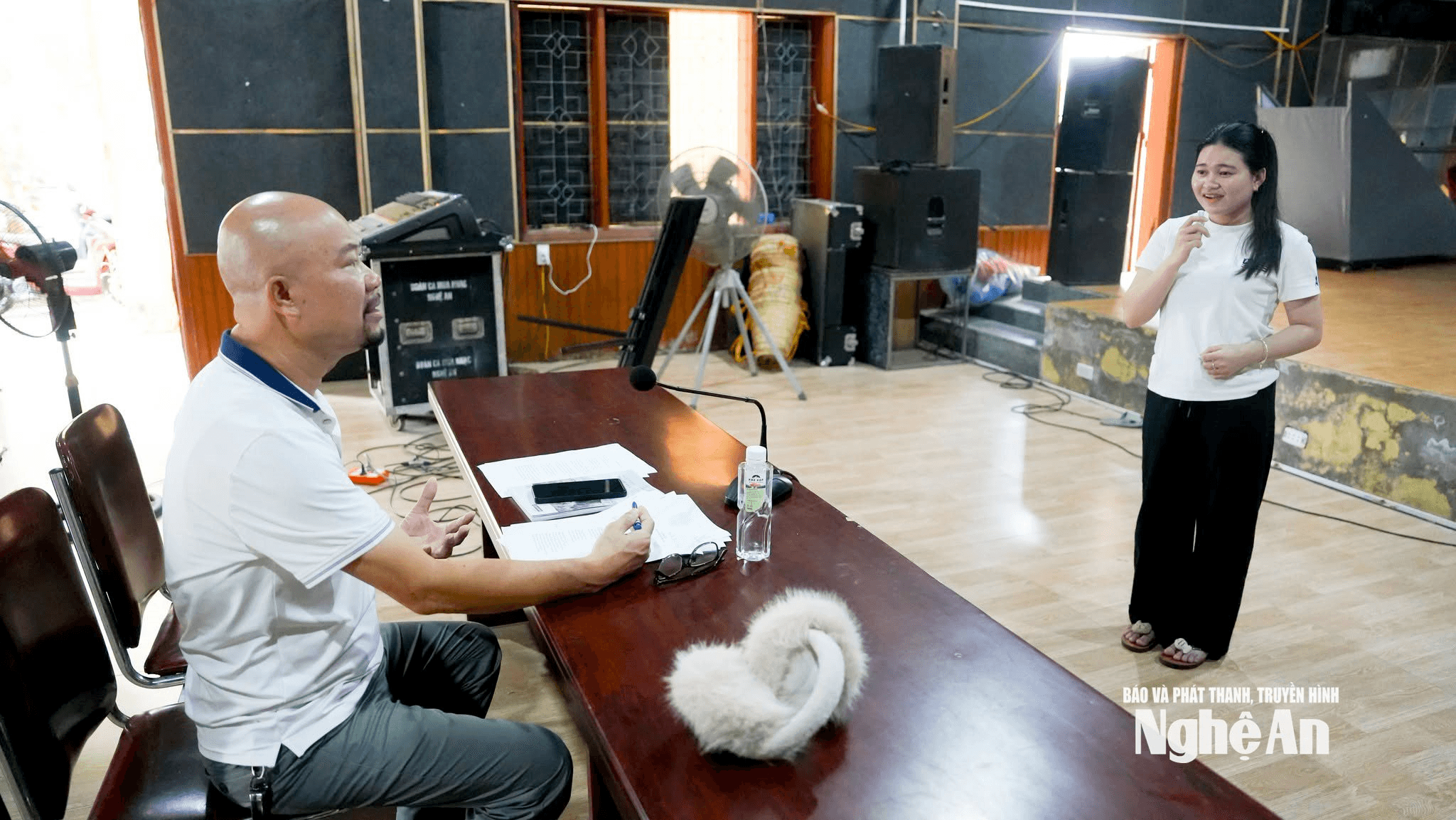
Contestant Ho Thi Ngoc Ha is still deeply moved and full of admiration when recalling her time studying here. “What I remember most isn't the new techniques I learned, but the dedication of the teachers. I felt like they wanted to pass on everything they knew to their students. One day, even though it was past class time and all the other groups had left, Ms. Minh Thanh from my group patiently stayed for a long time to correct my mistakes. If I sang incorrectly, she would gently demonstrate, guide me again, and encourage me to keep singing until I got it right,” Ngoc Ha confided.
It wasn't just Ngoc Ha; many other contestants also recounted lessons that lasted longer than the allotted time. These were lessons not included in the timetable, and no one counted the extra time or effort. But it was precisely these periods that nurtured a love for the folk singing style (ví, giàm) in many of the contestants.
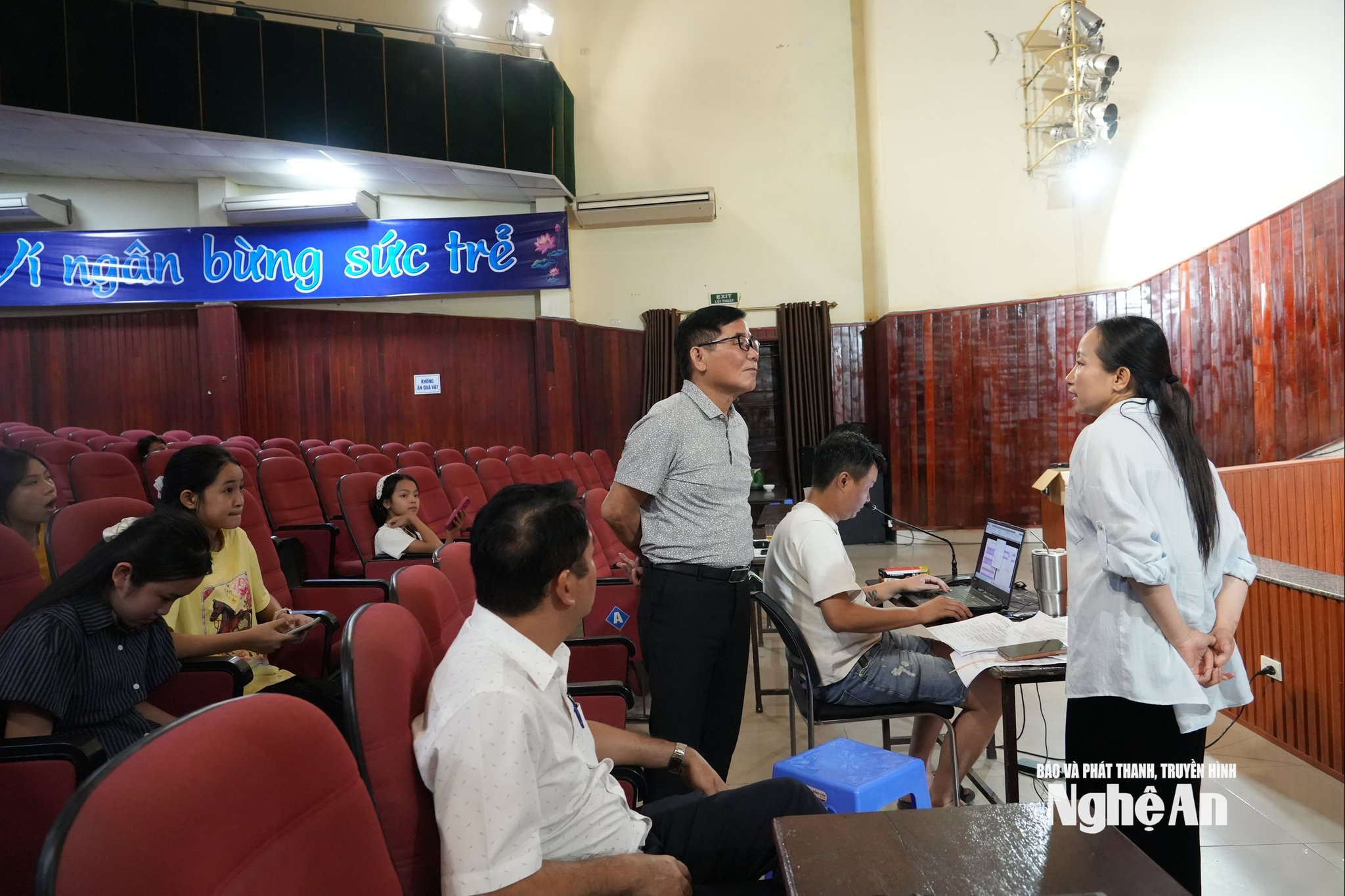
As one of the artists directly teaching at the training course, People's Artist Pham Tien Dung highly appreciated the significance of the competition in discovering and nurturing the next generation of folk artists. “What is valuable is not only the number of participants but also the professional quality and the seriousness of the Organizing Committee in every step. Organizing a well-structured training course before the final round gives the students more opportunities to improve their skills, while also creating conditions for truly talented individuals to be discovered and developed. This is also the foundation for the continued transmission of folk singing to the younger generation in the future,” People's Artist Tien Dung affirmed.
These positive experiences were also clearly felt by the parents. Nguyen Thi Cam Nhung, mother of contestant Tran Ngoc Khanh Ly (FPT School group), who has worked in the arts, said that her perspective changed after directly participating in the competition. Ms. Nhung shared: “Initially, I thought this was just another art competition like many others. However, witnessing the way the Organizing Committee worked, the fairness and transparency of the Judging Panel, and especially the dedication of the artists in each session, I deeply appreciate the opportunity my child had to participate in this competition. I believe this will be a good foundation for many future competitions.”
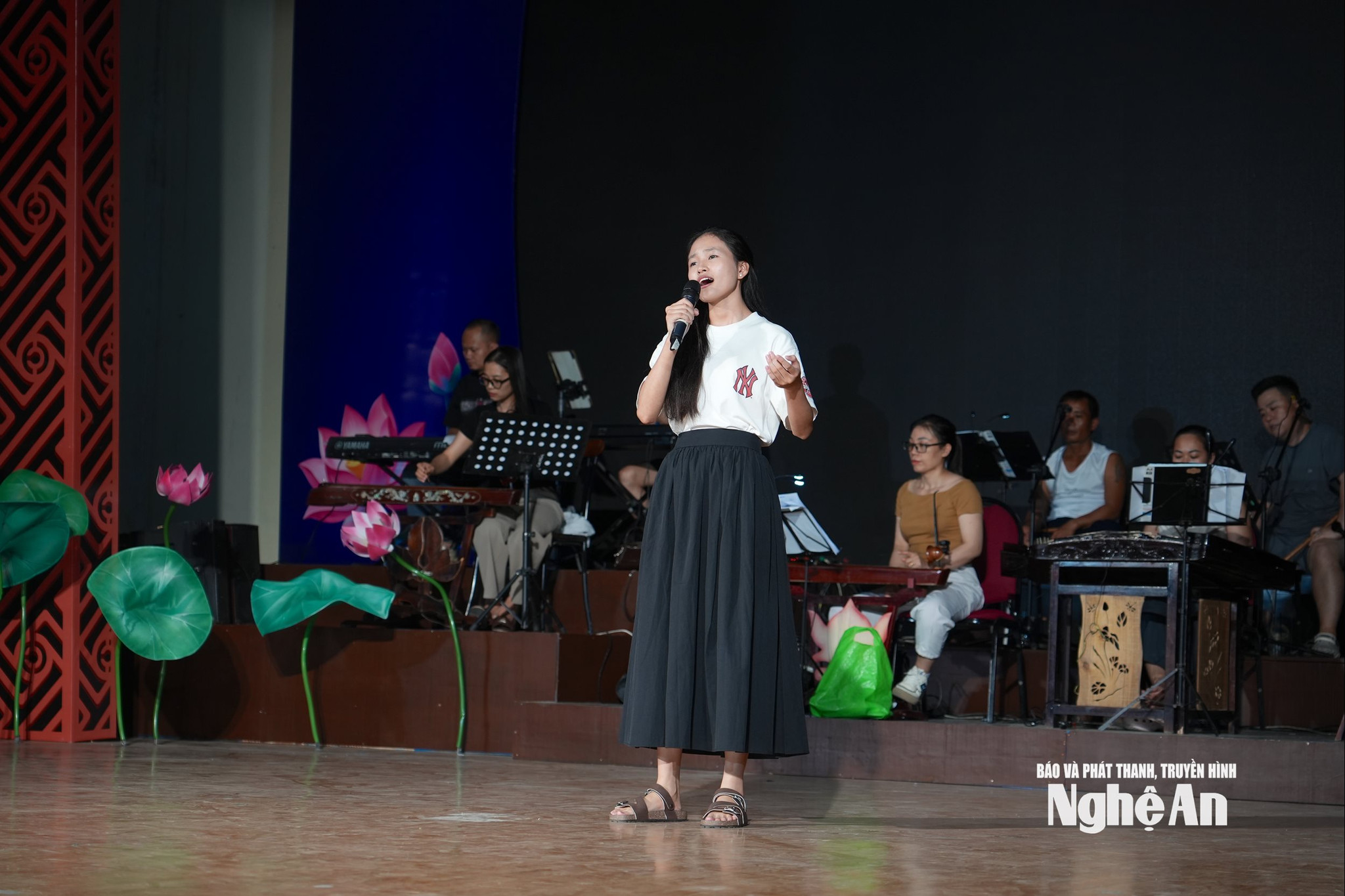
The training course will also come to an end, the final round stage will light up, and the prizes will find their rightful owners. But perhaps the greatest reward that the 30 contestants will take home is not just the results.competitionIt also included new friends, early life lessons about independence, and above all, a love for the Ví and Giặm folk songs nurtured by the teachers who quietly "passed on the torch."
The final round will take place over three nights, August 8th, 9th, and 10th, 2016, at the Provincial Traditional Arts Center (30 Nguyen Sy Sach Street, Thanh Vinh Ward). The program will be livestreamed on the "Competition" Fanpage.Searching for talent in folk singing (ví, giặm)" and the digital platforms of Nghe An Newspaper and Radio and Television.


