
People who preach morality online often…
(Baonghean.vn) - Nowhere else are moralistic sayings so prevalent as on Facebook. At first glance, they seem good, right, and logical, but upon closer reflection, many of them are utterly nonsensical.
The philosophy of the internet might seem harmless, reading and writing according to trends to appear "so deep," but be careful, too much of it can lead to gullibility, and you might find yourself in a dreamy, stagnant life without even realizing it.
Perhaps the most frequent contributors of philosophical quotes online are young women. At that dreamy age, these girls encounter a range of uncertainties in real life, including academic pressure, love, and marriage. Therefore, they spontaneously express feelings of sadness and joy, heat and cold, or randomly utter a few philosophical statements that sound profound and insightful…
Browsing Facebook these days, it's increasingly rare to find high-quality posts from young women that feature professional content, express opinions and thoughts on social issues, or showcase their individuality through status updates. Instead, most posts follow the pattern of selfies with faces heavily edited using countless apps, dressed in trendy outfits, and posing in modern restaurants, hotels, or on the streets… To get good engagement on a photo, a status update is essential to increase visibility. And what could be easier than browsing the internet, searching for profound philosophical quotes, and copying them onto your own Facebook page?

The truth is, for a long time now, all the girls on Facebook have looked pretty similar, almost identical in appearance and speech. Things like, "He earns 5 million VND a month, she earns 5 million VND a month / We don't need to be rich, we can't buy happiness with money, we just need to hold hands and walk through life together..."; or, "When a woman meets a good man, she doesn't need to grow up anymore"; or, "What I love most about him is his sense of responsibility, what I love most about her is her innocence"; and not to mention, "Gain and loss in life are all predetermined by fate, whatever happens, accept it calmly..."
Most online philosophies guide people towards peace and tranquility, but excessive tranquility leads to forgetting and losing the purpose of life. This transforms young people, who should be dynamic, positive, and bold in their lives and work, creating valuable contributions to the community, into superficial individuals who are indifferent, accepting whatever happens, believing that even if the sky falls, they will remain unfazed…
The philosophy of the internet advises you to live a carefree, innocent life, but in reality, how many people reach such heights in life? Most of us are still struggling in the crucible of making a living, filled with countless joys, sorrows, loves, and hates. If you don't strive every day, life will only get worse.
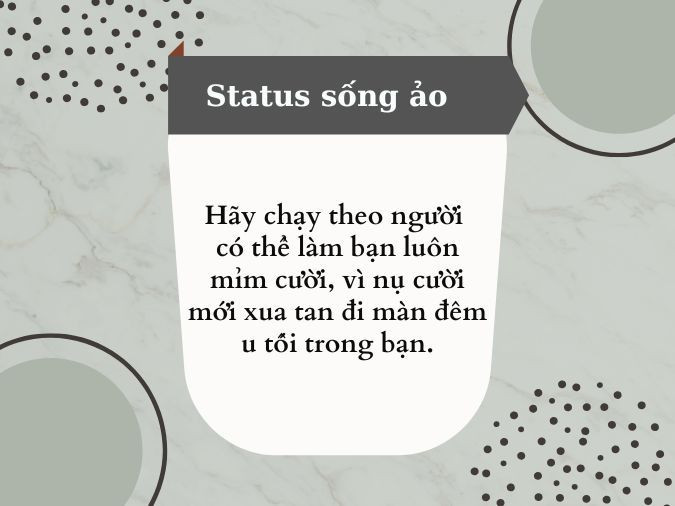
Online philosophies often appeal to men as well, but they tend to express them in a more subtle and discreet way. They don't simply copy a few catchy statuses; instead, they meticulously transform them into more insightful, longer articles, incorporating real-life stories. Or they diligently spend time browsing Facebook, commenting randomly, and offering advice to everyone.
But, as the saying goes: Those who preach morality often live like... While not generalizing, it's clear that if someone has a good life, they wouldn't have time to spend online spouting nonsense and keyboard warrioring. Most responsible and successful men are busy working, picking up and dropping off their wives and children, creating valuable contributions to society, and managing hundreds or thousands of employees. Who has the time to sit on Facebook all day spouting moralistic platitudes?
A level-headed person in the virtual world asserts: Listening to online philosophies is like throwing away your seeds; meaning, blindly believing baseless, unfounded beliefs will eventually ruin your roots, leaving you with nothing. Human nature is complex; truly virtuous people behave humbly, civilly, and avoid arguments, while those who live by virtual moral principles often try to appear more knowledgeable and insightful than others, lecturing and trying to teach others. They use these principles to mask their own shallowness and ugliness.

There's nothing wrong with reading philosophical insights to improve yourself; in fact, many exemplary individuals also use Facebook to share their real-life stories and heartfelt reflections. However, reality is harsh, and other people's experiences shouldn't be used as a definition for yourself. Therefore, read and reflect more, read with reason and understanding, and then examine and contemplate your own reality, rather than blindly believing, relying on others, or living in a virtual world. Ultimately, a few profound philosophical words are just the shell; the inner strength lies within – a hidden power that can only be forged through refinement, experience, and trials.


