
Works that embody the national spirit
The exhibition of ornamental plants opened in the Thai Hoc courtyard of the Van Mieu - Quoc Tu Giam historical site - Hanoi's nearly 1000-year-old university - as a warm welcome to the 54th anniversary of the liberation of the capital and to join the nationwide celebration of the 1000th anniversary of Thang Long - Hanoi.
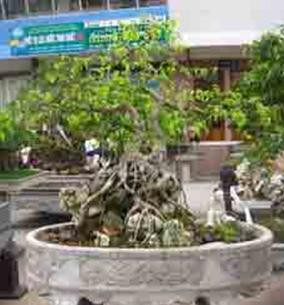
It can be said that the refined pastime of bonsai cultivation, inherited today, has created unique works that embody the soul of the Vietnamese nation. The shapes of mountains and rivers are hidden in the forms of trees and rocks, the spirit of culture is hidden in the exquisite lines, creative ideas, and materials passed down for hundreds of years… Nearly 100 bonsai works of various species: banyan, fig, cypress, pine, and crape myrtle… all have been nurtured and shaped naturally according to two schools of thought. Bonsai in the traditional style of old Hanoi are encapsulated in themes such as: Three Abundances, Brothers of the Same Academic Year, Father and Son, Mother and Child, and transcendence…
The contemporary trend is towards slender, elegant bonsai trees in the style of literati. Many of these trees have participated in and won numerous gold and silver medals at the Bonsai Festival in Ho Chi Minh City, the "Spring Colors of the Ancient Citadel" exhibition, and other national exhibitions from 2002 to the present. The work "Ancient Soul" by author Nguyen Trong Thanh seems to be the most captivating for bonsai enthusiasts. It is a meticulously shaped banyan tree with a miniature landscape of a well and a pavilion... just like the scenery and idyllic life of the people in the Northern Delta region. Even without considering the age of the banyan tree, the shaping and miniature landscape alone took the author six years. It's also worth mentioning the 80 orchid pots featured in this exhibition, with various species: slipper orchids, dragon's claw orchids, night-blooming jasmine, leopard orchids, foxglove orchids, buffalo ear orchids, and many rare terrestrial and wild orchids. In particular, members of the Hanoi Ornamental Plants Association have grafted several wild orchids onto ancient trees in the Temple of Literature - National University, with the firm belief that the trees will thrive, bloom regularly, and beautifully. If this practice is replicated, it will significantly contribute to greening and beautifying the capital city and, especially, will make a positive and effective contribution to the conservation of rare and valuable natural species.
 |
From its very first day of exhibition (October 4th), the ornamental plant exhibition has attracted a large number of domestic and foreign visitors. The works on display clearly and comprehensively showcase the form, posture, nature, and the ingenuity of Vietnamese people and culture. It is possible that after this exhibition (ending on October 13th), some works of high artistic and cultural value will be permanently preserved here. This is also the beginning of a new, unique, cultural, and traditional aspect for the upcoming 1000th anniversary of Thang Long - Hanoi, making the Temple of Literature - National University worthy of being one of Vietnam's leading and most representative historical and cultural relics.
According to Urban Economics