
Strategic calculations in Russia-India relations
(Baonghean) - Russian President Vladimir Putin's visit to India is attracting particular attention from international public opinion, in the context of Western sanctions against Russia and India emerging as an important partner of many world powers. Cooperation between Russia and India is not only part of bilateral strategic calculations, but also relates to other international relations.
(Baonghean) - Russian President Vladimir Putin's visit to India is attracting particular attention from international public opinion, in the context of Western sanctions against Russia and India emerging as an important partner of many world powers. Cooperation between Russia and India is not only part of bilateral strategic calculations, but also relates to other international relations.
For Russia, President Putin's visit to India comes at a time of geopolitical sensitivity. Amidst strained relations between Russia and the West over the Ukraine crisis, Russia is reconsidering its future strategic policy, and strengthening ties with Asia is one of the prominent foreign policy priorities under President Putin's administration. In addition to drawing closer to China in recent times, Russia has not forgotten another major regional power: India. Meanwhile, the foundation of relations between Russia and India remains quite strong.
| RELATED NEWS |
|---|
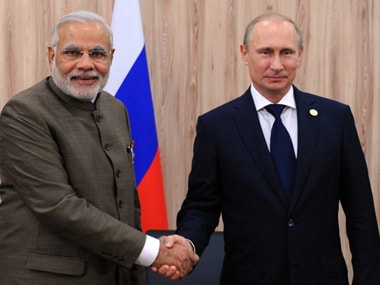 |
| Indian Prime Minister Narendra Modi and Russian President Vladimir Putin. |
India and Russia, once close allies since the Cold War, have not experienced any major conflicts or disagreements over the years and now enjoy a special strategic partnership. India is also a country with a significant strategic position in Asia, widely regarded as a responsible and moderate "stakeholder" in Asian and global security. Therefore, strengthening relations with India can be seen as part of Russia's Asia-oriented strategy. Increased cooperation with India will help Russia diversify its international relations in the face of isolationist pressure from the West. In the short term, Russia will leverage India's advantages and potential to further strengthen economic cooperation and boost bilateral trade.
India is currently a major trading partner of Russia in energy, weapons, and many other goods. President Putin's ambition is to become the leading energy supplier to Asia. And India is a market with great potential, a country with a strong energy demand to support its economic development plans. That is also why, during this visit, the Russian President proposed strengthening cooperation with India in oil and natural gas projects and building more nuclear power plants in this South Asian nation. It is expected that the two sides may sign 15-20 cooperation agreements in the fields of defense, nuclear energy, customs, and banking and finance.
Meanwhile, on the Indian side, although New Delhi no longer considers Moscow an ally as it did during the Cold War, there are still many reasons for India to strengthen cooperation with Russia. First, Russia is a major power and a country that consistently supported India's stance on the Cashmia issue during the Cold War. Currently, the two countries share similar views on how to address many global issues such as Afghanistan, Iran's nuclear program, and the fight against terrorism. Furthermore, Russia is a significant supplier of energy, nuclear technology, and weapons to India. Another reason is that India is interested in the recent strengthening of relations between Russia and China. Therefore, India does not want to be left out of the strategic triangle of Russia, China, and India – a crucial axis in international relations.
Another reason, according to observers, is that India is also interested in President Putin's approach to Pakistan – a neighboring country with which many conflicts currently exist. During the first visit of a Russian Defense Minister to Pakistan (since the end of the Cold War) last November, the two sides signed a military cooperation agreement emphasizing cooperation in counter-terrorism and stabilizing Afghanistan, and an agreement on Russia selling modern fighter jets to Afghanistan… This will certainly make India reconsider its position, given the flexible shift in Russia's strategy.
On another level, it's easy to see that India is pursuing a more independent and autonomous foreign policy with the goal of balancing its relations with major powers. Therefore, besides forging closer ties with the US or Japan, India also doesn't want to antagonize Russia. These are the reasons why India recognizes the need for cooperation and further strengthening its relationship with Russia. The fact that Indian Prime Minister Narendra Modi invited Russian President Putin to visit India amidst strained relations between Russia and the West is evidence that Russia remains a priority in India's foreign policy.
The special strategic partnership between Russia and India will undoubtedly provide Russia with leverage in the region and globally. This relationship will also help India balance its foreign policy with major powers. It seems that, in the current global environment, Russia needs India, and India needs Russia.
Thanh Huyen


