
The civil war in Syria risks "getting out of control".
The civil war in Syria continues to escalate, with fears that it is spiraling out of control. Fierce fighting persists, with Aleppo, the second-largest city, currently the focal point.
According to the Syrian Human Rights Observatory (based in the UK), on August 2, opposition forces shelled the Menagh air base, located 30 km northwest of Aleppo, which government forces use to conduct airstrikes.
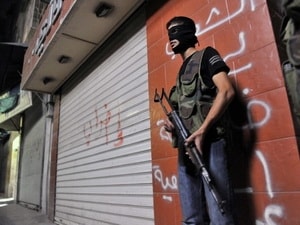
According to the same organization, 43 people have died in violence near the capital Damascus. The pro-government daily Al-Watan reported on August 2nd that Syrian security forces are hunting down "terrorist groups" in Damascus province.
Earlier, on August 1st, the UN confirmed that opposition forces attempting to overthrow President Bashar al-Assad's regime now possessed heavy armored vehicles, and UN military observers in Syria witnessed government forces using fighter jets to attack opposition forces in Aleppo.
The French news agency AFP reported that opposition forces had captured several tanks, while some Syrian army units had deserted, taking armored vehicles with them.
It is difficult to get a complete picture of the situation in Aleppo due to a lack of independent sources and restrictions imposed on foreign journalists.
Internet and mobile phone services in this city, which serves as Syria's commercial hub, have been cut since August 1st, and according to a security source in Damascus, this is often a harbinger of a large-scale military offensive.
According to the Syrian Human Rights Observatory, the nationwide death toll on August 1st was 163, including 98 civilians, 20 militants, and 45 soldiers. The organization estimates that more than 20,000 people have died in Syria since the crisis began in mid-March last year.
On August 2nd, a leading Syrian politician, Minister of National Reconciliation Haidar, emphasized that the only way to end the violence is through political dialogue. Speaking to Swiss media, Haidar stated that President Assad's establishment of the Ministry of National Reconciliation demonstrates his willingness to resolve the current issue through a political process.
Mr. Haidar also strongly criticized "external interference," arguing that such interference only "serves Israel's interests."
According to (VNA) - DT


