
In difficult times, there are Party members in military uniforms.Lesson 2: The soldiers return to "bring peace to the people and warmth to the villages."
In the misty villages along the majestic Truong Son mountain range, or in the coastal areas still fraught with difficulties, where worries about food, clothing, and the pressure of making a living still weigh heavily on many poor households, the green-uniformed Party members of the Nghe An Border Guard assigned to oversee these households have quietly brought two precious things: sustainable livelihoods for the people to reduce poverty and knowledge so that disadvantaged children do not miss out on a promising future.
Khanh Ly - Thanh Phuc - Hai Thuong/Present:Hong Toai• January 16, 2026
---------------o0o---------------
In the misty villages along the majestic Truong Son mountain range, or in the coastal areas still fraught with difficulties, where worries about food, clothing, and the pressure of making a living still weigh heavily on many poor households, the green-uniformed Party members of the Nghe An Border Guard assigned to oversee these households have quietly brought two precious things: sustainable livelihoods for the people to reduce poverty and knowledge so that disadvantaged children do not miss out on a promising future.
.png)
In the afternoon at the border of Tam Thai commune, clouds drift lazily over the Truong Son mountain range, and the only road leading down to Van Mon village is adorned with white reeds swaying in the winter breeze.
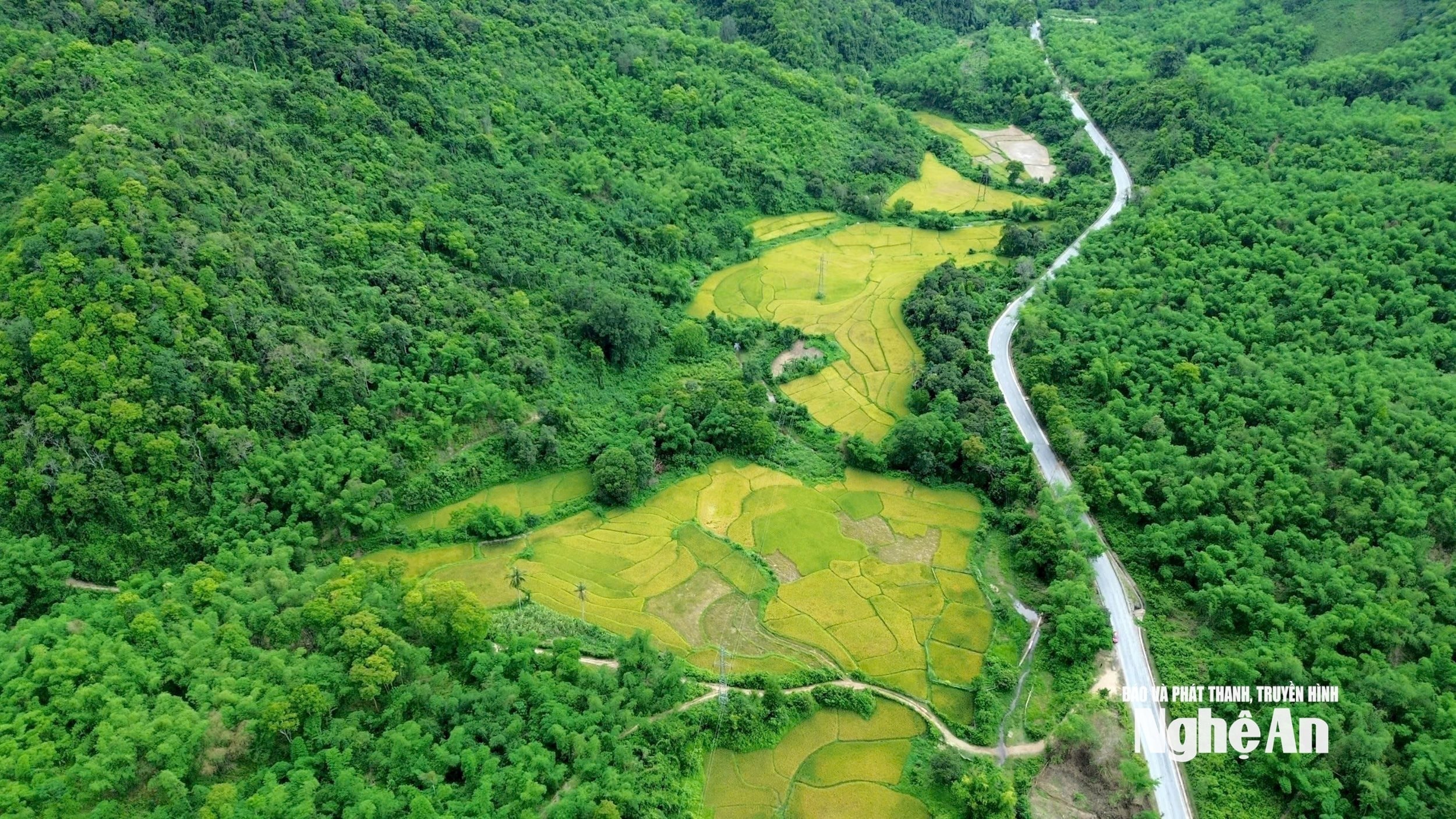
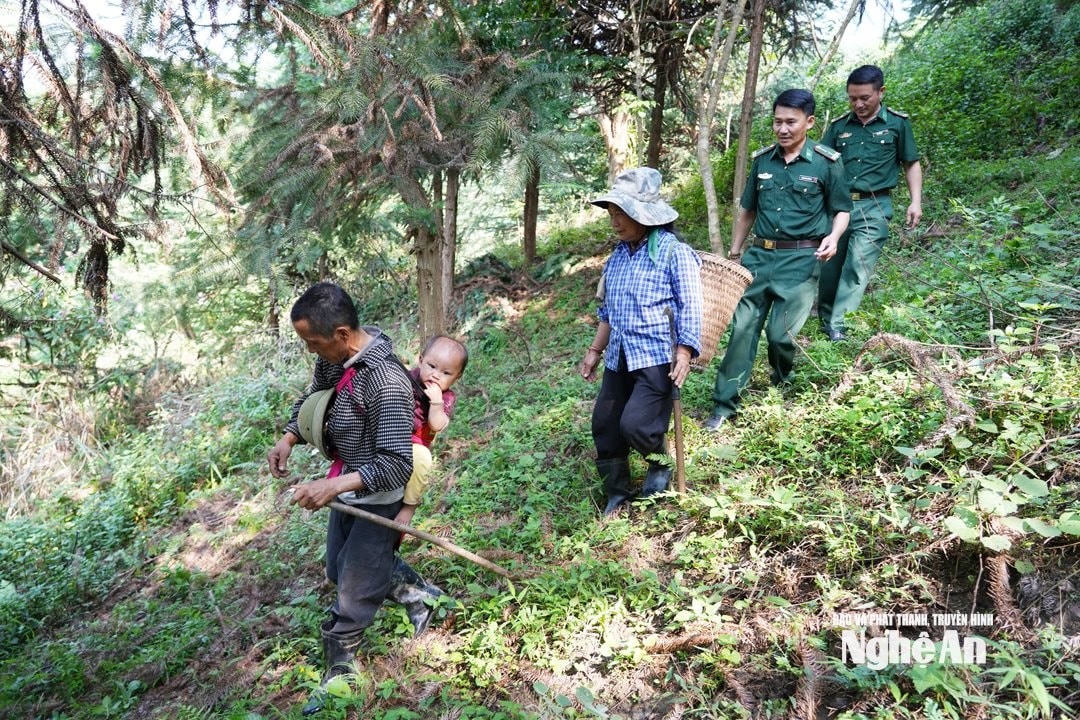
In this remote border region, the young, green-uniformed Party members of the Tam Hop Border Guard Post regularly trek through the forest and down to the villages; not only do they maintain border peace, but they also quietly ignite the aspirations of the local people to escape poverty, through persistent, unwavering, and sincere actions, just like the land and forests here.
.png)
"Going to the villages and receiving hands-on guidance"—that phrase may seem simple, but it represents a long and arduous journey for the Party members of the Tam Hop Border Guard Post. In the final days of 2023, when the program to support poor households in developing their livelihoods was widely implemented, each officer and soldier was assigned to be responsible for five households.
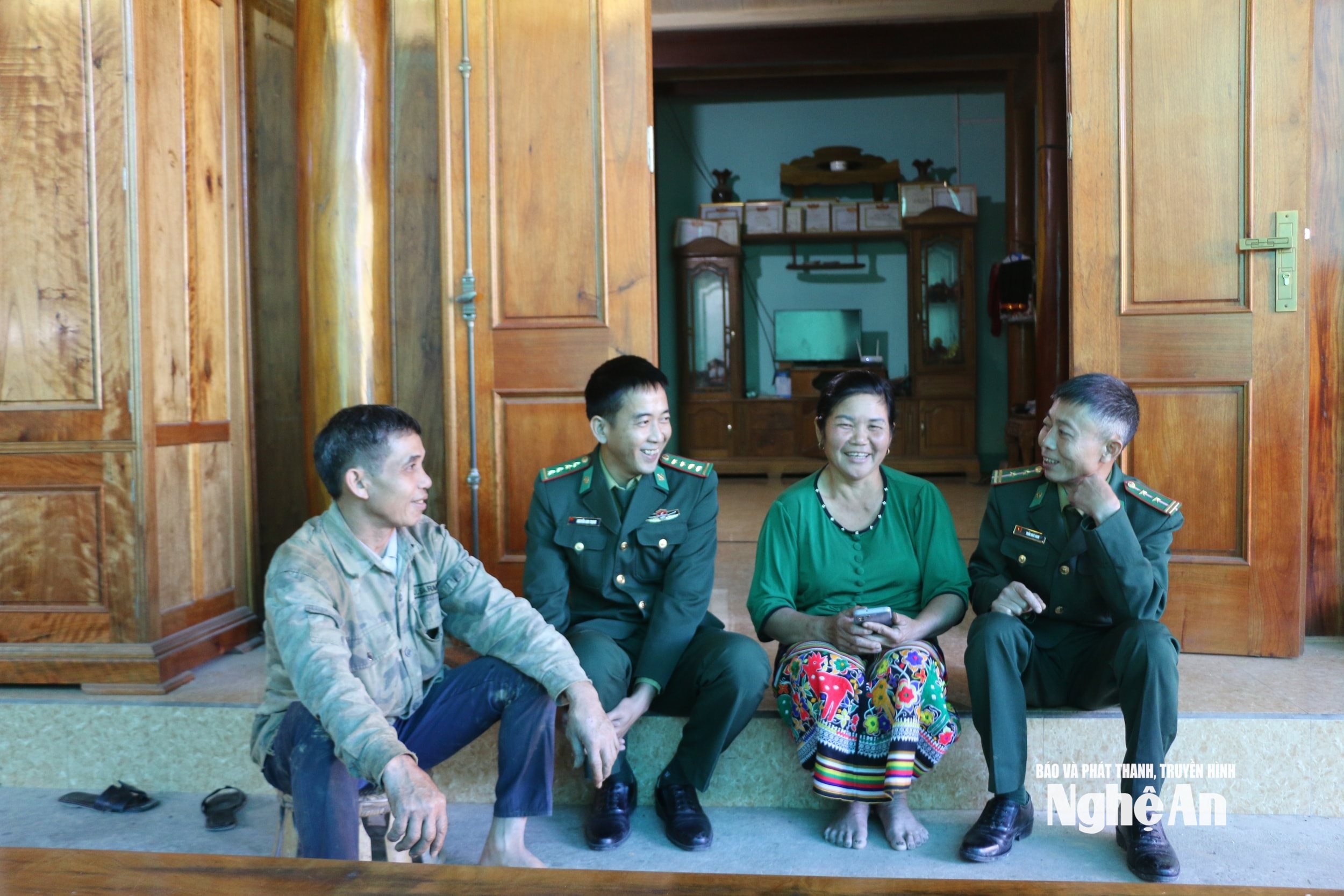
Captain Nguyen Kim Trong, the team leader of the Community Mobilization Team, provided assistance to the family of Mr. Luong Van Hoan and Mrs. Quang Thi Loan in Van Mon village, Tam Thai commune. Using his savings, Captain Trong spent 14.7 million VND to buy 5 breeding goats. He personally guided Mr. Hoan and Mrs. Loan on building a barn, selecting grass, disease prevention, and monitoring the herd's growth. In just one year, the herd, which started with a few breeding goats, had grown to 50 healthy animals.
Mr. Hoan recounted, his eyes shining with rare joy: “Last year, I earned nearly 75 million dong from selling goats, and I renovated my stilt house. Thanks to the soldiers' guidance, the goats reproduced regularly, and I invested more capital to expand the herd, reaching a peak of 70-80 goats. Now that I have the knowledge, I feel completely secure in my business.”
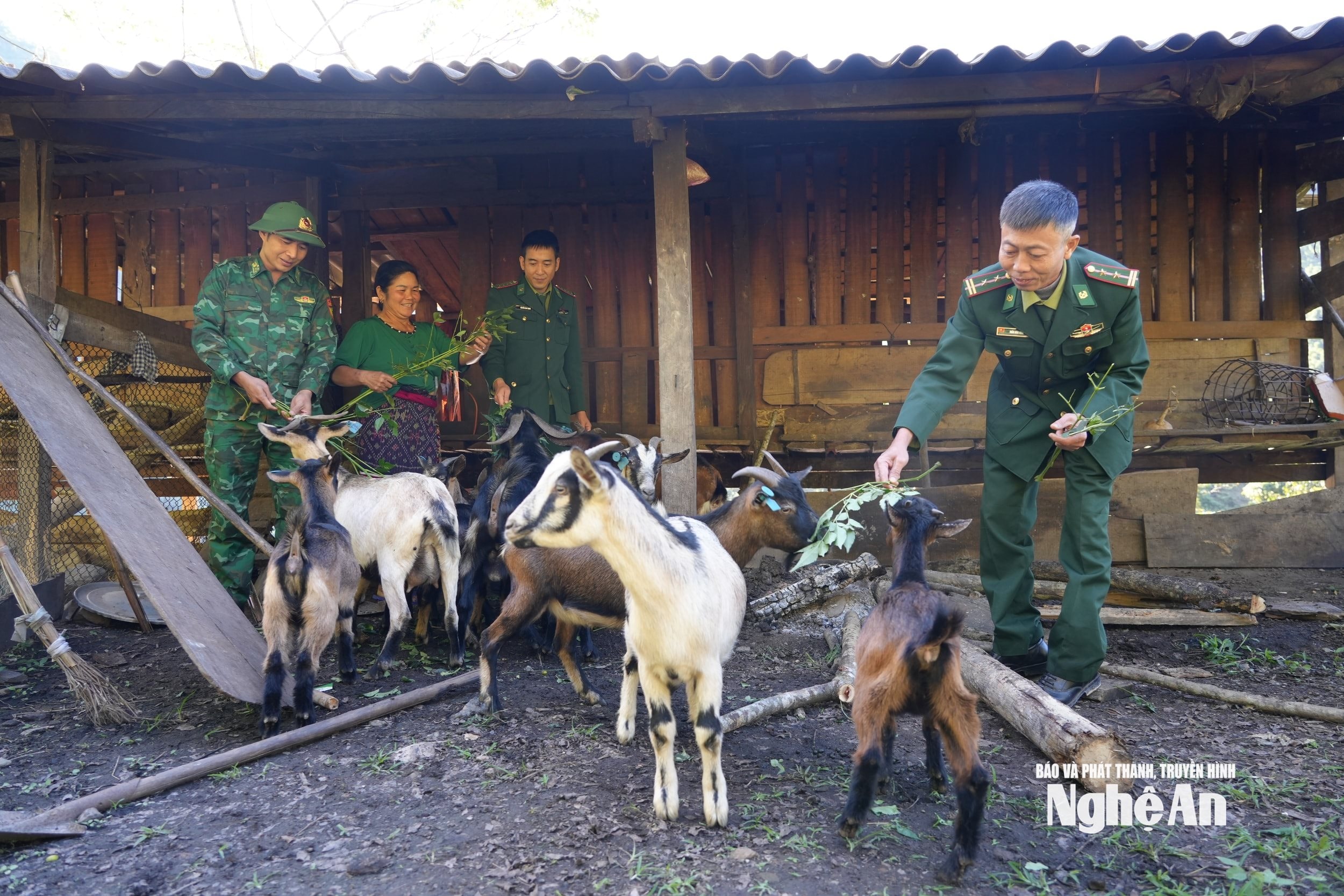
Besides providing capital, in his spare afternoons, Captain Trong would trek down the mountain slopes to the villages, inspect livestock pens, and encourage families. The soldier's perseverance, combined with the people's determination, created a solid model for poverty alleviation in a region still facing many hardships.
At the foot of the Tam Hop Border Guard Post, the family of Mr. Vu Giong Chua in Huoi Son village, a poor household with 12 children, also transformed their lives thanks to that silent sharing. Mr. Chua said: His family received support from Party members in military uniform, including seeds, fertilizers, guidance, and assistance in clearing land to plant 1 hectare of sorghum. In the first harvest of 2025, he earned 15 million VND – an amount that marked the beginning of a livelihood model suitable to local conditions.
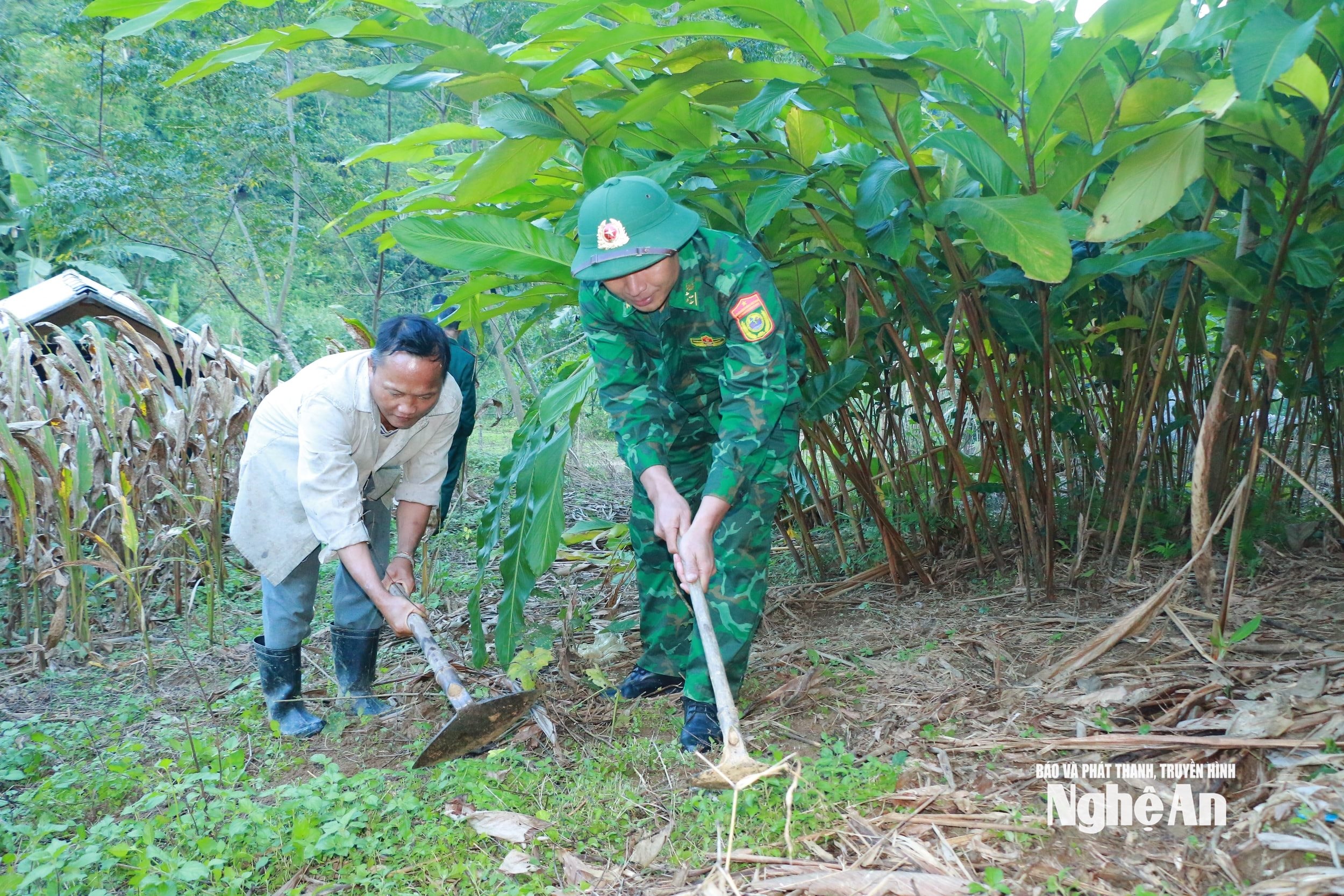
"Helping the people requires close attention, guidance step-by-step instruction so that they can succeed and succeed," shared Captain Nguyen Kim Trong, Team Leader of the Community Mobilization Team at Tam Hop Border Guard Station.
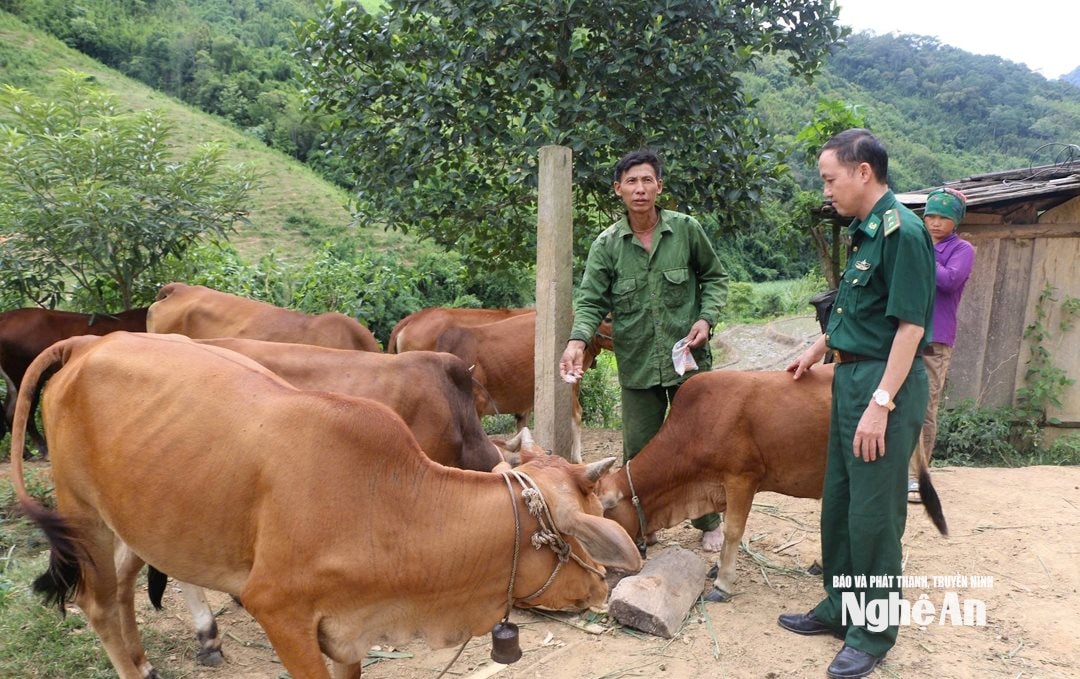
Not only providing support to individual households, since August 2022, the Tam Hop Border Guard Station has also coordinated with local authorities to implement the "Military-Civilian Livelihood" model, creating a continuous livelihood cycle among poor households. In the first phase, 50 piglets were given to the people; in the next phase, 4 more breeding cows were handed over.
The approach is: Receive - raise - breed - return - multiply. Each household that escapes poverty has the responsibility to return the livestock to other needy households, transforming the initial support into a lasting humanitarian flow.
Mr. Xong Va Menh, from Pha Lom village, still clearly remembers the day he received the breeding cow in early 2024: "Having a breeding cow gives me more hope. Later, when the cow gives birth, I will return it to help other poor households."
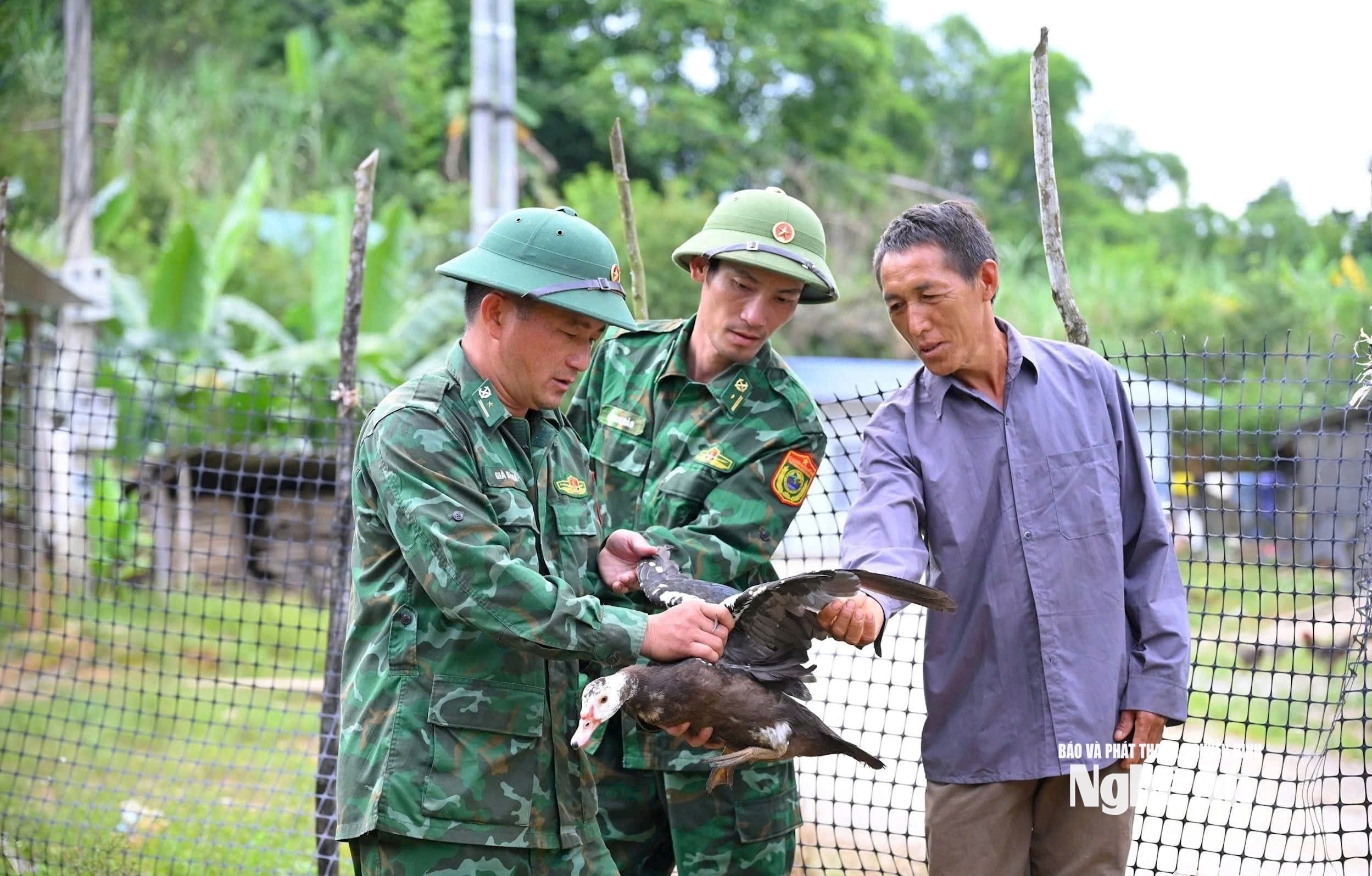
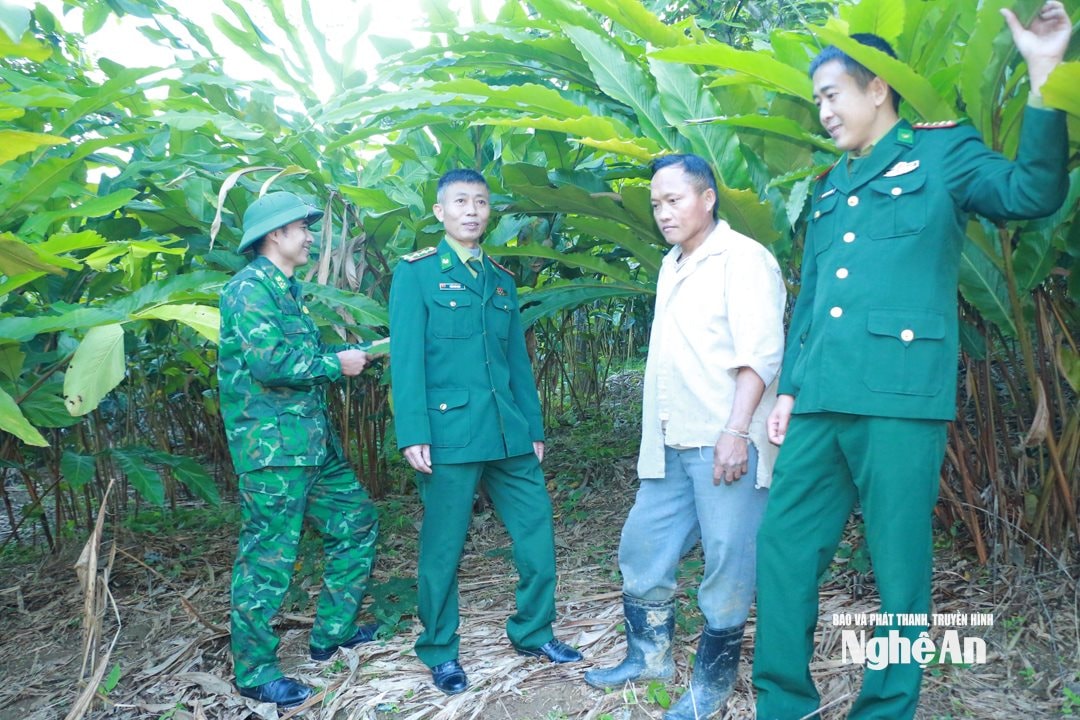
Not only at Tam Hop Border Guard Post, but also along the two border lines of Nghe An province, many other border guard posts are effectively implementing the assignment of Party members in military uniforms to "guide and instruct" local people, opening up new avenues for development. At Na Ngoi Border Guard Post, Major Gia Ba Na has persistently worked alongside Mr. Xong Ga Lau's family to build a model for raising ducks and freshwater fish. Starting with an initial capital of 2 million VND and 100 ducklings, along with the support of border guards in digging ponds and building enclosures, Mr. Lau's family has achieved a stable income and is gradually escaping poverty.
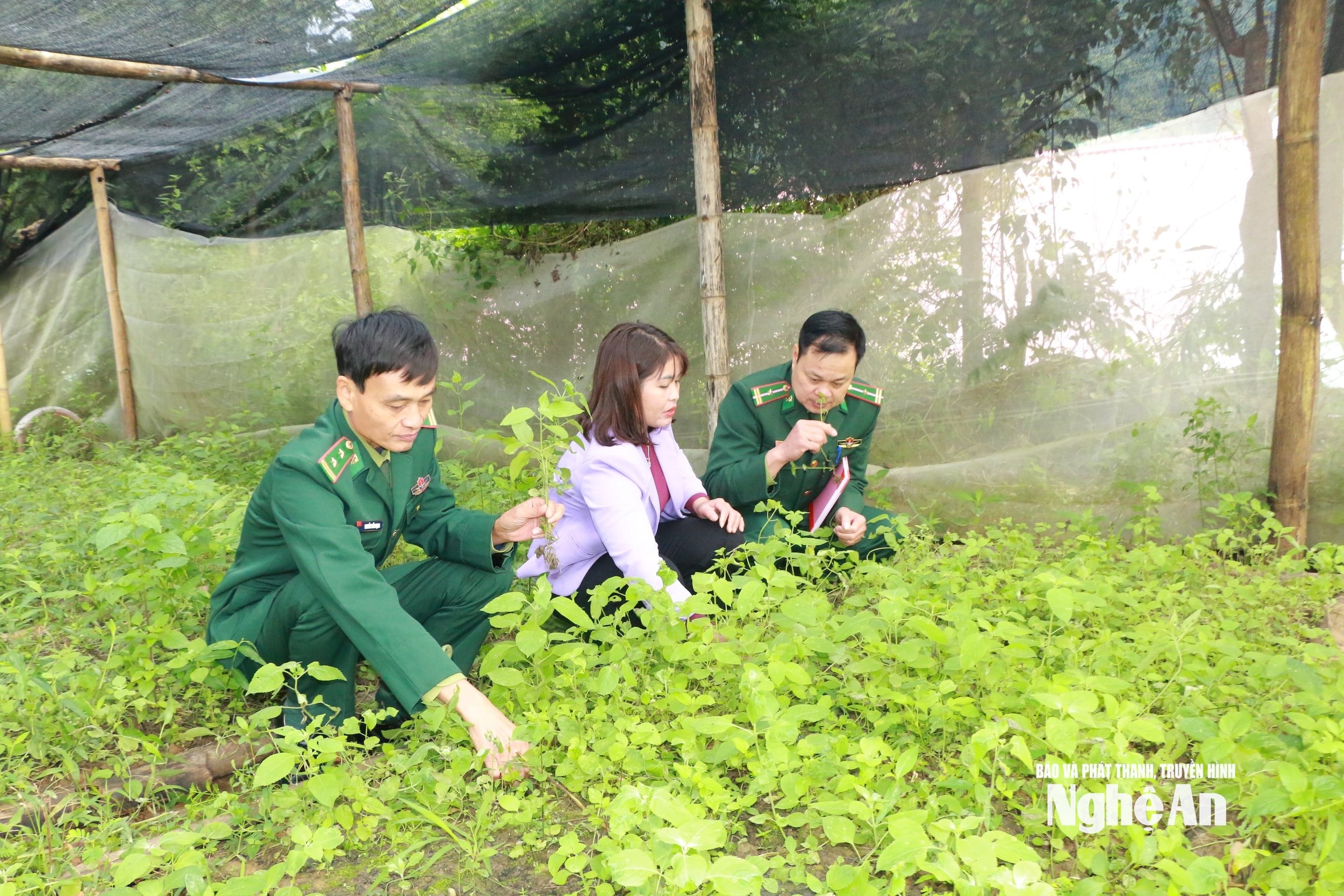
At the Muong Ai Border Guard Post, 31 Party members responsible for 135 households have persistently stayed close to the people in the villages. Besides disseminating the Party's guidelines and policies, and the State's laws and regulations, these military Party members also help people develop effective economic models such as breeding goats, cultivating rice during the winter-spring season, and raising fish fry. To date, 5 households have escaped poverty, some of which have achieved a relatively high income.
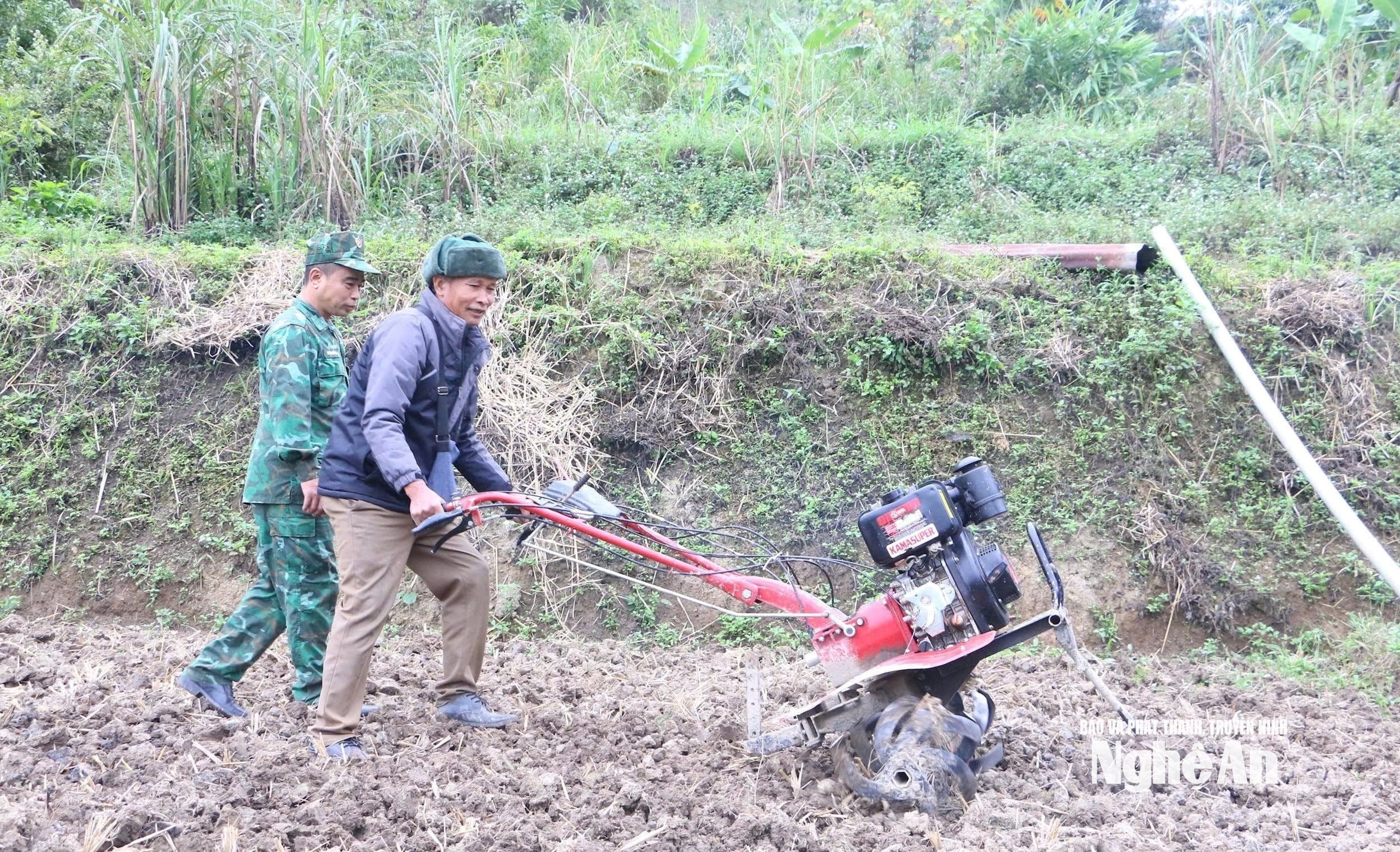
A prime example is village elder Hoa Pho Nganh (66 years old, Xop Lau village, Muong Tip commune). From a small, fragmented household lacking technical skills, the village elder's family has built a comprehensive economic model in the C5 area with 1.2 hectares of rice paddies, 2 fish ponds (with fish fry provided by the border guard station), elephant grass, high-yield cassava, 100 banana trees, various vegetables, fruit trees, and raising native pigs and chickens along with 14 buffaloes and cows. Proudly showing off his storehouse full of thick-grained corn, golden rice, and stacks of plump gourds and pumpkins, village elder Hoa Pho Nganh said: “Previously, my family only raised chickens and cows naturally, without knowing disease prevention, so the results were poor. Since receiving guidance on care and disease prevention techniques from Lieutenant Colonel Nguyen Truong Quan, a border guard party member, the livestock herd has developed well.”
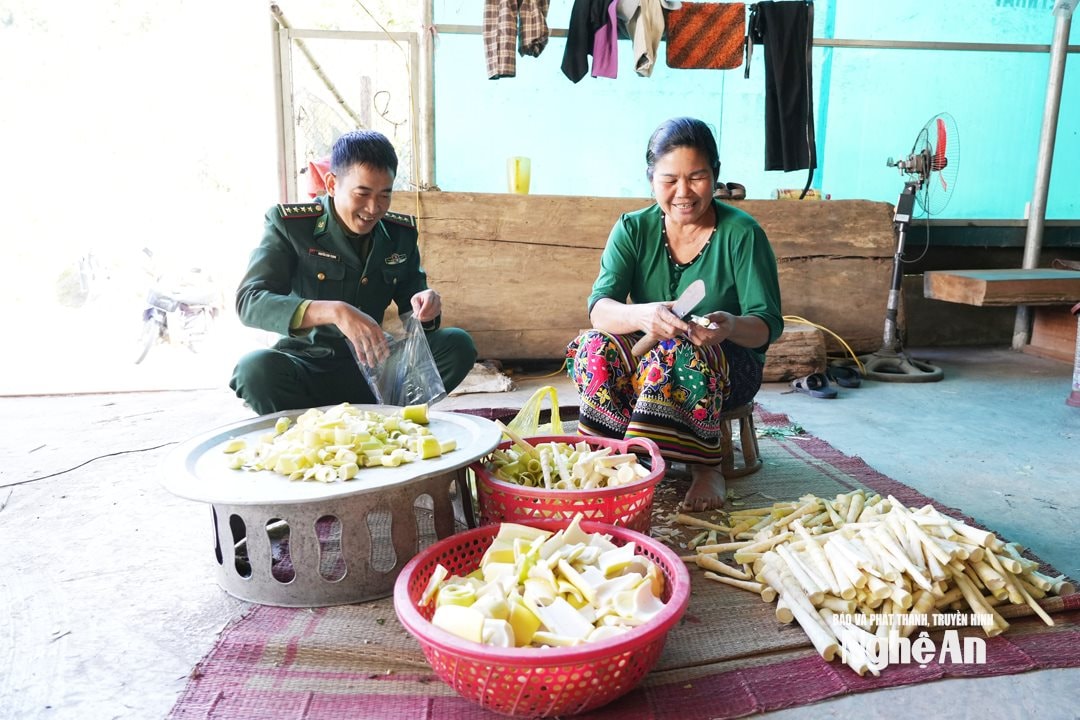
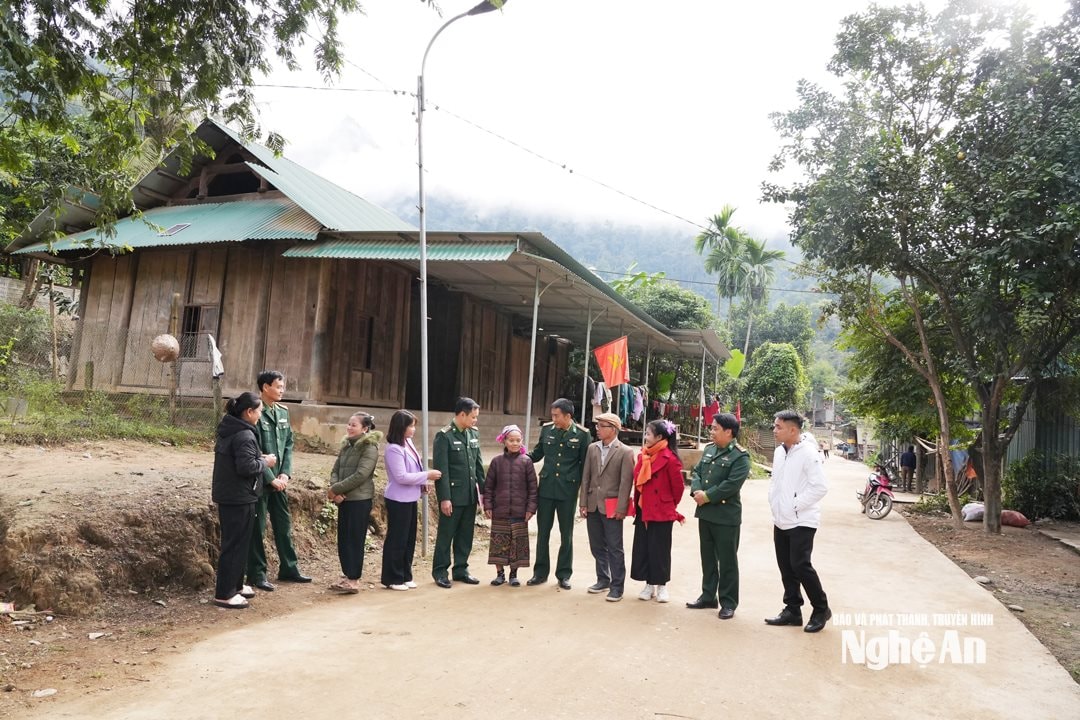
Along with mountainous areas, the "going door-to-door, providing support for each task" approach has also been extended to coastal areas. Major Nguyen Xuan Luan was assigned by the Dien Thanh Border Guard Post to participate in community activities and take charge of households in the Party cell of Hamlet 5, a predominantly Catholic hamlet with 165 households and 146 people.
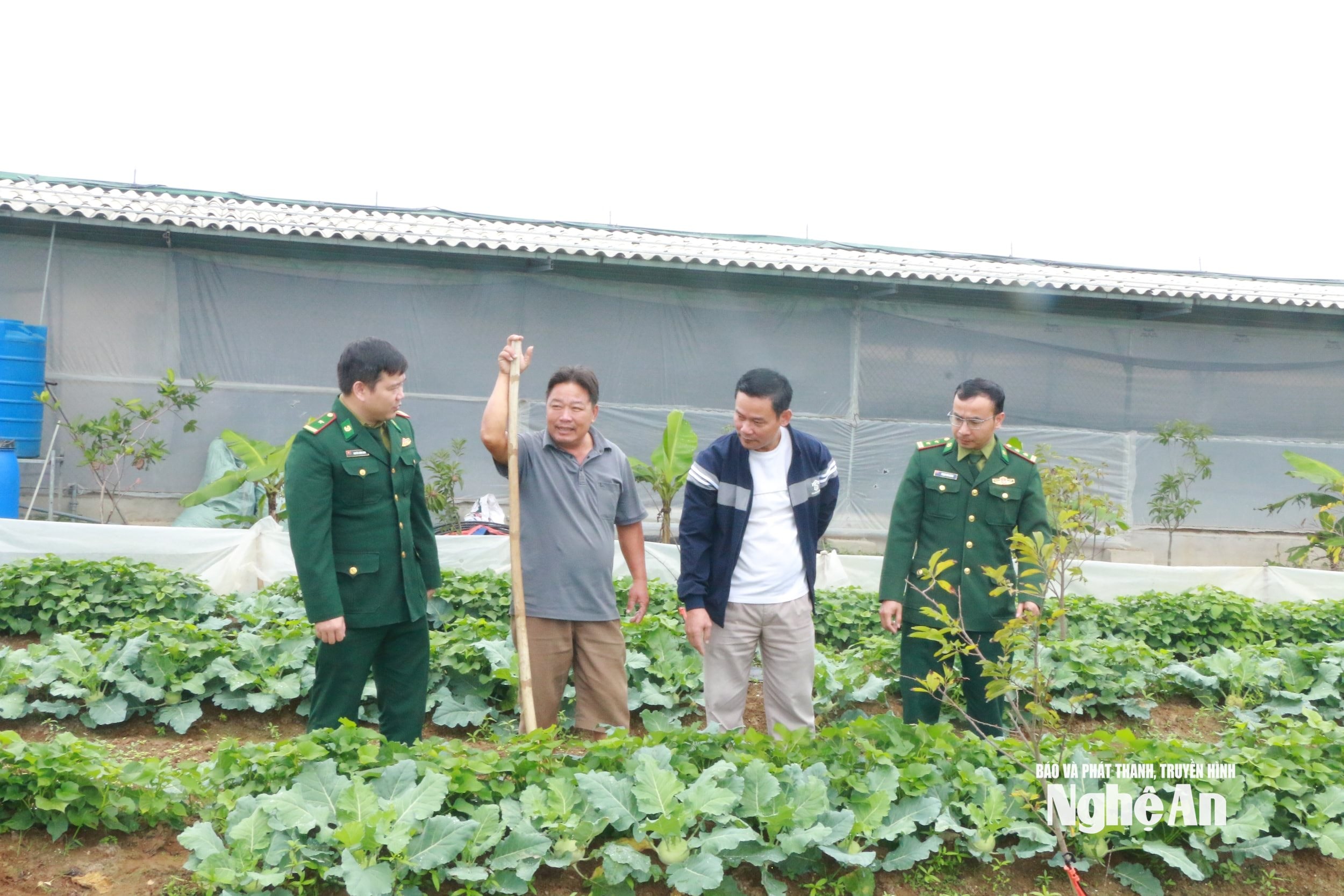
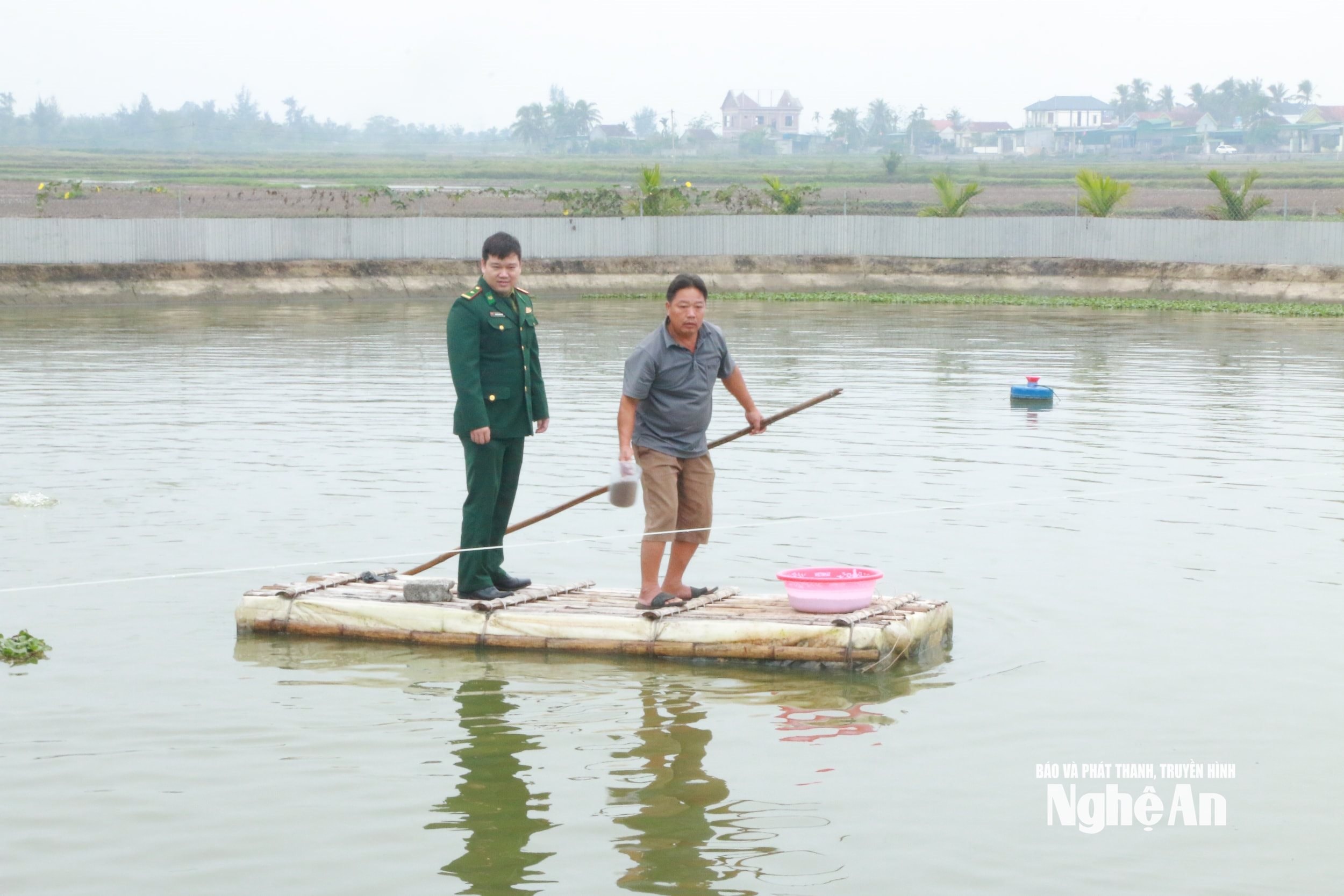
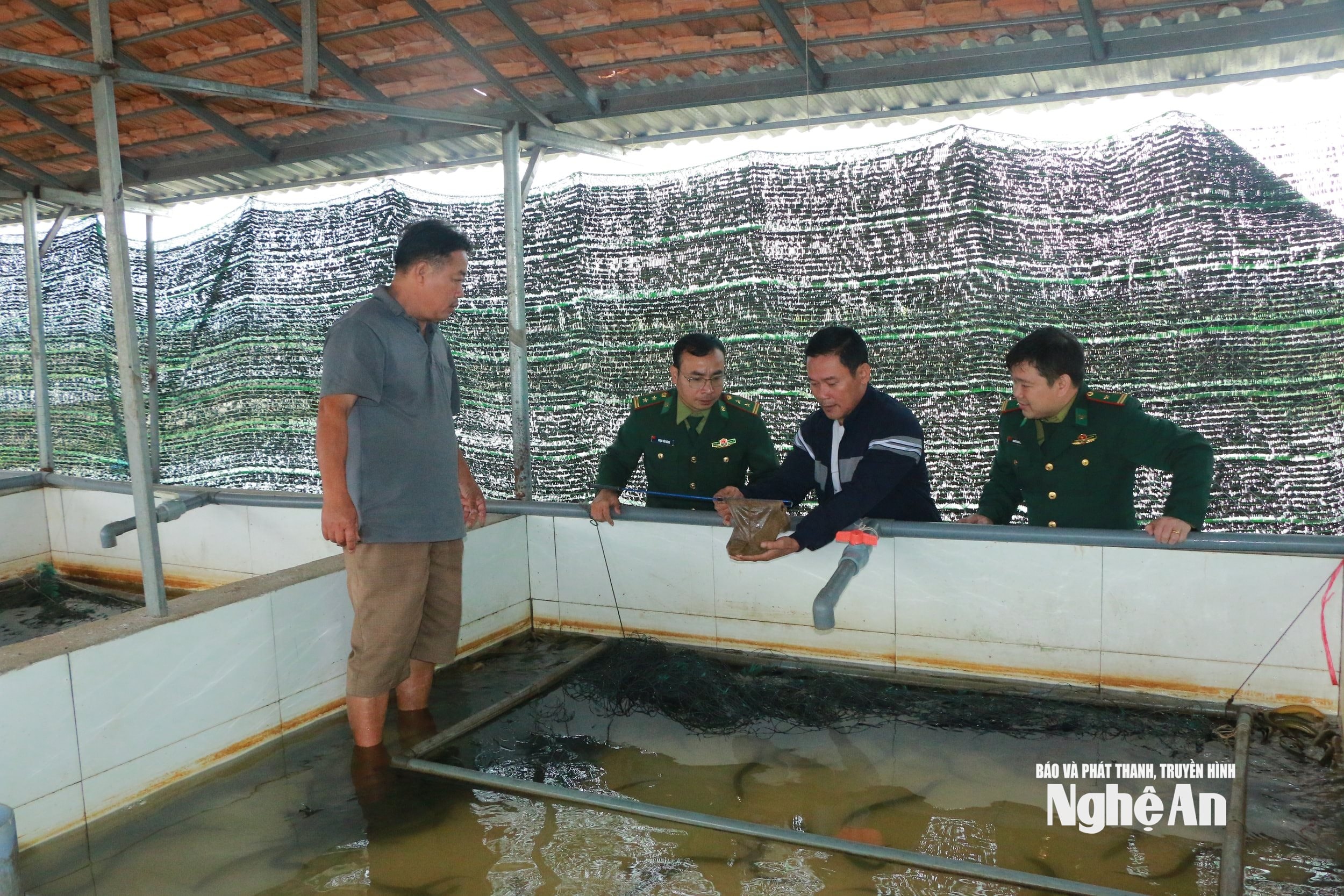
By staying close to the people and understanding the local area, the comrade, together with the Party committee, discussed and developed resolutions suitable to the reality; implemented and replicated household economic models; provided support in terms of labor, livestock, and guidance on animal husbandry techniques. Thanks to this support, Mr. Le Dien's family in Hamlet 5 successfully built a VAC (integrated farming system) model covering over 4,000 m² with greenhouses for growing cantaloupe, over 1,100 super-laying chickens, mudless eel farming tanks, and a 1,200 m² fish pond, bringing in an average income of 400-500 million VND per year.
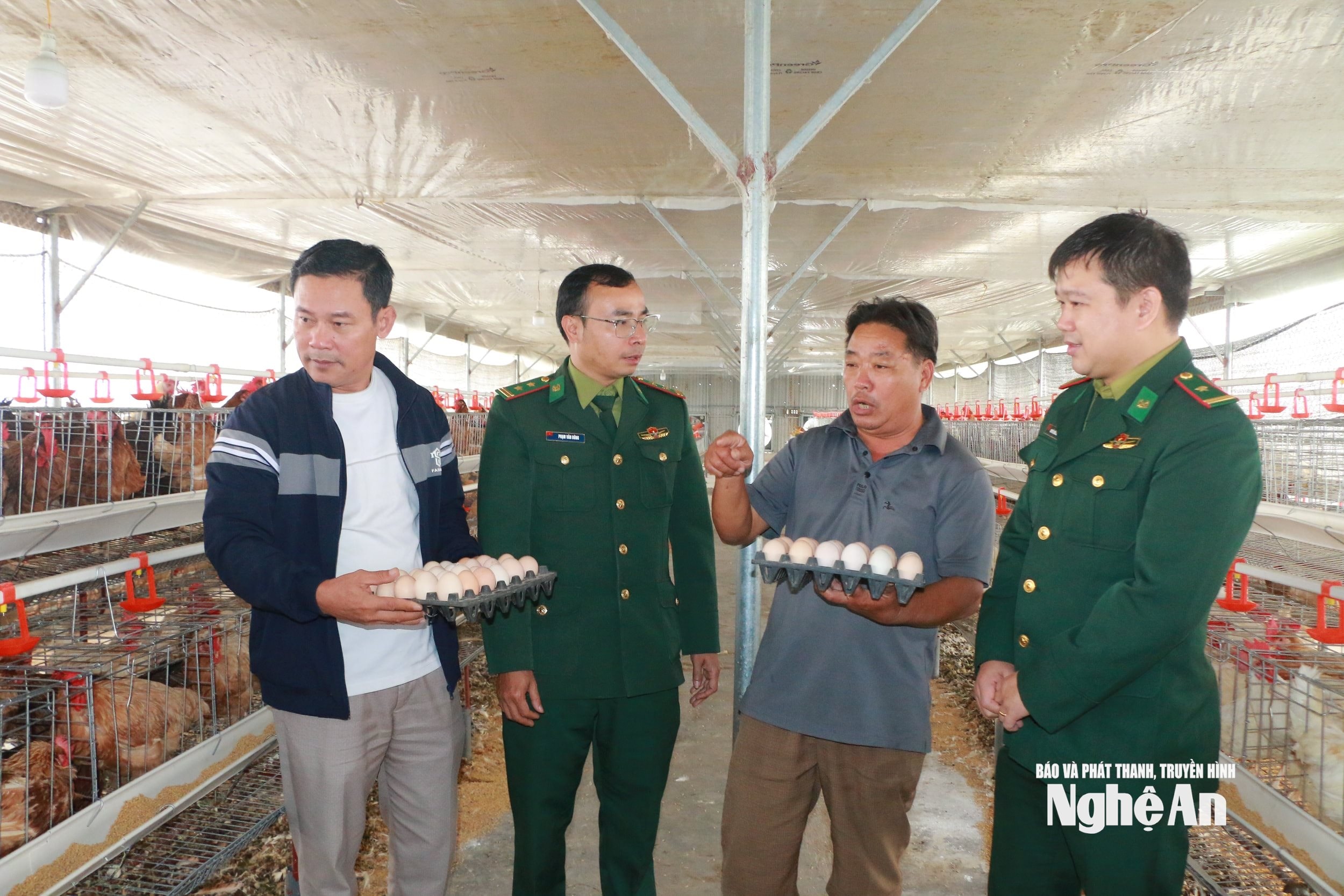
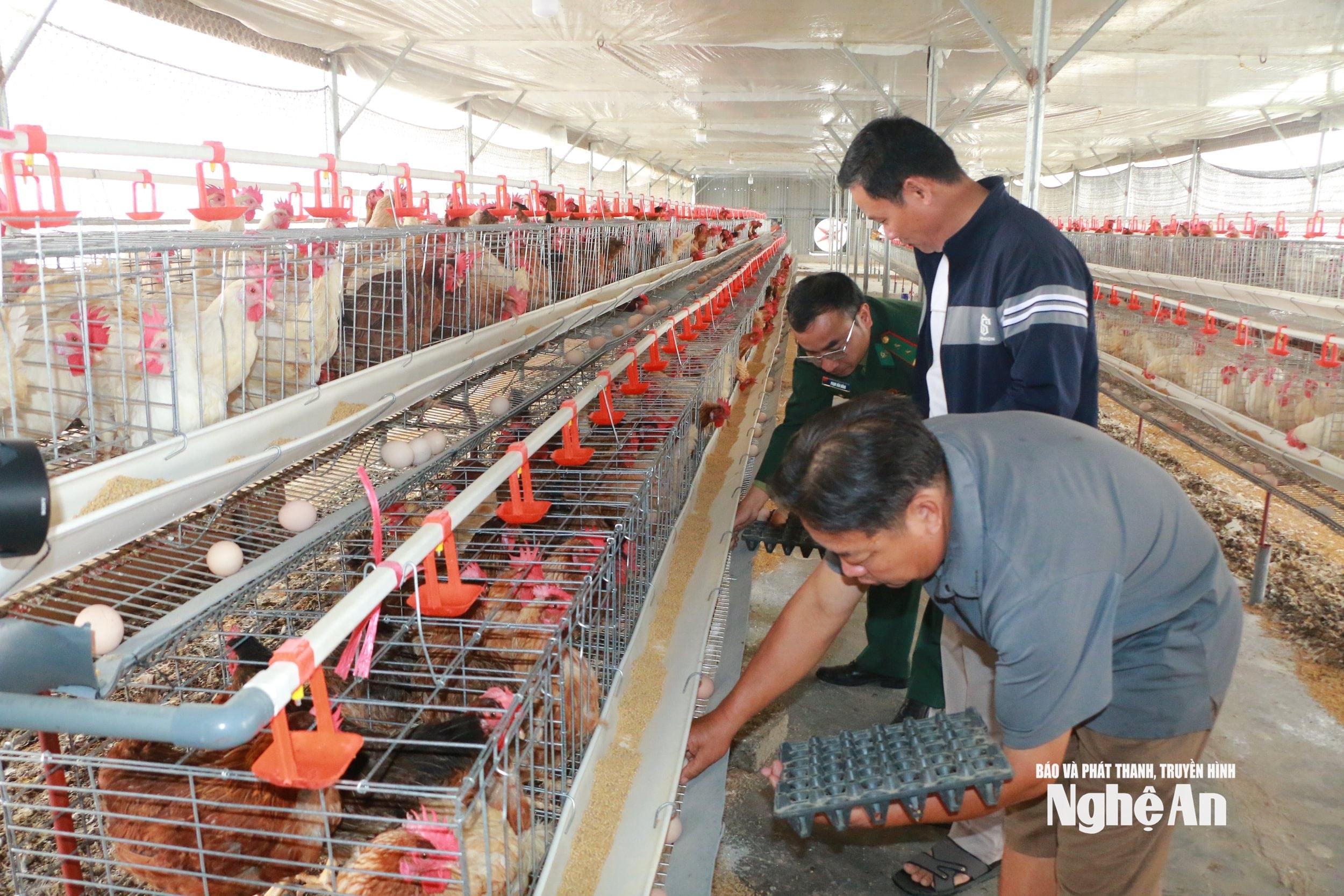
Mr. Le Vu - Deputy Secretary of the Party Branch, Head of Hamlet 5, Hai Chau Commune, expressed:Not only do border guard party members advise the Party branch on appropriate solutions, but they also assist disadvantaged households in harvesting crops, reinforcing houses and livestock shelters during storms, transferring production experience, and helping people develop economic models such as raising sows, Sind crossbred cattle, and high-yield laying hens... contributing to the construction of new rural areas and creating a strong foundation of public support.
Colonel Nguyen Van Hau, Head of Political Affairs of the Border Guard Command of Nghe An province, said: After 5 years of implementing Directive No. 681-CT/DU of the Party Committee of the Border Guard Command "On assigning Party members of Border Guard Posts to be in charge of households in border areas", the Party Committee of the Nghe An Border Guard Command has assigned 579 Party members to be in charge of 2,671 households in border areas.
True to the spirit of Party members leading the way, the Party members in military uniforms in charge of particularly disadvantaged households in border areas have stayed close to the local communities, understanding the thoughts and aspirations of the people to propose to the Border Guard Command to coordinate with local authorities to propagate and guide the people in developing production, building and replicating new models that bring economic efficiency and create sustainable livelihoods for the people.
To date, the Nghe An Border Guard has implemented 90 successful community outreach models, including 63 economic development models. This has contributed to igniting the faith and determination of the people to overcome poverty.
.png)
Alongside caring for their livelihoods, the military-ranking Party members also dedicate much of their efforts to the education of the children of the people in the border areas. At the Na Ngoi Border Guard Post, we encountered two boys chattering beside a small bamboo cage placed in front of the porch. When asked, both replied in clear voices: "We are the adopted children of the border guards!"
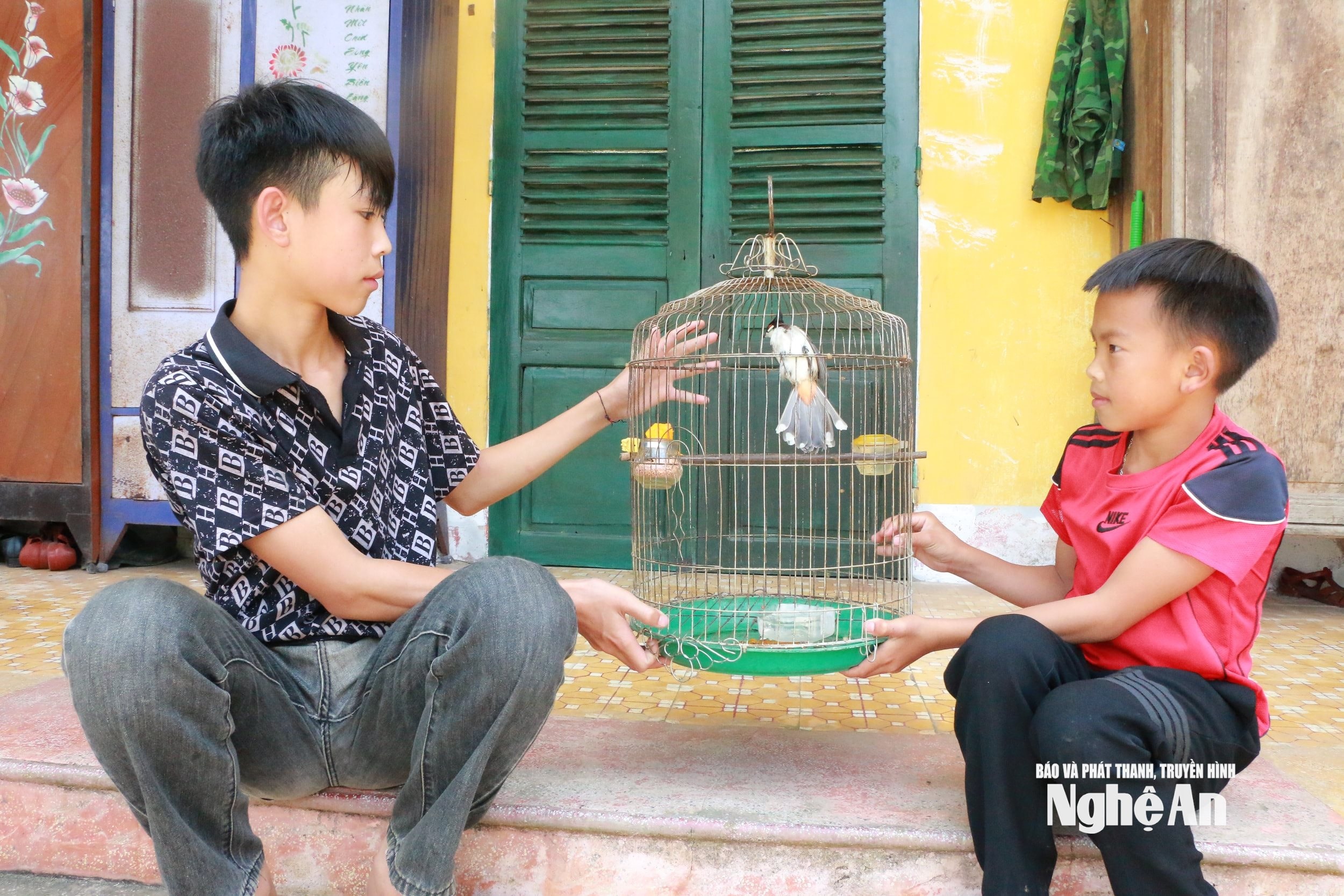
The conversation with the border guard officers shortly afterward gave a clearer picture of the two children: Vi Duong Cam (born in 2011), a Thai ethnic minority from Tang Phan village, and Vu Ba Lau (born in 2013), a Mong ethnic minority from Pu Kha 1 village. From children facing the risk of dropping out of school due to their family circumstances, they were adopted by border guard party members, who cared for them, providing meals, ensuring they slept well, teaching them, and instilling good habits in them.
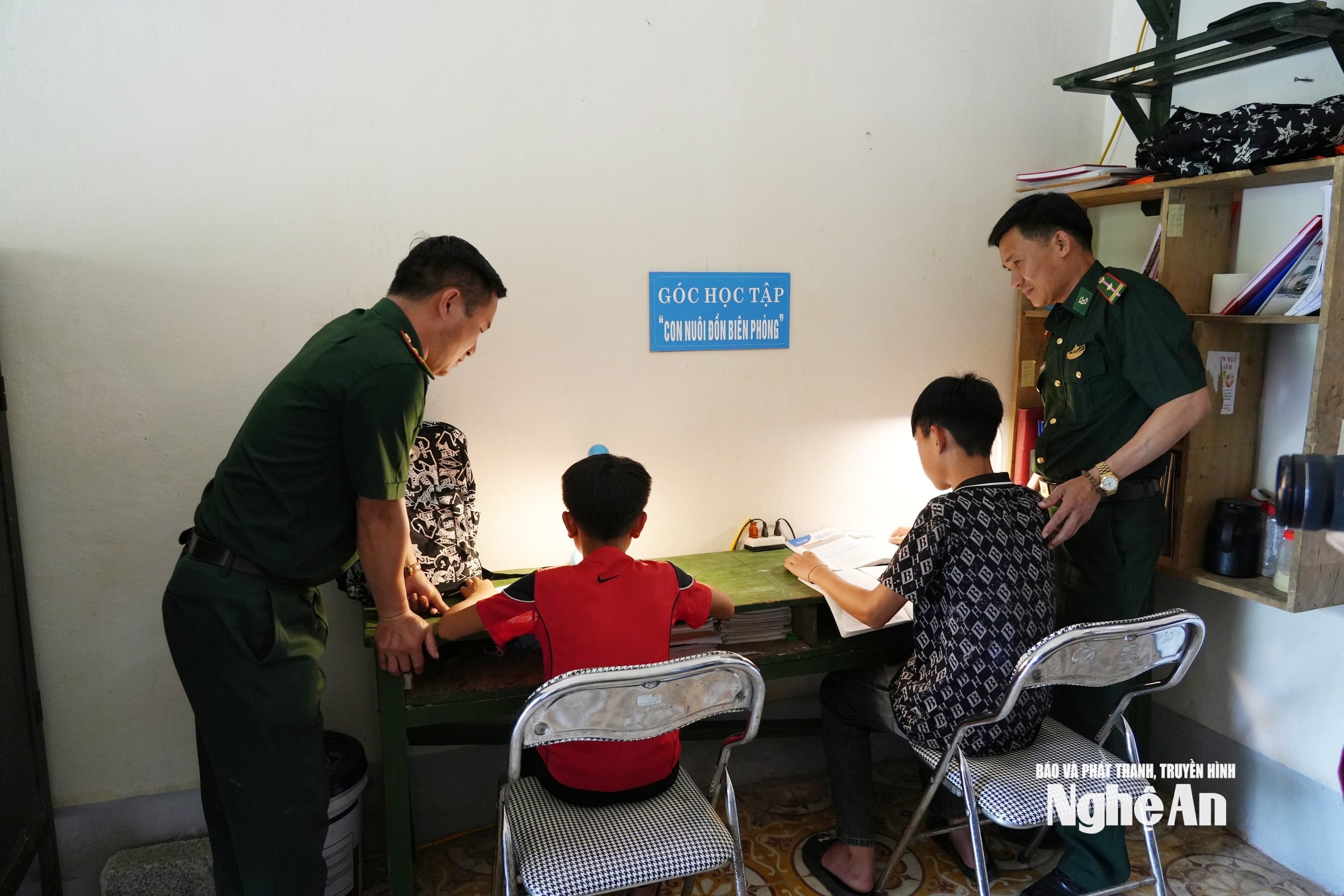
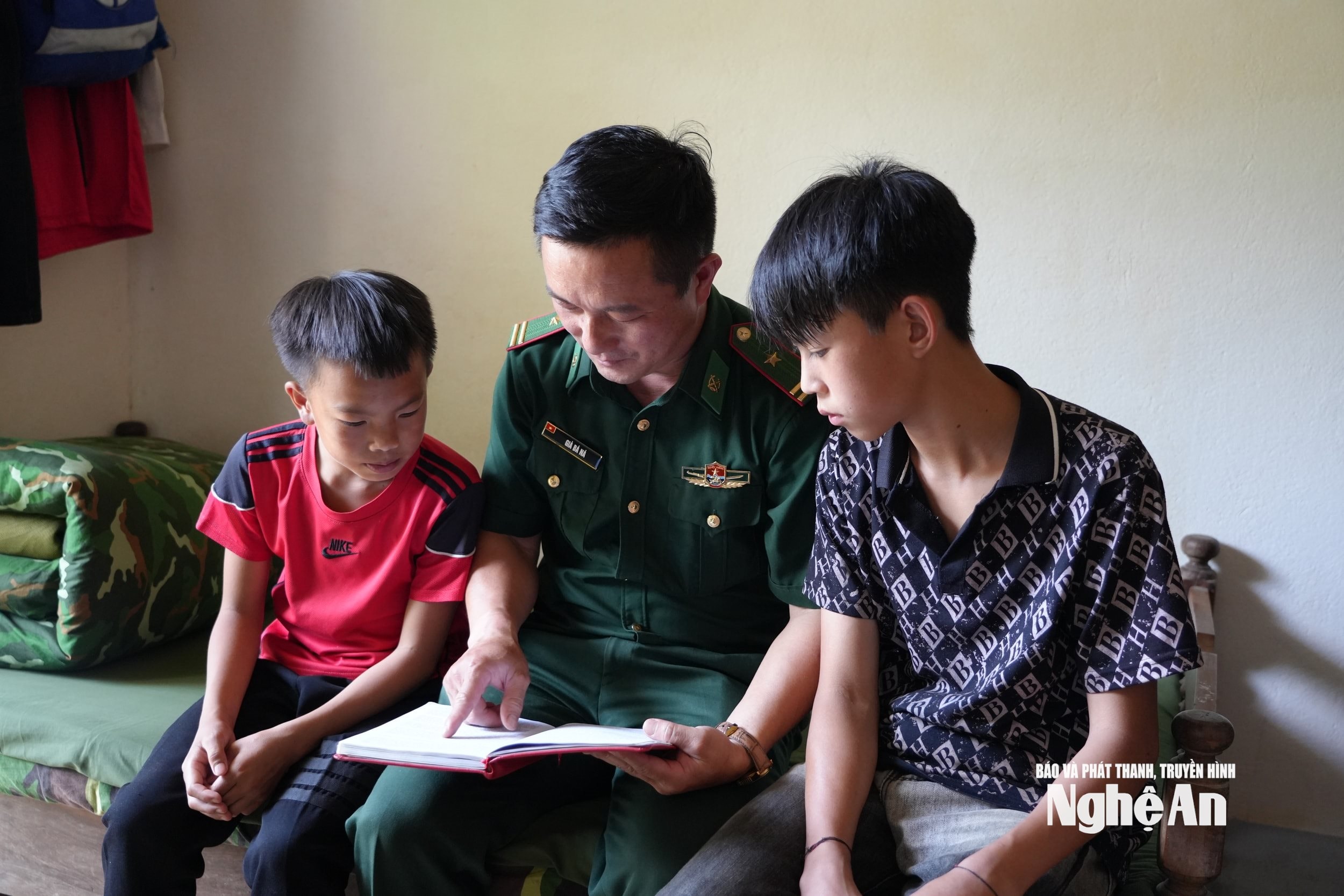
Under the barracks lights, the fathers in their green military uniforms patiently explained each math problem and each line of text. In just a short time, the once shy children became confident, learned to dream, and nurtured the aspiration to one day wear a military uniform like their uncles and fathers.
Major Nguyen Dinh Trung, Deputy Political Officer of Na Ngoi Border Guard Station, said that the children will be cared for until they finish 9th grade and will continue to be sponsored if they continue to high school. All expenses come from the salaries and savings of the unit's officers and soldiers. Before Cam and Lau, Mua Ba Sau - a Hmong boy from Phu Kha 2 village - was also cared for by the station and is now studying a vocational course in Quang Binh and still receives monthly support. This persistent support helps these young sprouts reach things that seemed beyond their reach.

Along the maritime border, the border guard's adopted child model is implemented flexibly, with the children not residing at the border post but living with their relatives. For example, Cao Tong Ton Sach, a 9th-grade student at An Trung Secondary School, was adopted by the Dien Thanh Border Guard Post since 7th grade. Sach is the third child in a Catholic family in Thien Tuoc parish, An Chau commune. His father passed away early, and his mother, Nguyen Thi Hien, works as a freelance laborer to raise five children. Sach is a good student with a strong will to succeed, and the Dien Thanh Border Guard Post has provided him with the motivation to overcome difficulties and continue his education.
From 2016 to the present, border guard units in Nghe An have taken in nearly 30 disadvantaged students right at their posts, sponsored more than 120 students with support of 300,000-500,000 VND/month, and helped more than 40 Lao students in border villages.
In addition, border dormitories in border areas have been built and renovated by the Nghe An Border Guard in coordination with local Party committees, authorities, and schools, becoming a "second home" for students from disadvantaged areas. For example, the border dormitory in Mon Son commune houses 84 Dan Lai students from Bung and Co Phat villages.
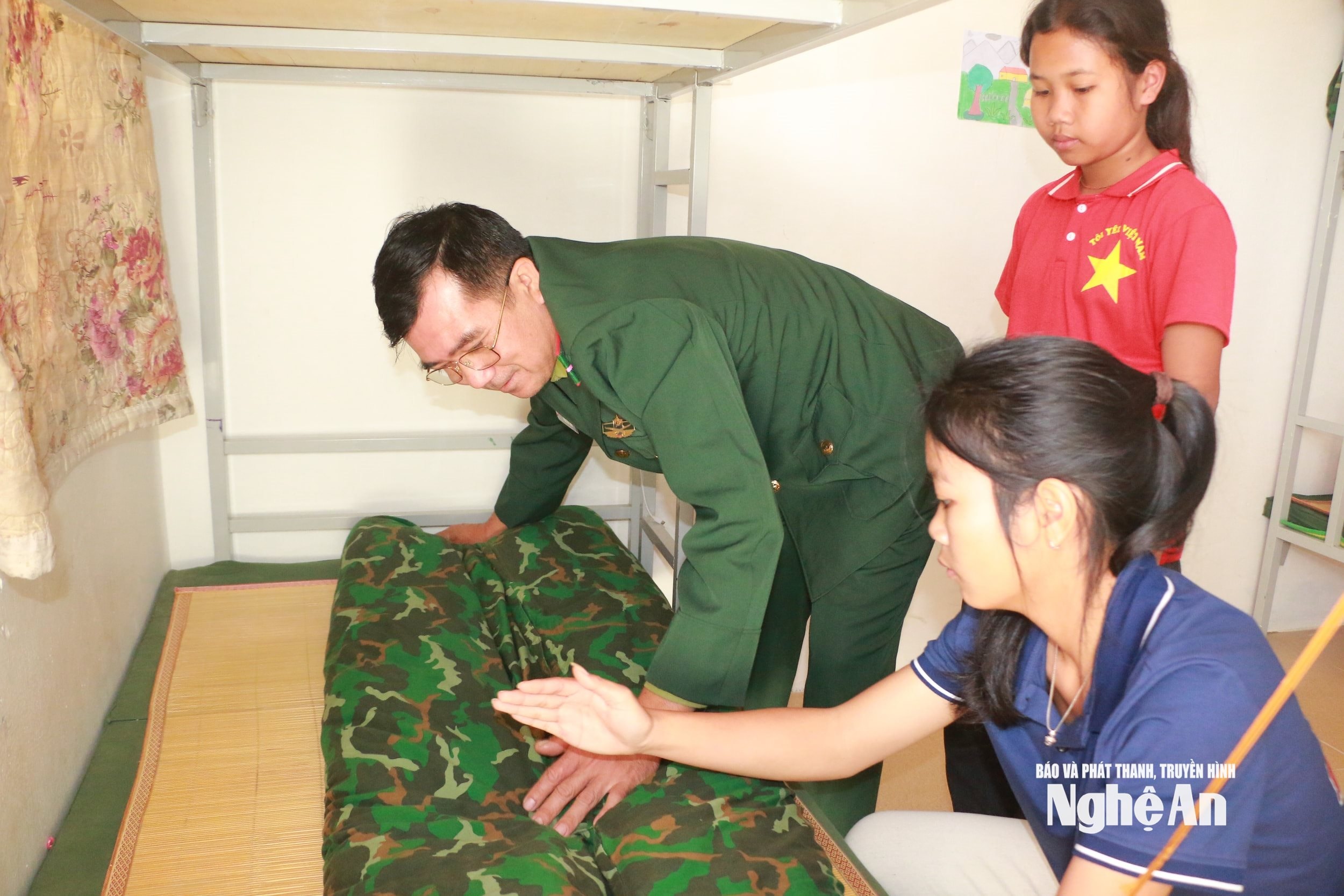
Here, there is a task force consisting of three border guard party members, led by Lieutenant Colonel Phan Van Tham, whose nhiệm vụ is to coordinate with the school to ensure security and order in the dormitory area, guide and instruct the children in even the smallest matters, from personal hygiene to physical training, studying, and handling various other unforeseen situations. This care stems not only from the love of these military party members but also from the belief that each child attending school today is a solid building block for the future. And according to La Thi Ngoc, a 9th-grade student from Co Phat village, "all of us in the dormitory naturally call the border guards 'dad' and respect them as our second fathers..."
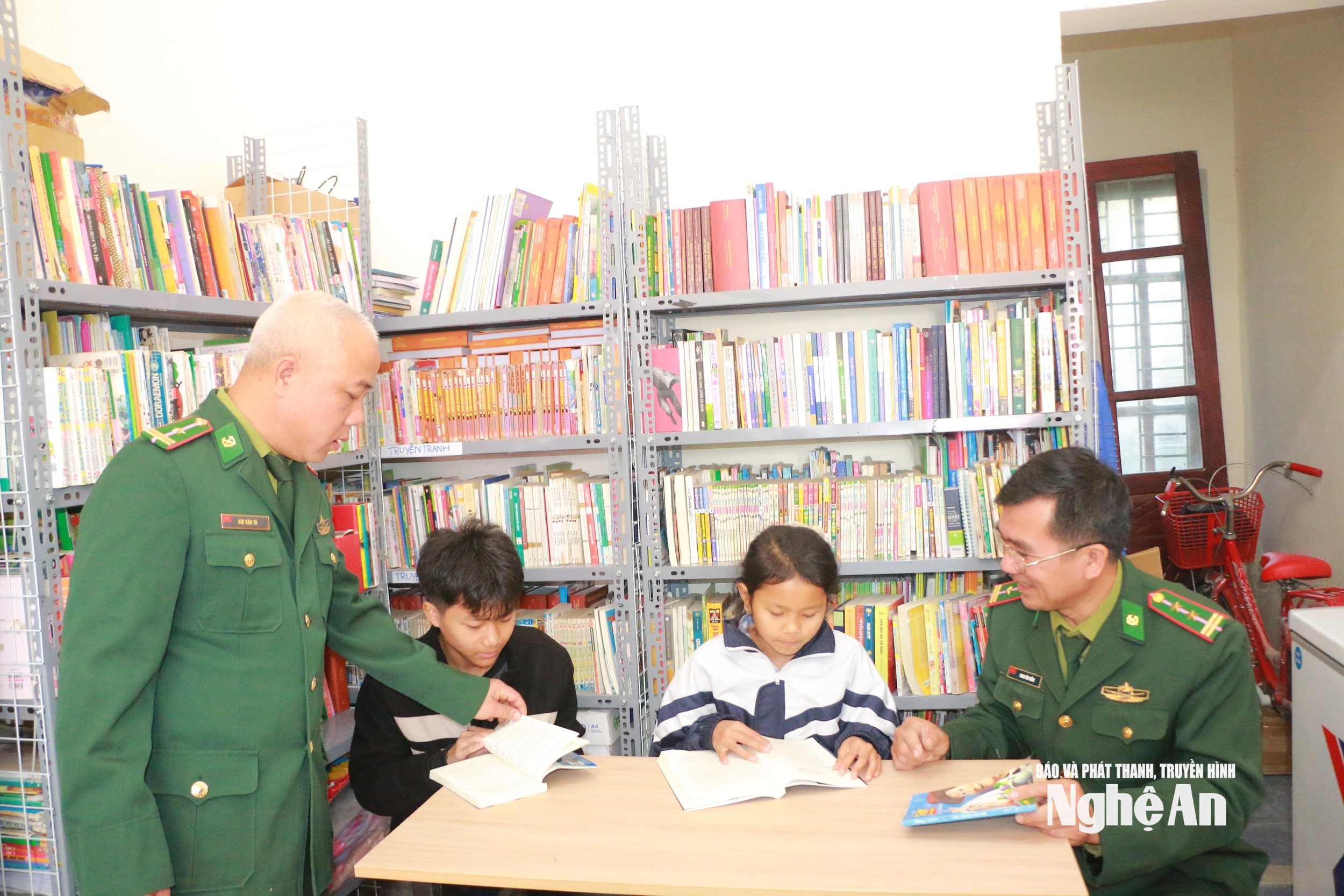
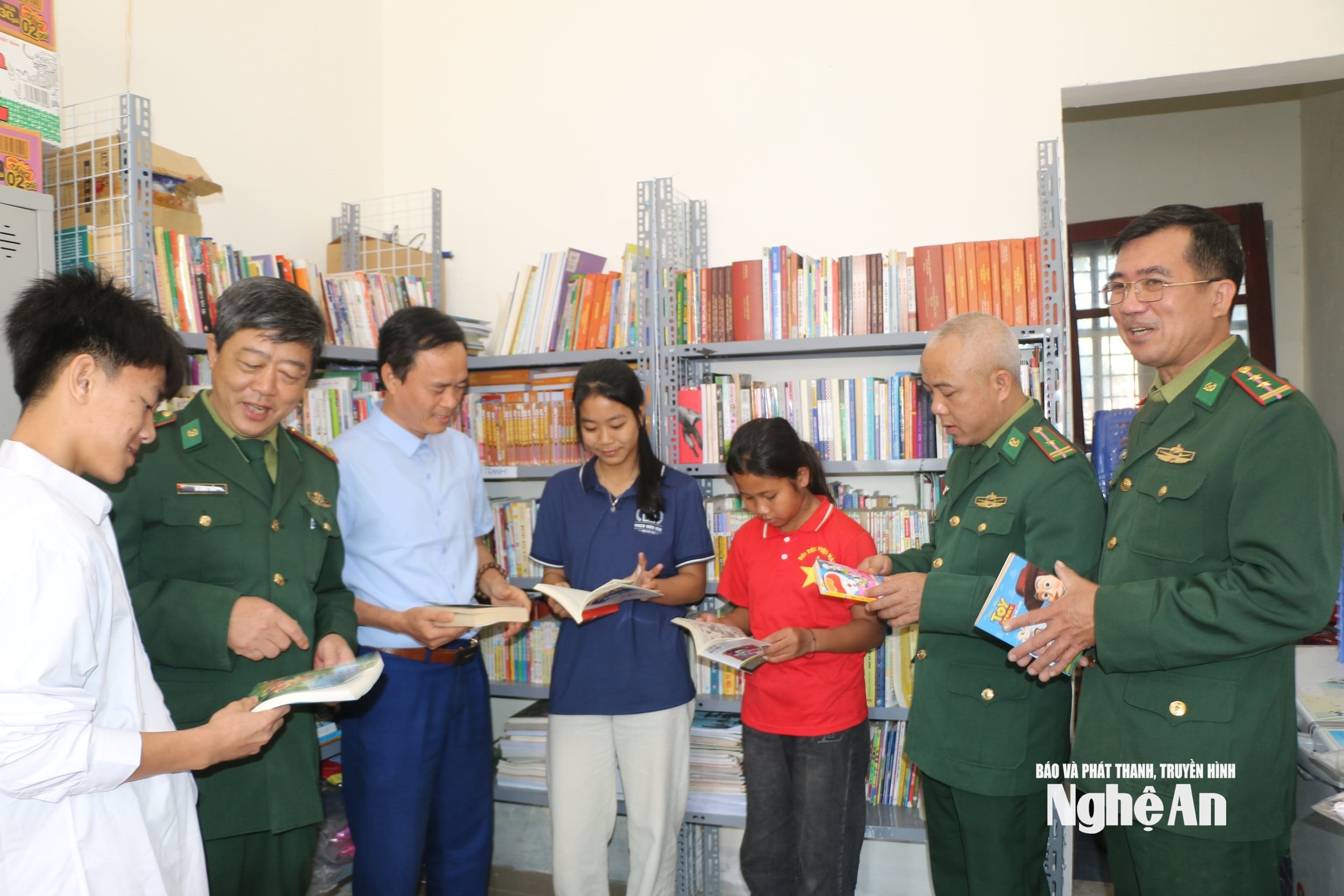
Along the border lines of Nghe An, especially the 468.281km of the western border of Nghe An, hardships still remain. But in those difficult places, the footsteps of Party members in military uniforms still quietly and diligently stay close to the villages and the people, persistently guiding them step by step, from developing livelihoods to helping underprivileged children realize their dreams... Behind every step taken up the slopes lies a long, silent, and responsible journey.
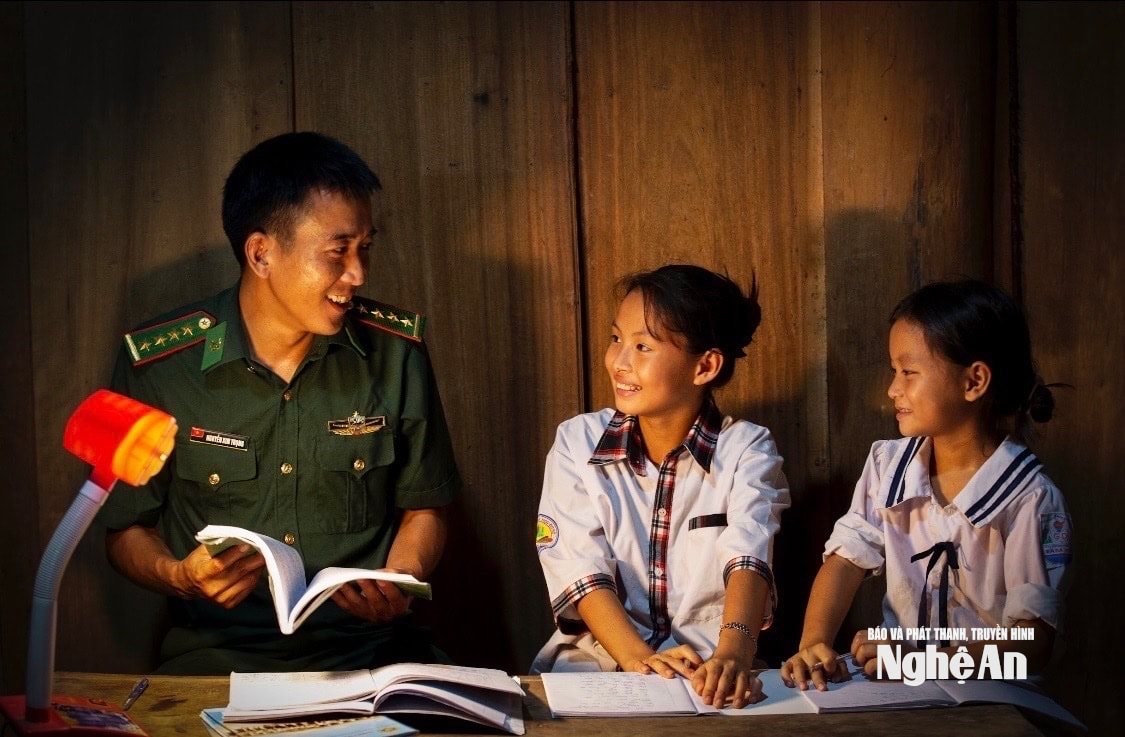
This is the journey of Party members carrying a "dual" mission: a shield protecting the frontline border and a dedicated community mobilization officer, persistently working to change mindsets and practices, and inspiring people to strive to escape poverty. Through this, they contribute to promoting economic, cultural, and social development goals, and strengthening national defense and security in the locality. Each project, each persistent task "for the people" in the border region of the Fatherland is proof that: Wherever there are border guard Party members, there is peace and prosperity for the people...
----------------------
(To be continued)
.jpg)


