
Post-World Cup anxieties
(Baonghean) - Brazil's defeat on July 9th was the final straw, igniting widespread resentment among the samba people, because for them, the World Cup is merely a frivolous game compared to the bleak lives of the country's poor.
Before the 2014 World Cup, Brazilians were already dissatisfied with the government due to slow economic growth and the large poverty rate in the country known for its captivating samba dance. Therefore, Brazilian officials hoped the World Cup would stimulate economic growth and allow football fans to immerse themselves in the game, forgetting their daily frustrations. However, all those plans were shattered after the disastrous semi-final match on July 9, 2014, when the Selecao were crushed by Germany with a score of 1-7! This bitter defeat plunged Brazil into chaos and violence. The 2014 World Cup has become a national tragedy for Brazil, not only in terms of sports, but also socially, and possibly politically, given the upcoming presidential election in October.
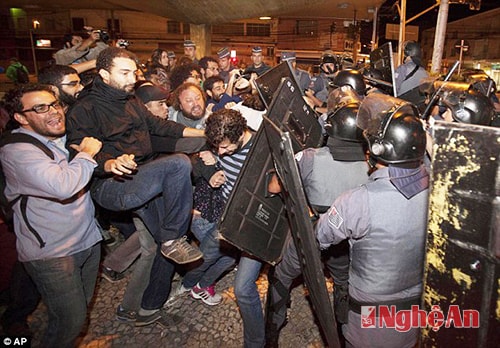 |
| Violence erupted across Brazil following the glitz and glamour of the 2014 World Cup. |
Brazilians believe their government should use the $11 billion spent on the World Cup to improve the lives of the poor rather than to entertain FIFA officials and the wealthy. Therefore, while the World Cup was underway, many cities in Brazil continued to protest with slogans such as: "We don't need the World Cup," "FIFA, go home," and "There will be no World Cup, save the money for hospitals"... And now, after the "tragedy of July 9th," this wave of protests has turned into riots and arson everywhere, as the Brazuca ball rolls towards the finish line in the final match between Germany and Argentina.
Many people wish that if coach Scolari and his team hadn't caused the disaster on July 9th, and the Selecao had reached the final, then the people of Brazil – where "football plays a crucial role in building national identity" – would now be enthusiastically dancing the samba, forgetting the hardships of everyday life, and the Brazilian government would have achieved its goals set before the 2014 World Cup instead of having to worry about the "post-World Cup 2014" situation as it does now.
The 2014 World Cup brought nations around the planet closer together, creating a shared celebration for billions of football fans worldwide. However, the 2014 World Cup also took away the simple joys of the poor in Brazil, and the aftermath of the 2014 World Cup is a difficult problem for the Brazilian government to solve!
Duc Dung


