
'The bittersweet feeling' in Na Loi
(Baonghean.vn) - In mid-November, the people of Na Loi commune (Ky Son district) begin harvesting fragrant rice – a specialty rice variety preserved and passed down through generations of Na Loi people. However, alongside the joy of the harvest season, the people and local authorities have concerns and worries as fewer and fewer households are persevering in preserving this precious rice variety.
More and more households are abandoning the cultivation of fragrant rice.
In mid-November 2022, farmers in Na Loi commune (Ky Son district) began their work.rice harvest"Tẻ thơm" is a local rice variety that has been cultivated by the people for many generations. Mr. Vi Văn Tiến from Na Khướng village said that he and his father passed down the "tẻ thơm" rice variety by carefully selecting large, firm, and densely grained rice ears to use as seeds for the next season. "We and the villagers in Na Khướng have been preserving the variety manually for decades," he said.
When asked if many households in Na Khuong still grow this fragrant rice variety, Mr. Vi Van Tien said, "There are far fewer than before. Every year, a few households stop growing fragrant rice and switch to other varieties." When asked why, Mr. Tien shook his head and said, "Perhaps it's because growing fragrant rice is much more labor-intensive than other rice varieties, and it takes longer to harvest."
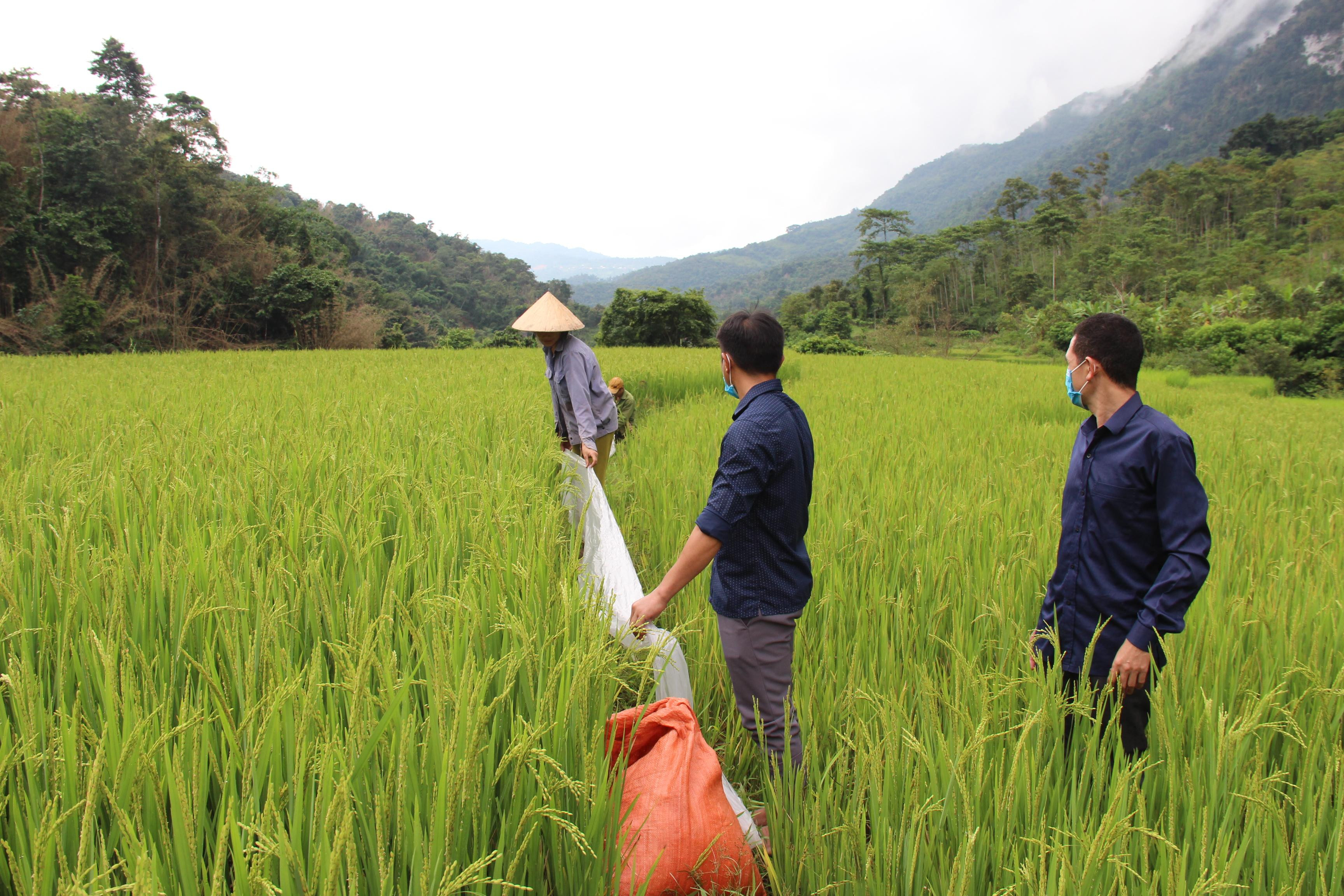 |
People in Na Loi commune tend to their fragrant rice fields. Photo: Hoai Thu |
Explaining this further, Na Khuong village head Luong Van Phong said that the fragrant rice variety has a longer growing season than regular rice varieties, by about a month. Furthermore, the fragrant rice plant has very tall stems, making cultivation more difficult, and if faced with unfavorable weather conditions such as rain and wind, it is very susceptible to lodging, leading to crop failure, especially in October and November.
This year, the yield of fragrant rice is lower than in previous years, with many fields having empty grains due to heavy rains and floods during the rice flowering period. Previously, in Na Khuong village, out of more than 70 households, every household grew fragrant rice. But this year, only a dozen or so households still grow it, and only a few households, such as those of Mr. Vi Van Tien, Mr. Vi Van Hai, and Mr. Moong Van Thiet, cultivate it extensively. Of the 48 hectares of rice in Na Khuong village, only about 3 hectares are planted with fragrant rice.
It is known that there are now many hybrid rice varieties with higher yields and shorter replanting times. In Na Loi commune, people now mainly grow hybrid rice varieties, fragrant glutinous rice, and Hanoi glutinous rice, which are readily available at the plant seed center. As for fragrant non-glutinous rice, there are no seeds for sale; people save their own seeds from one season for the next.
Previously, fragrant rice was sourced from Tuong Duong district, but the people of Tuong Duong have long since stopped growing this variety. Mr. Vi Van Tien, the largest rice farmer in Na Khuong village, also stated that he planted less fragrant rice this year than last year because the rice plants are too tall, easily falling over and resulting in reduced yields.
The original fragrant rice variety was slightly different from today's. Back then, each fragrant rice grain had a long brown awn at the tip. Over the decades, it has been partially crossbred. The fragrant rice variety we see today still retains this characteristic, but the grains no longer have the awn. The flavor is basically the same, though the stickiness has decreased slightly.
Ms. Pit Thi Ha, Chairwoman of the People's Committee of Na Loi commune, expressed her concern, stating that as a particularly disadvantaged commune in Ky Son district, the entire commune has 177.80 hectares of agricultural land in 5 villages: Don Boong, Na Loi, Na Khuong, Pieng Lau, and Huoi Xan, with 104.5 hectares planted with wet rice, of which about 25 hectares are fragrant rice.
Orientation towards awarding "stars" to OCOP products.
The fragrant rice variety was first brought from another region and planted in the fields of Na Khuong around 1993 by Mr. Vi Duyen Hong. These fragrant rice fields, nourished by the cool water from the Tam stream, produce rice grains that cook into soft, fragrant rice with a distinctive aroma that "wafts from inside the house to the street." Locally known as "khau chao hom," this fragrant rice variety has advantages in adapting to the soil and climate, and offers high economic value, with prices consistently double that of other rice varieties. For many years, 100% of households in the two villages of Na Khuong and Na Loi cultivated this fragrant rice.
According to Mr. Vi Duyen Hong, a unique characteristic of this rice variety is that it only tastes fragrant and delicious when grown in fields with water flowing from the Tam stream. If grown in fields with water from other streams, the aroma is almost completely lost. Therefore, out of the five villages in Na Loi, only two cultivate this fragrant rice.
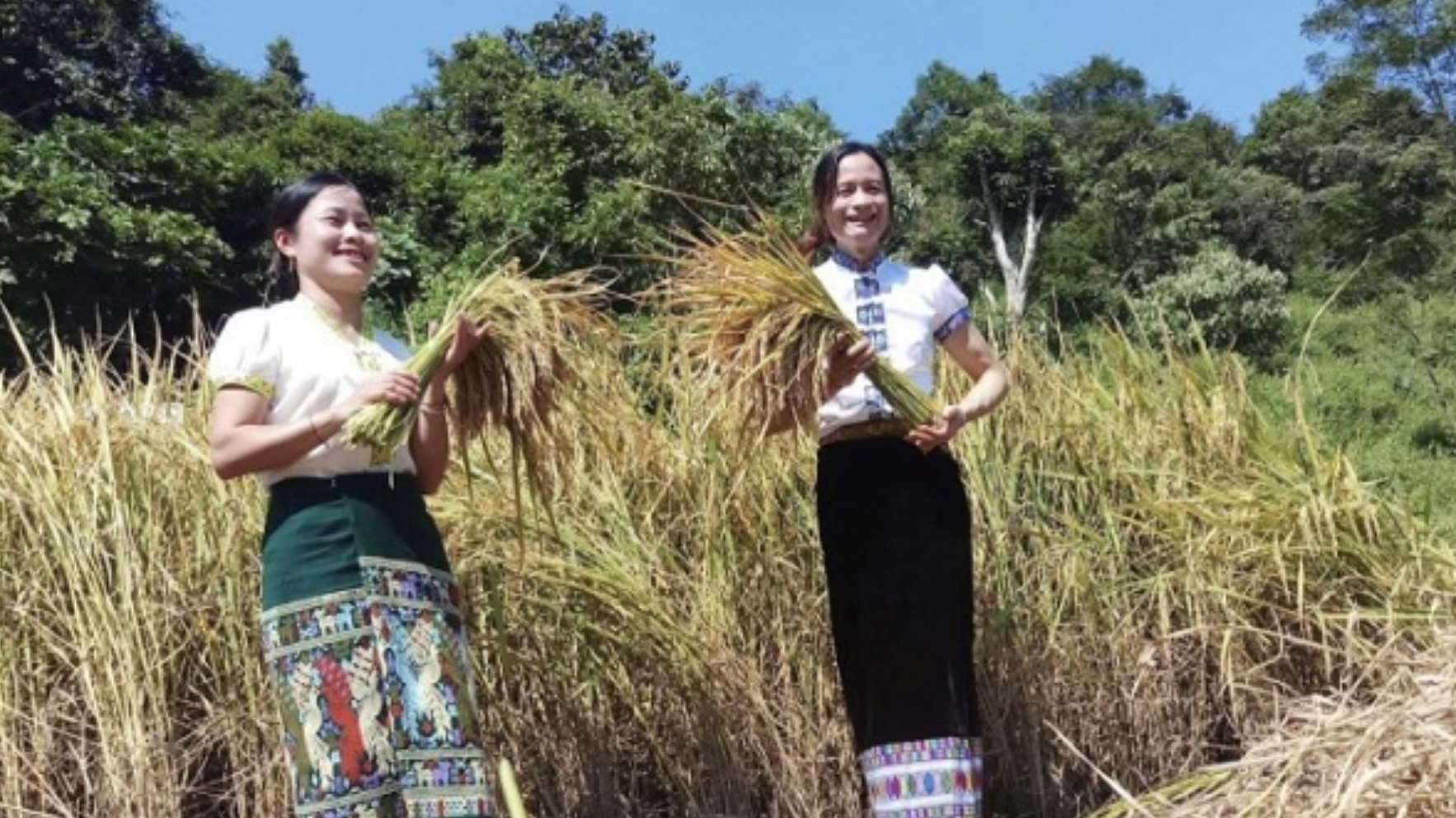 |
Residents of Na Khuong village, Na Loi commune, harvest fragrant rice. Photo: provided by the source. |
At the end of 2021, the Department of Agriculture and Rural Development also began implementing a model to renovate and restore the fragrant rice variety to create a scientific basis for mass production and expansion of cultivation area. Mr. Vi Oanh - Head of the Department of Agriculture and Rural Development of Ky Son district also said: Fragrant rice has become ingrained in the consciousness of many generations of people in Na Loi, a precious rice variety that needs to be preserved and maintained. Currently, the district is aiming to develop fragrant rice products that meet OCOP standards, not only to affirm the brand of local products but also to help people preserve a traditional cultural feature and increase their income.agricultural production.
Mr. Ngo Hoang Linh, Director of the Center for Applied Science and Technology, Nghe An Department of Science and Technology, also affirmed that in 2018, the center implemented a project to conserve the genetic resources of Na Loi fragrant rice. The conservation aims not only to preserve valuable genetic resources but also to serve scientific research and the breeding of higher-yielding, higher-quality rice varieties.
The Department of Science and Technology, which is responsible for preserving this rice variety, has assessed it as a valuable rice strain and a precious genetic resource. Following the process of preserving the genetic resources of the fragrant rice variety, the Center for Applied Science and Technology has also submitted reports and proposals to management agencies and research institutes to utilize the genetic resources of the fragrant rice variety, especially genes capable of withstanding harsh weather conditions, to breed rice lines that are adapted to the climate and yield higher productivity. However, to develop this rice variety into a marketable commodity that can compete with the market and the tastes of the majority of consumers, economic calculations must be met.
“Currently, Na Loi fragrant rice is still in high demand as before. After the harvest in November, leading up to the Lunar New Year, consumer demand increases significantly, and the amount of Na Loi fragrant rice produced is insufficient to meet the needs of local people both within and outside the commune. However, due to its demanding location and long growing period, and lower yield compared to regular rice varieties, expanding the cultivated area and aiming for OCOP certification for fragrant rice is facing difficulties,” said Ms. Pit Thi Ha, Chairwoman of the People's Committee of Na Loi commune.


