
Where the Soviet Union's "dream" came true.
Defense industry expert Alexey Leonkov and former Director of Ukraine's "Antonov" Design Bureau Dmitry Kiva spoke to Sputnik about the company's prospects and its main product - the world's largest transport aircraft, the AN-225 Mriya.
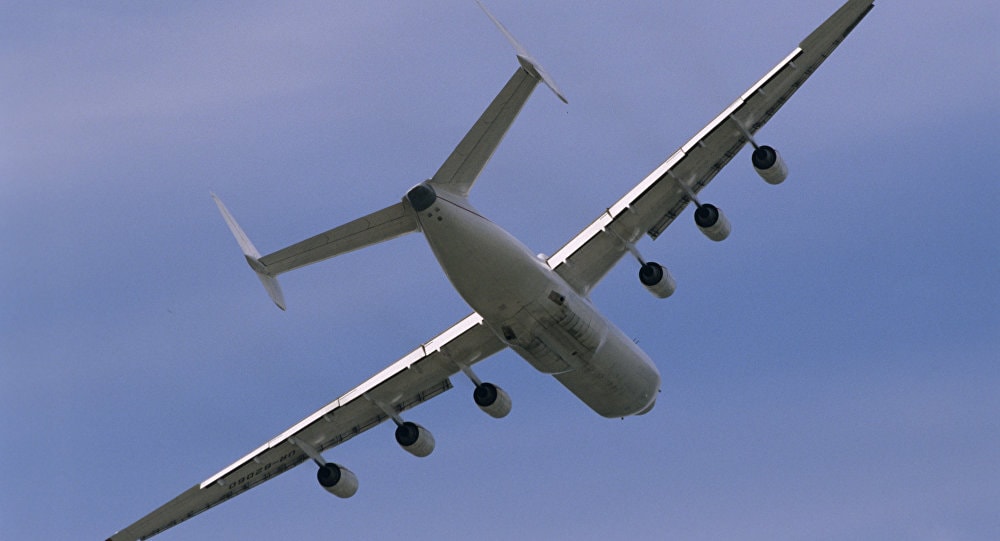 |
| The AN-225 Mriya heavy transport aircraft. Photo: Sputnik |
In fact, the agreement signed in August 2016 to hand over to China the license to manufacture the world's largest cargo aircraft, the AN-225 Mriya (which means "dream" in Ukrainian), demonstrated that Ukraine's aviation industry is incapable of undertaking large-scale projects.
However, new hopes emerged that the project would be restarted and a second AN-225 aircraft would be produced. Currently, the fate of the project remains uncertain. In an interview with Sputnik, defense industry expert Alexey Leonkov and former director of Ukraine's "Antonov" Design Bureau Dmitry Kiva commented on the prospects of the company and its main product — the AN-225 Mriya super-heavy transport aircraft.
According to Leonkov, the Mriya is a unique aircraft designed to perform specific tasks.
"Initially, this aircraft was designed not to carry cargo internally, but in the form of a cargo bay suspended below the fuselage (like the Buran space shuttle). Few people know about this limitation, but, in fact, such a limitation existed," Leonkov asserted.
"However, if China tries to turn the AN-225 into a cargo aircraft, they will fall into the same trap as the experts at the Antonov Design Bureau when they tried to restart production of the AN-225," the Russian expert explained.
Leonkov added that, in fact, handing over the license to China could be beneficial, because the aircraft "will not die." At the same time, in his opinion, there is a high probability that Chinese experts will not be able to convert the AN-225 into a cargo aircraft.
It is possible to refurbish the AN-225 to transport large and super-heavy cargo, but doing so would require thorough research, — Dmitry Kiva, former director of the "Antonov" Design Bureau, Hero of Ukraine, said in an interview with Sputnik.
"It's necessary to understand the current market situation and prices to draw conclusions about the advantages of this aircraft compared to others. Experts should conduct serious research," the designer said.
Kiva suggested that the Mriya aircraft could be used in the space domain, including carrying missiles just like the Buran, in other words, performing the mission it was assigned under the Soviet regime.
According to the former director of the "Antonov" design bureau, a second AN-225 aircraft could be produced in the near future, provided funding is secured. He further explained that this seems unlikely because many of the systems and equipment for the Mriya have already been developed in Russia.
"Without Russia's participation, it would be very difficult to accomplish this task. In fact, any task is feasible; it all depends on the amount of investment. It's possible to build a new aircraft that's better than the old one, but it will cost billions of dollars, not millions of dollars," Kiva emphasized.
Attempts to collaborate with Airbus were unsuccessful.
"The agreement on cooperation with the EU that Ukraine has signed has not led to economic development; Ukraine has not yet been invited into the family of European brotherly nations. This agreement has led to the fact that Kyiv is gradually losing the unique developments that were made in the Antonov Design Bureau and the Yuzhnoye Design Bureau," — Aleksei Leonkov commented.
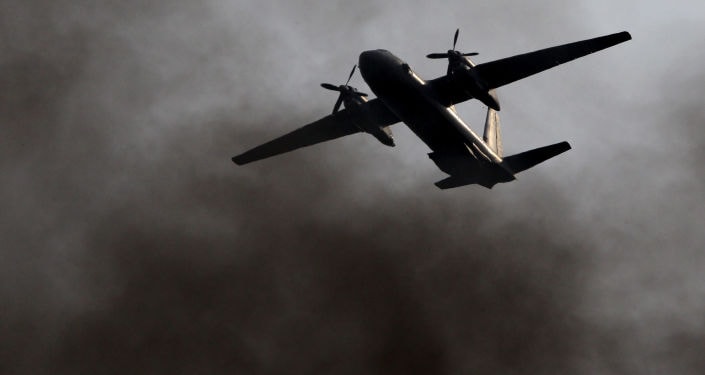 |
| A large transport aircraft. Photo: utnik / Vitaliy Ankov |
"Now Airbus claims to be the 'father of this invention,' while Ukraine has not benefited in any way from participating in this project. The Antonov Design Bureau had hoped that cooperation with Airbus would help the company reach international prominence," said Leonkov.
"They had hoped that 'Antonov' would regain its reputation in all countries as an outstanding design base and would once again be known as a manufacturer of super-heavy aircraft," said Leonkov.
For his part, Dmitry Kiva, former director of the 'Antonov' Design Bureau, denied that his company had been involved in the project.
"The 'Antonov' design bureau had no such collaboration and was not involved in that project," Kiva emphasized.


