
Pakistan begins holding historic general elections.
At exactly 8:00 a.m. on May 11 (local time), polling stations across Pakistan opened to welcome millions of voters to cast their ballots in a general election marking a historic democratic transition in this South Asian nation.
At exactly 8:00 a.m. on May 11 (local time), polling stations across Pakistan opened to welcome millions of voters to cast their ballots in a general election marking a historic democratic transition in this South Asian nation.
According to the registration list, over 86 million Pakistani voters are eligible to participate in the elections for the Lower House and legislative assemblies in four provinces: Khyber Pakhtunkhwa, Punjab, Sindh, and Baluchistan. Specifically, voters will cast ballots for 272 out of 342 members of the Lower House, with the remaining seats reserved for non-Muslims (10 seats) and women (60 seats).
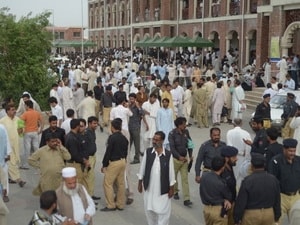
Pakistani citizens await the general election. (Source: Getty)
The number of parliamentary seats is allocated based on the population of each region. Accordingly, 148 seats belong to Pungiap province, 61 seats to Sindh province, 35 seats to the northwestern border province, 14 seats to Baluchistan, 12 seats for tribal regions under federal administration, and 2 seats in the capital Islamabad. After the results are known, the parliamentarians will meet to elect the Prime Minister and four provincial governors, based on the majority vote in the Lower House.
The major political parties participating in this election include the Pakistan People's Party (PPP), the Awami National Party (ANP), the Muttahida Qaumi Movement (MQM), the Pakistan Muslim League-Non (PML-N), and the Pakistan Justice Movement (PTI).
The main competition is between the PPP and the PML-N. These are the two core political parties in Pakistan, with the PPP having a strong base in Sindh province and the PML-N having a stronghold in Punjab. The PTI party, led by former cricket player Imran Khan, is also considered a formidable opponent.
To ensure the smooth running of the election process, a security force of over 600,000 people was deployed at nearly 70,000 polling stations nationwide.
This general election marks the first time a civilian government has completed a full five-year term and handed over leadership to an elected successor government in Pakistan, a country where military rule has lasted for more than half of its 66-year history.
Ahead of the election, a series of Taliban attacks targeting secular party candidates, politicians' offices, and campaign rallies across the country resulted in numerous casualties. An estimated 120 people have been killed and over 400 injured since the campaign began in mid-April.
According to (VNA) - DT


