
Pham Dan Que - a remarkable scholar of the Tale of Kieu
(Baonghean.vn) - If we say that a work of literature and art is "encoding," then reading, evaluating, and interpreting that work is "decoding." The more valuable the work, the higher the level of "encoding," and the more complex and fascinating the "decoding" becomes.
The epic poem *Truyện Kiều* by the great poet Nguyễn Du is a prime example. *Truyện Kiều* has a rich history of reading and study by many generations, both domestically and internationally. The poet Lưu Trọng Lư was right when he wrote in his book *Walking Among the Pages of Kiều* (1995): “*Truyện Kiều* is a timeless masterpiece. Yesterday, it belonged to Phạm Quý Thích, to Chu Mạnh Trinh… ‘A thousand willows sway, waves ripple with emotion.’ Today, it belongs to us. Tomorrow it belongs to you. And forever it belongs to mothers, sisters, and daughters. *Truyện Kiều* will reconnect the values of youthful years.”
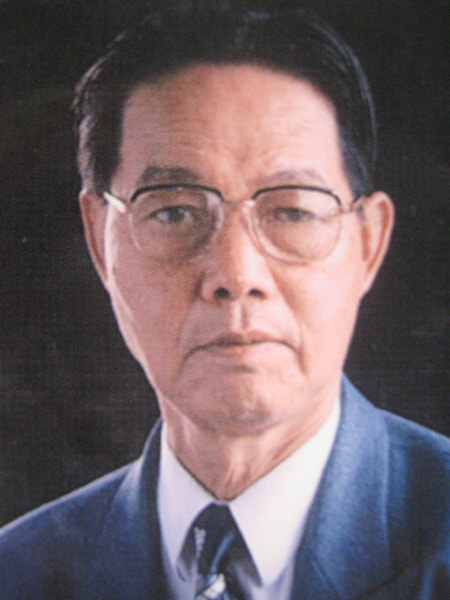 |
| Pham Dan Que |
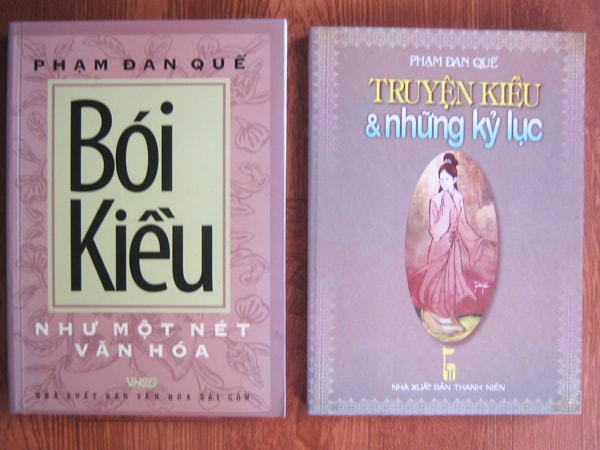 |
| The works of Mr. Pham Dan Que |
Among those who are passionate about the Tale of Kieu, who have devoted much effort and thought to understanding Nguyen Du and his masterpiece, the Tale of Kieu, for over 40 years and with dozens of published books, readers must surely reserve a place of honor for the scholar of the Tale of Kieu, Pham Dan Que.
Originally a math teacher, Pham Dan Que was 74 years old in 2013. Since the 1990s, this author has focused on studying the culture of the Tale of Kieu, gradually discovering its unique aspects. Thus, in 1991, he published his first two books: *Comparative Tale of Kieu* and *Commentary on, Praises, and Divination of the Tale of Kieu*. He compiled and published *Anecdotes about the Tale of Kieu*, including *Examples of the Tale of Kieu*, *Examples of the Tale of Kieu*, and many other anecdotes about the Tale of Kieu, in 1994 and 2000. Following a comparative literary research approach, he also wrote *The Tale of Kieu and Kim Van Kieu Story* (2000), which clearly demonstrates the genius of Nguyen, who, from a Chinese plot, created a masterpiece using the Vietnamese lục bát (six-eight) verse form.
Exploring the history of the reception of Truyện Kiều is also very interesting, because the reception of a literary work always bears the imprint of the era and the subjective creativity of the evaluator. The two books, Truyện Kiều and the Confucian Scholars of the 19th Century (1994) and Truyện Kiều in the Newspapers of the 20th Century (2004), compiled by Phạm Đan Quế, share the same perspective and were published exactly 10 years apart. Reflecting the unique aspects of Truyện Kiều, he also has two more books: Truyện Kiều Read in Reverse and Lục bát (Six-Eight Verse) After Truyện Kiều, both published in 2002. The artistry of Truyện Kiều is universally acknowledged as exceptionally distinctive, and Phạm Đan Quế continues to delve into this complex and subtle field through three books: Understanding the Allusions in Truyện Kiều (2000), On the Artistic Techniques in the Literature of Truyện Kiều (2002), and The World of Characters in Truyện Kiều (2005). In 2005, at the request of the Vietnam Records Center VIETBOOKS, the book Truyện Kiều and its Records was published. These two books, published in 2005, are considered a significant effort by the scholar of the Tale of Kieu, Pham Dan Que, to commemorate the 240th anniversary of Nguyen Du's birth, which also marks the 200th anniversary of the Tale of Kieu…
Great news for all those who love Nguyen Du and The Tale of Kieu: At the end of 2013, the UNESCO General Assembly voted to honor 93 prominent figures, including Nguyen Du. And at its 37th session in November 2013, UNESCO officially recognized Nguyen Du as a cultural figure of humanity! Perhaps, in preparation for this long-awaited event, in the third quarter of 2013, the scholar of The Tale of Kieu, Pham Dan Que, published another book, "Poems Praising Kieu and the Unique Method of Reversible Poetry." Previously, after the publication of Pham Dan Que's poem "Kieu Nuong of the Buddha," it was suggested that there could be up to 1464 different and meaningful ways to read it. In the book published by the Education Publishing House this year, Pham Dan Que increased the number of readings to 1728 according to various criteria. All of them are classical poems, with at least 23 of them in the seven-word eight-line verse form, adhering strictly to the rules of Tang Dynasty poetry.
In medieval Vietnamese literature, The Tale of Kieu and Nguyen Du were a cherished possession of the writer Dang Thai Mai (1902-1984). Through his valuable writings on The Tale of Kieu in 1955 and 1965, Dang Thai Mai assessed Nguyen Du as the greatest classical poet of our country, and The Tale of Kieu as the most glorious success, the greatest masterpiece of classical Vietnamese literature. Because of the boundless content, thought, philosophy, artistry, and influence of The Tale of Kieu, collecting, researching, and studying both Nguyen Du and The Tale of Kieu is an equally boundless undertaking, undertaken by successive generations building upon existing achievements.
Here, alongside other scholars, the scholar of the Tale of Kieu, Pham Dan Que, has set milestones widely recognized by readers. Many of his works on the Tale of Kieu, as some mentioned above, have been continuously published, reprinted, and supplemented by central and local publishers to meet the reading needs of various audiences… However, he is still not entirely satisfied with himself. In an interview with Dai Doan Ket newspaper (online, July 27, 2009), Pham Dan Que confided: “I have written 15 books on the Tale of Kieu in 15 consecutive years, which also corresponds to 15 years of Kieu's wandering. But reflecting on it, I am still not satisfied with my works because it is difficult to research every aspect of the Tale of Kieu.”
At a time when reading culture in our country is in a state of alarming decline, I believe that his series of works on The Tale of Kieu is a successful phenomenon. He achieved three records by 2013: the author with the most books written about The Tale of Kieu; the author with the most research books on the culture surrounding Kieu; and finally, the author who discovered the most interpretations of the poem "Kieu Nuong Cua Phat". Indeed, Pham Dan Que deserves such honor!
Nguyen Van Hung


