
A crucial discovery paves the way for a malaria drug.
On June 5th, European researchers announced they had identified how malaria bacteria live as parasites in the bloodstream.
This is a crucial discovery that paves the way for research into drugs to treat malaria, especially in children – the primary victims of this epidemic.
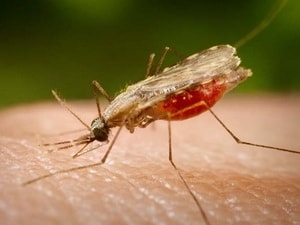
Illustrative image. (Source: bimcbali.com)
The falciparum strain of malaria—the most deadly type of malaria parasite—develops within red blood cells. They cling to the walls of blood vessels to avoid being swept away by the bloodstream as it flows to the spleen, where they are destroyed.
This has been known to science for over a century, but no one has yet figured out how malaria parasites manage to attach themselves to the walls of blood vessels.
Things became somewhat clearer in 2012 when a research team first discovered a protein in this parasitic strain, called PfEMP1.
New research, conducted by a team of scientists at the University of Copenhagen, has helped to clarify this issue further by identifying the binding sites where PfEMP1 attaches to blood vessel walls.
After reviewing 2,500 patient records and examining malaria parasite samples taken from 15 Tanzanian children with malaria, researchers identified a receptor in the bloodstream called outer membrane C protein (EPCR) and confirmed its association with PfEMP1.
According to researcher Thomas Lavxtsen from the research group, under normal conditions, ECPR plays an important role in regulating inflammation, blood clot formation, cell death, and vascular permeability.
The discovery of parasites that can bind to and interfere with the normal function of this receptor could help explain how severe malaria symptoms develop.
Oxford University researcher Matthew Higgins said this new finding will help drug developers focus on the binding mechanisms of parasites.
According to him, the first step is to pinpoint exactly which part of the malaria parasite protein allows it to bind to receptors in the blood vessel walls. This would then allow for the development of a vaccine specifically designed to block this binding.
According to a report by the World Health Organization (WHO) published in December 2012, in 2010, approximately 219 million people worldwide contracted malaria, the majority of whom were children under 5 years old in Africa, with about 660,000 deaths. Meanwhile, according to a study published in The Lancet in February 2012, approximately 1.2 million people die from this disease worldwide each year.
According to (VNA) - VT


