
Early detection of lung cancer through blood tests.
With biomarker testing, when a malignant tumor is present, the indicators will increase abnormally, potentially by thousands of times.
The World Health Organization and the International Association for Cancer Prevention have designated February 4th as World Cancer Day. This is a global health concern, with over 14.1 million new cases and over 8.2 million deaths each year.
In Vietnam, there are between 135,000 and 180,000 new cases each year, with 95,000 to 135,000 deaths. Vietnam ranks 78th out of 172 countries and territories surveyed, with a mortality rate of 110 deaths per 100,000 people.
In Vietnam, lung cancer is the leading cause of both morbidity and mortality in men and the third leading cause in women, and its incidence continues to rise. In 2000, the number of new lung cancer cases in men was only 6,905, with a rate of 29.3 cases per 100,000 population. By 2010, this number had increased to 14,652 cases, raising the rate to 35.1 cases per 100,000 population.
It is projected that by 2020, the number of new cases could reach 23,000 in men and over 34,000 in both sexes.
|
| Lung cancer is the leading type of cancer in our country. |
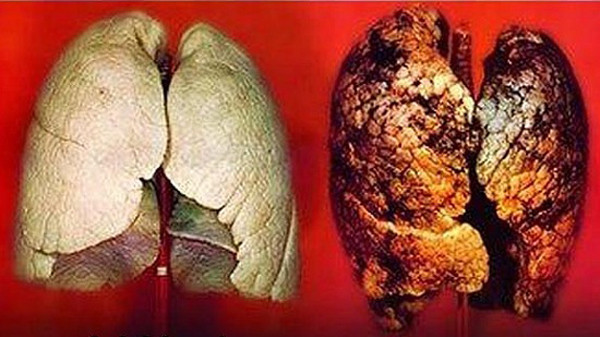
This is one of the types of cancer that is difficult to screen for and detect early. The clinical manifestations of the disease are diverse. Symptoms such as coughing, chest pain, shortness of breath, coughing up blood... are not characteristic signs of the disease. In the early stages, the disease develops silently, with few or no symptoms.
Professor Mai Trong Khoa, former Deputy Director of Bach Mai Hospital, stated that up to 70% of lung cancer patients in Vietnam are diagnosed at a late stage, leading to very difficult treatment and a short life expectancy.
Specifically, the 5-year survival rate for small cell lung cancer is only about 6%, while for large cell lung cancer it's about 18%.
For diagnosis, doctors commonly use CT scans, but 20-40% of patients are still misdiagnosed due to false positives. This procedure must be repeated every 1.5 years at a high cost.
New approach to early detection of lung cancer.
Currently, Vietnam, along with many other countries, is adopting a new approach: testing for biomarkers (using indicator substances) to detect cancer early.
For lung cancer, people in many European countries have a routine biomarker test once a year.
Professor Mai Trong Khoa stated that the five most common biomarkers currently in use are CEA, ProGRP, NSE, Cyfra 21-1, and SCC, which are tested based on patients' blood samples.
High-risk individuals such as smokers (including those exposed to secondhand smoke), those with a family history of lung cancer (parents, siblings), and those working in environments with potential exposure to carcinogens should be tested more frequently, depending on their age. The older the age, the more frequent the testing should be.
In a normal body, the concentration is low, but in the presence of a malignant tumor, it increases abnormally. If it reaches thousands of times the normal level, it is definitely cancer.
This method has an accuracy rate of up to 80%. 20% of suspected cases will be retested after one month for confirmation. This is an inexpensive and accurate lung cancer screening method that, along with clinical examination and imaging, helps detect lung cancer early.
Currently, all central-level hospitals, most provincial-level hospitals, and many large laboratories can perform this test; however, few people in the community are aware of this.
In addition to helping detect many types of cancer early, the use of biomarkers also helps doctors monitor recurrence after treatment and evaluate treatment effectiveness more efficiently.


