
Discovery of a "mathematical region" in children's brains.
A child's mathematical talent can be predicted by the size of their hippocampus. The larger this region and the stronger its connections to other areas of the brain, the easier the child will grasp numbers and demonstrate mathematical abilities.
Researchers from Stanford University (USA) confirmed this in a journal article.Proceedings of the National Academy of Sciences.
A considerable amount of modern neurobiological research is devoted to understanding the relationship between mathematical ability and brain structure.
Scientists are paying particular attention to the work of Vino Menone's team, which compared magnetic resonance imaging (MRI) data from the brains of 8-9 year old children with their mathematical abilities and IQ test scores.
For eight consecutive weeks, the children participated in a math course in which they were taught quick mental arithmetic and arithmetic problems.
Particular attention was paid to quickly accepting their proposed solutions (without considering the specific results). After the course, they underwent brain scans and participated in tests.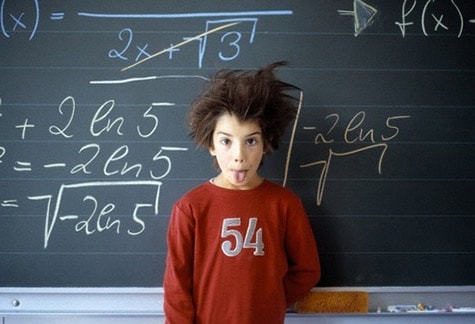
Children's mathematical abilities are assessed through brain scans.
As expected, they were much better at math. The children who achieved the highest results were always those with the largest hippocampus (the bulge in the lateral ventricle of the brain shaped like a hippocampus) and other parts of the brain.As we know, the hippocampus plays a crucial role in memory organization, so its involvement in the process of learning mathematics is understandable. However, according to scientists, in adults, the hippocampus is largely irrelevant to this field of study. This means that, at different ages, cognitive functions are the responsibility of different areas of the brain.
Understanding children's neurophysiological characteristics is very helpful for parents and teachers. Of course, this is not meant to discriminate against or ignore children who are "not naturally gifted in mathematics," but rather to dedicate more effort to them so they don't fall behind their peers.
It's also important to reiterate that differences in brain structure are not hereditary. Even when children have the same genetic makeup, parts of their brains can still differ.
According to Vietnamnet - LY


