
Urban development in Vinh City: Challenges to be overcome!
(Baonghean) - The synchronized development of technical infrastructure and modern architectural works in new urban area projects in Vinh City is creating "highlights" for the city, befitting its status as a Class I city and the economic and cultural center of the North Central region. However, much work remains to be done to ensure the sustainable development of urban areas in Vinh City, making them "ideal" places to live.
New urban space
The people of Vinh City were once proud of the Quang Trung high-rise apartment complex, as it was a "highlight" of Vinh's urban landscape. The architecture of the five-story buildings was quite similar, and the close connection between the blocks created architectural unity. However, with the strong development of the economy and social needs, the urban architecture of Vinh has been re-planned, licensed, and rebuilt, creating new technical infrastructure and giving the city a new look.
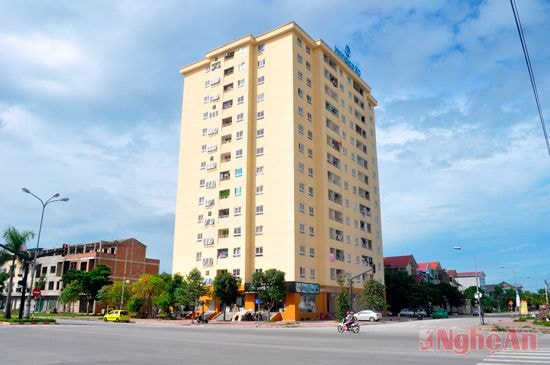 |
| The high-rise apartment complex on Lenin Avenue (developed by VINACONEX 9) has created a "highlight" for the city of Vinh. |
Currently, there are over 100 real estate development projects in the province, with more than 80 projects in Vinh City, covering a total area of over 1,500 hectares, including 45,000 villas, townhouses, and high-rise apartment buildings. This strong development demonstrates the significant investment appeal of Vinh City's real estate sector, with its synchronized infrastructure. Hanoi Housing Investment & Development Joint Stock Company No. 30 is the investor of 10 large projects in Vinh City and Cua Lo Town, notably the residential area south of Nguyen Sy Sach Street; the high-rise and townhouse residential area; the villas south of Nguyen Viet Xuan Street; the apartment complex east of VI Le Nin Boulevard; and the Vinh Tan ecological urban area project. In these projects, along with the synchronized investment in infrastructure, the company is constructing high-quality high-rise apartment buildings with modern architectural and landscape designs. One of the new urban areas is the Vinh Tan Eco-Urban Area project, invested by HANDICO Vinh Tan Investment & Development Joint Stock Company. Spanning over 77 hectares, it is planned and built as an eco-urban area, with a construction density of only about 40%, leaving the rest for public facilities, green spaces, ponds, and water features. In this urban area, along with the planned 1,500 plots for low-rise apartments, the investor is also constructing 8 apartment buildings ranging from 15 to 27 stories. With its bold and determined investment, the Vinh Tan Eco-Urban Area is creating a significant attraction for Vinh City.
The Nghi Phu New Urban Area, invested by PetroVietnam Construction & Trading Joint Stock Company (PVIT), covers an area of 1.3 hectares and includes the planning of 64 townhouses and villas, and 2 apartment towers. The project has completed 2 11-story apartment buildings with 117 apartments. Mr. Tran Luong Son, Head of the Project Management Board, stated: “This project has a very good advantage on the 72m road axis, but during the project implementation, we strictly adhere to the planning, ensuring that 42% of the land area is used for the construction of technical infrastructure and urban landscaping.” Real estate projects by TECCO Central Vietnam Joint Stock Company are also invested in a comprehensive and modern manner, including low-rise housing areas, high-rise apartments, social housing, and technical infrastructure. Consistently adhering to deadlines, making targeted investments, and prioritizing the construction of high-rise buildings are effective strategies used by TECCO to build credibility, attract customers, and successfully develop modern new urban areas.
The rapid development of new urban areas creates an abundant supply of housing for the people, while effectively utilizing land resources, especially in areas of barren land, unproductive agricultural land, and land lacking transportation infrastructure. The significant impact of real estate projects on land exploitation is evident: through the investment and construction of new urban areas, swampy, barren, and flood-prone lands have become valuable and attractive to investors. Typical examples include urban areas along the extended Le Mao road, with new projects by HANDICO, TECCO, etc.
Architect Nguyen Dinh Loi, Deputy Director of the Department of Construction, assessed: “The urban areas in Vinh City are planned and designed with a beautiful and modern spatial layout, with a reasonable proportion of high-rise buildings, in line with the urban spatial development orientation of Vinh until 2020. The projects have initially created a new look for urban architectural space in a synchronized and modern direction.”
Gradually reduce the number of stalled projects.
Since 2011, the real estate market has been sluggish, significantly impacting the progress of new urban development projects in Vinh City. Businesses have faced numerous difficulties due to bank debts, corporate debts, and debts to secondary investors. A worrying reality in real estate projects is the tendency for developers to focus on building infrastructure and selling land plots, or constructing and selling the unfinished state of low-rise housing to quickly recover capital, neglecting investment in high-rise housing, social housing, and welfare facilities such as schools, kindergartens, cultural centers, entertainment areas, markets, and green spaces.
Many urban areas are like abandoned buildings, with investors leaving no buyers. Some urban areas and projects are stalled due to land clearance issues, and the city has yet to find effective solutions, negatively impacting the investment environment. Some high-rise projects have unsightly and dirty ground levels due to indiscriminate leasing, sales, and littering. A prime example is the Vinaconex 9 urban area, where construction waste is dumped on vacant plots of land that have yet to be built upon...
In addition, there are unfinished and inconsistent urban areas that are aesthetically unappealing and negatively impact the city's appearance. Mr. Nguyen Quoc Thang, Head of the Urban Management Department of the Vinh City People's Committee, stated: “Although real estate projects have basic planning and design, in reality, many investors have not fully demonstrated their responsibility and lack attention to investment management, leading to situations where residents and investors arbitrarily construct buildings that do not conform to the basic planning and design, disrupting the planning and architecture, and ruining the urban landscape. However, in reality, it is very difficult for the functional forces of Vinh City to handle this...”
Service fees are not subject to agreement.
To date, residents of the Vinaconex 9 apartment complex have yet to agree with the new service fees proposed by the building management. Ms. Pham Thi Quynh (house number 1106) stated: “When signing the purchase agreement for our apartment here, we were informed that the service fee (including cleaning and elevator services) would be 1,500 VND/m2. However, from September 2014, the apartment building management suddenly increased the fee to 3,000 VND/m2 without clear explanation. The apartments here range in size from 84m2 to 123m2, so the service fee is very high, reaching 370,000 VND per month according to the new regulations. This is quite a high fee for low-income residents like us. When residents requested an apartment building meeting to address their concerns, the management only held one meeting at the end of 2014. Therefore, to this day, residents here have not received a full explanation of the newly issued regulations, nor have they been able to establish a management board to represent the residents in the area.” apartment".
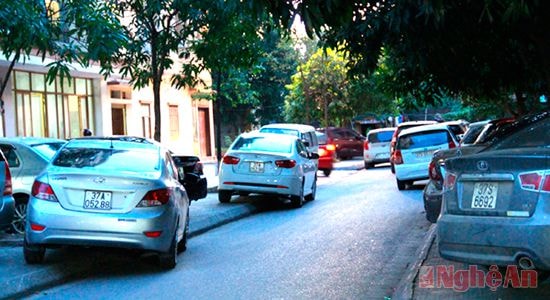 |
| The Doi Cung apartment complex lacks a planned parking area. |
According to Circular 37/2009/TT-BXD on "Guidelines for determining and managing apartment building service fees," apartment service fees must be consistent with the socio-economic realities of each locality and the income of residents at each period. Furthermore, they must be approved by more than 50% of the members of the apartment building management board through voting or secret ballot. For apartment buildings without a management board, the service fees must be unanimously approved by more than 50% of the residents living in the building through voting or secret ballot. If the service fees are already agreed upon in the apartment purchase contract, then that agreement shall be followed.
Based on the regulations, the increase in service fees at Vinaconex 9 building is wrong in two aspects: Firstly, it does not comply with the agreement when purchasing the apartments, which stipulated a fee of 1,500 VND/m2; secondly, the fee increase was not agreed upon by more than 50% of the residents. According to residents, despite the increased fees, the quality of service has not improved. Specifically, the waste disposal system remains inadequate, causing unpleasant odors and affecting the health of residents. Frequent power outages, causing elevator malfunctions, are explained by the management as being due to a broken generator or the operator being far away, making it difficult for the elderly and children to move around. In response to this situation, many residents have protested by refusing to pay and requesting a residents' meeting to discuss and resolve the issue. However, to date, the apartment building management has not yet implemented the residents' request.
Apartment complexes in the city still face other shortcomings, such as the issue of car parking. Many buildings lack planned parking areas for residents' cars or only have areas for motorbikes; some complexes don't even have basements. The basements are only large enough for bicycles and motorbikes, while the number of cars owned by residents is increasing. Therefore, people park indiscriminately on sidewalks, walkways, and even children's playgrounds. At the Hung Dung apartment complex, car break-ins and thefts occur frequently, causing residents to feel insecure, especially during the rainy season. At the Doi Cung apartment complex, the limited sidewalk space intended for children's playgrounds is also being completely encroached upon and turned into parking lots for adults. Even the ground floor space in front of the upscale Tecco apartment complex is problematic, with many companies renting space for their offices. As a result, vehicles belonging to both employees and customers are parked haphazardly on every corner of the sidewalk, making transportation extremely inconvenient. Parking fees in some places are also higher than regulated. For example, the Vinaconex 9 building stipulates a parking fee of 350,000 VND per month for cars with fewer than 7 seats. However, according to the regulations of the Nghe An Provincial People's Committee in Decision No. 61/2014/QD-UBND dated September 18, 2014, on the collection and management of parking fees for bicycles, motorbikes, and cars in the area, for parking facilities not invested in by the State but whose investment projects have been approved by competent state agencies, the maximum fee is no more than 270,000 VND/vehicle/month. In some other apartment complexes such as the Tecco apartment complex (Vinh Tan), parking outdoors costs 300,000 VND/month, and parking in the basement costs 400,000 VND/month.
Delay in issuing certificates of ownership for apartments.
The Nam Nguyen Sy Sach apartment complex (Tan Hop block, Hung Dung ward) was started in 2003 and put into use in early 2004 following a decision by the Provincial People's Committee to relocate residents from building C1, Quang Trung. Nearly 12 years after its completion, all 216 households in the complex have yet to receive their apartment ownership certificates. Lieutenant Colonel Doan Van Vuong (building 211 - B3), a resident of the complex, shared: “Most of the residents here are from disadvantaged backgrounds, such as war invalids, disabled veterans, or those with outstanding achievements in national development. Many have served in the Youth Volunteer Force or the army for many years, and it was very difficult to complete the procedures and pay for the houses. However, after years of waiting, we are almost hopeless as we still haven't been granted the right to use our apartments.”
During meetings with constituents organized by the ward or city People's Councils, residents have repeatedly raised this issue, but have always been told that the investor, Hanoi Housing Investment and Development Joint Stock Company No. 30, and the Department of Natural Resources and Environment have not yet reached an agreement, therefore, the Certificates of Land Use Rights for the apartments cannot be issued to the residents.
According to the plan, Vinh City will expand its area to 250 km2 and its population to approximately 1 million people. Therefore, in the coming time, many areas will be planned and invested in the construction of new urban areas. However, the issue is that all levels and sectors need to strengthen management and supervision of projects to ensure they are implemented on schedule, while resolutely eliminating stalled projects, contributing to building a modern Vinh City worthy of being the economic and cultural center of the North Central region. In addition, investors of apartment projects need to urgently fulfill their financial obligations to the State so that households can quickly receive land use certificates and stabilize their lives; more attention should be paid to post-investment services in apartment complexes to ensure residents' rights and quality of life.
Hoang Vinh - Thanh Quynh


