
The Philippines defends its decision to grant the US access to new military bases.
Philippine defense leaders have issued a statement defending the US's access to new military bases in the Southeast Asian nation.
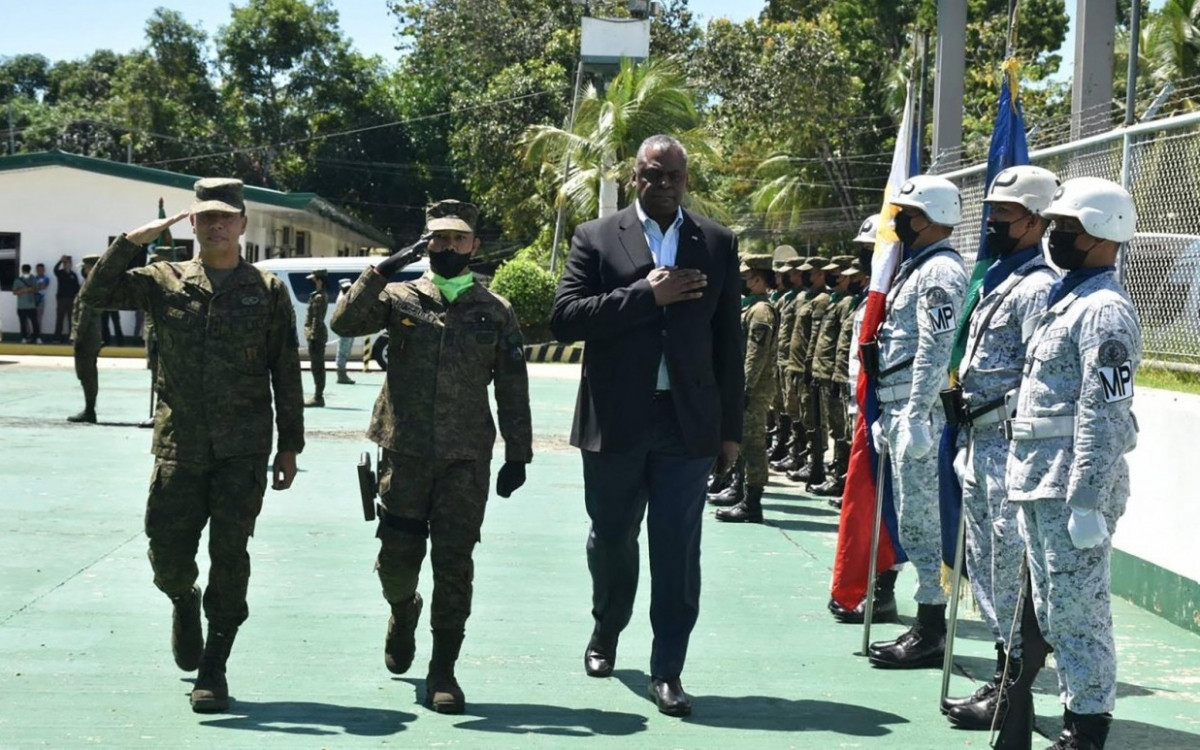 |
US Defense Secretary Lloyd Austin visited the Philippines in February 2023 to promote defense cooperation. Photo: Jakarta Post. |
The Philippines' decision to allow the US expanded access to its military bases is aimed at improving its defense capabilities against threats, not at preparing for war – this was the assertion of Philippine Defense Minister Carlito Galvez amid concerns after the Philippines granted the US access to four additional military bases, in addition to the five currently under the Enhanced Defense Cooperation Agreement (EDCA) from 2014.
Philippine Defense Secretary Carlito Galvez emphasized that the region's geopolitical situation is becoming increasingly unstable, and the Philippines wants to strengthen its defense capabilities against unexpected situations and security threats. Galvez also stressed that the Enhanced Defense Cooperation Agreement and the Philippines' defense partnerships are "not intended for aggression."
Previously, China stated that increased US access to Philippine military bases undermined regional stability and increased tensions. The Philippines has not yet disclosed specific locations for US access, stating that it is in the process of studying them.
The Philippine Department of Foreign Affairs also stated that the government is in the process of drafting guidelines for joint maritime activities in the South China Sea, including joint patrols with regional partners. The Department has not yet named which regional partners will participate in potential joint patrols between the Philippines and the U.S., but Philippine Ambassador to the U.S. Jose Manuel Romualdez previously mentioned the possibility of Australia and Japan's participation.
Commenting on this information, Australian Ambassador to the Philippines Hae Kyong Yu said: Australia has participated in discussions on joint maritime operations in international waters. Australia looks forward to working closely with partners to uphold international law such as the 1982 United Nations Convention on the Law of the Sea; Australia also benefits from all parties adhering to free and open seas. However, Ambassador Hae Kyong Yu said that Australia has not yet made a decision on this matter.
The Japanese Embassy in Manila stated that there have been no formal discussions yet regarding the possibility of participating in joint patrols. However, Japan will promote cooperation with partners to enhance maritime awareness and maritime law enforcement in the Indo-Pacific region.
During a Senate hearing, Philippine Foreign Minister Enrique Manalo also stated that, in terms of partnerships within ASEAN, the Philippines is in discussions with Singapore, Vietnam, and other countries in the region aimed at strengthening security, not only in military and defense aspects but also in economic security.


