Putin and measures to revitalize the country.
1. The context of Russia on the eve of the year 2000
On the eve of the year 2000, President Yeltsin caused a sensation by announcing his premature resignation. The "legacy" he left to his successor was a Russia in a state of profound crisis in every aspect: economic, political, and social.
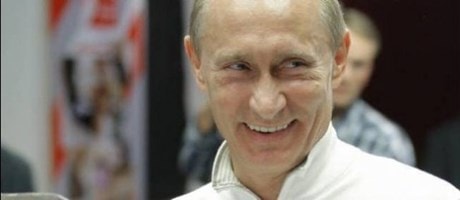 |
| Russian President V. Putin |
Economically, the overall picture of the Russian economy in the late 1990s was one of prolonged and severe crisis, persistently high inflation, and ever-increasing domestic and foreign debt. In particular, the 1998 financial crisis truly devastated an already struggling and ailing economy. The Russian economy proved to be increasingly backward compared to Western countries.
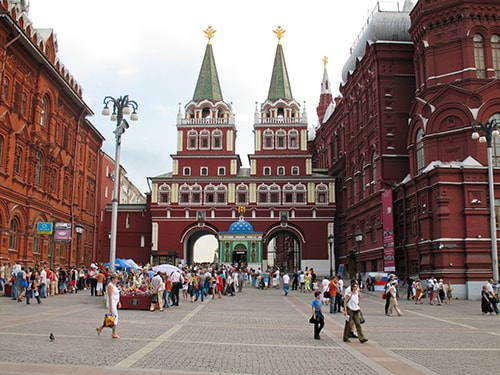 |
| Red Square - the heart of Russia. |
Official Russian statistics show that in the last decade of the first millennium, Russia's GDP had fallen by 56%, to only one-tenth of the US GDP and one-fifth of China's. The output of large and medium-sized enterprises decreased by 60%. Agricultural output fell by nearly 50%, investment by 70%, and real income for citizens by 50% (only one-sixth of Portugal, one-eighth of Spain, and one-fifteenth of the US). The ruble depreciated by 70%. Furthermore, the already weak Russian economy was torn apart by oligarchs and the destructive influence of economic mafia organizations. During Putin's presidency, the Russian Ministry of Internal Affairs recorded 78 major mafia groups controlling 60% of state-owned enterprises, 50% of commercial banks, and 40% of commercial enterprises.
Socially, economic difficulties and incessant political and power struggles have led to social tension and instability. People's living standards have seriously deteriorated. Social sentiment is one of confusion and uncertainty; the masses despise the government and have no hope for a better future. A segment of the Russian population is experiencing a "nostalgia" for the golden age of the Soviet Union. Conflicts between ethnic groups are intensifying. Demands for independence are rising in many places. Alongside this, criminal activities are rampant, and various cults are spreading, seriously impacting public order and security.
Politically, Gorbachev's "reforms" resulted in a disintegrating Soviet Union, while Yeltsin's resulted in a weak, loosely managed government, privatized by oligarchs and plundered by the provinces, with an elite largely driven by a desire to embezzle public funds and seize what little state property remained to share amongst themselves. Furthermore, the expansion of separatist nationalist forces, particularly in Chechnya, seriously threatened the integrity and unity of the Russian Federation.
In terms of military affairs, after the collapse of the Soviet Union, a leading world military power ceased to exist. The Russian military was forced to withdraw from many parts of the world. Russia's limited nuclear strategy was essentially reactive and largely ineffective. The situation of its conventional troops worsened, combat equipment rapidly deteriorated, military quality steadily declined, operational command became disorganized, and the defense industry was in disarray.
In terms of diplomacy, the effectiveness of the United Nations has diminished globally, and Russia's role and prestige have weakened; in many regional and international issues, Russia's role is being ignored. Western countries do not consider Russia a world power. Former Soviet states tend to lean towards the West. NATO is deploying its forces in areas beyond its borders, and foreign military bases are increasingly located closer to Russia…
It could be said that, from its former status as a superpower, as Putin put it, Russia has fallen to the role of "a second-tier country in the world, even at risk of falling to third tier." These enormous historical challenges – unexpectedly – have fallen on the shoulders of the 47-year-old president, whose abilities were largely doubted by most Russians at the time. Putin's task is to awaken the "sleeping polar bear" – to raise Russia and restore its rightful status as a great power.
2. Putin's actions as the head of Russia
As the head of Russia, Putin understands the situation in Russia and the difficulties his country faces better than anyone else. In his 2000 speech, "Russia at the Turn of the Millennium," Putin clearly stated that Russia today "is not among the countries representing the highest level of economic and social development in the contemporary world," but on the contrary, "is currently facing extremely complex economic and social problems" and "is entering the most difficult historical period in several hundred years."
The truth is, long-standing mistakes in economic and social development policies have pushed Russia from its status as a superpower to that of a "second-tier country, even at risk of falling to third tier" in the world. Both Gorbachev and Yeltsin failed to find a path to reform. Therefore, the first requirement for the new leader is to develop a suitable development strategy for the country.
After a period in power, the path of development that Putin has chosen for Russia can be seen in the following two points:
Firstly, instead of simply copying foreign development models, Russia's development model must be an organic combination of a market economy and universal democratic principles with the realities of Russia.
Secondly, we should avoid haste, subjectivity, and radicalism, and instead advocate for gradual progress. We should maximize the use of external resources while focusing on developing our existing capabilities.
The path of development that Putin has outlined has been consistently implemented across various fields and has yielded tangible results.
Economically, Putin has chosen and implemented an economic model that combines state intervention with a market economy, a model suitable to the realities of Russia and unique to the country, as demonstrated by the following points:
Firstly, it involves strengthening state intervention in economic life, particularly enhancing macroeconomic regulation and control over the financial and monetary sectors.
Secondly, adjust the direction of macroeconomic policy, shifting from a policy prioritizing financial stability to one prioritizing production development, through increased investment capital, stimulating high-speed economic growth; focusing on developing high-tech industries; and deepening agricultural reform and modernization of agriculture and rural areas.
Thirdly, overcome the one-sidedness in foreign economic policy through measures aimed at protecting domestic producers and consumer markets, creating conditions to support domestic producers, and stimulating exports, while focusing on improving the efficiency of privatized enterprises.
Fourth, resolutely combat organized economic crime by improving the effectiveness of law enforcement agencies and strengthening supervision of tax collection, foreign exchange, and exports.Putin has imprisoned one of Russia's oligarchs, Mikhail Khodorkovsky.
Fifth, deepen the adjustment of the economic structure based on ensuring a reasonable proportion between economic forms, guaranteeing stable economic growth.
Ignoring the current difficulties caused by Western sanctions, it is clear that under Putin's leadership, Russia has achieved significant economic successes. GDP growth has reached 6.5% annually, foreign debt has decreased considerably, foreign exchange reserves have increased, capital flight has ceased, and people's living standards have improved. Putin skillfully steered Russia smoothly through the 2008 global economic crisis. In 2011, Russia officially joined the World Trade Organization (WTO) after more than 10 years of intense negotiations. This event marked Russia's official integration into the dynamic global economy.
Currently, Russia is the world's eighth-largest economy, a major export market for the US, China, and the EU; and the largest supplier of natural gas to Europe. At any given time, Russia's "gas card" sends chills down Europe's spine. Notably, Russia is the world's second-largest exporter of military equipment, after the US. In 2013, the country earned $13.2 billion from exporting this type of goods.
Regarding society, based on the perception of a deeply divided Russian society, Putin advocates that social unity is of paramount importance in the country's revival. Each nation must possess a national spirit, and each country must unite all its peoples into a single entity. Putin believes that the spirit capable of uniting all nations is "Russian Ideology."
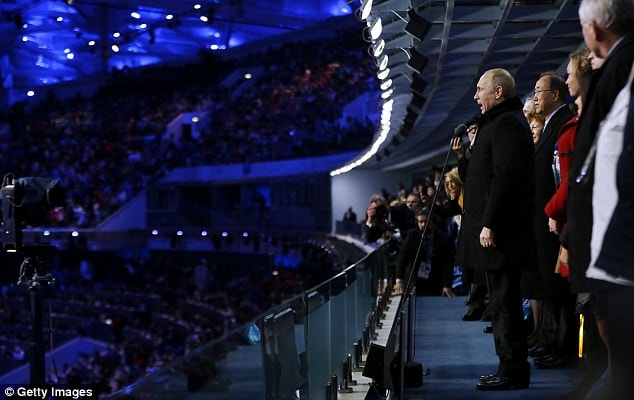 |
| President V. Putin at the Sochi Olympics |
Putin argues that "Russian Ideology" is a composite entity based on the organic combination of universal human values with the long-standing, tested traditional values of Russia. This ideology includes: patriotism; a sense of great power; the role of the state; and social solidarity.
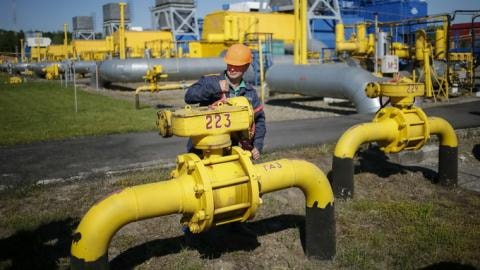 |
| Russia's gas pipeline system |
By uniting hardline minority communities under a new security mechanism, Russia has helped transform an ethnic conflict into a constructive nation-building process.
Everyone knows that the Soviet era was a glorious period for Russia, a source of national pride for the Russian people as a respected global power. Putin has not erased the Soviet past from Russian history; instead, he cherishes and develops it, considering it an important part of Russian history and a major influence on the formation of modern Russian society. Therefore, some Soviet-era symbols have been allowed to return to Russia, such as the red flag of the Red Army, the motto "Soviet Star," and the Soviet national anthem—all of which have made a positive impression on the majority of the Russian population.
Furthermore, through his actions and achievements, Putin has built himself as a symbol of national unity, a source of pride for a rising Russia. Unity around a leader is a very effective "habit" in uniting a nation; Vietnam, with President Ho Chi Minh, is a prime example.
Having weathered Russia's crises during his 14 years in power, the Russian people see Putin – “more than anyone since the end of the 20th century – as helping Russia become stronger and regain its former position as a country that respects itself and is respected by all other countries.” After each crisis, Putin's approval rating increases. Even when the Ukraine crisis was still unresolved and Russia was facing numerous difficulties from Western sanctions, the percentage of Russians supporting their president remained at 72%. Globally, Putin was also named “Person of the Year” by Time magazine (2007) and by Forbes as “The World's Most Powerful Person” (2013).
Politically, immediately after his election, Putin implemented numerous measures aimed at re-establishing the Kremlin's absolute power over Russian political life. One of Putin's first laws aimed to restore what he called "vertical power," returning the traditional top-down federal system for easier and more unified governance. Alongside this, he quickly implemented measures to stabilize Russian politics, such as: strengthening state institutions, primarily the two Houses of Parliament, by limiting the power of provincial governors; establishing a State Council – an advisory body to the President; dividing Russia into seven large administrative regions under the direct control of plenipotentiary representatives of the President to ensure unified application of law throughout the country; and targeting oligarchs to limit their influence on the Russian economy and politics.
As the leader of the world's largest nation, home to over 100 ethnic groups and constantly expanding separatist forces, Putin is determined to build "a powerful state" capable of action by adjusting and reforming the state's power branches such as the police, security services, and courts. Alongside this, he aims to strengthen the rule of law in Russia and revitalize the work ethic.
In short, Putin's political approach is based on laws and regulations, utilizing powerful branches of government to strengthen the state apparatus, effectively control federal entities, and implement market economics and democracy under macro-level control.
In military matters, Putin, aiming to restore Russia's image and status as a military superpower, has consistently emphasized that rebuilding the military is a key factor for Russia's future. Under his direction, Russia recently launched a comprehensive, multi-layered military strategy with ambitious goals, including upgrading weapons systems and maintaining the combat readiness of all military units. Notably, in 2000, Putin adopted a new military doctrine that expanded the possibility of using nuclear weapons, viewing them as a fundamental means of deterring war.
The development of the Russian military follows two major directions: firstly, strengthening its strategic nuclear forces to ensure that no country would dare attack Russia; and secondly, building forces capable of rapid deployment. Thanks to these reforms, Russia possesses superior strength compared to any of the former Soviet republics.
The Russian army's regaining control of Chechen territory, as well as its swift victory in the 2008 "five-day war" in Georgia, and especially the recent campaign in Crimea, demonstrates that the Russian military has recovered, is increasingly combat-ready, and acts decisively.
Therefore, there is no doubt about Russia's military strength. According to global military strength assessments, Russia is ranked among the world's most powerful military nations, second only to the United States.
In terms of diplomacy, Putin's foreign policy, as well as that of Russia today, opposes a unipolar world and advocates for a multipolar world, while also focusing on enhancing Russia's role as a major power on the international stage. Furthermore, Russia continues to defend and support the status and role of the United Nations in resolving crises or local and regional conflicts.
Russia has a significant influence on countries in the post-Soviet space. Based on Russian ideas, in 2011, the Customs Union (in 2012 the Unified Economic Space – EEP) comprising Russia, Belarus, and Kazakhstan began operating. In the future, the Customs Union and EEP will form the basis for the establishment of the Eurasian Economic Union in 2015. Vietnam is also considering joining this Union.
As a world power and a member of the UN Security Council, Russia participates in resolving crucial international issues. Putin's shrewd handling of the Syrian issue not only averted a bloody war for the country's people but also helped Russia protect its allies in the Middle East and strengthen its role in the region. Furthermore, Putin encouraged Western concessions on Iran's nuclear program and secured a multi-billion dollar arms deal with Egypt's new military government after the US halted aid. Other international issues such as strategic arms reduction and nuclear non-proliferation, Afghanistan, Libya, North Korea, and especially the current Ukraine crisis, would be difficult to resolve without Russia's involvement. This is not to mention Putin's skillful handling of the case of former US intelligence employee Edward Snowden, turning him into a persistent source of anxiety for the US.
Furthermore, the successful hosting of the Sochi Olympics, as well as winning the right to host the 2018 FIFA World Cup, helped to enhance Russia's standing in the world.
*
* *
From a country in crisis, utterly dilapidated and weak, "at risk of falling to third place" in the world, under Putin, Russia has regained its status as a great power that "respects itself and is respected by all other countries".
Explaining its decision to top the list of the world's most influential figures in 2013, the prestigious Forbes magazine stated: President Putin has consolidated his power in Russia and on the world political stage. The title "most powerful person in the world" honors the outstanding efforts and decisive policies that have brought resounding success to the Russian leader over the past year, particularly in foreign affairs.
Vu Van Dat
(Institute of Culture - University)Hanoi Culture