
Qatar's withdrawal: A bad omen for OPEC.
(Baonghean) - Qatar's decision to leave OPEC after 57 years of membership is a symbolic move at this time. For Qatar, it is a strategic move both politically and economically, while for OPEC, it will be a "bad omen" for this nearly 60-year-old organization.
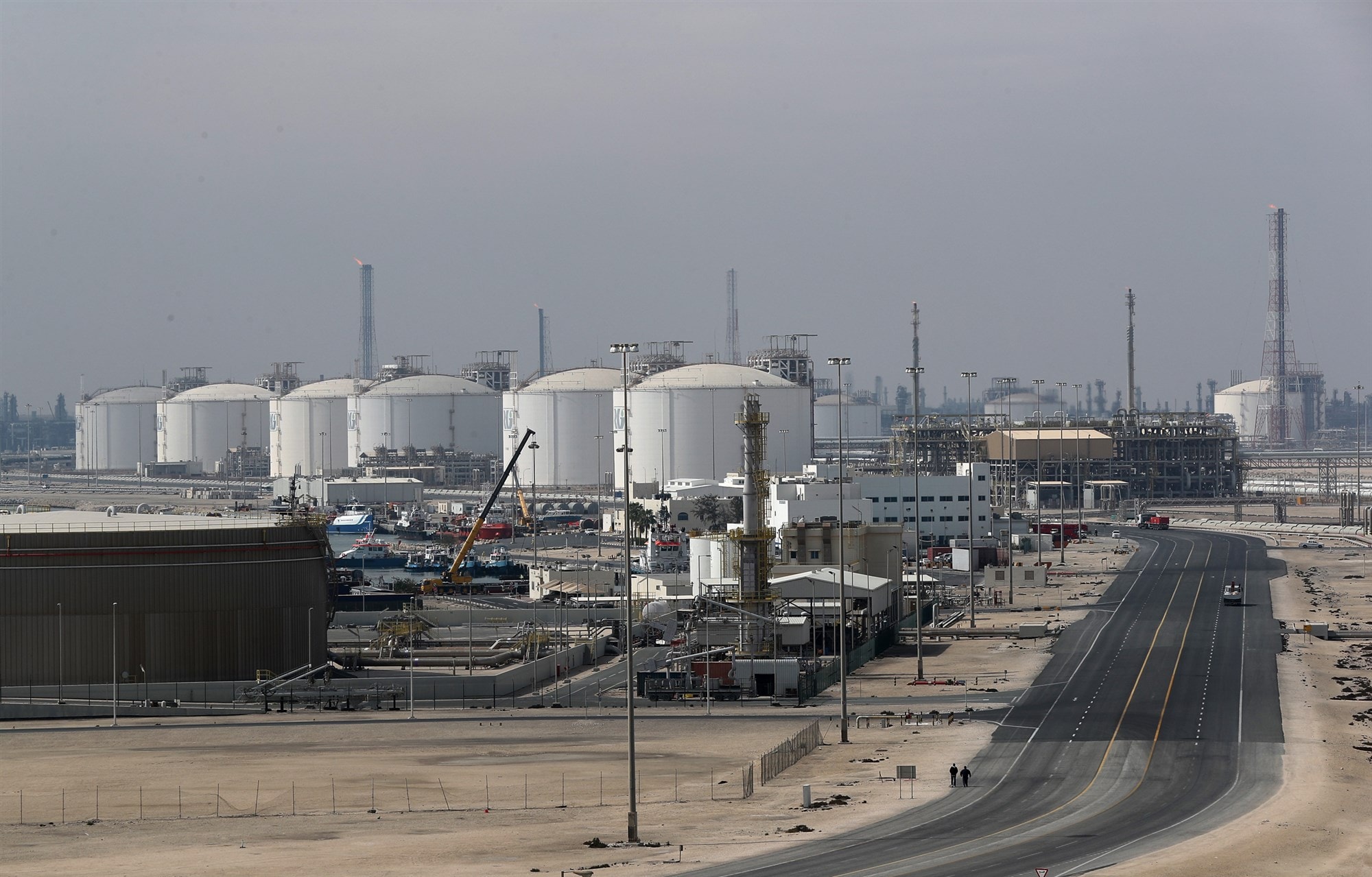 |
| Ras Laffan, an industrial city and liquefied natural gas (LNG) production center in Qatar. Photo: AFP |
Reasons for breaking up
Qatar will officially leave the Organization of Petroleum Exporting Countries (OPEC) in January 2019. The announcement by officials of this Gulf nation comes just before the group's meeting on December 6th in Vienna, Austria, to discuss oil production cuts for the coming year. Qatar's decision is relatively surprising because, although not one of the five founding OPEC countries, Qatar joined just one year after its establishment and became a fairly active member. The reason given by Doha officials for leaving after more than half a century of membership in OPEC is their desire to focus on natural gas – a sector in which the country is the world's largest exporter. While this explanation to the world is quite brief, the underlying reasons for Qatar's decision are believed to be far more complex.
While denying that the decision to leave OPEC was related to diplomatic tensions between Qatar and Gulf states over the past year, Qatari officials acknowledged their "disappointment" at being in an organization where their voice is increasingly undervalued. "The oil market is controlled by an organization that is dominated by a single country," said Qatar's new Energy Minister, Saad al-Kaabi, at a press conference in Doha. Although he did not name names, the "country" al-Kaabi referred to appeared to be Saudi Arabia – the largest oil producer in OPEC and currently the dominant member of the organization.
The views of the Qatari Energy Minister were also shared and supported by Iran. Iran's representative to OPEC, Hossein Kazempour Ardebili, said that Qatar's decision reflected the growing anger of oil producers over what he described as the unilateral approach of the OPEC ministerial-level Joint Monitoring Committee, led by Saudi Arabia and Russia, in deciding on oil production cuts.
According to some independent observers, for several decades, OPEC countries generally recognized that their interests were aligned with the organization. But now, there seems to be a growing dissatisfaction, with many believing that Saudi Arabia's best interests are not necessarily the best interests of the other members.
Not to mention the already strained relationship between Qatar and Saudi Arabia, which will undoubtedly cause disagreements in the process of formulating common OPEC decisions. Saudi Arabia and Qatar remain tense, ever since Saudi Arabia, along with three other Gulf states – Bahrain, the United Arab Emirates (UAE), and Egypt – severed diplomatic relations and closed shipping lanes with Qatar in June 2017, due to accusations that the Doha government supported terrorism. While these diplomatic tensions remain unresolved, Qatar's withdrawal from OPEC will likely exacerbate the situation.
Beyond its politically motivated reasons, Qatar's decision to withdraw from OPEC is believed to be part of its strategy for economic liberalization. Once no longer a member of OPEC, Qatar will no longer be bound by its oil export policies. Furthermore, the country will focus its efforts on developing natural gas with the goal of achieving global dominance in this sector.
Qatar possesses the world's largest natural gas reserves and plans to expand its gas production capacity to 100 million tons (currently at 77 million tons), aiming to do so before the gas market becomes too constrained in the early part of the next decade. This is seen as a strategic move by Qatar to revive its economy under the pressure of sanctions and blockades imposed by Gulf states.
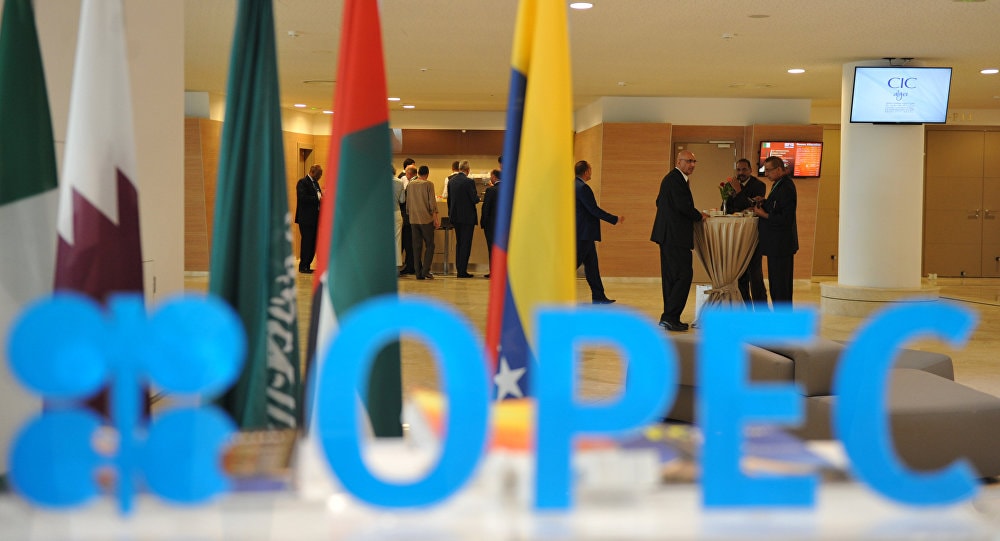 |
| Qatar announced its withdrawal from OPEC just before the organization's meeting scheduled for December 6 in Vienna, Austria. (Photo: AFP) |
Cracks in OPEC
Qatar's withdrawal from OPEC is not expected to have a major impact on the international oil market next year, as Qatar's oil production accounts for only about 2% of OPEC's crude oil output. However, the departure of this long-standing member is a "big deal" for the image and unity of the OPEC organization.
This is not the first time OPEC has seen members leave. Indonesia joined in 1962 and has temporarily suspended its membership twice, most recently in November 2016. Other members such as Gabon and Ecuador also temporarily suspended their participation in OPEC in the 1990s and rejoined a few years later. However, the case of Qatar is particularly noteworthy. Besides the five founding countries – Iran, Iraq, Venezuela, Kuwait, and Saudi Arabia – Qatar is the longest-standing member of OPEC. As one of the world's wealthiest nations, with abundant financial resources, Qatar holds significant influence within OPEC.
For many years, Qatar has maintained a crucial role as a bridge between the countries of the alliance. In addition, it has served as an intermediary connecting OPEC with other major oil rivals such as Russia and the United States. Two years ago, when oil prices hit a record low of around $30 per barrel, Qatar, then holding the rotating presidency of OPEC, played a vital role in helping to build the production cut agreement. After a difficult negotiation process, Qatar successfully persuaded the organization's member countries, especially Saudi Arabia – the largest oil exporter – to agree to cut oil production for the first time in eight years. This was seen as a major step in rebalancing the market and reducing surplus production, thereby pulling oil prices out of their record lows. Therefore, Qatar's decision to leave OPEC will leave a void left by a former active member of the organization.
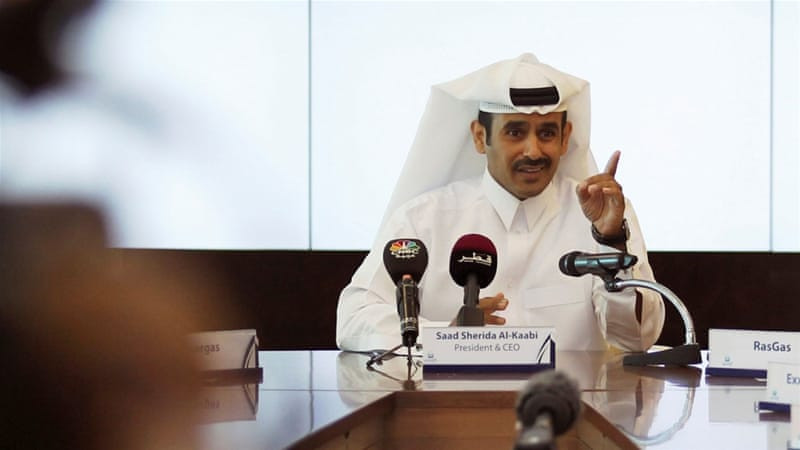 |
| Qatar's Energy Minister Saad al-Kaabi. Photo: Reuters |
Furthermore, Qatar's departure, coupled with dissatisfaction over the dominance of a few countries within OPEC, reveals serious internal divisions and rifts within the organization. In the context of OPEC's efforts to attract new members, Qatar's recent decision will raise doubts about the organization's reputation and image. Within OPEC itself, Qatar's withdrawal could pave the way for smaller members to do the same. Thus, the disintegration of OPEC is a possible scenario. According to some experts, even if OPEC doesn't literally disintegrate, its role could gradually become meaningless if the rifts continue to widen.
In the short term, this event will undoubtedly affect confidence and OPEC's ability to stabilize the oil market. Currently, oil prices are below $50 per barrel, the lowest level in nearly 14 months. Upcoming OPEC policy discussions will no longer include Qatar, which plays a crucial connecting role. This is causing significant concern among investors and poses a challenge to OPEC's organizational structure. Furthermore, Qatar's departure from OPEC also increases concerns that Saudi Arabia, Russia, and the United States – the world's three leading oil producers – will gain more control over global oil decision-making, as geopolitics has become a major driver behind oil prices.
In short, Qatar's withdrawal is the first sign of a turbulent future within OPEC.


