
Passing through Gay tea region
(Baonghean) - Cao Son (Anh Son district) is known for its famous Gay tea brand, renowned throughout the province. This seemingly common plant has become a key crop, helping people escape poverty and improve their living standards. Farmers here are deeply concerned about the tea plant, their daily joys and sorrows tied to the price of each bundle of tea...
After several missed opportunities to visit Gay, the land of tea, I finally managed to arrange a return trip to this special place. Choosing a sunny weekend day, we took a bus along the Ho Chi Minh Highway. The bus sped through Thanh An and Thanh Chuong districts – home to beautiful tea plantations; past Hanh Lam commune, also in Thanh Chuong district, a significant location during the Nghe An - Tinh Hoa Soviet Uprising (1930-1931), and a little further on, we reached Cao Son in Anh Son district.
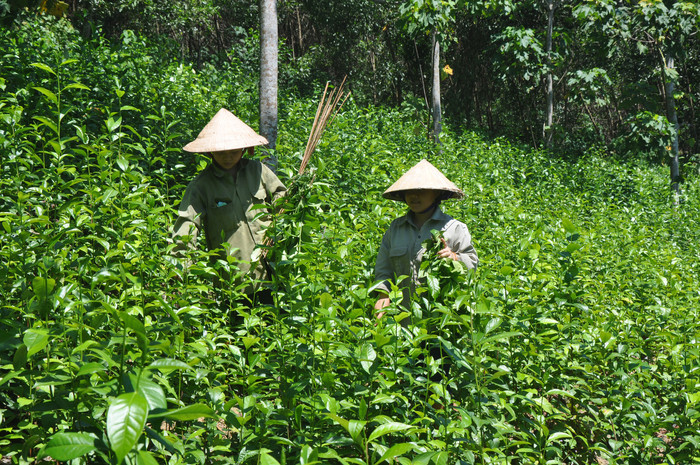 |
| Gay tea has become the main crop in Cao Son commune, Anh Son district. Photo: Cong Kien |
Passing through lush, seemingly endless rolling hills of tea plantations and vast expanses of acacia trees, we began to sense the changes and promising development prospects of this rural area.
Over cups of shimmering green tea, the elders chat, their stories often filled with joy about family, village, and homeland, interspersed with nostalgia for bygone years. In the not-so-distant memories of these old folks from Gay, the hardships, difficulties, and isolation are clearly etched; a meal with meat and fish was a seemingly unattainable dream.
In short, the Cao Son countryside has barren land and lacks the advantages for agricultural production development. Some explain that, bordering Thanh Chuong, Cao Son commune has the characteristic "barren, rocky land" of this midland district, and therefore will never escape poverty.
Nature may not have been kind to the land of Cao Son, but it has bestowed upon it a special tea variety. The locals named the tea after the old Gay market in Linh Son commune. According to the elders, this is because, in the past, Cao Son commune did not have a market, so the locals had to take their tea to Gay market to sell it. Over time, the market's name became the tea's brand.
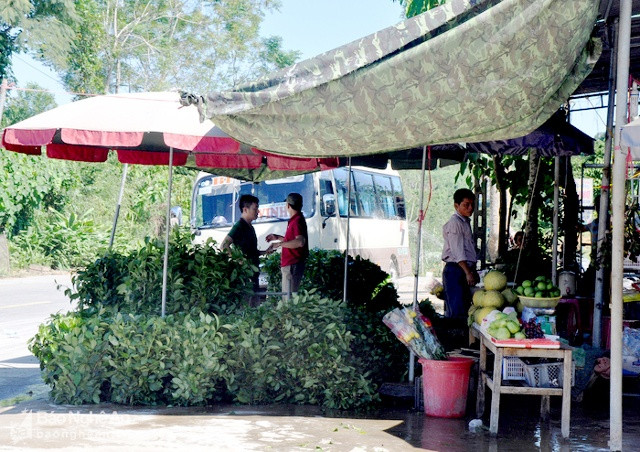 |
| Gay tea is sold along the Ho Chi Minh Highway through Cao Son commune. Photo: Cong Kien |
And for some inexplicable reason, despite the barren hills and harsh climate, Gay tea plants thrive and possess a distinctive flavor. Compared to teas from other regions, Gay tea leaves are thick but not broad, with a darker yellow-green hue. When brewed, it releases a rich aroma that spreads throughout the house on the breeze, and when poured, the resulting liquid is a shimmering golden color. When drunk, Gay tea has a slightly strong astringent taste, followed by a pleasant sweetness – a quality rarely found in teas from other places.
About 10 years ago, Gay tea was only a drink for the people of Gay, and if sold, it was only available in a few neighboring districts. Then, the Ho Chi Minh Highway was upgraded, and the road connecting National Highway 7A with Cao Son was paved, breaking the isolation. Trade became extremely convenient, and life improved day by day in all aspects.
Thanks to this, Gay tea products have had the opportunity to expand beyond Gay to reach all regions, becoming a marketable commodity and establishing a brand throughout the province. And now, the Gay tea region has been granted geographical indication status, helping customers near and far identify a unique tea-producing area in the southwestern part of Nghe An province.
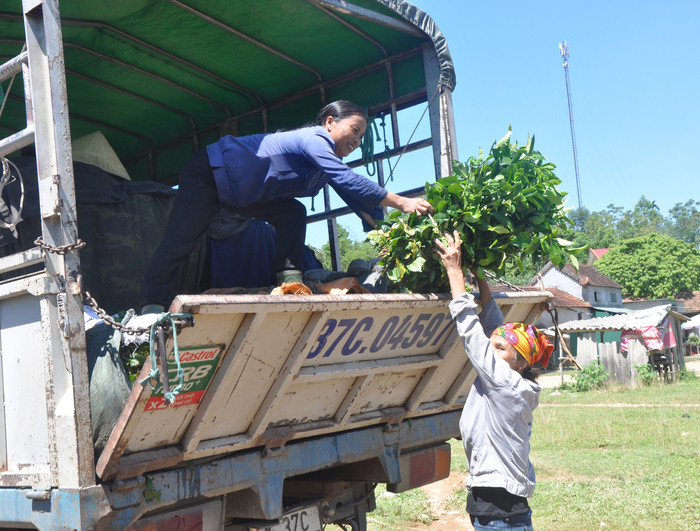 |
| Every day, 3-5 trucks arrive in Cao Son commune (Anh Son district) to buy Gay tea. Photo: Cong Kien |
To date, Cao Son has over 500 hectares of Gay tea plantations, with more than 90% of households cultivating it. Some households cultivate around 0.5 hectares, while others cultivate 1-2 sao (approximately 1000-2000 square meters), earning at least 3 million VND per month. Some tea gardens are 40-50 years old. For the people of Cao Son, Gay tea has truly become the main crop, the primary source of income for the farmers. Every day, 3-5 trucks belonging to traders come to buy the tea, not to mention dozens of motorbikes loaded with tea piled higher than a person's height.
Gay tea is transported to various regions, down to Dien Chau, Vinh City, into Ha Tinh, and even as far as Hanoi. In reality, the volume of tea purchased daily by traders is still small compared to the volume of produce from farmers. Therefore, being forced to accept low prices and having the volume of tea purchased is unavoidable, ultimately causing losses for the farmers.
Leaving Gay, along with joy, we carried with us a sense of concern: it's time for local leaders and relevant departments to study options for expanding the market for Gay tea products, helping farmers expand production, improve their livelihoods, and promote development. Because, with an established brand, finding additional outlets for the product is feasible; the key is having people with the dedication.
Cong Kien
| RELATED NEWS |
|---|


