
What matters is awareness and behavior.
(Baonghean) - On the occasion of World Environment Day 2015, Baonghean Newspaper had a conversation (on related issues) with Mr. Vo Van Hong - former official of the Department of Natural Resources and Environment, currently an environmental consultant for many agricultural and industrial projects.
- Currently, the environment is a "hot" global issue with a series of concerns such as the ozone hole, climate change, depletion of forest resources, freshwater scarcity, soil pollution and desertification, loss of biodiversity, depletion of minerals; increasing waste... Among these issues, what do you consider to be the most concerning?
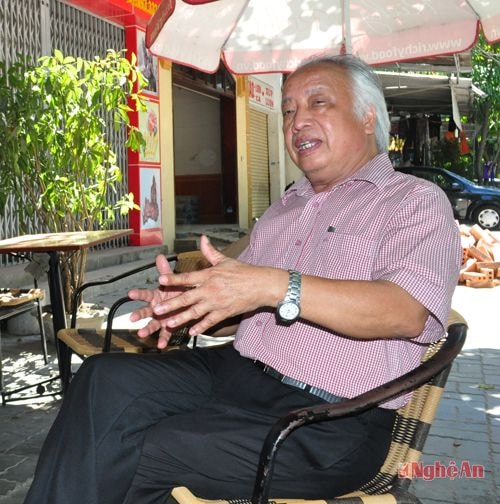 |
- The most worrying aspect is climate change. Climate change has a very clear impact on climate and hydrology. Never before has there been a year like the summer of 2015, when in Nghe An province, a heatwave lasted for a whole month, with temperatures in some areas such as Tuong Duong, Con Cuong, Quy Chau, and Quy Hop reaching 43°C. Looking more broadly, the peak heatwave in India reached over 46°C, causing thousands of deaths. Thus, changes in climate conditions are not limited to one region but affect territories, nations, and peoples worldwide. Climate change not only shifts the climate from arid to humid, but also makes those climates harsher and drier, affecting crops and agricultural production, altering the biological rhythms of animals, and pushing some species to the brink of extinction. Following the heatwave and rising temperatures, many regions and areas around the world, as well as within the country and province, will face numerous natural disasters such as floods, storms, tsunamis, earthquakes, etc.
Yes! Could you tell us a little more about the impacts of climate change in our province?
- Studies by various organizations on the climate and hydrological situation in Nghe An province over the past three decades show that temperatures are increasing by nearly half a degree Celsius, from 0.7 to 0.15 degrees Celsius. According to scenarios, if the temperature increases by 1°C, the sea level will rise by 1 meter. Monitoring the hydrological history of Hon Ngu over the past 50 years shows that the sea level has already risen by 20 cm. Given Nghe An's gently sloping coastline, only about 20 cm from the sea surface, a 1-meter rise in sea level will certainly cause severe flooding in many residential areas in Nghi Loc, Dien Chau, Quynh Luu, and Hoang Mai districts, resulting in loss of homes and reduced agricultural land for the people; and impacting the province's socio-economic development programs and projects in general.
- So, given the challenges and difficulties that humanity is facing regarding climate change, it is necessary to clearly understand the causes in order to take appropriate actions. Could you tell us what causes climate change?
- The main causes of climate change stem from human activities. From an industrial production perspective, with outdated technology, limited financial resources, and a lack of awareness of environmental protection laws, many businesses are causing environmental pollution. For agriculture, especially livestock farming – one of the three sectors with the largest greenhouse gas emissions, each pig emits an average of 7-8 kg of waste per day; cattle and buffalo emit 10-12 kg... This waste generates methane and other toxic gases, contributing to the greenhouse effect and climate change. The shrinking of some coastal mangrove forests to serve economic programs and projects is also increasing the risk of significant impacts from climate change, including rising sea levels, storms, and tsunamis. Lack of awareness regarding waste disposal, including household and medical waste, is also a contributing factor. The burning of agricultural waste after harvest, slash-and-burn farming, etc., also produces a significant amount of CO2 and other toxic gases in the air.
- To join in the global concern and demonstrate our responsibility towards global issues, what should each level, sector, organization, agency, business, and citizen of Nghe An do, sir?
- There's a lot to do. But I'll keep it brief: Every organization and individual needs to raise awareness of the reality of climate change and extreme weather events like the present to adapt appropriately and take many actions to reduce greenhouse gas emissions, such as being mindful of waste disposal and practicing economical consumption to limit the consumption of products, because the production process, whether agricultural or industrial, causes pollution, and also to reduce consumer waste...
Thank you very much for this conversation!
Minh Chi


