
The process of collecting thousands of dead fish in Florida.
Authorities in Brevard County, Florida, USA, had to mobilize numerous agencies, residents, and even prisoners to clean up thousands of dead fish in the Indus River lagoon at the end of March.
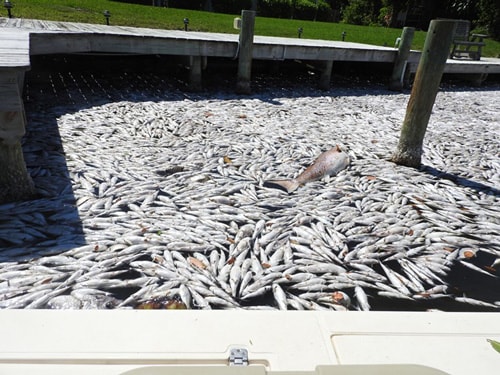 |
| Dead fish floated along the lagoon in Brevard district for about 30 km. Photo: New Times. |
In late March 2016, thousands of dead fish were found floating along a nearly 50-kilometer stretch of the Indus River lagoon in Brevard County, central Florida, USA. One of the causes given was the El Niño phenomenon in the area.
In January, many areas of Florida receive three times the annual average rainfall. This influx of water carries pollution into the rivers, altering the ecosystem. By mid-March, river temperatures rise sharply due to the proliferation of blue-green and brown algae, which deplete the oxygen in the water.
Immediately after being informed of the situation, the district authorities mobilized various agencies to quickly collect and clean up the dead fish, including the Water Resources Management Agency, Social Services, Solid Waste Management, and even the police force.
The cleanup of dead fish was initially carried out in the riverside areas of the district's parks, then expanded to docks, riverbanks, and other locations.
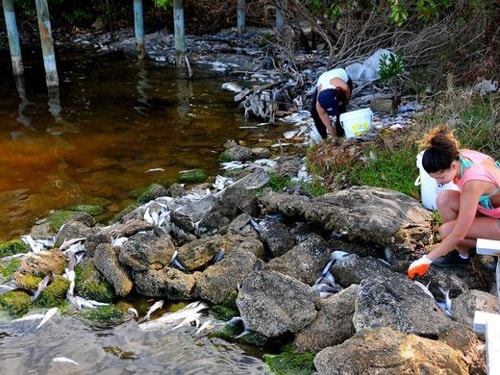 |
| Locals help collect dead fish that have washed ashore. Photo: New Times |
According to Florida Today, health authorities are requiring all participants in the cleanup campaign, whether deployed or volunteering, to wear gloves while working and not to handle the dead fish directly.
After collecting the fish, they gather them in large trash bins placed at designated locations. Trucks then transport them to a central landfill for disposal by burial.
In the middle of the water, the district's waterway authority will dispatch vessels carrying specialists to retrieve the floating fish carcasses.
To expedite the process, local authorities have called for the help of volunteers, including residents living in areas where the fish have been washed ashore.
The local prison also sent 15 inmates to help collect the dead fish. They had only committed minor offenses, but they still had to wear leg shackles while participating in the cleanup.
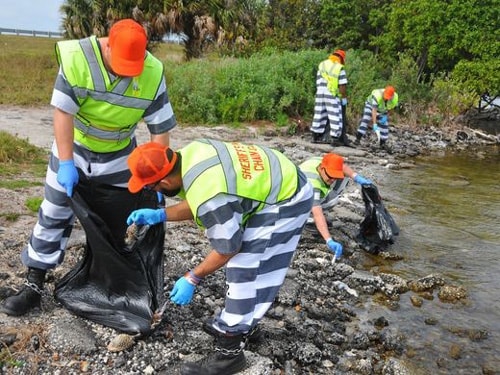 |
| Some prisoners were still shackled at the feet while participating in the cleanup of dead fish. Photo: New Times |
Due to the massive number of dead fish, cleanup efforts are primarily focused on areas where fish have washed ashore. Authorities are advising people against collecting the rotting fish floating on the water's surface.
"We don't encourage them to try to go out into the middle of the river to pick up dead fish. Just let it sink; nature will do its job," said Don Walker, spokesman for the Brevard County government.
According to the Miami Herald, after nearly two weeks of cleanup, residents and professionals have collected nearly 30 tons of fish floating on the water's surface or washed ashore. This figure does not include a large quantity of fish that sank to the bottom.
According to Zing.vn


