
Quynh Luu: Prioritizing infrastructure development in "disadvantaged areas"
(Baonghean) - To promote socio-economic development in mountainous areas, over the years, Quynh Luu district has focused on many solutions to build infrastructure such as electricity, roads, schools, health stations, and irrigation systems. As a result, many projects have been put into use, making an important contribution to improving the lives of the people and narrowing the gap between different regions in the district.
In recent years, along with the effective implementation of the Government's Programs 134 and 135 on socio-economic development of disadvantaged communes, ethnic minority areas, and mountainous regions, the district has integrated support funds to invest in areas such as: health, clean water, education, rural transport, irrigation, etc.
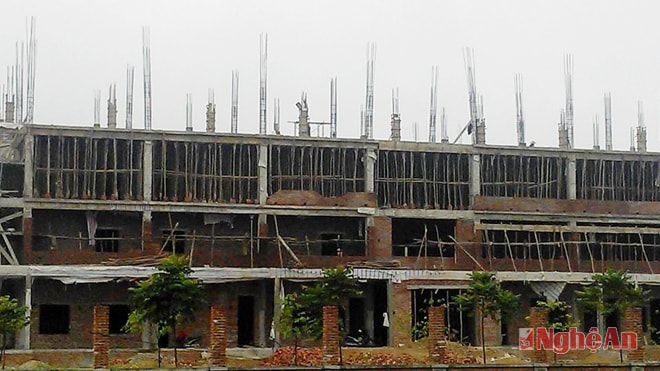 |
| Quynh Luu invests in mountainous infrastructure. |
The changes in Ngoc Son mountainous commune are considered a vivid example. Currently, the entire commune has built 13 km of asphalt roads and dozens of km of concrete roads; the three-level school system has been invested in and built with modern facilities and teaching equipment, including two schools that have been recognized as meeting standards. The commune has been recognized as meeting standards in healthcare. The commune center has been invested in with the construction of the commune committee office, the commune cultural house, the community learning center, schools, a stadium, and the commune health station, creating a new look. Everyone is happy and excited about these changes. Mr. To Van Tram from Hamlet 3 shared: "Since the new road was built, travel and trade for people in the hamlet have become much more convenient, and people's lives have become more prosperous as a result."
Ngoc Son commune has a population of 8,040 people with 1,866 households. Previously, due to outdated farming practices and inadequate infrastructure, the lives of the people were extremely difficult. However, in recent years, through support programs and projects from the central, provincial, and district levels, tens of billions of dong have been invested in building and renovating the electricity, road, school, and cultural center systems, gradually meeting the needs for stable living and production development of the people in the villages. With the improved infrastructure, the people are competing in labor, production, and livestock farming, increasing their income. In the last three years, the poverty rate in ethnic minority and mountainous areas has decreased from 10% (in 2010) to less than 6% (in 2014). Currently, most people have built solid houses, and no households are living in dilapidated temporary shelters. Nearly 100% of the people have access to the national power grid. 97% of households own motorbikes for transportation; 100% of children of school age attend school…
The most significant result of investment and infrastructure development policies in the mountainous areas of Quynh Luu district is that it has given local people more leverage to build better lives and keep pace with the overall development of the district. As infrastructure is gradually improved, localities have focused on shifting the agricultural structure, leveraging the strengths of each region and applying scientific and technological advancements in production. This has contributed to increasing the district's rice yield from 44 quintals/hectare (2010) to 69.86 quintals/hectare (2014), with food production reaching over 65,000 tons; and the value of production per hectare of agricultural land increasing from 40 million VND to 65 million VND.
In ethnic minority and disadvantaged areas, many concentrated production and livestock farming models have yielded high economic efficiency, such as: the medicinal plant cultivation model and goat farming model in Ngoc Son commune; the free-range chicken farming model in Tan Son commune… The movement “Farmers competing in excellent production and business” in ethnic minority areas has also been widely developed in mountainous communes such as Tan Thang, Quynh Tam, Tan Son, Quynh Chau, Quynh Thang… contributing to reducing the average poverty rate of the entire district from 9.2% (2012) to below 5% (2014).
Good news has come to the ethnic minority communities in the district as the Provincial People's Committee recently approved the Project "Developing socio-economic conditions, stabilizing production and livelihoods in particularly difficult hamlets and villages with large ethnic minority populations in mountainous areas until 2020". Accordingly, the project will allocate 3,650 billion VND for the construction of the Tan Thang Cement Plant in the mountainous area of the district.
Hoang Thuy
(Quynh Luu Radio Station)


