
The full moon of the seventh lunar month is a time to remember ancestors and origins.
(Baonghean.vn) - In the mild weather of early autumn, people in many rural areas of Nghe An province celebrate the Mid-Autumn Festival (the 15th day of the 7th lunar month), turning their thoughts towards their roots, ancestors, and lineage with reverence and gratitude.
Returning to our roots
A few days before the full moon of the seventh lunar month, many fishermen in Dien Bich commune (Dien Chau district) temporarily suspended their fishing trips, setting aside their arduous daily work at sea to prepare for the festival.
Nguyen Van Linh (29 years old) from Hai Nam hamlet shared: “For the past four years, I've been too busy working far from home to celebrate the Mid-Autumn Festival in July, so this year I decided to stay home to celebrate. I've taken a break from fishing at sea for the past few days to clean the house and shop with my family to prepare for the festival. In my hometown, this Mid-Autumn Festival is the biggest festival of the year; every family prepares a feast to offer to their ancestors and goes to the ancestral temple to pay respects.”
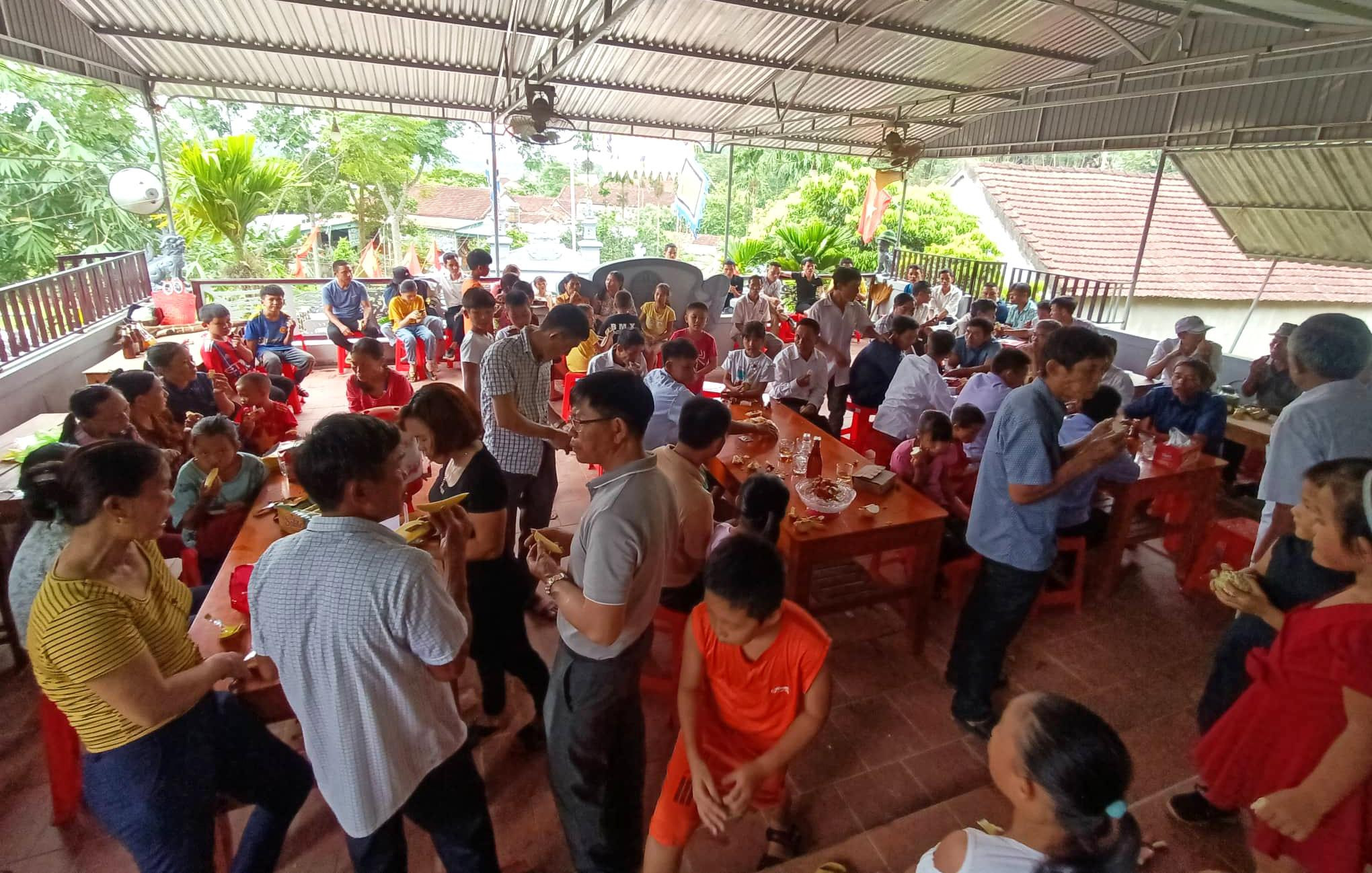 |
A warm and cozy atmosphere on the full moon day of the seventh lunar month at the Nguyen The family church (Thanh Chuong). Photo: Huy Thu. |
According to Linh, just like in previous years, this full moon festival his family members will work together to cook several trays of food with familiar dishes such as steamed sticky rice, boiled chicken, braised pork, and specialties from the coastal village to offer to their ancestors.
Perhaps it's not just his family, but many households in this coastal countryside also share the same sentiment: the 15th day of the seventh lunar month is a time for siblings and relatives to gather, connect with their roots, and go to the ancestral temple to light incense for their ancestors, hoping for good health, calm seas, and a bountiful harvest of shrimp and fish.
As Linh put it, for the people of his coastal village, the full moon of the seventh lunar month is a "reward festival" for those who work at sea. They get to stay home to celebrate the festival, socialize, connect, and explore new business opportunities.
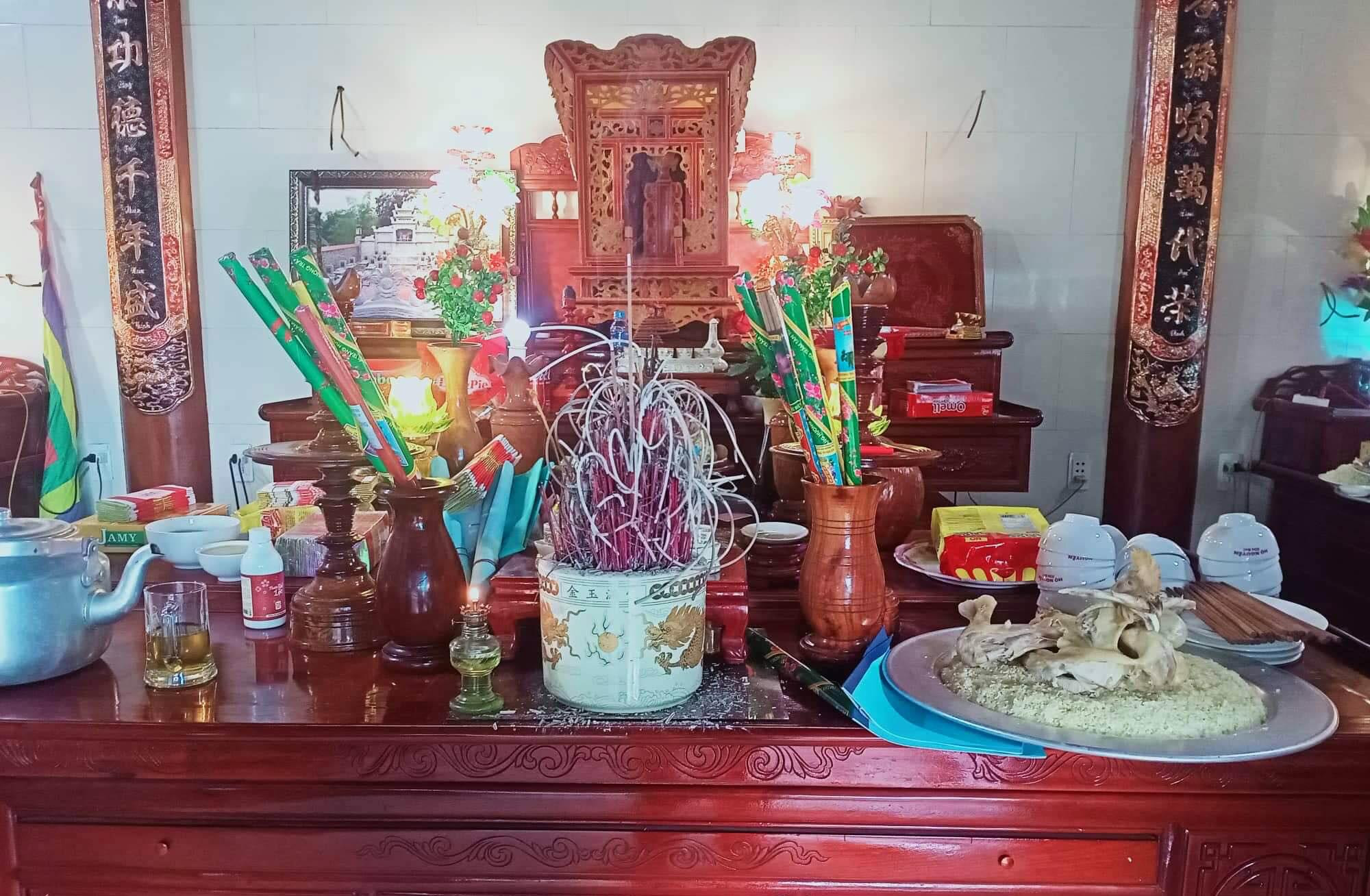 |
| Ancestral altar on the 15th day of the seventh lunar month in Dien Bich commune (Dien Chau district). Photo: Hoai Linh |
For the people of Thanh Chuong - a region known for its specialties like free-range chicken and black olives - the Mid-Autumn Festival in July is a prosperous one, with many vendors and customers, and products selling smoothly. This makes the festival more lively, and the atmosphere more joyful, reflecting the spirit of preserving, conserving, and promoting traditions.
Mr. Tran Cong Thang (29 years old), residing in Thanh An commune, said: This year, on the 15th day of the seventh lunar month, his family still followed the old tradition. On the day of the full moon, his parents still woke up early to prepare a full and elaborate meal to offer to his grandparents and a plate of sticky rice with chicken to bring to the family's ancestral temple to worship their ancestors.
Unlike the first full moon of the lunar month, when ancestral worship takes place at the main ancestral temple, the seventh full moon prioritizes ancestral worship at the branch temples within the family. For him, from childhood to adulthood, he has many beautiful memories of the seventh full moon. The most unforgettable memory is probably the time when family members gathered in a long procession, carrying offerings to the ancestral temple for the worship ceremony – a very joyful and heartwarming experience.
Although material life has changed considerably, on the 15th day of the seventh lunar month – the Vu Lan festival – descendants of the family still gather in large numbers to pay respects to their ancestors and origins.
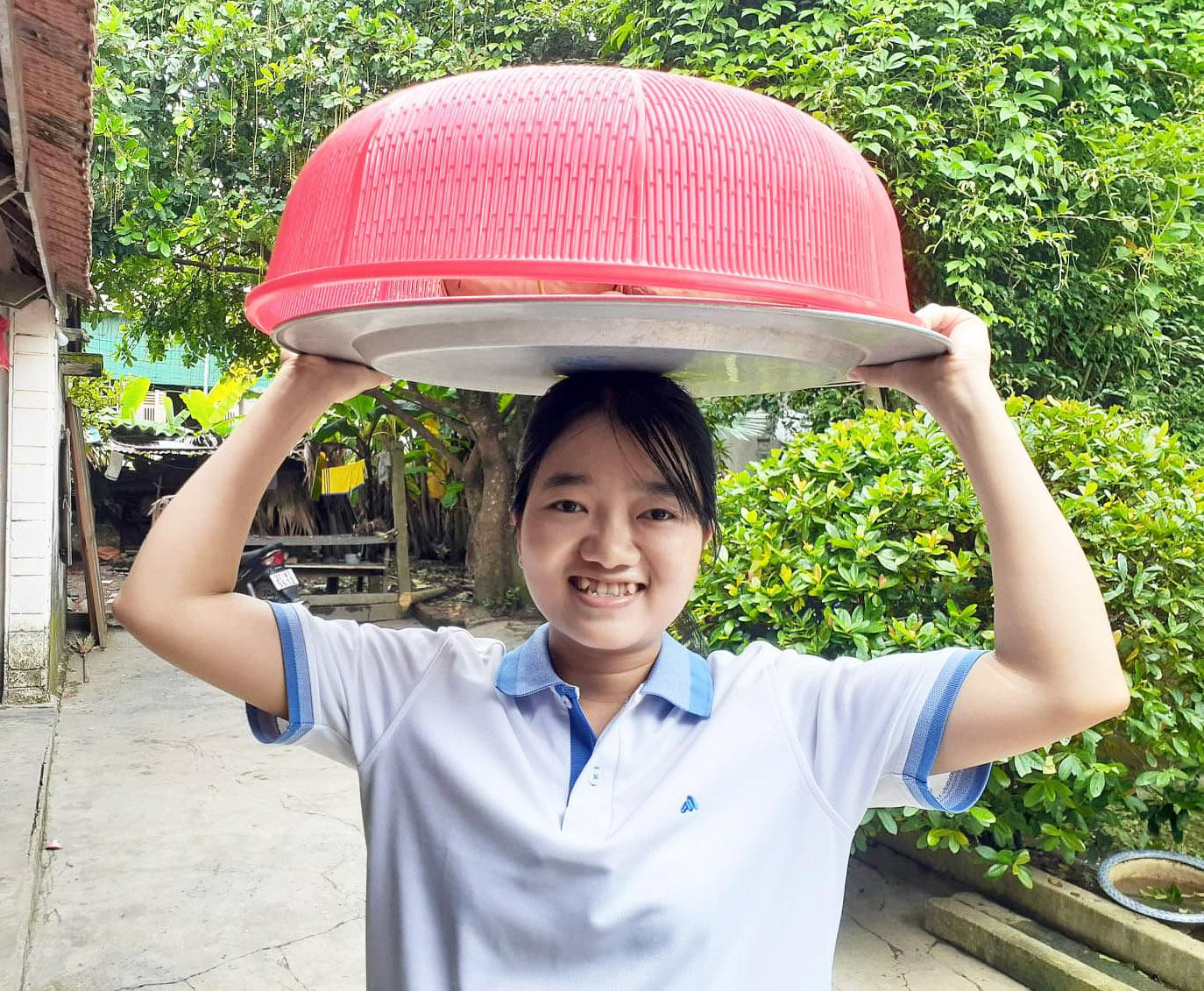 |
| Young people from Thanh Chuong district prepare offerings for the Mid-Autumn Festival (15th day of the 7th lunar month). Photo: Huy Thu |
In Thanh An commune, there are many large clans such as the Nguyen Canh, Nguyen Danh, Nguyen Van, Nguyen Huu, Nguyen Quoc, Nguyen Quang, Tran Cong, Tran Van, and Tran Dinh clans. A common feature of these clans is the preservation of the beautiful tradition of ancestor worship on the 15th day of the seventh lunar month. Each year, descendants of these clans make pilgrimages back to their hometowns in large numbers. The preparation of the offerings and the organization of the ancestor worship ceremony are very thorough, civilized, and in accordance with the customs and traditions of the homeland.
With the belief that "The whole year is blessed with the Mid-Autumn Festival in July, and everyone is blessed with the Mid-Autumn Festival in January," not only in Dien Chau, Thanh Chuong... but also in many other rural areas of Nghe An such as Quynh Luu, Hoang Mai town, Do Luong, Yen Thanh, Nam Dan, Nghi Loc, Hung Nguyen... they also organize Mid-Autumn Festival celebrations and feasts with a lively, festive, and warm atmosphere.
Depending on the customs, cultural traditions, and economic conditions of each region, the rituals and celebrations of the Full Moon Festival in different localities have their own unique characteristics, contributing to the richness and diversity of the cultural colors of the Full Moon Festival in the seventh lunar month in Nghe An.
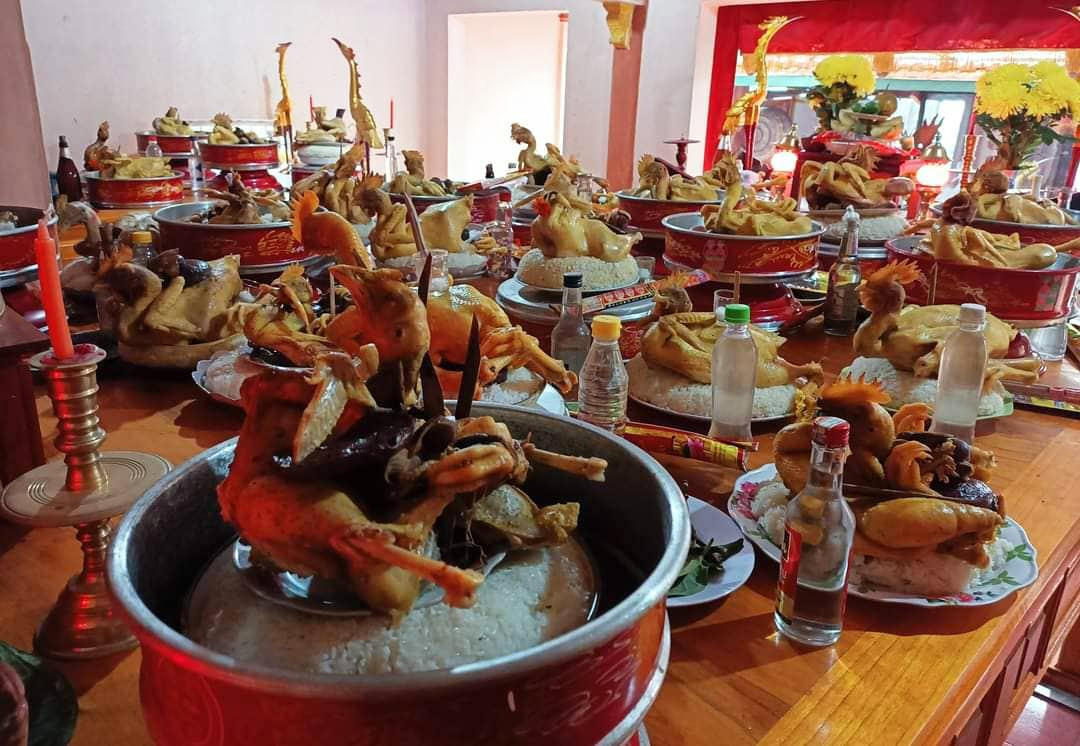 |
| The ancestral altar of the Nguyen The family in Thanh My commune (Thanh Chuong district) on the 15th day of the seventh lunar month. Photo: Huy Thu. |
Traditionally, the 15th day of the seventh lunar month has been associated with the Vu Lan Festival, a celebration of filial piety and gratitude for the nurturing care of parents. It also represents a deeply humane spiritual belief: the day of "atonement for the deceased," with rituals of offering prayers and performing ceremonies to guide wandering souls. These two cultural aspects have been practiced by the people, linked to showing filial piety, expressing gratitude to their parents, and remembering their ancestors and origins.
Spreading the spirit of humanity.
This year, with the pandemic temporarily subsiding, localities in Nghe An province are celebrating the Mid-Autumn Festival in a vibrant and warm atmosphere. Before the festival, many people from Nghe An who live far from home are returning to their hometowns. Preparations for the festival are also quite lively in the localities, especially the purchase of offerings and the decoration of ancestral altars.
Mr. Le Van Thinh (58 years old) from Quang Son commune (Do Luong district) said that the Le Van family in Hamlet 5, Quang Son commune, has a long history with nearly 100 households. To celebrate the Mid-Autumn Festival, on the morning of the 14th, more than 20 people gathered at the ancestral temple and marched into the mountains to light incense for their ancestors.
On the morning of the 15th, according to ancient custom, each family prepared a feast of sticky rice and chicken to carry to the ancestral temple for the ancestral worship ceremony, except for families still grieving, who did not have to prepare the feast. More than 80 feasts of sticky rice and chicken were meticulously arranged, filling all three altars in the main hall.
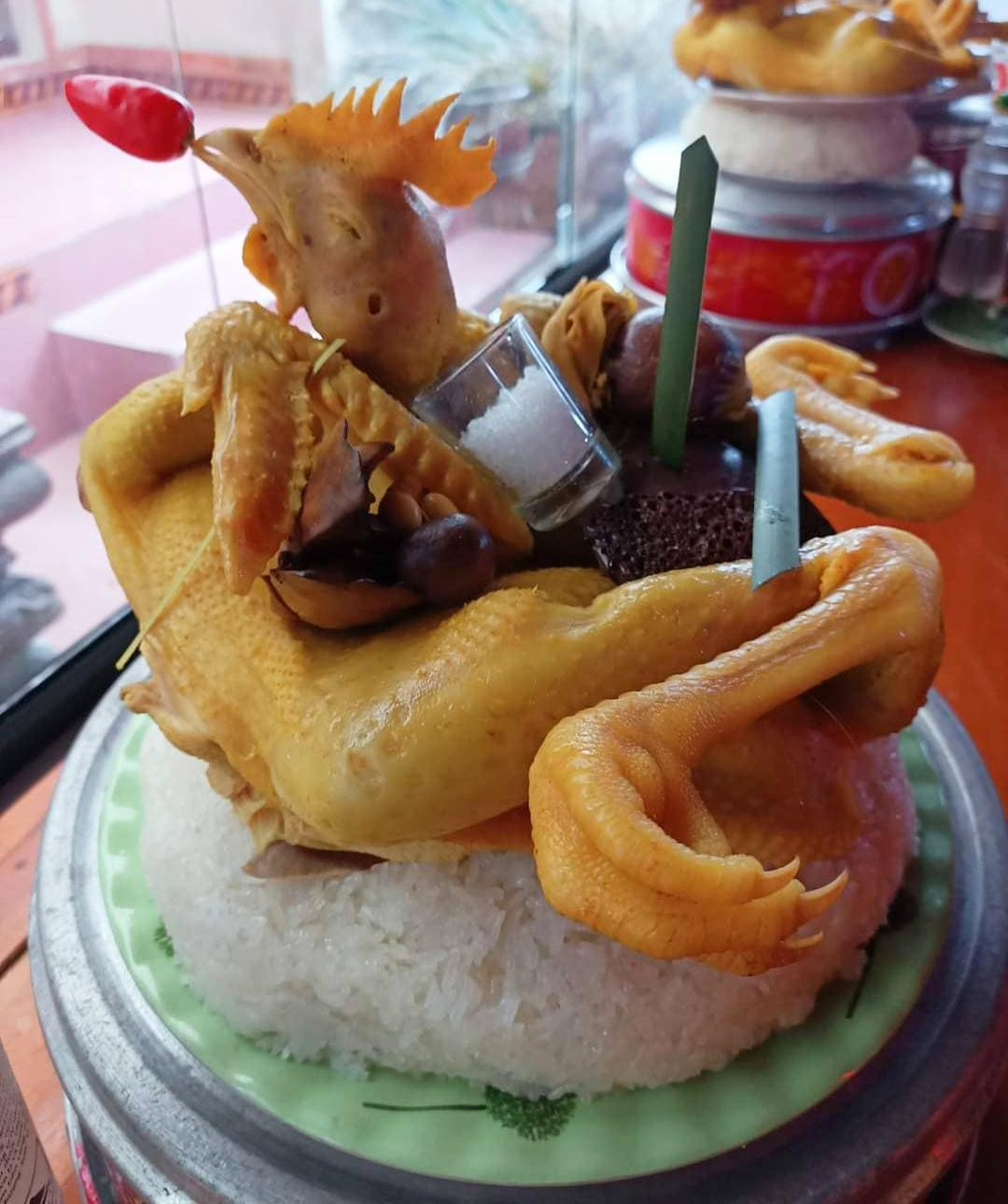 |
| The sticky rice and chicken offering for the Mid-Autumn Festival in the seventh lunar month is elaborately prepared. Photo: Huy Thu |
During the ancestral worship ceremony, the ceremonial team, dressed in formal attire, performed the rituals according to traditional customs, accompanied by a band playing drums and gongs, a chanter, those offering incense and wine, and those playing musical instruments. Amidst the swirling incense smoke and resounding ceremonial music, the ancestral worship ceremony at the family temple took place in a solemn manner.
After the ancestral worship ceremony concluded, the clan held a meeting to discuss common affairs and presented scholarships to outstanding students. This year, the Le Van clan had nearly 70 students, from kindergarten to 12th grade, who achieved excellent academic results, earned the title of outstanding student, advanced student, or passed university and college entrance exams, receiving scholarships ranging from 20,000 to 200,000 VND. According to Mr. Thinh, the clan's Scholarship Fund has been established for decades and is awarded during the ancestral worship ceremony on the 15th day of the 7th lunar month, aiming to encourage the clan's children to strive for academic excellence.
Mr. Nguyen Huu Hung (30 years old) from Thanh Dong commune (Thanh Chuong district) shared: "On the 15th day of the seventh lunar month, my family gathers to offer sacrifices at the ancestral temple of the middle branch, not at the ancestral temple of the main branch like on the 15th day of the first lunar month. Currently, I am the head of the 9th generation of the middle branch in Thanh Dong 5 village, Thanh Dong commune. My branch currently has 26 households, and is the second branch of the main clan (which has 3 branches)."
According to tradition, on the afternoon of the 14th day of the lunar month, descendants of the family gather to clean and tidy the ancestral temple before visiting the graves and offering incense to their ancestors at the cemetery. The women focus on cooking and preparing the feast. The elderly arrange the altar, prepare betel leaves, and pour wine... From fruits to betel nuts, everything is from the family's garden. The rooster for the feast was chosen and raised by the grandmother several months in advance.
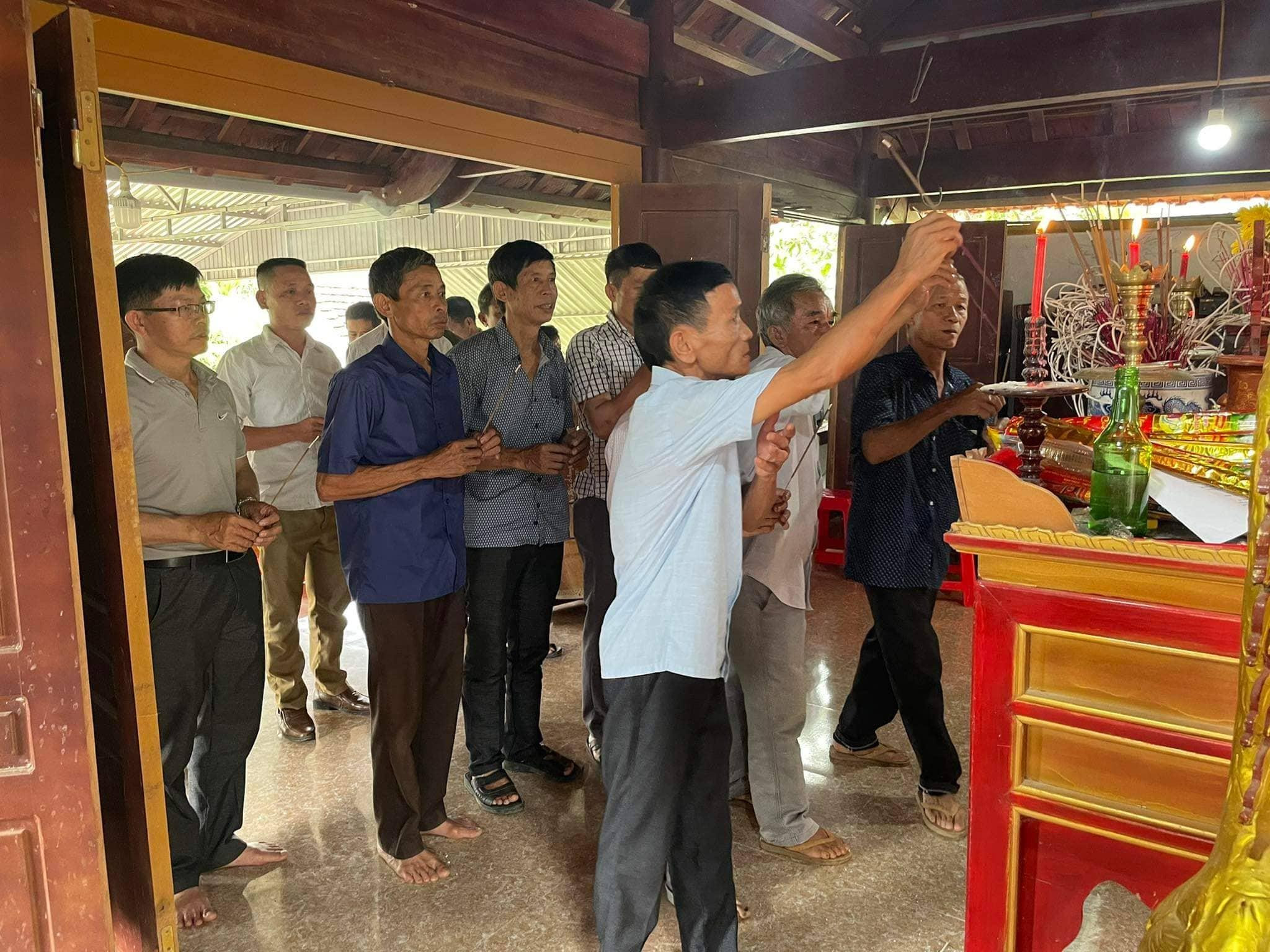 |
Offering incense at the ancestral altar on the 15th day of the seventh lunar month. Photo: Huy Thu |
The ancestral worship ceremony on the 15th day of the seventh lunar month consists of a preliminary offering and a grand ceremony. The preliminary offering in the afternoon is usually the most crowded, with descendants from both sides bringing offerings to the ancestral temple. This year, with the pandemic temporarily subsiding, the clan slaughtered a whole pig and roasted it. After the ceremony, the descendants gathered to enjoy a feast. On the morning of the 15th, each household prepared a dish of sticky rice and chicken to bring to the ancestral temple for worship.
The Nguyen Huu clan usually holds their Mid-Autumn Festival (the 15th day of the 7th lunar month) earlier than other clans, around 7 am, because their ancestors passed down the tradition that one of their ancestors worked outside the temple of the Goddess, so the ceremony had to be performed early. After the ancestral worship, the clan leader commends the descendants who excelled in their studies, organizes the awarding of prizes, and discusses various matters, such as the renovation of the ancestral temple and cemetery, and announces the income and expenditure...
Hung added: "My wife and I work in Vinh. This year's full moon falls in the middle of the week, and the office doesn't allow us time off, but my family still managed to arrange our schedules to go back to our hometown and visit our ancestral temple, because the full moon of the seventh lunar month is the only one of its kind in the whole year."
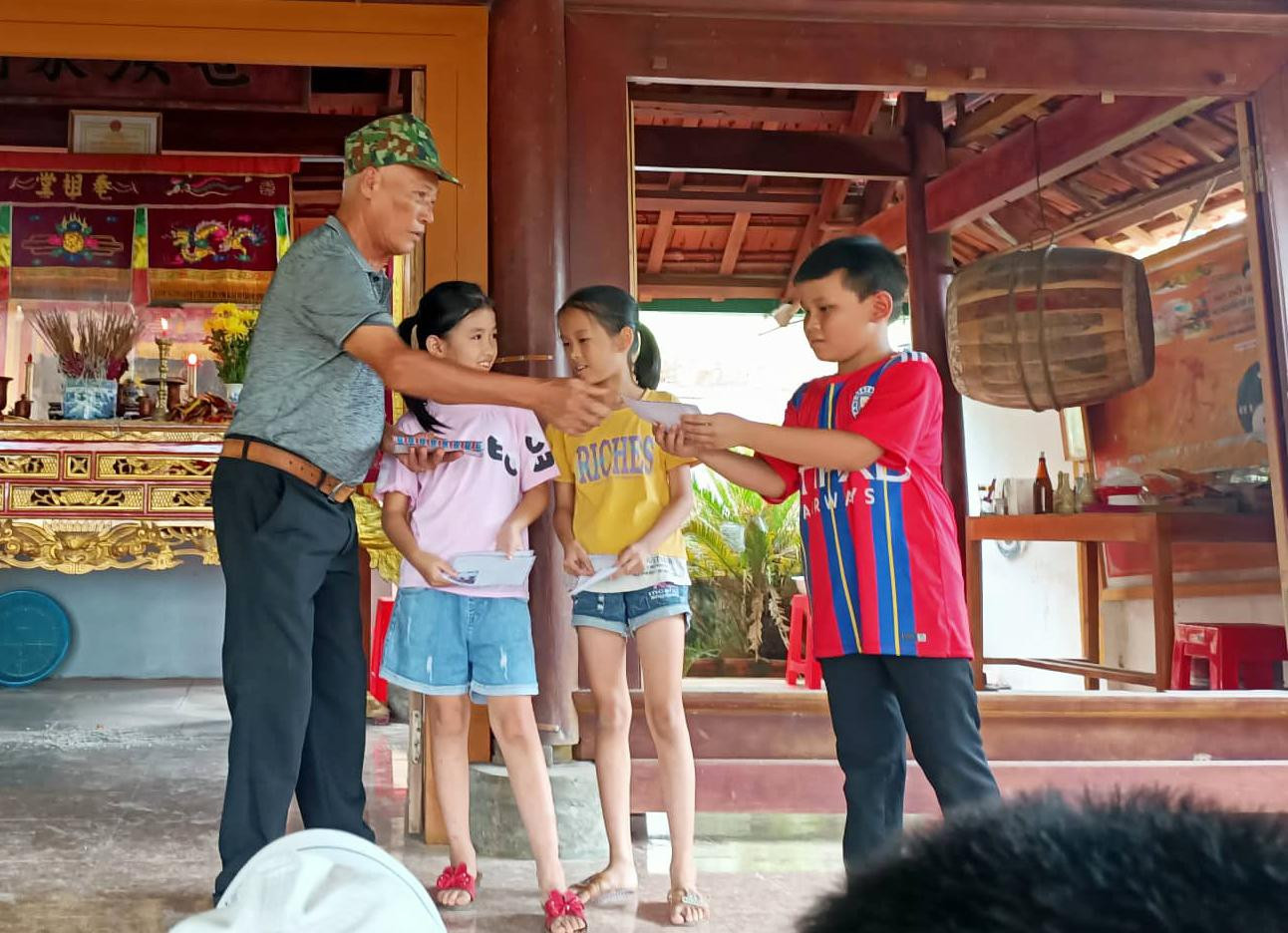 |
Scholarship gifts are presented after the ancestral worship ceremony on the 15th day of the seventh lunar month at the Nguyen The clan (Thanh Chuong). Photo: Huy Thu. |
The folk saying goes, "Every person has ancestors, just as a tree has roots and a river has a source." The 15th day of the seventh lunar month is an occasion for descendants from all over to return to their roots, express gratitude to their ancestors, and spread the humanistic spirit of the nation.
For people in the villages of Nghe An province, the full moon of the seventh lunar month is a major festival for family and hometown. For those living far from home, the full moon is an opportunity to bring their children and grandchildren back to visit their ancestral homeland, meet relatives and clans, express their gratitude, and report their achievements to their grandparents, parents, and ancestors.
On the full moon day, people can share their feelings, discuss the construction of the ancestral temple, make charitable donations, promote education, visit relatives, strengthen family bonds and relationships, and encourage their children and grandchildren to strive in their studies and work to build a stronger and more prosperous family lineage.
Scenes from the Mid-Autumn Festival ceremony at the Le family ancestral temple in Do Luong. Video: Huy Thu |
As the socio-economic life of the country and homeland continues to develop, the way people in Nghe An organize and celebrate the Mid-Autumn Festival (Rằm tháng Bảy) may change to some extent to better suit modern lifestyles, but traditional rituals and humanistic spirit are still preserved, promoted, and spread within the community.


