
Mars exploration robots cause pollution.
Scientists claim that 377 species of bacteria have attached themselves to the Curiosity rover and may still be alive when the machine lands on the surface of the Red Planet.
The Daily Mail quoted researchers as saying that 377 species of bacteria escaped NASA's cleaning process. They landed on the Martian surface along with the Curiosity rover. Scientists at the University of Idaho recreated each condition Curiosity experienced during its journey to Mars. They found that 11% of the bacterial strains survived at least one condition.
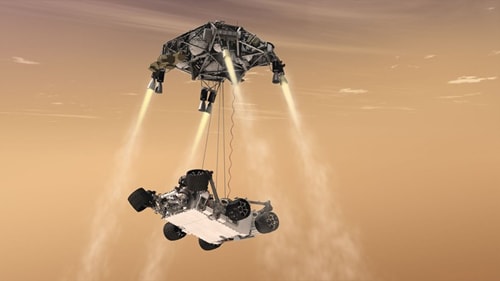 |
| A simulation of the Curiosity rover landing on the surface of Mars. Photo: NASA |
According to the journal Nature, spacecraft must undergo multiple cleaning processes to ensure they do not cause biological contamination to other planets. However, the report indicates that scientists on the Curiosity project did not strictly adhere to this procedure. The majority of bacteria that slipped through the cleaning process belonged to the genus Bacillus, which is capable of surviving in oxygen-deficient environments.
Currently, Curiosity – a $2.5 billion machine – continues its relentless search for life on the surface of the Red Planet. It is the first man-made device to drill on the Martian surface to collect and analyze samples for signs of water and carbon-based organic matter. The machine is currently heading towards Mount Sharp in the center of Gale Crater.
NASA launched Curiosity on November 26, 2011. It landed on the surface of Mars in August 2012 with the most advanced exploration technologies. Its unique landing opened up opportunities for extensive exploration of Earth's neighboring planet.
According to Baomoi.com


