
Creating new performance spaces for folk songs and dances.
(Baonghean.vn) - Since ancient times, almost everywhere in Nghe An province, regardless of social class, religion, gender, age, intellect or commoner, everyone could sing Nghe An folk songs and improvise...
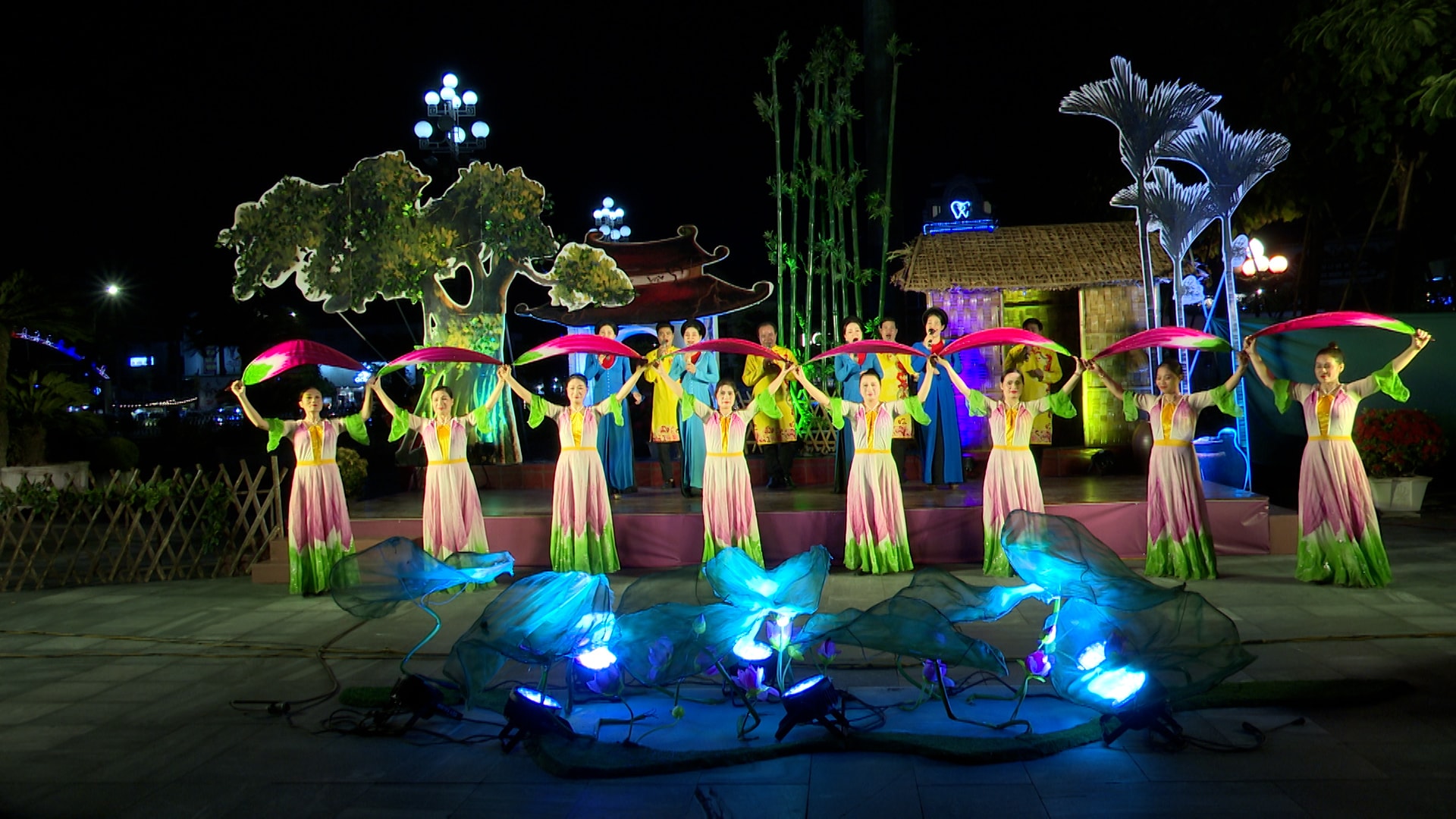 |
A courtship performance takes place in a newly organized performance space in Ho Chi Minh Square. Photo: archival. |
The folk songs of Ví and Giặm are closely associated with the working environment, so traditionally, the performance spaces were often in craft villages, where laborers could improvise to relieve fatigue while working; it was also a place where literati and scholars could frequent to play games like "the rooster teacher." Therefore, Ví and Giặm were popular not only among the common people but also among the intellectual class.
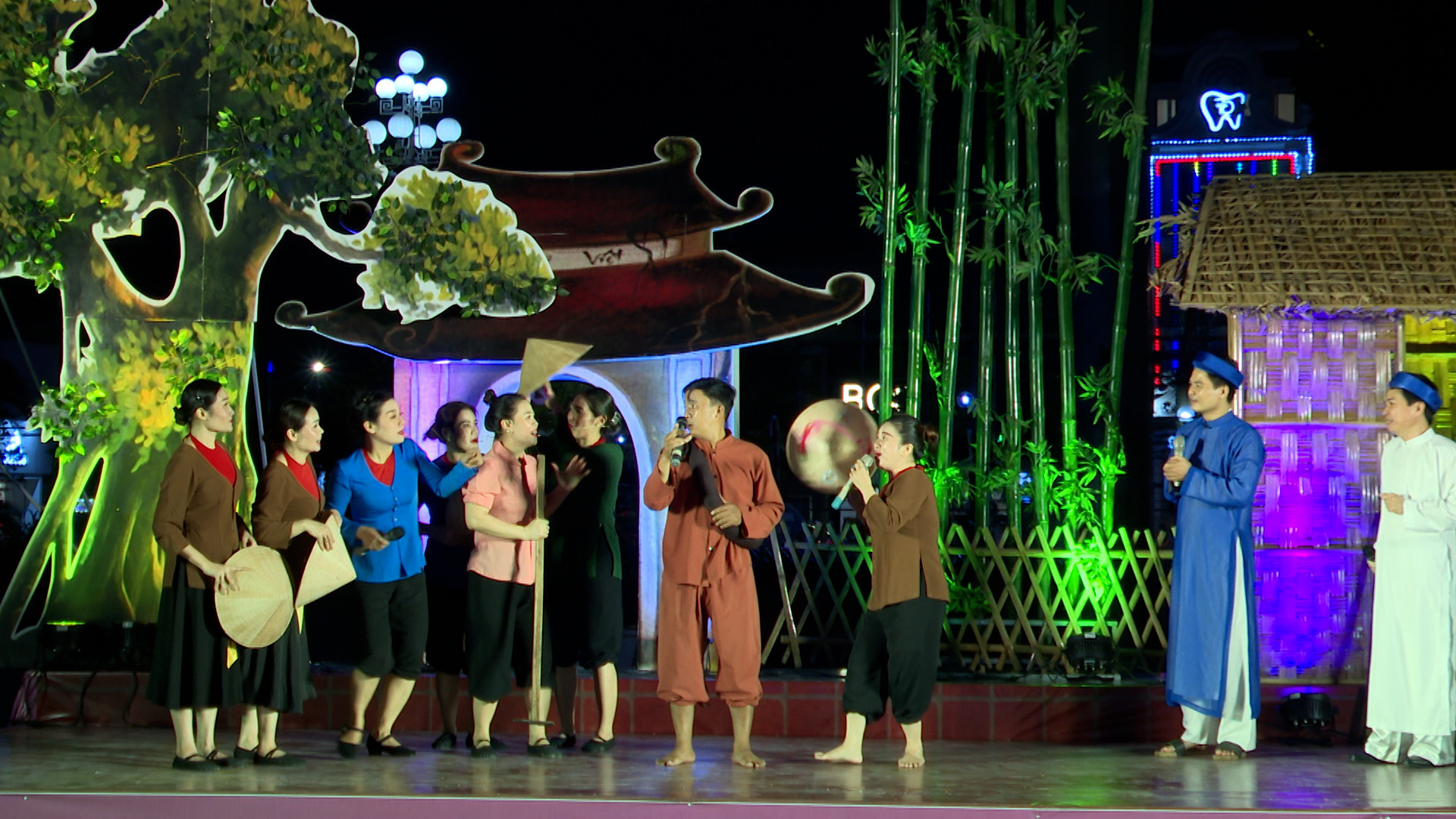 |
A call-and-response performance in a setting that simulates a traditional craft village. Photo courtesy of Minh Quân. |
"In the past, in the folk singing tradition of Ví and Giặm, people would sometimes play a single melody from dusk until midnight before going home," said musician Thanh Lưu, former head of the Nghệ Tĩnh Folk Song Troupe. Particularly, in these performances, the "master of ceremonies" would often present witty and humorous verses, sometimes so profound that one only realizes the humor after much thought. Therefore, the beauty, the fun, and the appeal lie in this, and only Ví and Giặm could fully convey the wit and sharp wit of this call-and-response style.
According to musician Thanh Luu: "Through folk songs like 'vi' and 'giam', which are composed and improvised, people express their deepest feelings and the complexities of life; or recount everyday stories in society, in the village, or in the community. Therefore, 'vi' and 'giam' folk songs partly fulfill the mission of conveying social life. If life around us is joyful and peaceful, we sing songs of happiness; conversely, we have songs that are less joyful, even resentful..."
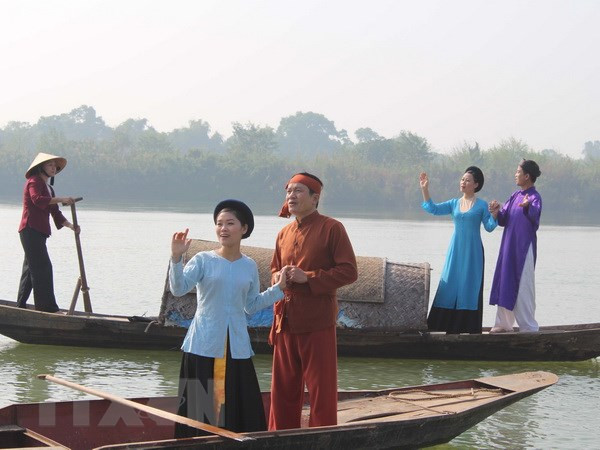 |
Scenes of boats and docks are often recreated to simulate traditional performance spaces. (Archival photo) |
However, with the current state of affairs, the traditional craft villages of Nghe An are gradually disappearing. The art of folk singing (Vi and Giam) no longer has a place to showcase its exquisite qualities. Those who love Vi and Giam have no place to perform. More importantly, in the 4.0 era, with many forms and means of entertainment, Vi and Giam are no longer chosen as a form of entertainment by many generations as they once were. Therefore, spaces for Vi and Giam, already limited, are becoming even scarcer. "That's why we must increasingly strive to create performance spaces that are suitable for the modern era," said People's Artist Hong Luu.
Creating new performance spaces is also a way to add new lyrics to the treasure trove of Nghe An folk songs. "It must also be said that for a long time we have been relying on the existing heritage of our ancestors. Perhaps we have only been able to write new lyrics based on ancient melodies, but we haven't yet created new performance spaces from which to generate new innovations for the folk songs of the Ví and Giặm genres," said People's Artist Hong Luu.
According to People's Artist Hong Luu: "Recently, through studying the practical experiences of many heritage areas across the country and the world, they have all built real-life stages so that the heritage has a place to perform, a place to live, and thrive. From there, the multiplication of precious ancient traditions or new creations can be promoted and spread strongly. Because the characteristic of folk songs is that they do not have independent songs; they are a form of dialogue and improvisation. Without a space for improvisational poetry and literature, we will forever be relying on what our ancestors have already created, unable to add to the performance the essence of the times. Moreover, if we study folk songs in depth, we know that they are a chronicle in themselves, an expression of national identity and the times. If we do not continue to create, our mission of continuing to write this is not yet complete."
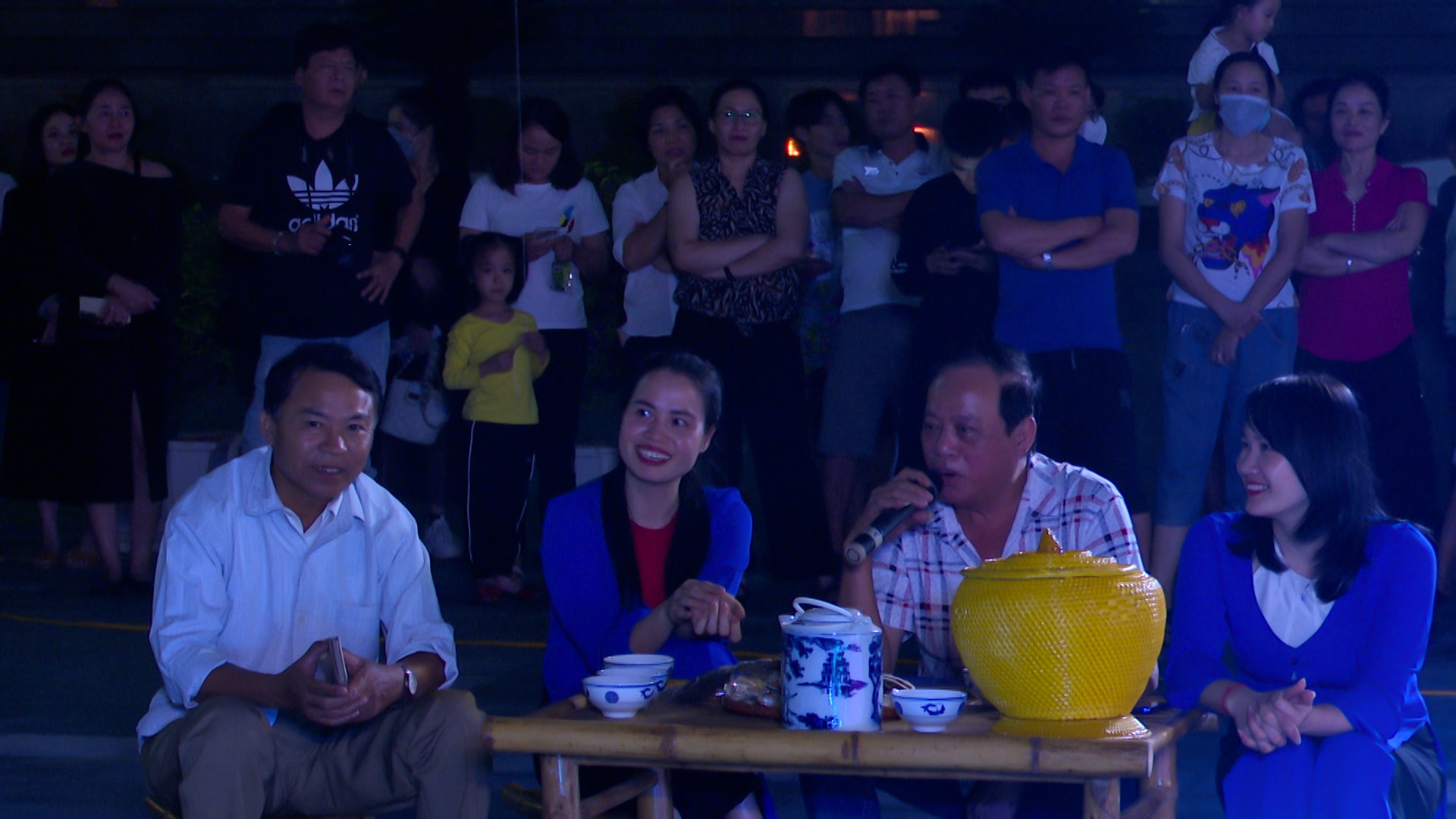 |
Dialogue in the new performance space. Photo: Minh Quân |
However, creating a suitable, long-term, stable, and attractive performance space is not easy, nor can it be achieved immediately. After much research and consultation with experts and cultural figures, the Nghe An Provincial Traditional Arts Center has organized around 10 "traditional poetry recitation" sessions in Ho Chi Minh Square, recreating the setting of an old craft village. Encouragingly, this has been a successful first step in attracting prominent figures to participate. Those who couldn't attend provided couplets for others to respond to. Examples include the Distinguished Teacher Vuong Long (Nam Dan), the poet Tung Bach from Vinh City, the writer Cao Xuan Thuong from Dien Chau, and the poet Van Anh from Vinh City. Notably, the poet Thach Quy, during his lifetime while undergoing treatment for a serious illness, also provided couplets and improvised verses for the community right in this new performance space.
During a game, the couplet was: "The square is brightly lit with lights / My mother told me what to do before I left." The counter-couplet was: "Even now, under the statue of Uncle Ho / If you don't love me, don't pretend to love me." Or: "I liked your post on Facebook / But now I'm sure you'll turn your back and ignore me / Oh phone, oh phone, oh phone / I threw it into the bushes, I don't want to touch it anymore"... The atmosphere of the couplets became lively as one person asked for a counter-couplet, and if someone's answer wasn't perfect, they wanted to correct it the next day.
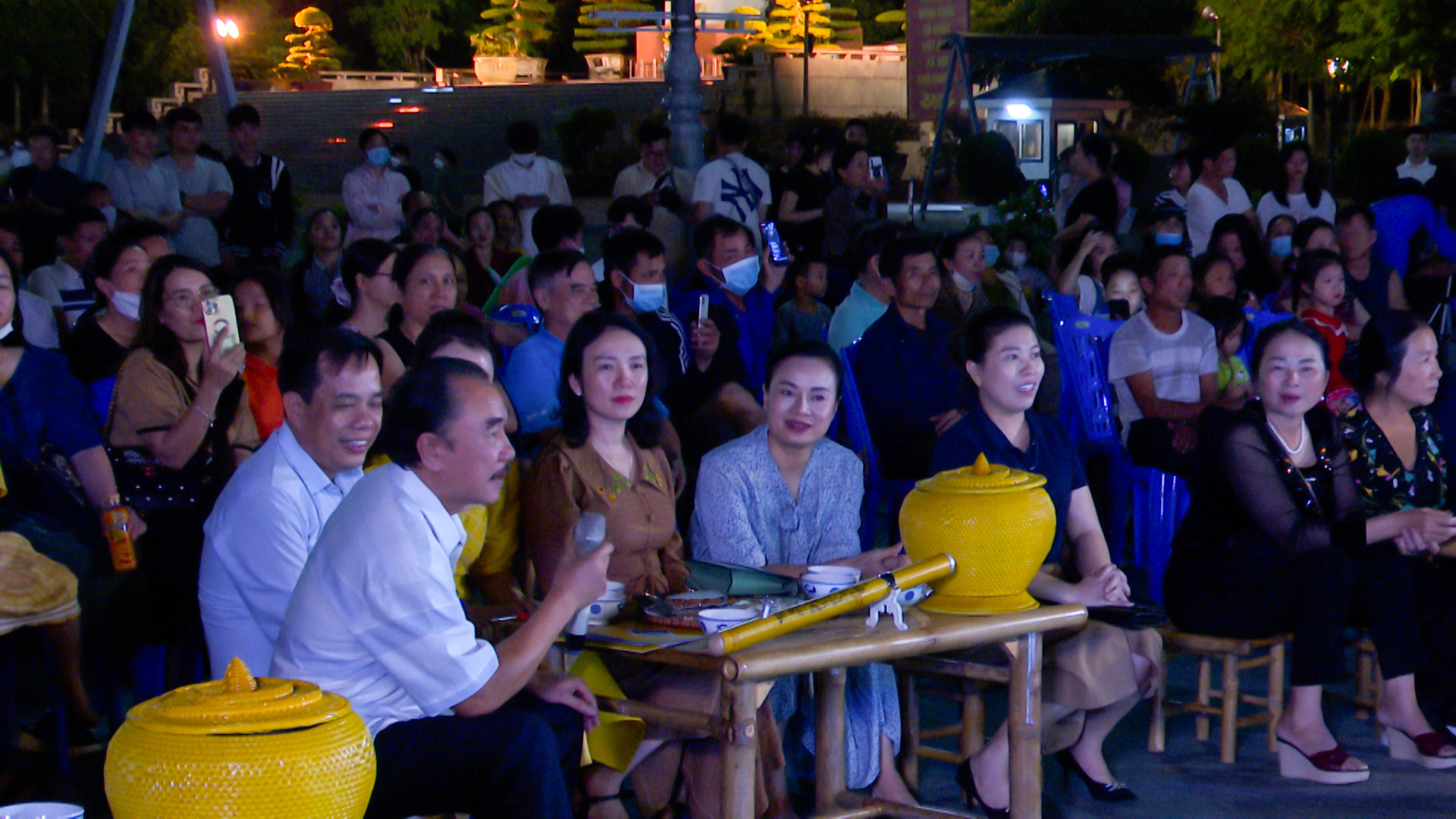 |
Leaders and citizens participated in improvisational performances in the performance space at Ho Chi Minh Square, held in early December 2022. Photo: Minh Quan |
It should also be added that, since 2007, the performance space for the Ví and Giặm folk songs has been revived throughout the province by the Provincial Traditional Arts Center, then the Center for the Preservation of Ví and Giặm folk songs. Typical examples include Ví Phường Vải (Ví of the cloth weaving village), Ví Phường Nón (Ví of the hat-making village), and Ví Đò Đưa (Ví of the boatman) in many villages with traditional crafts such as silk spinning, weaving, and hat making. Therefore, more than ever, Ví and Giặm folk songs need to be strongly disseminated by bringing them back to the people and their lives. “To achieve this, each village and commune needs to be aware that their place of residence is a Ví and Giặm cultural space, and each citizen must be a performer. We need to invest responsibly, deeply, and broadly, so that Ví and Giặm folk songs are restored to their true meaning and mission,” said Ms. Quách Thị Cường, Deputy Director of the Department of Culture and Sports of Nghe An province.


