
Falling into love and money scams because of online dating.
Although the tactics of using social media platforms like Zalo, Facebook, and WhatsApp to commit fraud and steal property have been widely publicized by authorities to raise public awareness, some people still fall prey to these scammers due to their gullibility and greed.
Losing billions of dong because of trusting a lover… online.
On February 15, 2022, the Cyber Security and High-Tech Crime Prevention Department of the Quang Ninh Provincial Police received a report from Mr. Nguyen Trong H, residing in Ha Long City, who was defrauded of his property by an individual.
According to the report, through an online "dating" website, Mr. H met a woman who introduced herself as "Thuong," born in 1989, residing in Ngo Quyen District, Hai Phong. She confided in Mr. H that she was divorced, had previously worked in Singapore, and had returned to Vietnam to live and run a fashion store, but was currently staying at home due to the pandemic.
After some time chatting, Thuong said she had developed feelings for Mr. H and introduced herself as participating in the foreign exchange market on a Forex platform called "usdcgloballimited.com," wanting to invite him to invest together in one account, with the possibility of marriage later if they were compatible. Mr. H agreed and Thuong introduced him to the Telegram account of a customer service representative of this Forex platform to help him open an account and invest.
Following the advice of the customer service representative, Mr. H provided all his personal information, including his Gmail address and phone number, to create an account. Subsequently, lured by Thuong and the Forex trading platform's customer service representative, from December 28, 2021, to February 7, 2022, Mr. H made multiple transfers to various bank accounts to participate in investments and pay taxes and fees requested by these individuals, totaling 307,900,000 VND. In addition, Thuong used various excuses, such as claiming his mother was ill and hospitalized and needed to pay hospital bills and buy a phone SIM card, to request money transfers. Mr. H transferred money twice, totaling 39,000,000 VND.
In the following days, Thuong and the other individuals continued to demand that Mr. H transfer money to pay various taxes and fees before he could withdraw his investment. Suspecting he was being scammed, Mr. H requested that Thuong send his ID card information, photo, and address for verification. However, no one matched the information and background Thuong provided, and the address Thuong had given him to arrange a meeting was a fake.
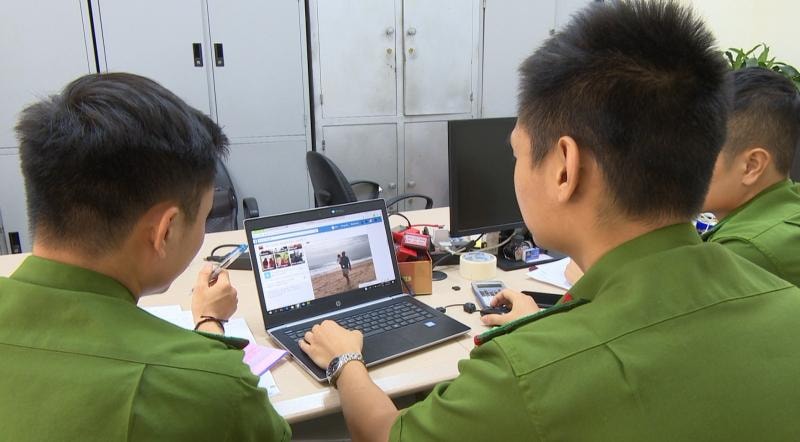 |
Authorities are investigating online fraud via social media.
After realizing he had been scammed, Mr. H demanded that Thuong return the money, but Thuong blocked him on Facebook, Zalo, etc., and could only be contacted via Telegram. However, through Telegram, Thuong threatened Mr. H that if he didn't find the money to pay them, she would post his nude photos online. Mr. H then went to the police to report the incident.
Lieutenant Colonel Nguyen Trong Ha, Head of the Cybercrime Prevention and Control Team – Cyber Security and High-Tech Crime Prevention Department – Quang Ninh Provincial Police, said that a few years ago, four consecutive cases occurred in Quang Ninh province where perpetrators used Facebook accounts to defraud four women in Cam Pha City, Quang Yen town, and Van Don district of nearly 3 billion VND.
At that time, an account named "James Jerry" befriended and got acquainted with Ms. Tran Thi Nhung (the victim's name has been changed), residing in Cam Pha City, through the social network Facebook. This individual claimed to have been born in 1970, currently living in the United Kingdom and working at Victoria Oil Company. A month later, James Jerry said he wanted to give Ms. Nhung jewelry and $500,000.
Later, someone claiming to be an employee of a shipping company called to inform her about a package sent by air from England, stating that if she wanted to receive it, she would have to pay various fees. Trusting James Jerry, Ms. Nhung transferred a total of 517 million VND in three separate transactions to different bank accounts in Ho Chi Minh City belonging to the perpetrator. After receiving the money, they switched off their phones and blocked her Facebook account.
Using similar methods and tactics, the perpetrators defrauded Ms. Tran Thi Quynh Huong (the victim's name has been changed), residing in Van Don district, of 716 million VND. According to the victim's report, she befriended someone with the Facebook account name Jonhson Alexan Dre Chizitere. Jonhson then asked her to send clothes, medals, gold, and watches to Vietnam for safekeeping, promising that the goods would arrive in a few days.
As agreed, that morning a man who introduced himself as Dinh Le Hoang Khuong called her mobile phone, saying the goods had arrived in Ho Chi Minh City and requesting that Ms. Huong transfer 17.5 million VND to pay for shipping. After sending the money, that afternoon, Khuong said that upon checking the goods, he discovered 1.5 million USD that had not been declared, resulting in a fine of 88 million VND. Ms. Huong questioned Johnson about this and, trusting him, transferred the money to Khuong's account at a bank branch in Hanoi.
Over the following days, Khuong repeatedly gave various excuses, such as claiming the goods were tax-evading, guaranteeing safe transportation, and demanding tax payments, and asked Ms. Huong to continue transferring money. After receiving three payments totaling 611 million VND, Khuong continued to ask her to transfer an additional 600 million VND to process tax procedures in Hanoi. Since Ms. Huong no longer had the money, the perpetrator said he would process a 50% tax reduction and urged her to pay the remaining amount soon to complete the procedures. Suspecting she had been scammed, Ms. Huong reported the incident to the police.
Besides the two victims mentioned above, there are two other cases: Ms. Nguyen Thi T, residing in Cam Pha City, and Ms. Nguyen Thi N, residing in Quang Yen town, who were defrauded of over 1.2 billion VND by individuals using Facebook. According to investigations into these cases, the perpetrators typically create social media accounts such as Zalo, Facebook, and Whatsapp, posing as foreigners, single individuals with stable jobs and comfortable financial situations to befriend victims. After gaining their trust, the perpetrators offer valuable gifts such as laptops, necklaces, jewelry, tablets, foreign currency, or request that the victims send money for charity.
When the "victim" agrees, the group in Vietnam will pose as airline officials, customs officers, airport security personnel, or courier company employees, calling and giving various reasons to demand that the victim pay customs clearance fees, fines for having a large amount of USD in the package, or hire a lawyer to prove the package's legality. The perpetrators request the victim to transfer money to a designated bank account, then quickly transfer the money to multiple different banks, withdrawing and misappropriating it abroad.
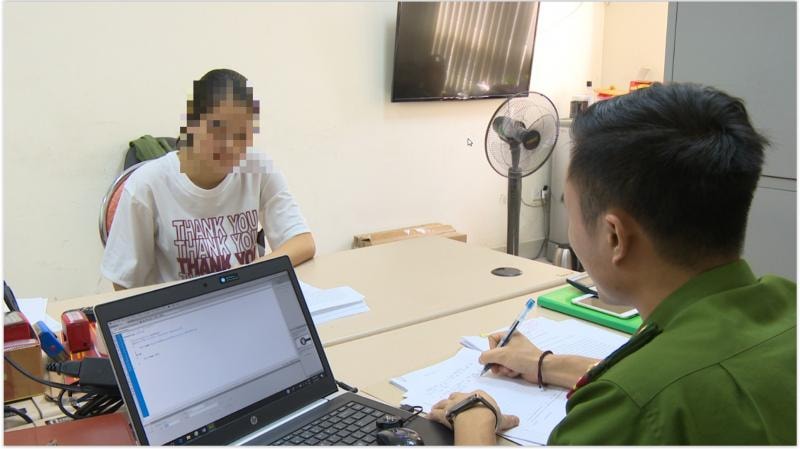 |
A victim came forward to report being scammed via Facebook.
Don't be too trusting and lose money unnecessarily.
According to Lieutenant Colonel Nguyen Trong Ha, Head of the Cybercrime Prevention and Control Team – Cyber Security and High-Tech Crime Prevention Department – Quang Ninh Provincial Police, although the methods of exploiting social networks such as Zalo, Facebook, and WhatsApp to defraud and seize property have been widely publicized by authorities to raise public awareness, some people still fall prey to these scammers due to gullibility and greed.
Lieutenant Colonel Dinh Ngoc Van, Head of the Cyber Security and High-Tech Crime Prevention Department of the Quang Ninh Provincial Police, said that compared to the past, the methods and tactics of the perpetrators are more sophisticated. They often use "burner" SIM cards to make calls and hire students and freelance workers to open accounts at multiple banks. After receiving money from victims, they quickly transfer and withdraw money through various banks, making it difficult to freeze the accounts.
To prevent such fraudulent activities, public awareness campaigns need to be intensified in the coming period, starting from the neighborhood level. In addition, banks need to regularly exchange information with authorities and promptly freeze suspicious accounts before fraudsters can transfer or misappropriate funds.
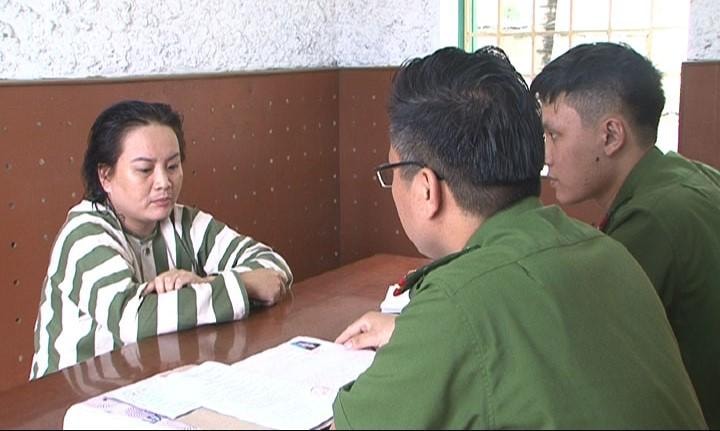 |
Tran Thi Bich Tuyen, a suspect in a Facebook-based online fraud ring, has been arrested by the Quang Ninh Provincial Police.
Lieutenant Colonel Dinh Ngoc Van emphasized that people must be extremely vigilant when using social media. Before getting acquainted or making friends, it is necessary to carefully select social media accounts with a high degree of authenticity (avoiding befriending fake accounts created by individuals), and verify the information of people you meet online before intending to take things further.
In particular, be wary of misleading offers or solicitations, especially those suspected of involving the collection of personal information, account details, and fraudulent activities to steal assets (currently, there are countless types of scams online, and people need to constantly research and update their knowledge to avoid falling into the traps set by these individuals).
Lieutenant Colonel Dinh Ngoc Van noted that caution is never superfluous in any relationship, especially those in the "virtual" world. The need to meet, make friends, and find one's significant other through social media is legitimate; however, to avoid falling into the traps of scammers, individuals need to be vigilant and refuse any suspicious offers, be wary of "gifts from out of nowhere," and be swayed by sweet promises and enticements. When chatting or messaging on social media, absolutely do not provide or exchange sensitive information or images to avoid being exploited, controlled, or extorted by malicious individuals.


