
Heatstroke, sunstroke - How to treat it?
Without prompt medical attention, victims of heatstroke or heat exhaustion may fall into delirium, seizures, coma, and are at high risk of death.
Sunstroke occurs due to prolonged exposure to sunlight.
Heatstroke usually occurs when the body is exposed to sunlight for too long. Heatstroke is a form of heat exhaustion, a condition caused by increased body temperature. Heat exhaustion is a systemic inflammatory response when body temperature exceeds 40.6°C, altering consciousness and disrupting vital functions. Heat exhaustion often occurs during heatwaves or in places with high temperatures such as mines, brick kilns, fires, etc.
Those most susceptible to heatstroke include: the elderly, laborers, those who exercise intensely, and those who spend long periods outdoors in the sun.
The elderly are more susceptible to heatstroke due to multiple underlying health conditions, impaired thermoregulation, or the use of various medications. Younger people who work outdoors in the sun, such as farmers, brick kiln workers, lime kiln workers, and steel mill workers, are also more vulnerable.
People with conditions such as: cardiovascular disease, chronic lung disease, asthma, diabetes, pregnant women, dehydration due to diarrhea, alcohol abuse, psoriasis, eczema, burns, hyperthyroidism... People currently taking medications such as: anticholinergics, cocaine, amphetamines, phenothiazines...
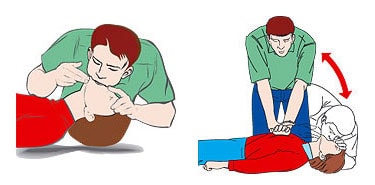
Mouth-to-mouth resuscitation and external chest compressions.
Symptoms of heatstroke or heat exhaustion
Heatstroke only occurs in people who are outdoors in the sun. A person suffering from heatstroke typically exhibits the following symptoms: a high fever above 39.8°C, initially deep breathing and a rapid pulse, followed by shallow breathing and a weak pulse, dilated pupils, confusion, delirium, convulsions, and fainting. Common symptoms include hot and dry skin, extreme fatigue, headache, discomfort, flushed face, vomiting, and diarrhea.
Heat exhaustion: the patient's skin is cold and clammy (due to exertion, skin is usually moist), pale, and sweaty; dry mouth, weakness, dizziness, headache, nausea or vomiting, muscle cramps; rapid and weak pulse; cardiac arrhythmias, hypotension; acute respiratory distress syndrome in adults; central nervous system disorders: seizures and coma; liver and kidney failure, coagulation disorders...
When encountering someone suffering from heatstroke, it is important to differentiate it from other conditions such as drug poisoning, neuroleptic malignant syndrome, sepsis, and central nervous system infections.
Signs of heatstroke in children include: fatigue, lethargy; a burning sensation in the body, flushed face, body temperature possibly reaching 40-41°C; rapid, shallow breathing; weak, difficult-to-detect or undetectable pulse. In severe cases of heatstroke, children may experience seizures or coma.
Emergency treatment for heatstroke and heat exhaustion.
When encountering someone suffering from heatstroke or heat exhaustion, it is necessary to quickly perform the following first aid: lower the victim's body temperature by immediately moving them to a cool, well-ventilated area, using a fan, and laying them on their back with their legs elevated. Remove some clothing, give them cold water mixed with salt to drink, preferably oral rehydration solution (ORS) or fruit juices such as lemon juice, orange juice, fresh tea, coffee, or boiled water spinach water... Use a towel or clothing soaked in ice water to apply cold compresses all over the victim's body, especially the neck, armpits, and groin.
If the victim has cardiac arrest (no radial pulse detected, no heartbeat palpable), perform chest compressions and artificial respiration. To perform chest compressions: place both hands on top of each other and press down on the chest over the heart, at a frequency of approximately 90-100 compressions per minute.
If only one person is providing first aid, perform 2-3 breaths of artificial respiration followed by 10-15 chest compressions. If two people are providing first aid, one person should perform artificial respiration while the other performs chest compressions, continuing persistently until the victim's heart starts beating again and they can breathe. Immediately transport the victim to the hospital if they are unable to drink water, are vomiting continuously, have a persistently rising fever, chest pain, difficulty breathing, abdominal pain, or are unconscious.
Treatment
Intravenous fluids are administered to replenish water and electrolytes in the patient. Continue to lower the patient's body temperature using methods such as: giving cool water to drink, placing ice packs on areas with large, superficial blood vessels such as the neck, armpits, and groin... Note that external cooling may cause the patient to shiver. If the patient is stable, immersing the whole body or parts of the body in cold water is often effective.
However, please note that for patients in critical condition, immersion in cold water should not be used. In medical facilities with the necessary resources, modern cooling techniques should be used, such as: hypothermia treatment after cardiac arrest; using cold water to irrigate the stomach, peritoneum, pleura, or bladder. Intravenous cold fluid infusion, or cooling catheters in the bloodstream, are also possible. Remember that there is no specific medication to lower body temperature in heatstroke or heat exhaustion.
Measures to prevent heatstroke and heat exhaustion: |
According to Health & Life - NT


