
The management of the gas business will be decentralized to the district level.
(Baonghean) - In Nghe An province, there are currently 829 retail outlets selling liquefied petroleum gas (LPG) with 17 different brands. This system is considered to basically meet consumer demand. However, to closely manage business activities in this sector across a wide area, the Department of Industry and Trade has advised the Provincial People's Committee to decentralize management to the district level.
Concerns regarding the implementation of the new Decree.
Although Government Decree 19/2016/ND-CP on the business of liquefied petroleum gas (LPG) (replacing the previous Decree 107/2009/ND-CP) came into effect in May 2016, Mr. Tran Van Vien, a gas distributor in Vinh City, has not been entirely reassured by the application of some new regulations over the past few months. According to Mr. Vien's analysis, his business currently has over 200,000 gas cylinders and storage tanks of approximately 80 m³. If the new regulations under Decree 19/2016 are applied, his dealership model may need to re-register as a distributor, meeting the required standards for cylinders, but the storage tanks must have a capacity of approximately 300 m³.
This is a difficult task because businesses would have to invest tens of billions of dong more, leading to waste, since the gas in cylinders is recycled for household use, making tank upgrades unnecessary. Not to mention that upgrading the tanks would also require upgrading (or renting additional) storage facilities, and ensuring safety conditions…
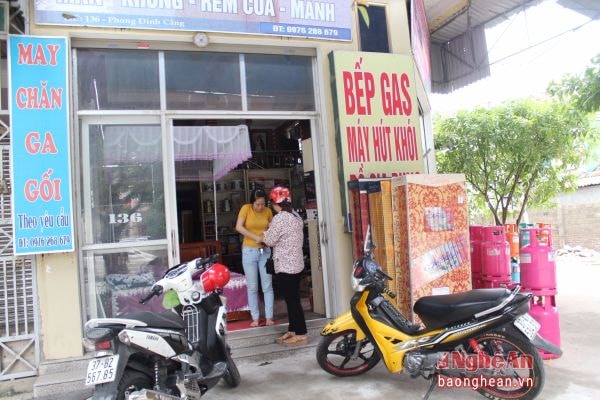 |
| Many gas shops share premises with other businesses. (Photo taken on Phong Dinh Cang Street - Vinh City). |
Concerns remain surrounding the application of Decree 19/2016/ND-CP regarding regulations on the number of agents for gas distributors or general distributors, as well as regulations on filling stations and storage conditions. Furthermore, if strictly enforced, most gas businesses in Nghe An province will have to reconsider their operations. For a long time, many establishments have been storing gas cylinders in their homes, lacking separate warehouses, and selling gas alongside other goods. These gas businesses are often concentrated in densely populated areas with high foot traffic, failing to maintain safe distances. According to statistics from the Department of Industry and Trade, over 90% of gas businesses in Nghe An do not have separate storage facilities; gas cylinders are primarily stored at the store or in homes for distribution and consumption.
Furthermore, the quality of labor at gas retail outlets remains low, and training in liquefied petroleum gas (LPG) sales and fire safety is not adequately aligned with practical needs. Illegal gas refilling and brand fraud still occur in the area, creating significant difficulties for relevant authorities in management, inspection, and control. The lack of regulations on the transparency of information regarding gas business operations by wholesale, general, and retail gas distributors makes it difficult for consumers to access information about prices, brands, and distribution systems of these businesses. All of these are issues worth discussing regarding the implementation of the new decree on gas business management. However, from the perspective of retail gas outlets, Decree 19/2016/ND-CP does not regulate as much as previous regulations.
Management will be decentralized to the district level.
Regarding the regulations on gas business conditions under Decree 19/2016/ND-CP, the Ministry of Industry and Trade is listening to businesses and continuing to gather opinions from relevant agencies to propose appropriate adjustments to the Government. From a management perspective, the Department of Industry and Trade has advised and submitted to the Provincial People's Committee a draft decision on the decentralization of granting certificates of eligibility for liquefied petroleum gas (LPG) business to retail gas outlets in Nghe An province, after seeking opinions from relevant departments and agencies and the People's Committees of districts, cities, and towns. The draft decentralizes the granting of LPG business eligibility certificates to retail gas outlets to the district-level People's Committees for management and licensing.
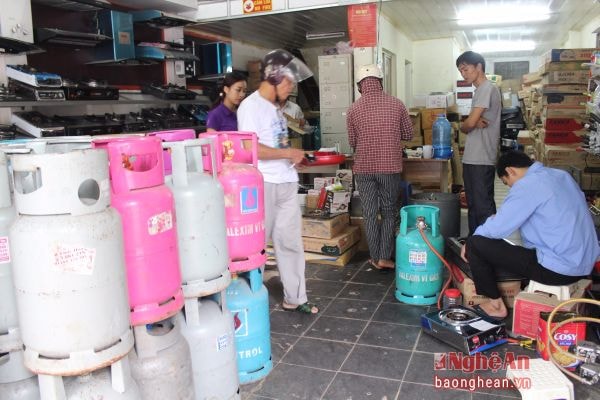 |
| Gas business operations will be decentralized to districts, cities, and towns. |
The reason given by the Ministry of Industry and Trade is that Nghe An has the largest land area in the country, a complex geographical area, and most gas businesses are small-scale retail outlets scattered throughout the province. When applying the new decree, granting certificates of eligibility to operate liquefied petroleum gas (LPG) retail outlets requires direct inspection and assessment of each establishment to ensure compliance with regulations. Another issue impacting the decentralization of gas business licensing and management to the district level is that the Fire Prevention and Control Police force has now established specialized departments in different regions, closer to the businesses. This is the core force, along with the Ministry of Industry and Trade and other relevant agencies, in controlling licensing and providing training on fire prevention and control in the LPG business (which is on the list of conditional business sectors).
For example, the Fire Prevention and Control Police Department of Vinh City, in coordination with the Department of Industry and Trade, manages 131 liquefied petroleum gas (LPG) retail outlets. Monthly and quarterly, the department proactively inspects the conditions ensuring gas business safety. In addition, annually, in coordination with the government and store owners, they organize professional training for 100% of the staff (326 people) involved in the gas business.
According to Ms. Ho Thi Ha, Deputy Head of the Trade Management Department of the Department of Industry and Trade, all 829 gas retail outlets in the province have been licensed by the Department of Industry and Trade. In reality, due to the province's large geographical area and uneven distribution of these outlets, on-site inspections are difficult and limited, resulting in wasted time and travel costs for organizations and individuals located far away who have to submit applications directly to the Department of Industry and Trade. Decentralizing gas business licensing to the districts will further strengthen the management of gas business activities within their respective jurisdictions.
This is also a direction aimed at increasing efficiency in business management in the new era. Based on this, the department guides the districts to publicly post and explain to organizations and citizens the legal regulations on the issuance, re-issuance, adjustment, and extension of certificates of eligibility for liquefied petroleum gas business; and to issue, re-issue, adjust, and extend certificates of eligibility for liquefied petroleum gas business to stores of organizations and citizens belonging to the specified categories after decentralization by the Provincial People's Committee.
Nguyen Nguyen
| RELATED NEWS |
|---|


