
Tighten management of school canteens providing meals to students.
(Baonghean.vn) - To ensure the health of students, food safety and hygiene in school cafeterias need special attention. At this time, this issue still raises many concerns.
Current situation of school canteens
In recent days, news of a mass food poisoning incident at a school in Nha Trang city has caused considerable concern among parents and schools. At Nghi Phu 1 Primary School (Vinh City), Principal Nguyen Thi Hong Minh stated: “For a long time, our school has followed proper procedures for organizing the school lunch program and has been supervised by the Parents' Association. Recently, the association has been monitoring the situation more frequently…”
The communal kitchen at Nghi Phu 1 Primary School is quite small. For many years, the school kitchen has followed a one-way workflow. By over 10:00 AM (November 22nd), the kitchen had completed preparing over 500 meals for the students. Ms. Nguyen Thi Ha, a cook at the school, said: “I have worked here for many years, but I have never dared to neglect my work, especially regarding food safety and hygiene. All procedures are strictly followed. I myself participate in food safety training courses and have regular health checkups every year.”
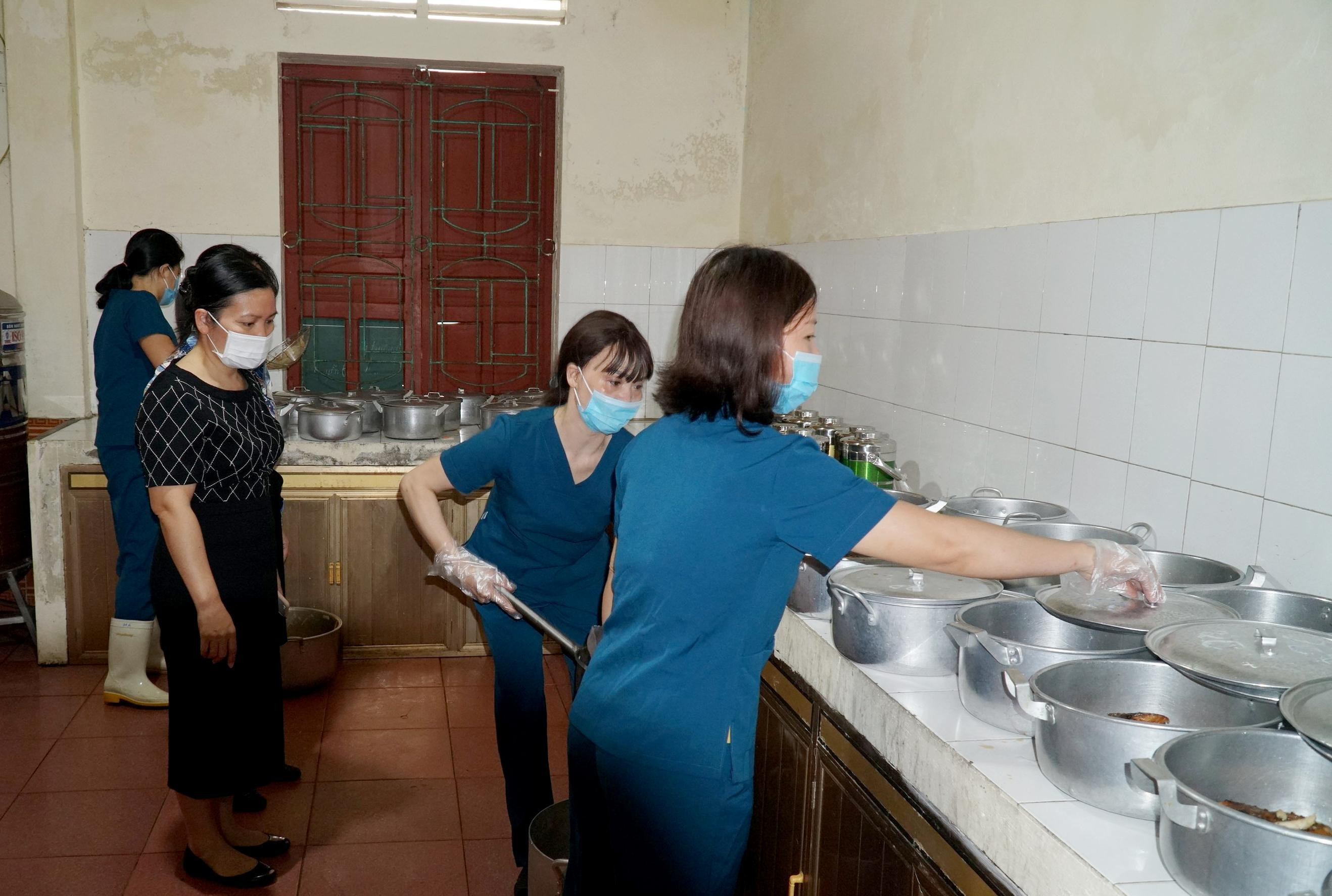 |
The management board of Nghi Phu 1 Primary School inspects food safety and hygiene practices at the school's cafeteria. Photo: My Ha |
Regarding the organization of school lunch programs for students, teacher Nguyen Thi Hong Minh said: "Ensuring the safety of the food supply is very important. Currently, the school has signed contracts with several units in the city and some individual businesses to supply food such as green vegetables, meat, fish, and some processed products. According to regulations, all suppliers must have certificates guaranteeing food safety and hygiene and meet the necessary business conditions."
After the food is delivered to the school, the school requires kitchen staff to follow the three-step food inspection process and retain food samples.
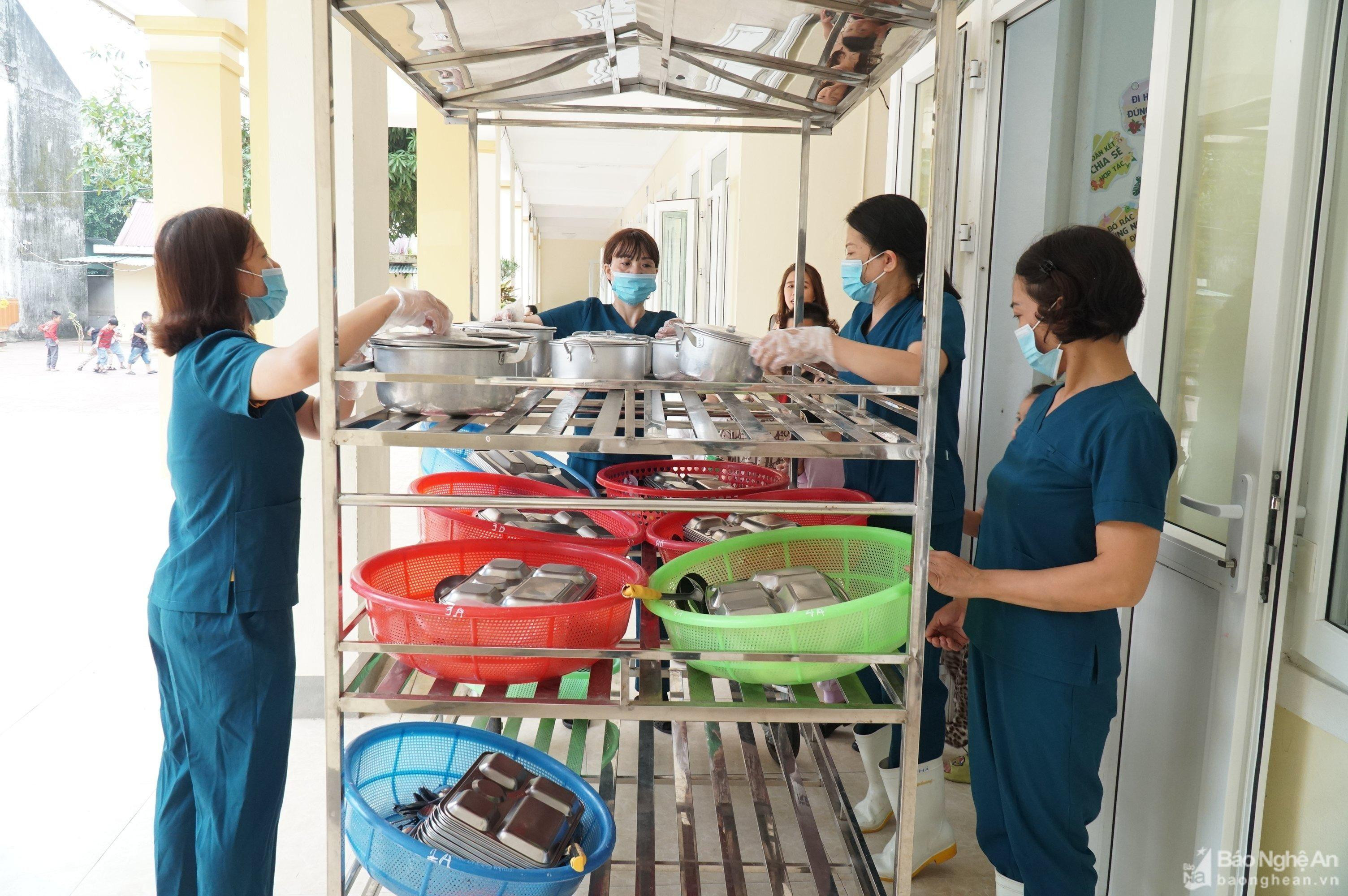 |
Food was delivered to each classroom. Photo: Thanh Chung |
In recent times, food safety and hygiene in school cafeterias have been given attention and implemented quite systematically by all schools in the province. However, for various reasons, many schools in disadvantaged areas, especially in remote and rural regions, still struggle to comply with regulations due to inadequate facilities and other requirements.
In reality, although called "collective kitchens," Nghe An province has many organizational forms, including boarding school kitchens run by female cooks, boarding school kitchens run by local families, and in some mountainous schools, students often bring their own food to school, with teachers assisting in cooking rice and soup for them. Here, implementing regulations on one-way kitchen operations or the three-step inspection process is difficult. Food supplies mainly come from reliable sources or from self-sufficient local sources.
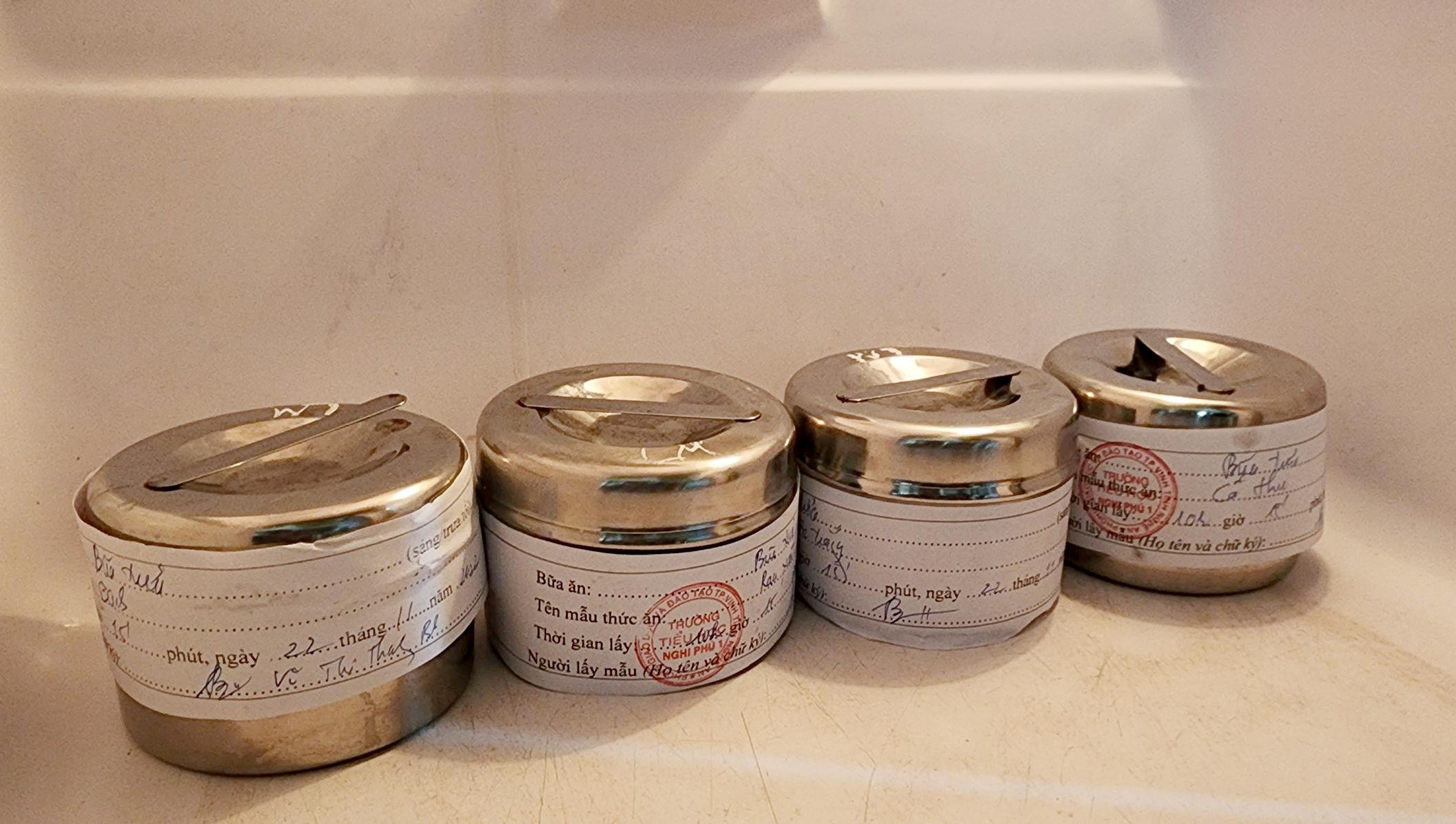 |
According to proper procedure, all food samples must be stored in the refrigerator. Photo: My Ha |
Further elaborating on this, Ms. Vo Tuyet Chinh, Deputy Head of the Education and Training Department of Tuong Duong District, stated: “Currently, 100% of kindergartens and over 50% of primary and secondary schools in Tuong Duong District have organized collective kitchens for students. In recent years, the district has required schools to uphold their responsibilities in the implementation process and has regularly inspected and supervised them. However, organizing collective kitchens in schools still faces many difficulties. Specifically, due to inadequate infrastructure, the number of schools that have organized one-way kitchens is small, and many kitchens are still quite simple and rudimentary.”
In school kitchens located in disadvantaged areas, sourcing food is difficult, resulting in a lack of fresh, high-quality food or food with proper documentation. In this context, we encourage schools to increase their own production to provide students with clean vegetables, or to find reliable sources from parents or teachers.”
Tighten management
The report on food safety in schools by the Department of Education and Training also highlighted difficulties such as: Many food sources on the market have unclear origins, making it difficult to control before they are supplied to schools.
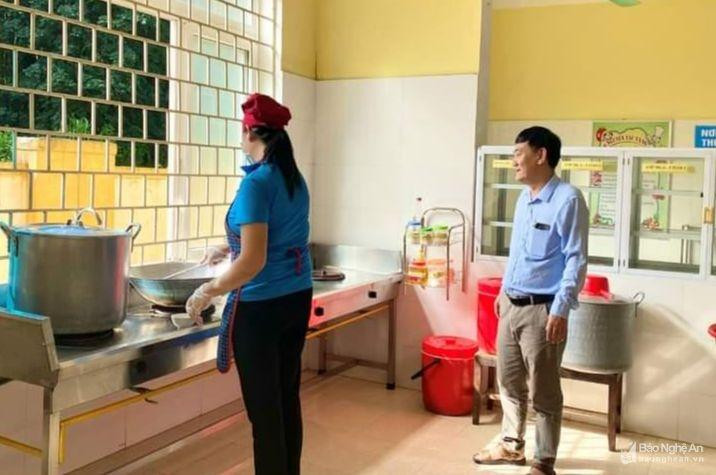 |
The Nghe An Provincial Food Safety and Hygiene Department conducted inspections at 44 school cafeterias in the province and discovered numerous shortcomings. (Photo: CSCC) |
Furthermore, coordination among relevant agencies in exchanging and providing information is still lacking, affecting the management of food quality.
Concerned about food safety and hygiene issues in school cafeterias that could lead to food poisoning and serious consequences, in recent years, authorities in Nghe An have proactively strengthened guidance, supervision, inspection, and auditing efforts.
Right from the beginning of the 2022-2023 school year, on September 6, 2022, the Nghe An Department of Health issued Official Letter No. 3536/SYT-NVY on strengthening food safety and preventing food poisoning in schools in 2022-2023, addressed to the People's Committees of districts, towns, and Vinh City.
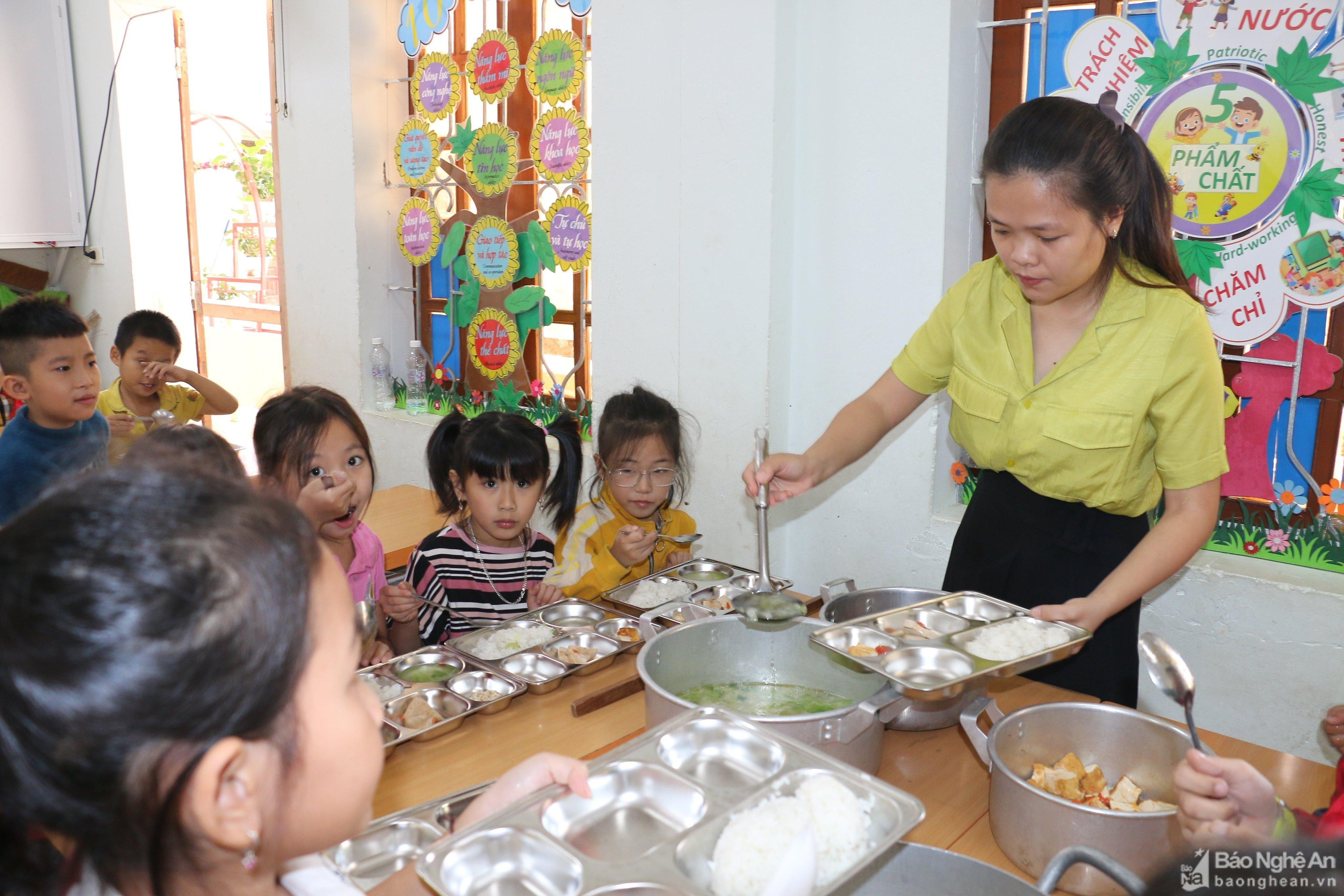 |
Organizing lunch services for students at Muong Xen Primary School, Ky Son district. Photo: My Ha |
Subsequently, under the direction of the Department of Health, on September 14, 2022, the Nghe An Provincial Food Safety and Hygiene Sub-Department issued Decision No. 153/QD-ATTP to monitor food safety in schools throughout Nghe An province in 2022.
In implementing this decision, the Food Safety Monitoring Team in Nghe An province in 2022 conducted monitoring at 44 school canteens in the districts of Hung Nguyen, Nam Dan, Do Luong, Thanh Chuong, Dien Chau, Yen Thanh, Nghi Loc, Que Phong, Nghia Dan, Quy Hop, Quynh Luu, Thai Hoa town, Cua Lo town, Hoang Mai town, and Vinh city. In each locality, the team invited officials from the local Health Department and Education and Training Department to participate.
Dr. Pham Ngoc Quy, Head of the Food Safety and Hygiene Department of Nghe An province, said: Of the 44 school canteens monitored, 22/44 facilities met the standards (accounting for 50%); the remaining 22 facilities still have some conditions that do not ensure food safety and hygiene. Results from testing filtered water samples from 37 schools showed that 12/37 samples did not meet the standards (accounting for 30.43%)...
Through monitoring school kitchens, several other violations were discovered, such as:
The establishments' owners and staff have not participated in the required food safety and hygiene training; they have not properly implemented the three-step food inspection process and food sample retention; they have not tested the water used in processing and filtered drinking water as required; the design and layout of the preparation and processing areas do not ensure separation and prevent cross-contamination; and they do not have separate utensils for raw and cooked food.
Furthermore, the processing area lacks adequate containers for solid waste; food storage areas are poorly arranged; drainage ditches in the processing area are clogged and uncovered; walls and ceilings are peeling; floors are cracked and waterlogged; there are no measures to prevent insects and pests; and staff practices do not comply with regulations.
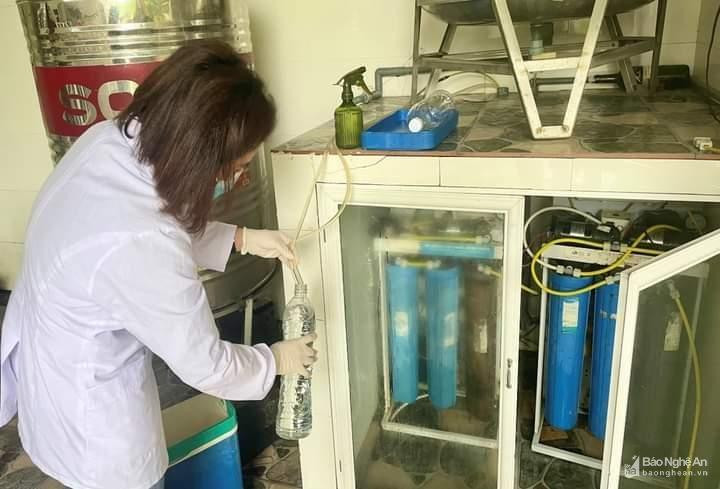 |
Through monitoring by the Food Safety and Hygiene Sub-Department, many collective kitchens have not tested the water used in food preparation or filtered drinking water as required by regulations. Photo: CSCC |
Currently, the Food Safety and Hygiene Sub-Department has submitted a proposal to the People's Committees of districts, towns, and Vinh City to strengthen the direction of food safety and hygiene management. For schools that still have inadequate food safety and hygiene conditions, they need to immediately rectify the existing deficiencies and comply with all legal regulations on ensuring food safety and hygiene.
Specifically, facilities where water sample test results show absolutely no compliance with standards are prohibited from allowing students to drink the water directly without boiling it first; they must strictly adhere to food safety and hygiene regulations as prescribed by law; rectify any deficiencies to ensure safety; and re-test the drinking water source to ensure it meets safety standards as required.


