
Anaphylactic shock: Causes are not limited to medication.
Around 12 noon on August 12th, at the Intensive Care Unit (Ha Tinh General Hospital), the family members of a patient became enraged, vandalizing property and severely injuring four doctors and nurses after their relative died from a drug overdose.
|
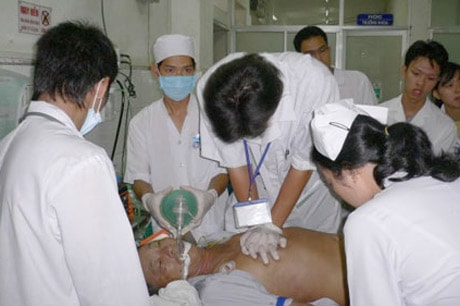
However, according to many doctors, anaphylactic shock has many causes, including the patient's constitution, and not just the use of medication.
Everyone is at risk.
According to Dr. Bui Hanh Tam (Anesthesiologist – Resuscitation Specialist, Department of Cardiovascular Surgery, University Medical Center of Ho Chi Minh City), when we talk about anaphylactic shock, we often think of shock caused by medication. This is not entirely true, because besides medications, many substances can cause allergic reactions, the most severe manifestation of which is anaphylactic shock, for example: medical gloves, latex, fruits, beef, soy milk, bee venom... It's not only antibiotics that cause shock; many other medications, even those considered "harmless" like vitamins, also carry a similar risk. It's also worth mentioning medications commonly used in hospitals such as: painkillers, fever reducers, contrast agents, muscle relaxants, intravenous fluids (also called saline solution), and nutritional fluids administered intravenously... Even medications used to treat shock can cause anaphylactic shock.
“Emergency treatment for anaphylactic shock must be carried out in a place with sufficient personnel and equipment, including a doctor and an anti-shock kit. Therefore, if you have a history of allergies, please tell your doctor. In addition, you need to know how to identify the early signs of allergies as mentioned above and tell your doctor as soon as they appear. Anaphylactic shock can occur early, sometimes later after a few hours, but once it occurs, it progresses very quickly within 1-2 minutes and becomes critical, at which point it is very difficult to reverse the situation,” said Dr. Tam.
Warning signs of shock from allergic reactions.
Dr. Nguyen Huu Truong (Clinical Allergy-Immunology Center, Bach Mai Hospital) stated that allergic reactions affect everyone, regardless of age, whether in a hospital or anywhere else. Just like traffic, whether you travel by plane or on foot, in good or bad weather, day or night, the risk factor is always present. The manifestations of allergic reactions are diverse: skin redness, hives, coughing, swelling of the eyes and mouth, difficulty breathing, fatigue... up to respiratory failure and even cardiac arrest. Sometimes, death is unavoidable. Allergic reactions can occur immediately or later, a few hours after contact with a foreign substance; sometimes they only occur after subsequent exposures.
According to medical analysis, there have been many cases of patients dying immediately after receiving antibiotic injections, even though healthcare workers strictly followed treatment protocols. These are cases of anaphylactic shock, a severe and particularly dangerous form of drug allergy, often unavoidable due to the individual's allergic predisposition. Even more dangerous, anaphylactic shock can occur at very low doses (i.e., it can happen during a test), without warning signs, and all emergency measures after the medication has been administered may be ineffective. This is an undesirable risk that users need to be aware of and share with healthcare professionals if a dangerous adverse reaction occurs during medication use.
How do I know if I'm having a drug reaction?
According to Dr. Nguyen Huu Truong, allergic reactions to medication occur immediately, with the most severe being anaphylaxis, the most common clinical manifestation being anaphylactic shock. Milder reactions may include skin reactions: itching, redness (which may be localized or spread throughout the body). Slower skin reactions, occurring after several hours to several days, include Stevens-Johnson syndrome and Lyell syndrome – characterized by generalized skin and mucosal peeling; patients may also die afterward due to skin infections and sepsis.
After taking the medication, if any of the above symptoms occur, the patient should go to the hospital immediately and inform the doctor of all the medication they have taken. Many symptoms may be unknown to the patient, such as vestibular disorders, kidney failure, or blood cell loss after taking the medication; these can only be detected by medical staff after several days of monitoring following medication use.
According to GiadinhNet - TL


