
Dengue fever: Don't let it be too late!
Dengue fever, also known as dengue hemorrhagic fever, is a viral disease spread by mosquitoes, commonly found in tropical and subtropical countries.
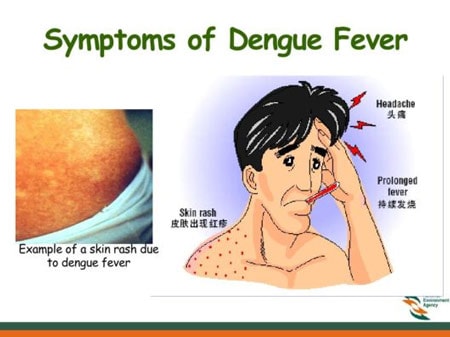 |
1. Symptoms
Symptoms of the disease usually begin to appear 3-14 days after exposure to the dengue virus, which is called the incubation period; the average incubation period is about 4-7 days.
Symptoms typically begin with a sudden, high fever, which can reach 41°C.
Other symptoms include:
- Severe headache
- Eye pain; especially pain behind the eyes.
- Severe bone and joint pain (dengue fever is also known as "bone pain fever")
- Severe muscle pain in the lower back, arms, and legs.
- Abdominal pain, feeling unwell
- Chills (shivering)
- Red, flat rashes appear on the skin.
- Dizzy
- Loss of appetite
- Sore throat
- Unusual bleeding, such as nosebleeds, bleeding gums, and/or blood in the urine.
Symptoms usually resolve within one or two weeks, but it can take many weeks for a full recovery. Extreme fatigue is a common symptom during the recovery process.
2. Causes
Dengue fever is spread by Aedes aegypti mosquitoes infected with the dengue virus. These mosquitoes bite people both during the day and at night.
There are four different strains of the Dengue virus: DEN 1, DEN 2, DEN 3, and DEN 4.
Once infected with a particular strain, a person will have lifelong immunity against that strain. However, they can still be infected with other strains.
If reinfected by a different strain, the patient will have a slightly increased chance of developing more severe complications such as severe dengue fever.
Dengue virus transmission occurs in a circular pattern: an infected person is bitten by a mosquito, then the mosquito, also infected with the virus, bites another person, and so the cycle continues.
Aedes mosquitoes prefer to breed near water and are commonly found in stagnant water in water containers around construction sites in urban environments. Dengue fever rates are often high in large cities of developing countries with poor sanitation.
3. Treatment
Currently, there is no specific cure for dengue fever, so treatment focuses on alleviating symptoms and making the patient as comfortable as possible throughout the illness.
Things to do:
- Use paracetamol to relieve pain and fever – do not use aspirin or ibuprofen as they can cause internal bleeding in people with dengue fever.
- Drink plenty of fluids to prevent dehydration – drink bottled water or boiled and cooled water, do not drink tap water.
- Get enough rest.
If symptoms do not improve after 3-5 days, seek medical attention.
4. Recovery time
You will feel tired and unwell for a while. Most patients recover within two weeks, although sometimes it can take up to six weeks to fully recover.
5. Complications
In a few cases, people with dengue fever will develop a more severe and potentially life-threatening form, known as severe dengue fever.
The exact reasons in these cases are unclear, but the primary risk factor is a prior history of dengue fever.
Signs and symptoms of severe dengue fever include:
- The fever has subsided.
- Feeling tired
- Abdominal bloating and persistent pain
- Frequent vomiting
- Enlarged liver, which may be painful and palpable.
- Symptoms include heavy nosebleeds, heavy menstruation, red-colored urine accompanied by bloody stools or vomiting blood.
Another common complication is that people with severe dengue fever may experience a sudden and significant drop in blood pressure. This condition is known as dengue shock syndrome.
Symptoms of dengue shock syndrome include:
- Skin is cold and sticky.
- Small, fast pulse
- Dry mouth
- Infrequent urination
- Rapid breathing
If you experience any symptoms of severe dengue fever, you should seek immediate medical attention to prevent the disease from progressing to a more serious stage.
Patients will need to be hospitalized and receive intravenous fluids to prevent dehydration and stabilize blood pressure. The vast majority will recover quickly and can be discharged from the hospital after a few days.
 |
Disease prevention
There is no vaccine for dengue fever. The best way to prevent the disease is to avoid mosquito bites.
Avoid mosquito bites by:
- Use insect repellents both day and night to avoid mosquito bites – products containing N-diethylmetatoluamide (DEET) are effective, but should not be used on children under 2 years old.
- Wear protective but loose-fitting clothing – mosquitoes can bite through tight-fitting clothes; ideally, wear long pants, long-sleeved shirts, shoes, and socks; avoid sandals.
- Use a mosquito net when sleeping to avoid mosquito bites at night.
- Environmental sanitation – mosquitoes that transmit dengue fever breed in stagnant water in densely populated areas; this includes everything from communal toilets to stagnant water in old car tires.
According to dantri.com


