
The return of Alexis Tsipras and the future of Greece.
(Baonghean) - The official results of today's snap parliamentary election show that the left-wing Syriza party of leader Alexis Tsipras has won. Thus, former Prime Minister Tsipras returns to politics to take on the responsibility of steering Greece through its public debt crisis. Will Tsipras's return bring hope of escaping Greece's quagmire?
Unlike the boisterous celebrations of the January election, the narrow victory of the left-wing Syriza party this time shows that its popularity has significantly declined since the previous election. However, the door remains wide enough for the party's leader, former Prime Minister Tsipras, to return to politics after a risky gamble. Tsipras had already faced strong domestic opposition after receiving the third massive bailout package since 2010 and unexpectedly resigned in August 2015, calling for early elections in Greece.
Many Greeks, including some within the Syriza party, criticized him as a "traitor" for accepting the harsh reform plans demanded by creditors, going against the results of the July referendum against austerity policies. However, according to observers, Tsipras still enjoys the support of a significant number of voters who believe the bailout package is the only way to prevent Greece from defaulting on its debt.
Tsipras's resignation last month and the call for early elections are seen as a way for him to consolidate his ruling Syriza party, weed out dissenting members, and seek more support from smaller parties. He also hopes to demonstrate voter support for the third bailout package he was forced to sign with lenders, even though this action contradicts his campaign promise to end austerity measures.
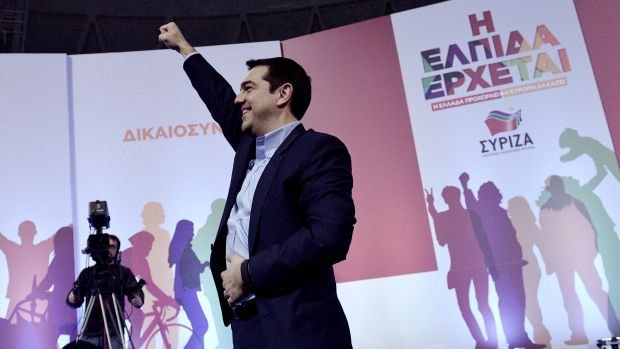 |
| Alexis Tsipras, leader of the Syriza party, has returned to the position of Prime Minister of Greece. Photo: AP |
Observing the current situation in Greece, ultimately, the question of whether or not to implement reforms is no longer the most pressing issue for Greek society. Instead, the main concern is how to revive the economy, which is in a disastrous state. The voter turnout in this election, at only 54%—the lowest in 70 years—accurately reflects the sentiment of Greek voters: they do not want to continue with overly harsh austerity measures, but they also have no other choice but to follow Tsipras's policies, accepting unfavorable deals with creditors in order to secure loans.
Although he couldn't find a new path for Greece, Tsipras at least took a firm stance in pursuing an anti-austerity approach. In his short seven-month term, Tsipras had tried to steer Greece against creditors' demands in an attempt to find a more favorable deal for the Greek people, but ultimately he broke his promise to a large number of voters, accepting the stringent demands of international creditors to prevent Greece from defaulting and avoiding the risk of leaving the eurozone.
Currently, Mr. Tsipras is campaigning to urge creditors to ease the stringent conditions. This demonstrates his desire to fulfill the commitments and promises he made to voters during his first election campaign earlier this year. However, it is not difficult to see that the challenges awaiting the left-wing leader and his government are considerable.
The new government will have to implement urgent reforms to both rescue the struggling economy and find a way to repay creditors, while also appeasing public opinion, given that harsh measures could provoke public outrage and lead to an increasing risk of political instability.
Upon taking office, negotiations regarding Greece's debt problem are expected to be a top priority on the agenda of Prime Minister Tsipras and the new government. Experts believe that the third bailout package of 86 billion euros is not a magic wand that can solve all the remaining issues of a six-year-long crisis in Greece. Furthermore, Greece must also make a positive contribution to efforts to resolve the refugee crisis plaguing European countries, as Greece is one of the key gateways for migrants seeking to enter the continent.
The way to extricate Greece from its crisis remains a highly uncertain and unpredictable prospect. It seems that, despite his success with this political gamble, the young Prime Minister Tsipras still faces many risky "gambles" on his journey towards a brighter future for Greece.
Thanh Huyen


