
Jellyfish contain many toxins that can easily cause poisoning.
Spring and summer are the breeding seasons for jellyfish, so they often accumulate many toxins that can cause food poisoning and affect human health.
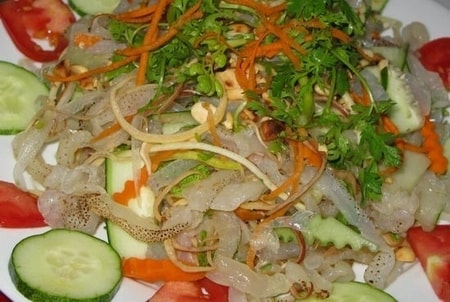 |
| Illustrative image. |
To ensure public health, the Food Safety Department advises people not to consume jellyfish as food, especially in raw salads, and particularly not to feed it to children; and not to process jellyfish into food products for commercial purposes. Regarding sea snails, when using them as food, they should be soaked in clean water several times to remove all impurities, and should not be given to children to prevent diarrhea.
Jellyfish venom, when ingested, can cause headaches, chest pain, cyanosis, sweating, shortness of breath, nausea, vomiting, abdominal pain and frequent diarrhea, rapid and weak pulse, and a drop in blood pressure. In the most severe cases, adverse reactions occur immediately after the jellyfish venom enters the victim's bloodstream. The victim experiences nausea, headache, chest pain, cyanosis, sweating, rapid breathing, nausea, vomiting, abdominal pain and frequent diarrhea, rapid and weak pulse, and a drop in blood pressure. The victim may become lethargic, sometimes experience seizures, and may fall into a coma, requiring immediate hospitalization for anaphylactic shock treatment.
In acute or subacute cases, about 15 minutes after contact with milk, the victim experiences itching on the hands and feet, localized erythematous rashes on the skin, generalized urticaria, Quincke's edema in the eyes, lips, face, and larynx leading to suffocation, rapid and weak pulse. The heart beats rapidly and regularly, blood pressure drops, and there is a dry cough and wheezing.
Laryngeal edema causes difficulty breathing. The victim experiences nausea, abdominal pain, diarrhea, watery eyes, runny nose, and sweating. These are signs of anaphylactic shock and require immediate hospitalization for shock treatment. In mild cases, the victim only has a skin reaction, with localized burning, redness, and intense itching. The whole body feels uncomfortable, but there is no need to worry excessively.
In Vietnam, jellyfish are widely used in various dishes such as salads, hot pot, soups, and noodle dishes. However, during processing, jellyfish must be soaked three times in a brine and alum solution. The jellyfish meat will then turn a light red or light yellow color before being used in cooking.
Previously, from February 5th to 7th, 2014, 14 cases of food poisoning due to consuming jellyfish and sea snails (also known as carp snails) were recorded in Phu Ninh district, Quang Nam province. The Food Safety Department issued document No. 216/ATTP-ND on February 8th, 2014, requesting the Quang Nam Provincial Department of Health to strengthen public awareness campaigns through various media channels, advising people not to consume jellyfish during the breeding season (spring-summer); and not to feed jellyfish and sea snails to children to prevent diarrhea.
According to VNmedia


