With the remarkable progress of its defense industry, Vietnam has successfully manufactured many types of weapons, including the SPG-9 anti-tank gun.
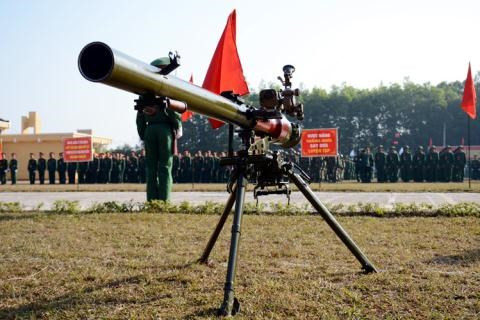 |
| The SPG-9 Kopye anti-tank weapon is considered one of the most effective anti-tank weapons. Developed in the early 1960s, the SPG-9 is still in production today. Along with the RPG-7 and AK-47, it is an extremely popular weapon. Currently, this dangerous weapon is still in use in the Syrian conflict. Image source: QPVN |
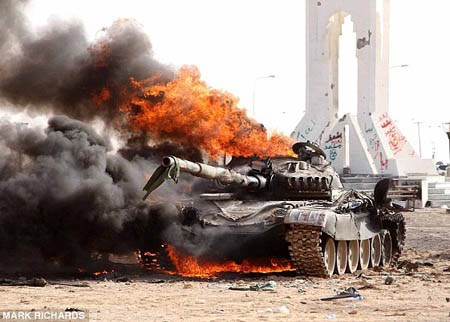 |
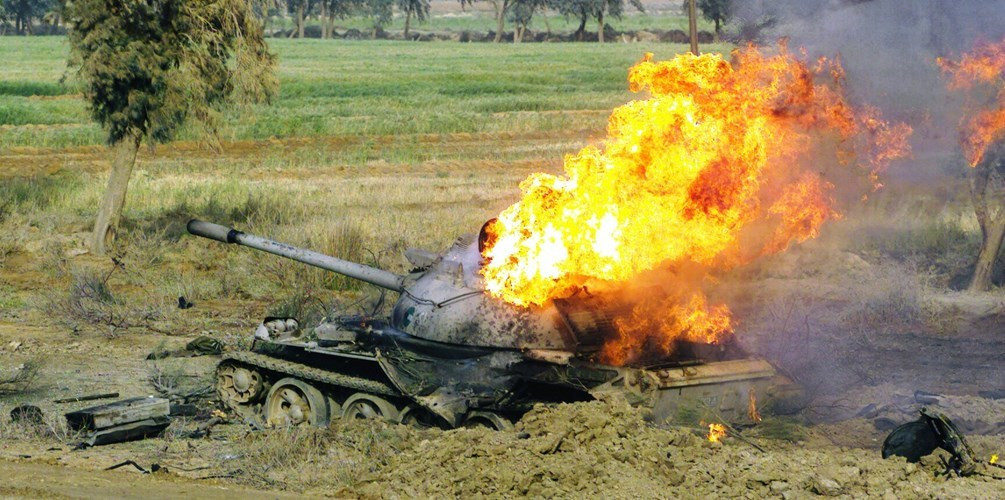
| Because the gun uses HEAT rounds capable of penetrating armor, it is extremely dangerous to tanks. Without active protection systems, such as explosive reactive armor, tanks can easily be destroyed by rounds fired from the SPG-9 anti-tank gun. Image source: Mark Richards |
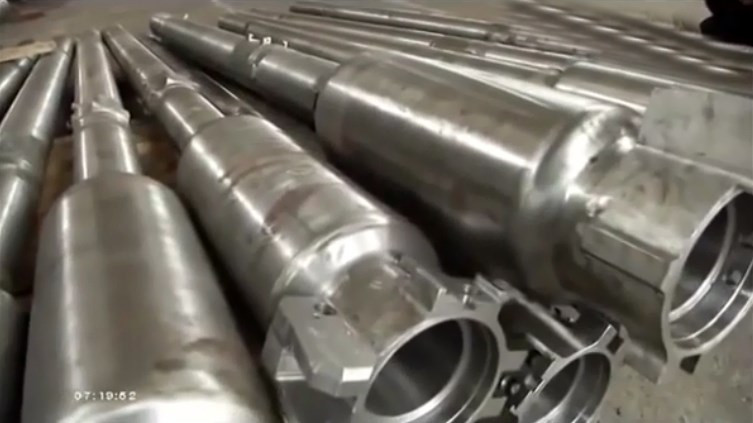 |
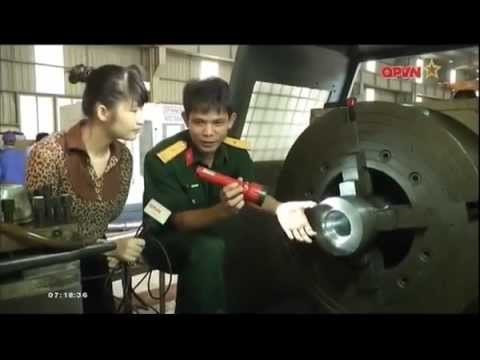
| It is noteworthy that with the current development of military science and technology, Vietnam has successfully created the barrel blanks and bored the barrel to manufacture the SPG-9 recoilless anti-tank gun. For any type of weapon, barrel manufacturing is considered the most important step determining product quality. Image source: YouTube |
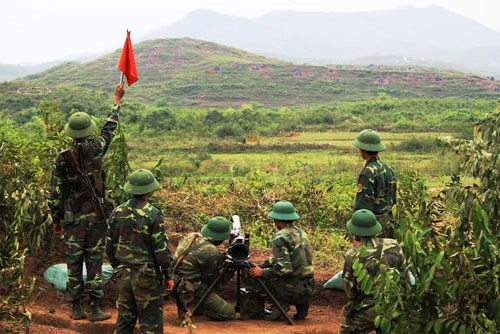 |
| In Vietnam, the SPG-9 anti-tank gun is manufactured at the Z125 factory under the General Department of Defense Industry under the name SPG-9T, with several improvements to suit combat conditions in mountainous areas, hot and humid environments, and infantry combat carrying weapons, etc. (Image source: QPVN) |
 |
| With meticulous research into suitable combat conditions in Vietnam, combined with its inherent capabilities, the SPG-9T anti-tank weapon will undoubtedly possess formidable power, still capable of destroying tanks with limited armor and active defense systems. (Image source: warmilitary) |
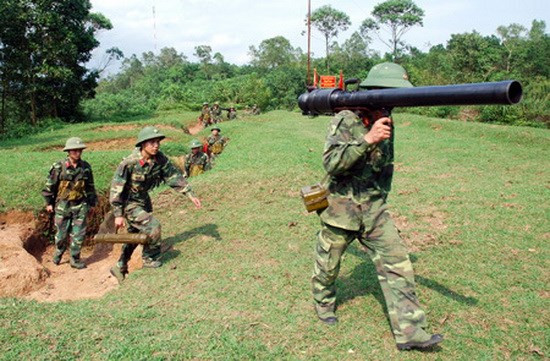 |
| The SPG-9T anti-tank gun weighs 47.5 kg, and 59.5 kg when mounted on a tripod. Its dimensions are 2.11 m long, 99 cm wide, and 88 cm high. The SPG-9 recoilless gun uses two types of ammunition: the standard OG-96 high-explosive round (5.5 kg) and the PG-9B shaped-charge anti-tank round (4.4 kg). (Image source: QPVN) |
 |
| The successful development of large-caliber gun barrels is considered a breakthrough in weapons manufacturing. (Image source: QPVN) |
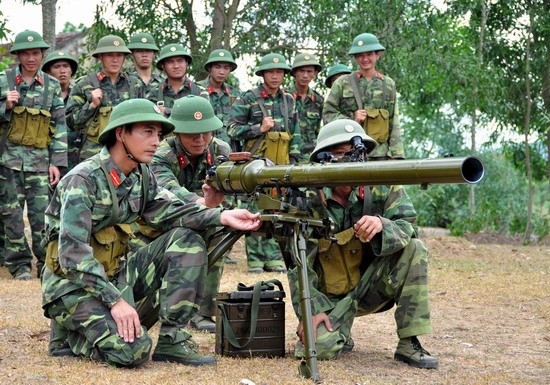 |
| The SPG-9's barrel is a smoothbore without rifling, fitted with a handle for pulling the gun during maneuvers, a mechanical sight, a sight frame mount and slide, and a barrel shroud to prevent the shooter from burning their hand while firing. (Image source: QPVN) |
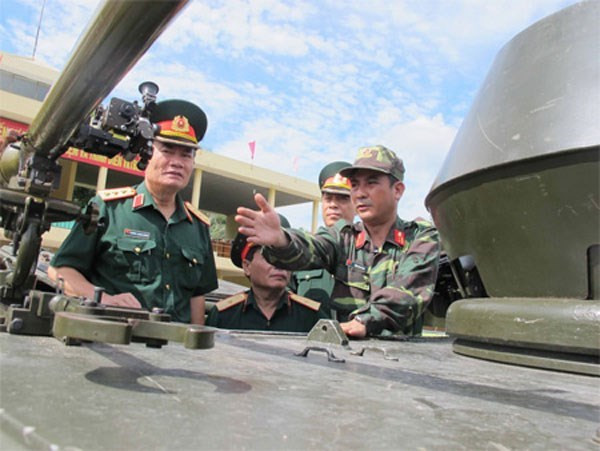 |
| The mechanical components are used to detach the launch tube after firing, and the electrical components of the propellant charge detonator are also included. The barrel is connected to the breech lock in the form of a muzzle brake and a breech lock lever, allowing for opening and closing the breech for loading and unloading. The image shows an SPG-9 anti-tank gun mounted on a Vietnamese-modified M113 armored vehicle. Image source: QPVN |
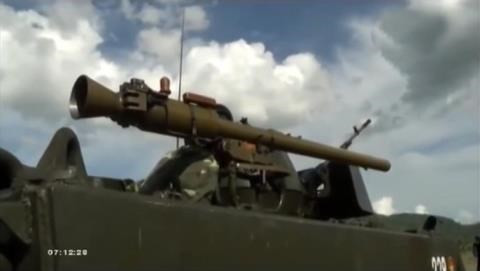 |
| Anti-tank projectiles with rocket propulsion are launched from the barrel by a propellant charge with an initial velocity of 435 m/s. In the initial phase of their trajectory, the SPG projectile activates its rocket engine and accelerates to 700 m/s. Upon firing, the rear of the gun creates a dangerous zone due to the rocket fire of the propellant charge, with a radius of 30m and an opening angle of 90°. (Image source: YouTube) |
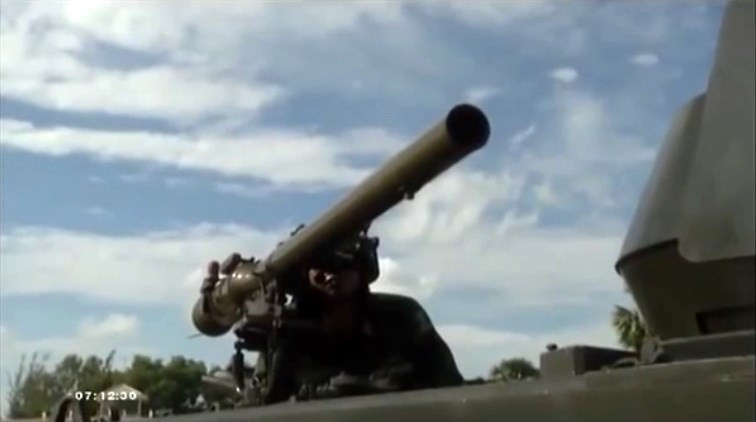 |
| Currently, the SPG-9T anti-tank gun is being equipped on upgraded armored vehicles as well as by infantry units. Each SPG-9T crew consists of two people: one gunner and one loader. The gun has a maximum range of up to 6.5 km. Image source: YouTube |
According to Kienthuc



