
Why is the Japanese way of raising children admired by the whole world?
Having traveled to 80 different countries around the world, after living in Japan for 20 years, the Jewish mathematician Peter Frankl exclaimed that he admired Japan and its education system.
 |
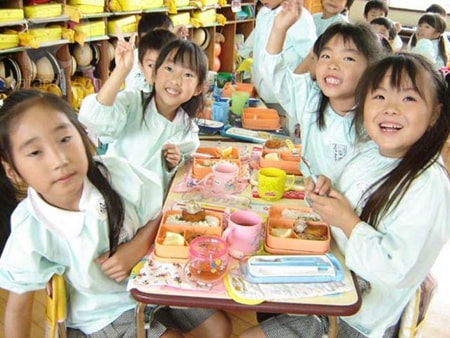
| Japanese children are taught to thank their parents, teachers, and others who have worked hard to provide them with a delicious meal. |
Japan is admired worldwide for its miraculous economic development in a short period of time, but anyone who has lived in or studied Japan will realize that this admiration stems from the way the Japanese educate their people in morality.
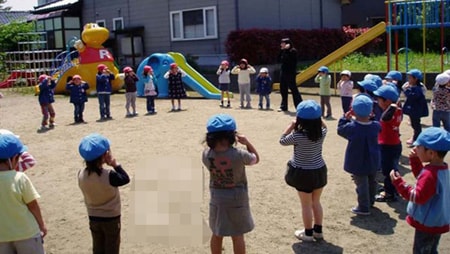
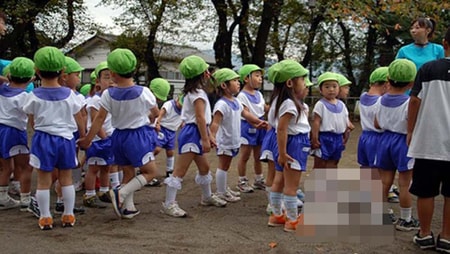
Japanese children receive moral education not only from school but also from society. All subjects, not just those similar to Civics, have a role to play in moral education. From kindergarten onwards, students are trained to practice morality in their daily activities, such as saying thank you to their parents, voluntarily helping and serving their peers, and maintaining cleanliness in the school.
As children grow older and enter the general education system from grades 1 to 9, they will learn and practice moral lessons with a curriculum divided into four groups, arranged from most immediate to most distant and from easiest to most difficult. Group 1 relates to oneself, group 2 relates to others, group 3 relates to the collective and society, and group 4 relates to the natural world. Students of different ages will learn all four groups, but to varying degrees. For example, in the group related to oneself, students in grades 1-2 will learn about "diligence and hard work," while students in grades 7-9 will learn about "cherishing the truth."
Moral education for children in Japan takes place through daily activities, not just through textbooks. All schools, from urban to rural areas (from elementary to high school), require students to clean their classrooms and public areas. This not only creates a good learning environment and atmosphere but also educates students in many aspects, such as the value of work, work skills, cooperation, solidarity in work, responsibility, and discipline.
From elementary school age, children are nurtured and cared for by animals and plants daily, year-round, even during the summer, in order to connect with science, become familiar with nature and the living things in their environment, and gradually develop a love for living things, nature, and life.
Furthermore, school activities are given special attention to perfecting the moral education program for children. Children are required to participate in clubs from the secondary school level to learn teamwork, thereby fostering a sense of collective spirit, promoting their development, self-discovery, and exploration of life. These activities also help children build close relationships with friends and teachers, and develop communication and social skills. During these activities, many situations arise for children to practice within the school environment, allowing teachers to understand each child's personality and provide timely encouragement or guidance.
 |
| Children are required to participate in clubs from middle school onwards to learn teamwork and develop a sense of collective spirit. |
The Japanese moral education program correctly identifies its purpose as training students, not just for grades to pass. The Japanese also avoid overwhelming children with too much knowledge, selecting only the most basic and practical things to teach them, ensuring they have a solid foundation for development rather than being taught grandiose and unrealistic concepts.
The effectiveness of this holistic education method has been proven by the collective consciousness of the Japanese community and even in written documents. Only in Japan can one find the "Guide to Action for All Citizens," containing over 200 rules clearly outlining what to do, what to avoid, and the severe penalties for violations. For example: "If you see any tap running without anyone using it, turn it off immediately; if you see a fan or electric light unattended, turn it off immediately."
 |
Moral education in Japan is highly effective due to the close collaboration between family, school, and society. For example, the topic of "Protecting the surrounding environment" is taught in detail and thoroughly practiced by families. At school, students from elementary to high school are required to clean their classrooms and public areas daily for over 10 years. In society, streets and markets are always clean, with many trash cans placed close together, and people sort their waste before disposing of it.
With such a thorough education, every Japanese person possesses excellent moral habits and behaviors. For example, Mr. Oshima Mituteru, 34 years old, works in Ward 6, District 3, Ho Chi Minh City, Vietnam. Every morning, he picks up trash around the streets where he works. When asked, "Why do you do that?", he sincerely replied, "Even small changes to the environment bring me a sense of happiness."
According to Vietnamnet


