
New officials, new policies
(Baonghean) - The event that attracted the most attention worldwide last week was the inauguration of the new US President Donald Trump. Along with the discussion and interest in his first moves, the departure of Obama from the White House also left many people feeling regretful.
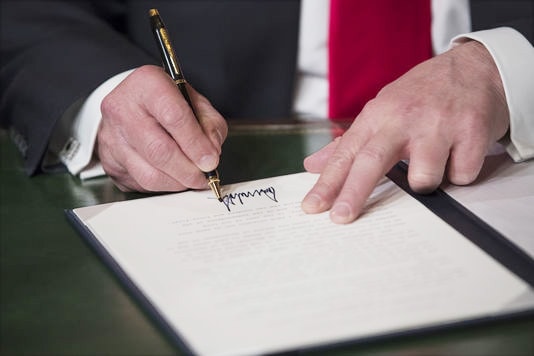 |
| Donald Trump signs his own appointment at the Capitol in Washington on January 20, 2017. Photo: AFP |
Will the US withdraw from the TPP?
On Friday, January 20th, Donald Trump officially took office, becoming the 45th President of the United States. Immediately after the inauguration ceremony, Trump made his first moves to dismantle the legacy of his predecessor, Barack Obama.
As expected, the first executive order targeted the health insurance law, also known as Obamacare. Trump had promised to repeal this law during his campaign. While it couldn't immediately abolish Obamacare, the order Trump just signed requires federal agencies to "lighten the weight" of the law while awaiting the passage of a replacement law.
Obamacare, implemented since 2010, has faced significant opposition from Republicans due to its high cost. Now, all that remains is for the US Congress – with a Republican majority – to vote to repeal Obamacare.
Besides Obamacare, two other issues were also targeted by President Donald Trump just hours after his inauguration: LGBT rights and climate change. A major change was noted on the White House website since Trump took office.
Subsections on LGBT rights and climate change have been removed from the website. While these two issues may not receive as much attention as Obamacare in American politics, they will certainly generate significant public debate and draw international attention. Donald Trump is likely to repeal the "Climate Action" program passed during Obama's second term.
The 45th President of the United States declared he would “eliminate unnecessary, even harmful, policies such as the climate and water action plan.” The White House argued that “lifting these sanctions would increase American workers’ wages by approximately $30 billion over the next seven years.” However, the White House made no mention of the Paris Agreement.
Trump's latest move is the release of a video in which he asserts that the US will withdraw from the TPP (Trans-Pacific Partnership). Although the US signed the agreement in February 2016 along with 11 Asia-Pacific countries, the TPP still needs congressional approval to take effect. However, with the transition of power from Obama to Trump, the future of the TPP looks bleak.
Edward Snowden's stay in Russia has been extended.
On Wednesday, January 18, a spokesperson for the Russian Foreign Ministry announced on Facebook that Edward Snowden's residence permit had been extended for another two years.
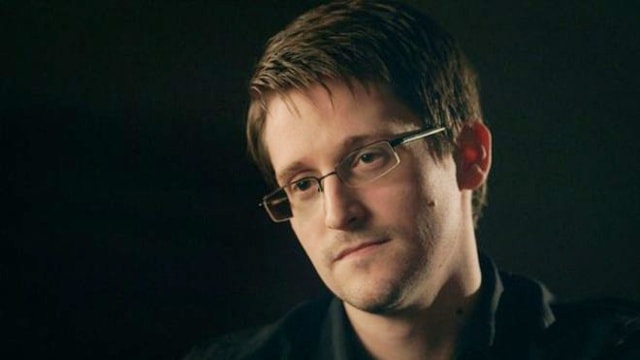 |
| Edward Snowden. Photo: BBC |
Edward Snowden is a former employee of the US National Security Agency (NSA) who caused a massive information scandal in 2013 when he revealed the US's global telecommunications and internet surveillance system. This shocking revelation severely damaged the US's relationships with its allies, and Edward Snowden became a wanted criminal, facing a 30-year prison sentence. That same year, Snowden sought asylum in Russia and was granted a three-year residency permit. At that time, relations between Russia and the US were already extremely strained, further exacerbating the already tense situation.
The announcement extending Snowden's stay came just hours after President Obama signed a pardon for another "criminal" – Chelsea Manning. Manning had been sentenced to 35 years in prison and had served seven years for leaking 700,000 classified documents to WikiLeaks. Thanks to Obama's posthumous pardon, Manning will be released in five months. This move was welcomed by both WikiLeaks and Edward Snowden. However, newly inaugurated President Donald Trump does not seem likely to be lenient with Snowden.
Trump once called Snowden a "disgraceful traitor" and is likely to pursue him more aggressively than Obama. Many NGOs and celebrities have urged Obama to take humane action in Snowden's case. However, this faces legal obstacles because Snowden is only subject to an arrest warrant, not a formal conviction. Meanwhile, presidential pardons issued before leaving office only apply to those convicted by federal courts.
However, what will newly inaugurated President Donald Trump, who is generally considered quite sympathetic to Russia, think about Russia extending Edward Snowden's stay? Will this affect Trump's foreign policy? It's difficult to predict the intentions of this unpredictable president, but perhaps Edward Snowden won't bother him immediately, given the many important legacies of the Obama administration that the new president wants to erase.
Hai Trieu
(According to Le Monde)


