
Credit growth in 2020 surged to 12.13%.
This figure was announced by Deputy Governor Dao Minh Tu at VietinBank's recent 2020 business performance review conference. Thus, in just the last 10 days of the year, outstanding credit across the entire economy increased sharply by nearly 2 percentage points.
Previously, according to data from the same agency, but only up to December 21, 2020,credit growthIt only reached 10.14% compared to the end of 2019 and increased by 11.62% compared to the same period last year.
Mr. Tú also stated that the credit institution system has supplied more than 9 trillion VND to the economy, and even in 2020, when the Covid-19 pandemic was raging, it added more than 1 trillion VND to the market.
At the same time, the increased credit in 2020 was still mainly focused by the banking sector on production and business sectors, serving the lives of the people.
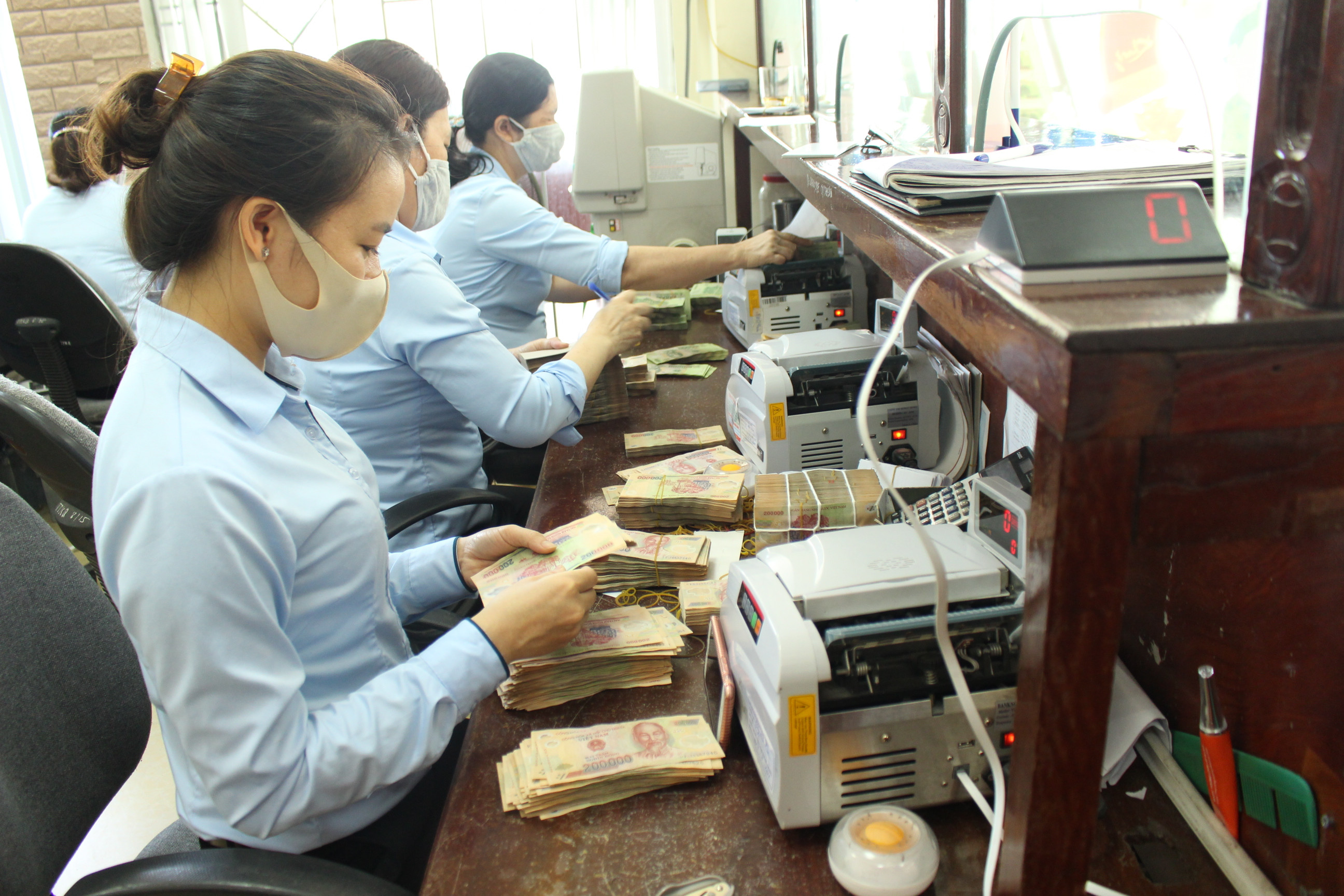 |
| Cashier duties at a bank in Vinh City. Photo by Thu Huyen. |
"Although the growth rate did not reach the 14% target set at the beginning of the year, it demonstrates the tremendous efforts of the entire system in the context of the impact of the Covid-19 pandemic. Credit growth slowed down in the early months of the year and gradually recovered towards the end of the year," Mr. Tu emphasized.
On the other hand, the current market has very low interest rates. "For the first time in many years, interest rates are at this level, having dropped by half compared to 6-7 years ago," Tú said.
In addition, in the restructuring andhandling bad debtsMr. Tú stated that the system of credit institutions has maintained stability, and its scale and operational efficiency continue to improve; the financial capacity, management and operational capabilities, and transparency of credit institutions are gradually being enhanced, approaching international best practices.
More specifically, the on-balance sheet non-performing loan ratio of the entire credit institution system gradually decreased over the years and remained below 2% from the end of 2017 to July 2020, then increased to 2.09% at the end of October 2020 due to the impact of the Covid-19 pandemic.
The non-performing loan ratio, including loans sold to VAMC that have not yet been processed and loans with the potential to become non-performing, stood at 4.36%, a sharp decrease from 10.08% at the end of 2016 and exceeding the target of 5%.


