
River shrimp
(Baonghean) - I returned to my hometown during the dry season, as summer was drawing to a close, and the cicadas were pouring out their hearts to the vastness of the forest. The boats seemed sad too, their hulls lowered to the riverbank, left to be used as buffaloes for plowing and horses for riding by the village children. The sun was no longer as scorching as before because of the sudden clouds crossing the sky. The river seemed to swell, exhaling cool breezes that reached deep into my heart. This was a sign that the first rains of the season were coming.
That sign can also be recognized by the upward movement of ants, the calls of amphibians, or the splashing of fish. It's also the time when aquatic species seek each other out, reproduce, and when the tide comes in, they disperse in all directions, developing and perpetuating their species. Nature is incredibly skillful in establishing and maintaining ecological balance for this vast yet fragile planet, vulnerable to ever-present natural disasters. The fastest among these is the river shrimp; in just a week, from egg to shell, they can swim from place to place, becoming a common food source for the people in my hometown.
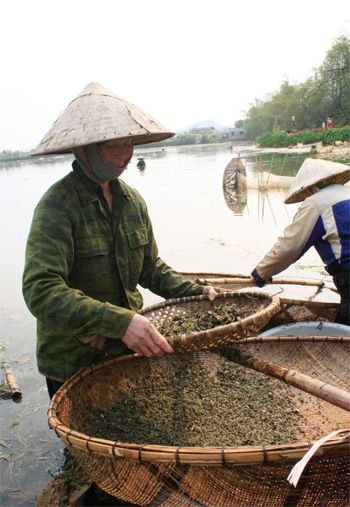 |
| Illustrative image - source: Internet |
People in the countryside catch shrimp using soft nets with small holes. The net is tightly tied to a 6mm iron ring with a fairly long handle, and the bottom must be slightly deep so that even if there are fish, shrimp, or frogs, they can't escape. They call it a net. Because shrimp live near the shore, under clumps of water hyacinth or patches of seaweed and grass, people just need to put the net underneath and quickly lift it up to catch them easily.
River shrimp, with their long antennae and hard snouts, are very difficult for children to eat, so people put the shrimp in boiling water and stir them around with chopsticks until the antennae curl up, then they pluck them off. The head of the shrimp sticks tightly to the antennae, so it also separates from the neck.
Remove the shrimp from the water and let them drain. At this point, the shrimp will have a beautiful reddish-pink color. They are an ingredient used to prepare simple yet unforgettable dishes. Boiled shrimp wrapped in rice paper with fresh vegetables, dipped in sweet and sour fish sauce, is a dish almost everyone knows and has tasted. For something a little more delicious, stir-fry them with lime leaves and lemongrass, or grill them with garlic and wrap them with boiled meat and various wild vegetables. The shrimp are best when they are just cooked through, with plump, glossy, sweet, and crispy flesh. If the shrimp are stir-fried for too long, the meat will shrink and become mushy, but this is the only way to preserve the dish for several days.
Now, shrimp has made its way to restaurants, a staple on lavish feast tables, giving city dwellers a chance to reminisce about their childhood in the countryside, even if only briefly. But that's enough to make already delicious dishes even more flavorful. For them, the image of a barefoot, bareheaded country child, eating rice from palm leaves while running in the fields or going to school, has become rare; in fact, some no longer have that place of memories to return to, making it even rarer.
Ly Thi Minh Chau


